Quick answer
For heavy lenses, choose a wide padded strap that spreads weight across your shoulder or neck, and confirm the strap hardware matches your camera's lug size. A padded strap reduces pressure points, but the right attachment and length matter just as much as the padding.
Why padding alone is not enough
A thick pad solves the pressure problem on your neck, but it does nothing for balance. A heavy lens pulls the camera forward, so the strap needs to sit wide on your shoulder and stay grippy, or the whole rig keeps sliding. Look for a strap with a non-slip backing and enough width to spread the load across your collarbone and shoulder, not just a soft center pad.
Strap length is the second factor people overlook. A strap that is too short forces the camera to hang high and swing into your ribs; one that is too long lets the lens tip forward. Measure from shoulder to opposite hip and add slack for layers before you commit to a length.
Neck vs. shoulder vs. crossbody: what changes with a heavy lens
A standard neck strap concentrates the full weight of a body-plus-telephoto combo on the back of your neck. For a lighter kit this is fine, but once the lens starts to outweigh the body, a padded strap only shifts the pressure point. A wider shoulder or crossbody strap spreads the load across your shoulder and upper back, which is why it is the safer default for heavier setups.
Padding and materials: what actually helps
Padding matters when the strap carries weight for hours. Look for a strap with a soft, wide center section that sits on the shoulder or neck rather than a thin cord. The trade-off is bulk: a heavily padded strap takes up more room in a camera bag and can feel warm against your skin on hot days. If you carry the camera on a shoulder, a wider strap spreads the load; if you prefer neck carry, a strap with a grippy underside reduces slipping on jackets and collars.
Quick-release vs. fixed straps
Quick-release straps let you detach the camera fast when you need to set it down, use a tripod, or switch to a wrist strap. The trade-off is that the connection points add a little bulk and one more part that can fail. Fixed straps are simpler and lighter, but you have to unthread the strap every time you want to remove it.
For heavy lenses, the connection hardware matters more than the fabric. A strap rated for the weight of your body plus lens is safer than one that only looks thick. If the catalog listing does not state a weight rating, treat that as a signal to check the hardware and stitching before you trust it with a long telephoto.
Padding versus width: what actually relieves neck strain
Padding absorbs pressure, but width spreads it. A narrow padded strap still concentrates weight on one spot, which is why many photographers move the strap to a shoulder or use a sling-style carry for heavier glass. For a heavy lens, look for a strap that distributes the load across a wider contact area rather than only adding cushioning.
Quick-release hardware and security trade-offs
Quick-release buckles make it easy to detach the camera when it is mounted on a tripod or packed in a bag. The trade-off is that every connector is a potential failure point. If you carry a heavy body and lens, check the buckle material and locking mechanism before you trust it with your gear. A simple loop-and-tuck design can be just as secure and lighter than a metal clip you do not need.
Decision rules for choosing a heavy-lens strap
- Match the strap width to the load: Choose a wider strap for a heavy body-and-lens combo. A wider strap spreads the weight over a larger area of your neck and shoulder, which reduces the pressure you feel during a full day of shooting. If your kit crosses roughly 1.5 kg, move up to a wider padded strap.
- Check the padding and material: Look for padding that sits on the shoulder or neck area and a material that grips without digging in. Neoprene-style padding absorbs shock better than thin webbing, while a soft woven or scarf-style strap spreads pressure more evenly. Test the strap with your heaviest lens mounted before you commit.
- Match the connection hardware to your camera: Confirm the strap fits the lugs on your camera body. Quick-release clips are convenient for swapping bodies, but they add a failure point; a fixed strap is simpler and less likely to come loose. Check the strap width against your camera's lug loop before buying.
- Decide between neck and cross-body carry: For heavy lenses, a wide padded strap that sits across the chest spreads weight better than a narrow strap worn around the neck. Choose a padded design if you carry for more than an hour or walk long distances. If you shoot handheld all day, consider a strap that can be adjusted to cross-body length.
- Balance comfort against bulk: Padded straps reduce pressure but add bulk and can catch on gear. If you prefer a slim profile, look for a strap with a wide but thin pad rather than a thick cushion.
- Match the strap to your shooting style: A scarf-style strap suits casual street shooting where the camera hangs at your side; a heavier padded strap suits long events where the lens stays on the camera all day. Keep a second strap for a different bag or body if you switch between casual and long sessions.
Straps that fit this guide
-
Capturing Couture Pocket Scarf Camera Strap (Candy Stripes): Scarf-style camera strap with a pocket design in a candy stripe pattern. The scarf style spreads weight across a wider surface, which helps when a heavy lens pulls the camera forward.
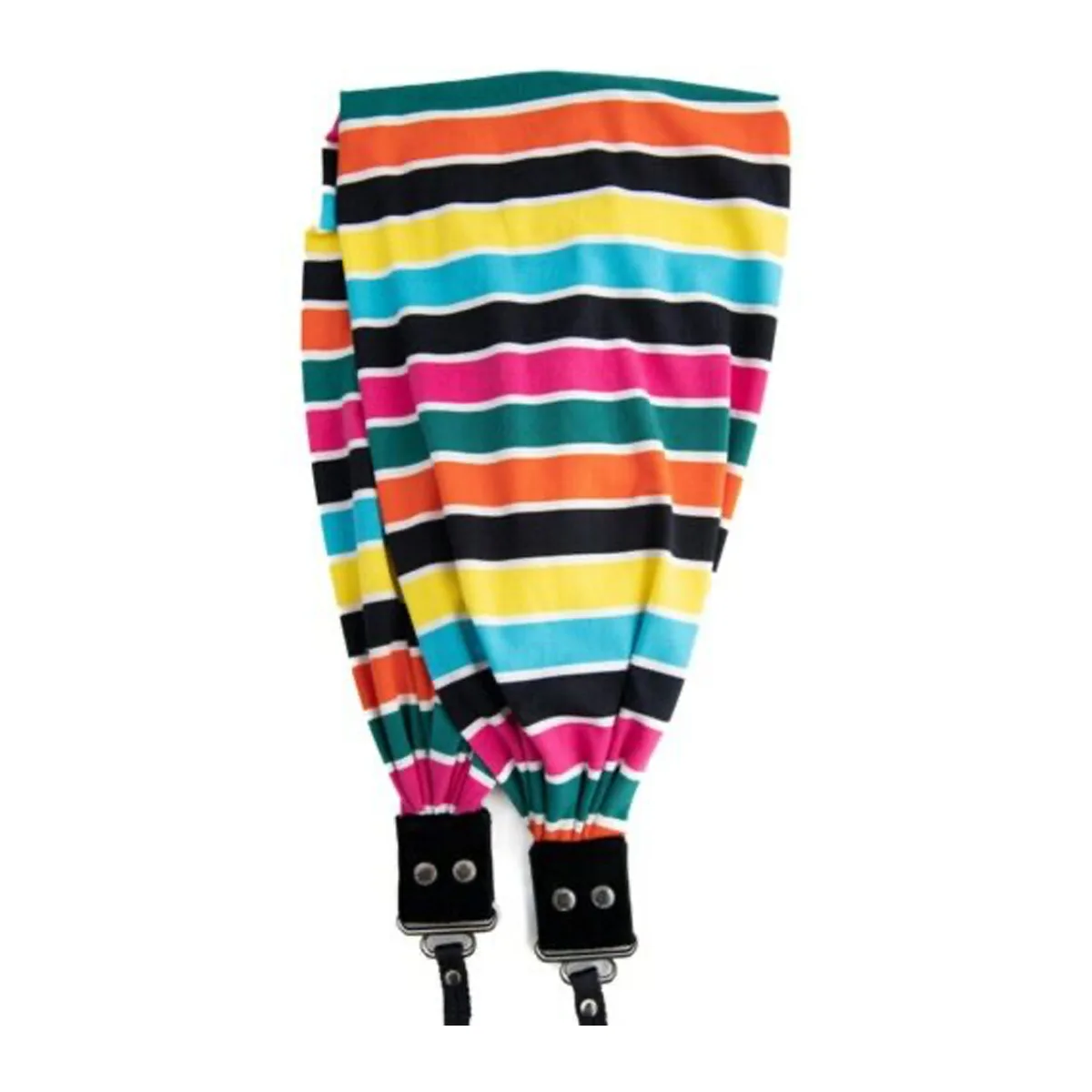
Capturing Couture Pocket Scarf Camera Strap (Candy Stripes)
-
Capturing Couture Pocket Scarf Camera Strap (Nautical): Nautical colorway of the same pocket scarf strap design. Lets you pick a finish that matches your kit while keeping the same padded support for heavier bodies.
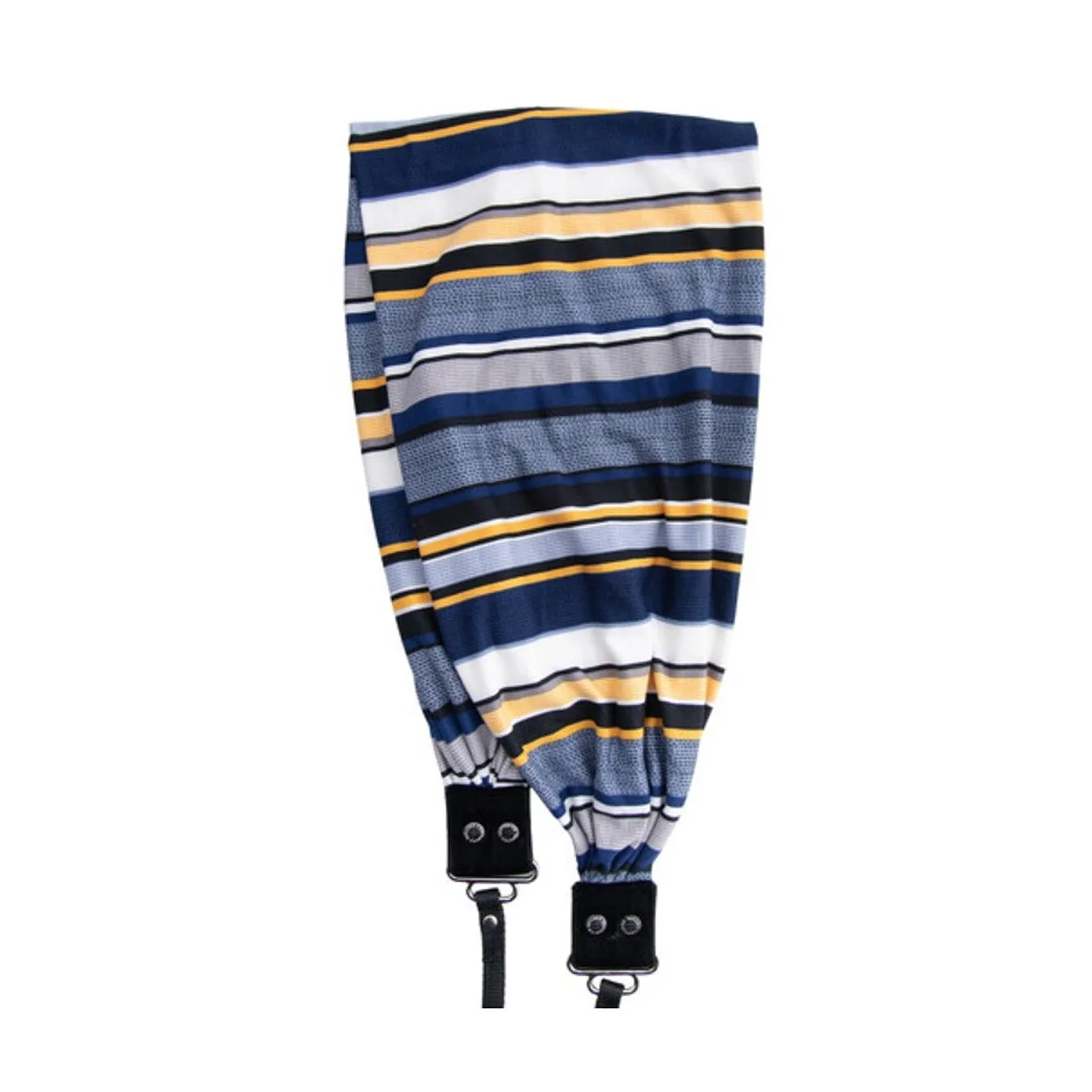
Capturing Couture Pocket Scarf Camera Strap (Nautical)
How to match a strap to your setup
Best for
- Photographers carrying a heavy telephoto or zoom lens for several hours
- Shooters who prefer a strap that doubles as a soft neck cushion
Not for
- Minimalists who want a thin, discreet strap that disappears under a jacket
1-2 sentences with a concrete next action, not a summary