Quick Answer
For most holiday meals, choose a carving knife with a blade 8 to 9 inches long, a pointed tip for working around bones, and an edge style that matches the texture of your roast—hollow edge for juicy meats, straight edge for clean slices of ham or vegetables.
Blade Length: Match It to Your Largest Roast
The blade length determines how many strokes you need to cut across a roast. An 8-inch blade works well for a medium turkey or a standard beef roast, while a 9-inch blade gives you extra reach for larger birds or thick hams. A longer blade also helps you make one smooth, even slice rather than several short, jagged ones.
If you regularly carve for a crowd, the extra inch on a 9-inch blade reduces effort and keeps slices more uniform. For occasional holiday use, an 8-inch blade is easier to control and store.
Edge Style: Hollow vs. Straight
The edge style affects how the knife releases meat as you slice. A hollow edge has small divots along the blade that create air pockets, reducing friction and preventing thin slices from sticking to the metal. This is especially helpful for juicy roasts like turkey or prime rib, where sticky slices slow you down.
A straight edge gives you a clean, precise cut with no drag, making it ideal for denser items like ham, fruits, and vegetables. It also tends to be easier to sharpen at home because the entire edge is a continuous line.
Pointed Tip: Essential for Bone Work
A carving knife's pointed tip is not just for looks. It lets you guide the blade around bones, separate joints, and make precise cuts in tight spaces. Without a pointed tip, you would need a separate boning knife for those tasks, which adds clutter to your carving station.
Look for a blade that narrows to a sharp point rather than a rounded tip. This feature is especially important if you carve turkey, chicken, or any bird with a ribcage.
Decision Rules for Choosing Your Carving Knife
- If you carve a whole turkey or large roast: Choose a 9-inch blade to span the width of the bird and make clean, single-pass slices. A shorter blade will require more strokes and may tear the meat. Measure your largest roasting pan to confirm the blade length fits comfortably.
- If you often slice juicy meats like turkey or prime rib: Pick a hollow-edge blade. The divots create air pockets that prevent slices from sticking, so you can work faster and keep slices intact. Hollow edges are slightly harder to sharpen at home; plan for professional sharpening if you use the knife frequently.
- If you carve ham, dense roasts, or also slice fruits and vegetables: Choose a straight-edge blade. It gives you a clean, drag-free cut that works well on firm textures and is easier to maintain with a standard sharpening steel. A straight-edge carving knife can double as a slicer for bread or melon, reducing the number of specialty knives you need.
- If you have a small kitchen or carve only a few times a year: An 8-inch blade is easier to store and control. It handles most holiday birds and roasts without taking up much drawer or block space. Check that the knife's handle feels balanced in your hand before buying; a comfortable grip is essential for long carving sessions.
Two Carving Knives to Consider
-
Classic 8" Hollow Edge Carving Knife: The WÜSTHOF Classic 8" Hollow Edge Carving Knife has a longer and narrower blade than a chef's knife, allowing the knife to cleanly cut through meats. The narrow blade and pointed tip make it easy to guide around bones, so you can carve a turkey or roast with minimal resistance.
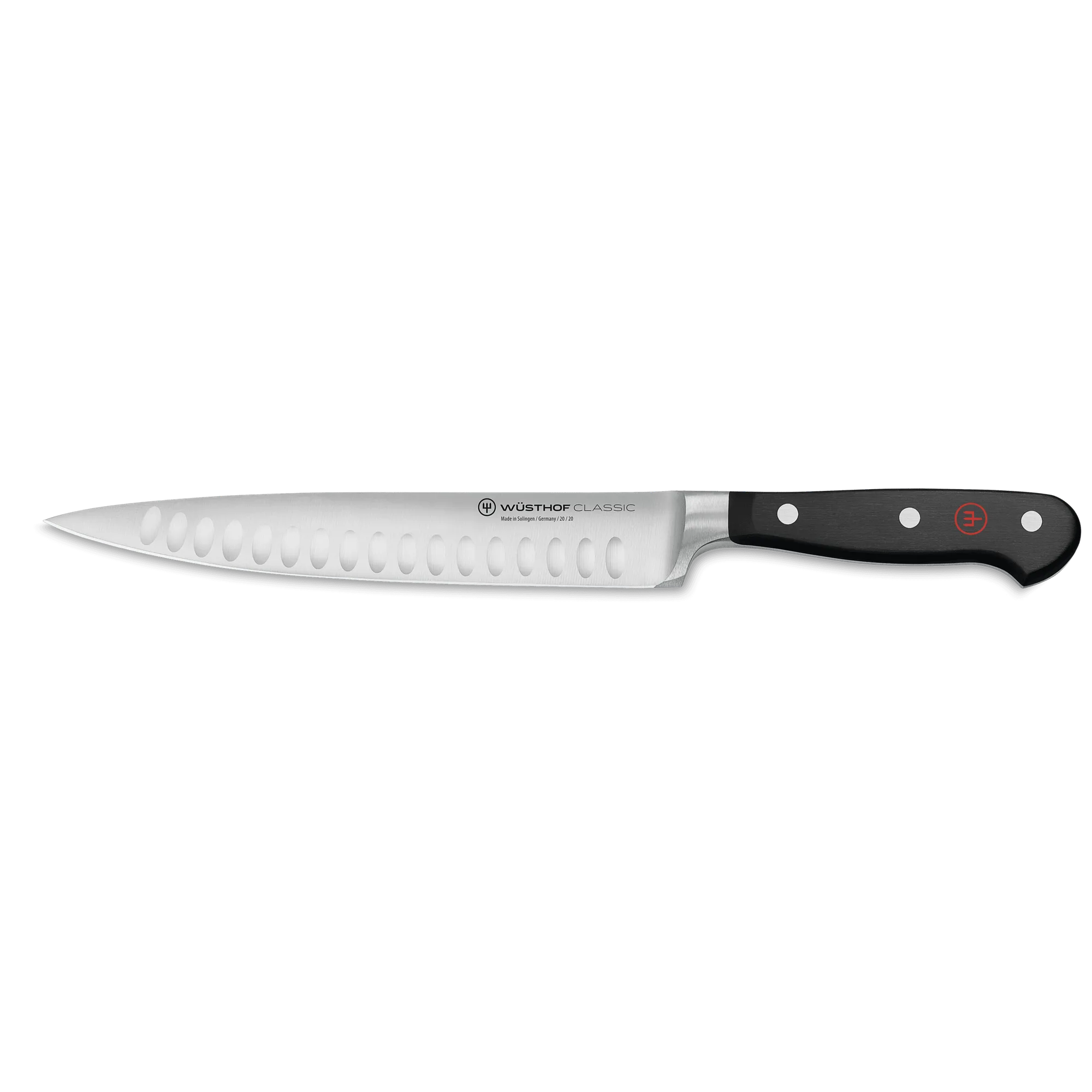
Classic 8" Hollow Edge Carving Knife
-
Epicure 9" Carving Knife: The Epicure Slicer has earned its name: its shape and sharpness are designed to cut very thin slices of hard ingredients, especially hams. If you serve ham or dense roasts, this knife produces paper-thin slices without tearing, and it also works well on fruits and vegetables.
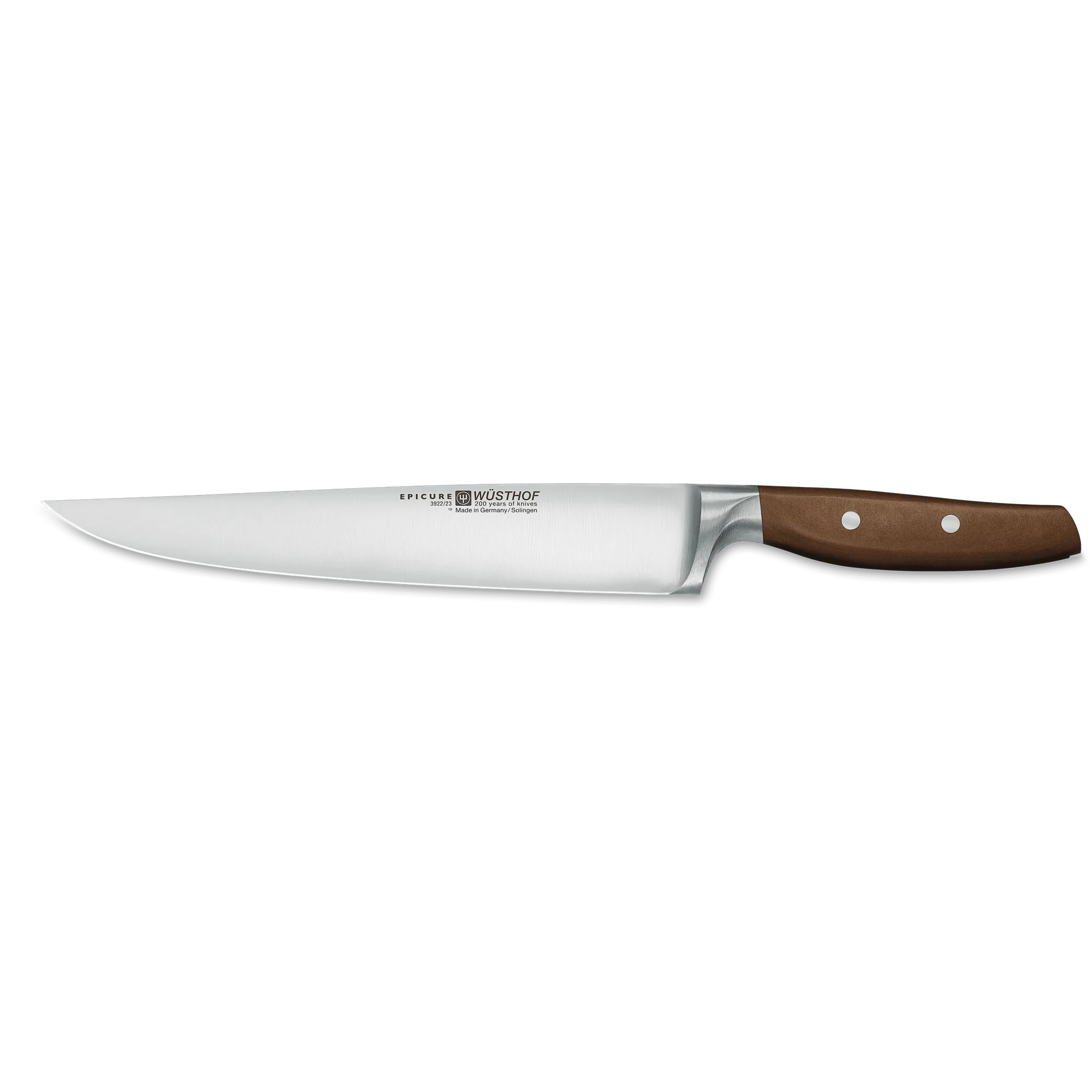
Epicure 9" Carving Knife
Who Should Choose Which Knife
Best for
- Home cooks who carve a whole turkey or large roast a few times a year and want a versatile, easy-to-store 8-inch blade.
- Those who serve juicy meats like prime rib or turkey and want hollow-edge blades to keep slices from sticking.
Not for
- Professional chefs or frequent carvers who need a longer blade for very large roasts or who prefer a straight edge for precise ham slicing.
- Anyone who wants a single knife for both carving and fine slicing of dense ingredients; a straight-edge slicer may be more versatile.