Quick answer
Measure from your shoulder to where you want the hem to land, then choose a chemise whose listed length is within about 2 inches of that number. Petite frames usually look best in a hem at mid-thigh to just above the knee, while taller frames carry a hem at or below the knee without losing proportion. If you are between sizes, size up and use the adjustable straps to control where the bodice sits.
Start with your shoulder-to-hem number, not the size label
A chemise is a slip-style piece, so its length is measured from the shoulder seam or strap anchor down to the hem. Because that measurement is fixed by the cut, two women in the same size can get very different hemlines. Before you shop, stand in front of a mirror and hold a tape measure from the top of your shoulder to the point on your leg where you want the fabric to end. Write that number down. Then compare it with the length listed for each style. A difference of 1 to 2 inches is usually workable; more than 3 inches and the hem will sit somewhere you did not plan.
Short vs long chemise: what each hemline does for proportion
A short chemise that ends at mid-thigh keeps the leg line long and reads as a lighter, more playful layer. It works well under a robe or as sleepwear in warmer months. A long chemise that falls to the knee or below creates a continuous vertical line, which can make a taller frame look especially elegant and a petite frame look taller when the hem is not too low. The trade-off is coverage versus ease: longer hems can catch on the leg when you walk, while shorter hems show more of the thigh. Neither is better; the right one depends on how you plan to wear it.
Fit checks that matter more than the number on the tag
Once the length is close, check three things. First, the bust: the seam that separates the cup area from the body should sit at your natural underbust, not ride up. Second, the straps: adjustable straps let you raise or lower the whole garment slightly, which changes the hem by an inch or more. Third, the waist: a cut-out or defined waist detail should land at your narrowest point. If it sits too high or too low, the length will feel wrong even if the measurement is right. For a closer fit through the torso, a bodysuit style removes hem-length guesswork entirely because it fastens at the base.
How to adjust length without a tailor
You have three practical levers. Shorten the strap setting to lift the hem, which is the fastest fix for a long chemise on a petite frame. Choose a bias-cut style, which skims rather than clings and can make a longer hem feel less heavy. Or layer: a long chemise under a short robe gives you the look of a shorter piece with the coverage of a longer one. If a hem is more than 3 inches too long, though, adjusting straps will pull the neckline out of place, so it is better to choose a different length than to fight the cut.
Decision rules for chemise length
- Petite frame (under 5'4"): Aim for a hem at mid-thigh to just above the knee. A long chemise can work if you shorten the adjustable straps and choose a bias cut, but avoid hems below mid-calf, which can overwhelm your vertical line. Check that the waist detail lands at your natural waist, not your hips.
- Tall frame (5'9" and up): A hem at or just below the knee usually looks proportional. Short chemises can read as tunics if the listed length is too short for your torso, so compare the shoulder-to-hem number before buying. Look for a leg split or bias cut to keep a longer hem from feeling restrictive.
- Between sizes: Size up rather than down. A chemise has no waistband to hold it in place, so extra room through the torso is easier to manage than a bodice that pulls at the bust. Use the adjustable straps to lift the hem after sizing up.
- Wearing it under a robe or as sleepwear: If the chemise is mostly a base layer, prioritize a smooth hem that will not bunch. If it is the main piece, prioritize the hemline you actually want to see. Decide the primary use before you compare lengths.
Product facts that affect length and fit
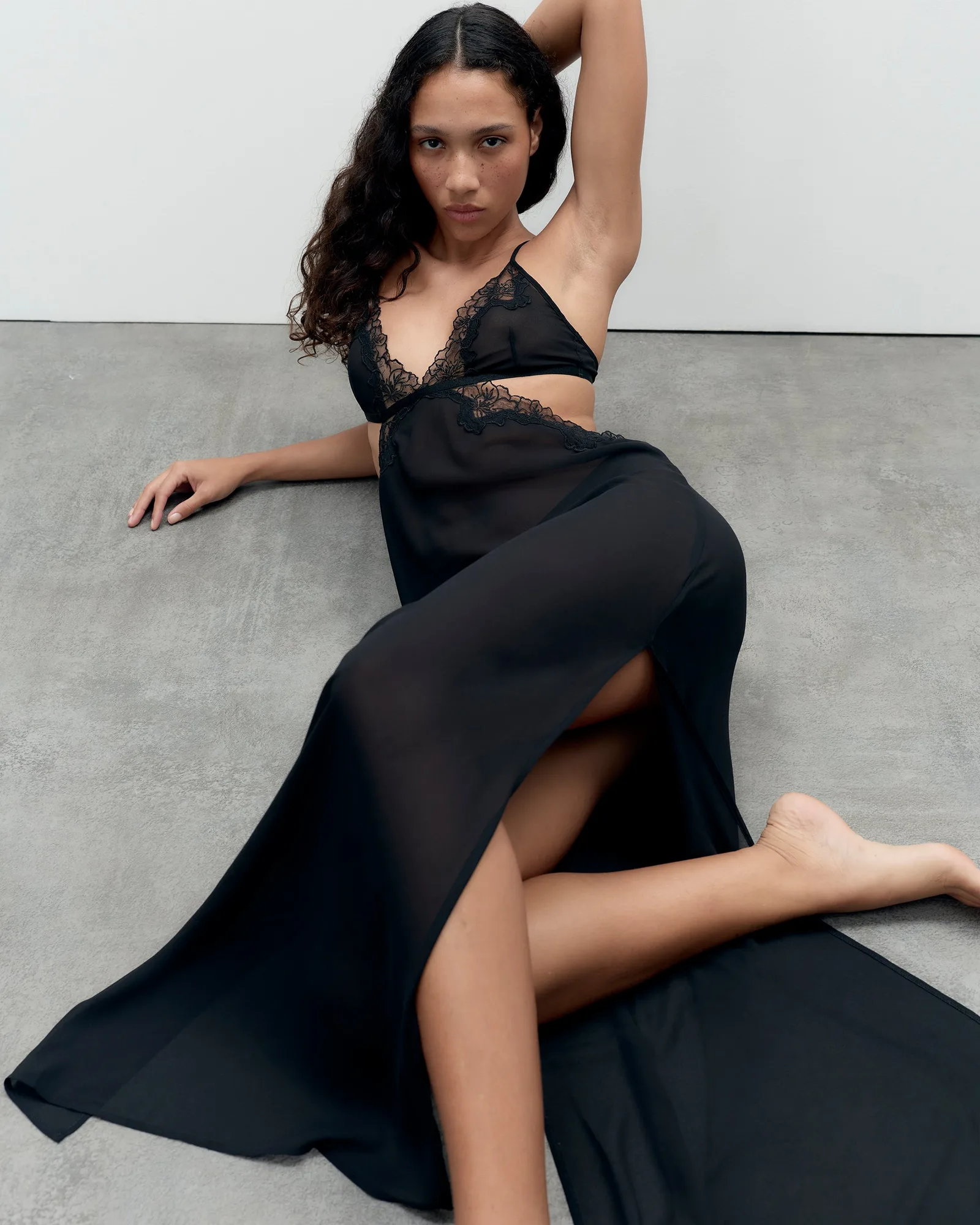
- Julianne Long Chemise Black: The Julianne Long Chemise in black has a bias cut with a leg split, lace trimming, a cut-out waist and back detail, adjustable straps, and is available in an extended size range. The bias cut skims the body instead of clinging, so a longer hem stays comfortable, and the leg split adds movement for taller frames. Adjustable straps let you fine-tune where the bodice and hem sit.
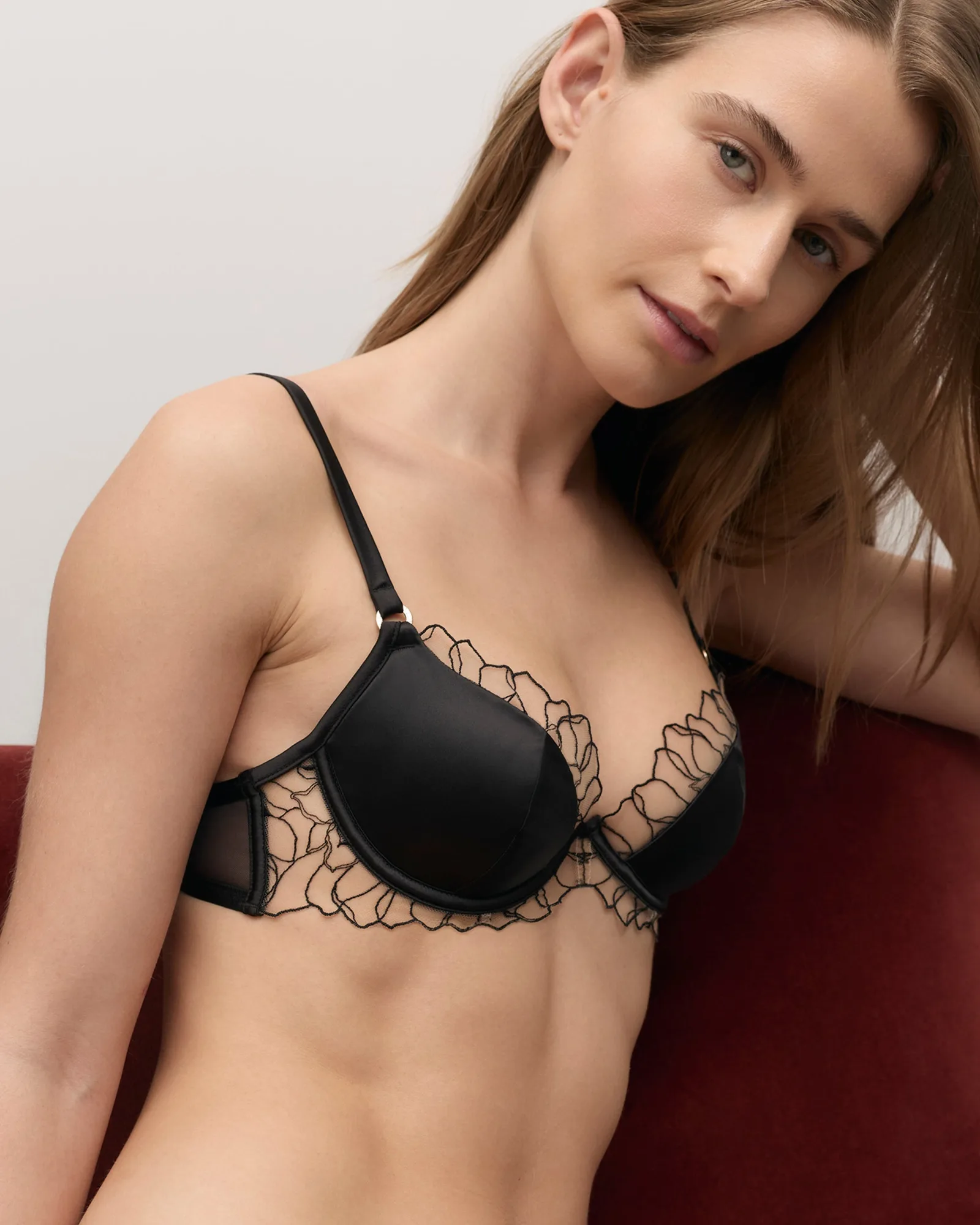
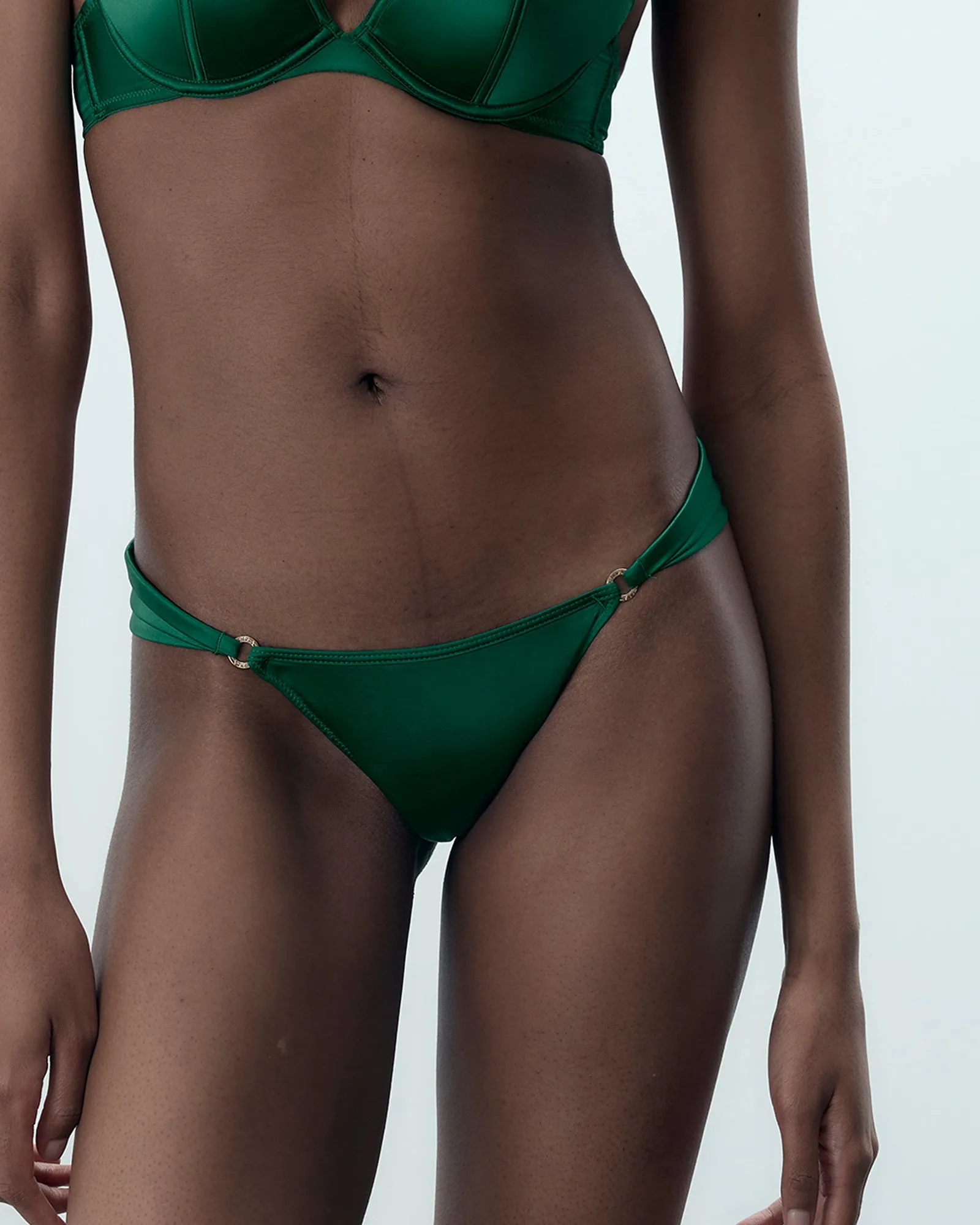
- Fern Luxury Satin Moulded Bra Black: The Fern Luxury Satin Moulded Bra in black has moulded foam cups, underwiring, sheer mesh wings, and adjustable straps. If you want a defined silhouette under a chemise, this bra's moulded cups create shape while the mesh wings keep it light. Adjustable straps help you set the underband position, which affects how a chemise neckline sits.
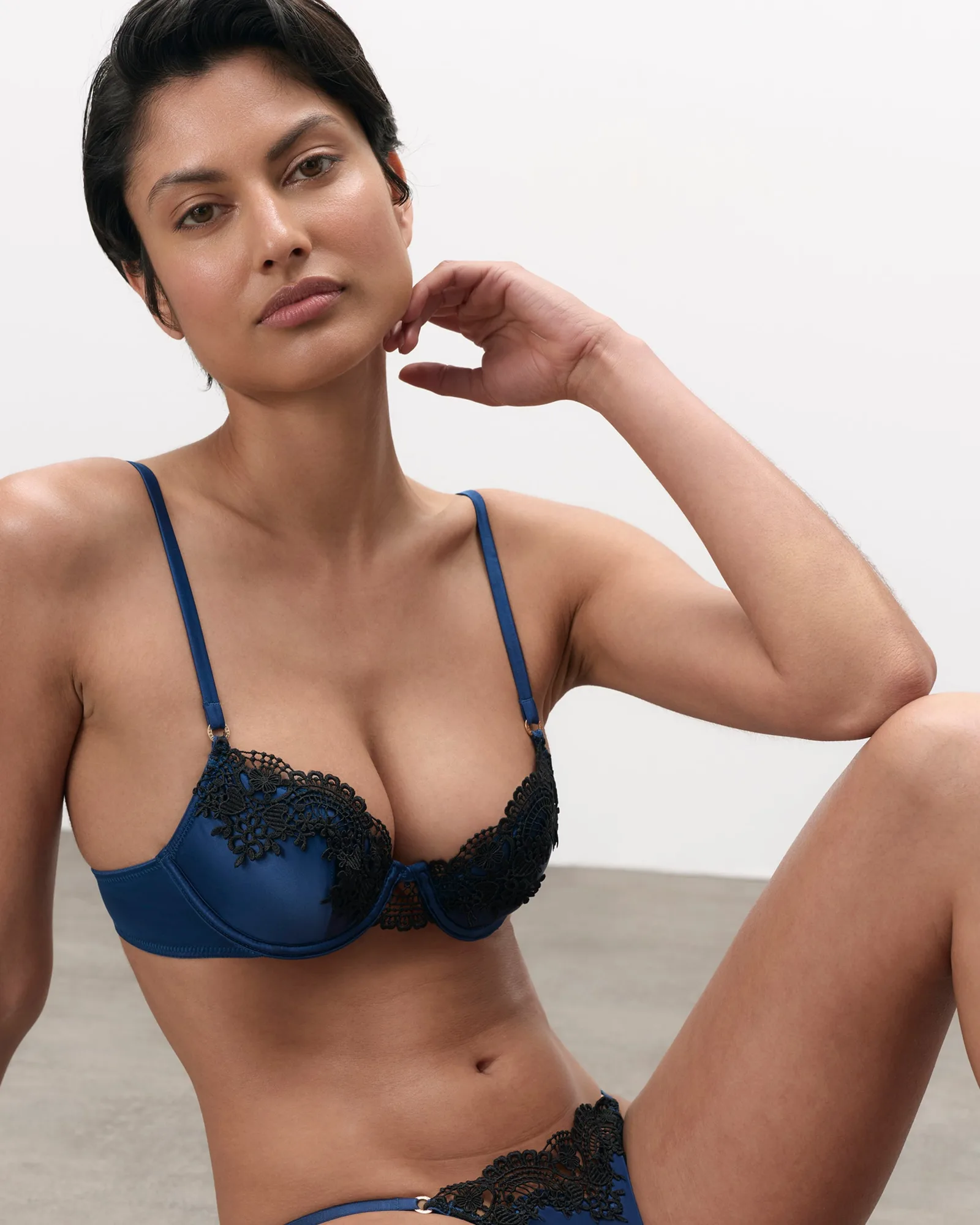
- Ida Luxury Satin Moulded Bra Navy Peony/Black: The Ida Luxury Satin Moulded Bra in navy peony and black has moulded foam cups, a wired plunge silhouette, guipure lace overlay, satin shoulder straps, and sheer mesh wings. A plunge shape suits chemises with a deeper neckline, and the lace overlay adds texture without bulk. The satin straps are a visible detail if your chemise has a low back.
Who this length advice is for
Best for
- Shoppers choosing between a short and long chemise for their height
- Anyone who wants a hemline that works without tailoring
- Petite and tall frames looking for a proportional fit
Not for
- Shoppers who want a fitted bodysuit with no hem to consider
- Anyone looking for a structured bra fit guide rather than a slip-length guide