Quick answer
Match the mount to your camera body first, then to the lens you actually want to shoot with. If you own a Canon EF camera, buy EF-mount glass like the Laowa 14mm T2.6 Zero-D VV; if you shoot Sony E, buy native E-mount like the Sirui Venus 75mm T2.9 1.6x. Only choose an interchangeable-mount lens such as the Laowa Sword 35mm T2.9 when you genuinely need to move one lens across different camera systems.
Why mount choice comes before lens choice
A cinema lens only works if its mount matches your camera's mount or a supported adapter. The mount also determines flange distance, which affects whether you can reach infinity focus and whether adapters are practical. Canon EF and Sony E are the two most common native mounts in this catalog, and each has a different flange distance and electronic protocol. Before comparing focal lengths or apertures, confirm the mount printed on your camera body and the mount printed on the lens.
Canon EF vs Sony E: the practical differences
Canon EF is a DSLR-era mount with a longer flange distance, which means EF lenses can often be adapted to mirrorless bodies but not the other way around. Sony E has a shorter flange distance and is native to Sony mirrorless cameras, so E-mount lenses cannot be adapted to EF bodies. If you shoot on a Canon EF camera or a cinema camera with an EF mount, EF glass is the safe choice. If you shoot Sony E, native E-mount glass avoids adapter stacking, light leaks, and infinity-focus problems.
When an interchangeable mount is worth it
Interchangeable mounts let you move one lens across multiple camera systems by swapping the mount module. That is useful for rental houses, owner-operators with mixed bodies, or anyone planning to change camera systems without selling the lens. The trade-off is that you must buy and carry the correct mount module for each body, and the mount module is specific to a lens series and focal length. Check that the module you need exists before committing to the lens.
Sensor coverage and mount are separate decisions
A lens can have the right mount but the wrong coverage. Full-frame and VistaVision sensors need lenses designed for that image circle, while Super35 or APS-C sensors can use smaller-coverage glass. The mount tells you whether the lens attaches; the coverage tells you whether the image fills the frame without vignetting or soft corners. Read the coverage specification for each lens rather than assuming it from the mount alone.
Decision rules for picking a mount
- Rule 1: Match the mount to the camera body: Write down the exact mount on your camera. If it is Canon EF, restrict your search to EF-mount lenses. If it is Sony E, restrict it to E-mount lenses. Do not buy a lens in the wrong mount hoping an adapter will fix it, because adapters add cost, length, and potential infinity-focus issues. Wrong mount equals wrong lens, no matter how good the optics are.
- Rule 2: Choose interchangeable only for multi-body work: Pick an interchangeable-mount lens like the Laowa Sword 35mm T2.9 only if you actually shoot on more than one camera system or plan to switch systems. Otherwise, a native-mount lens is simpler and cheaper. Interchangeable mounts solve a multi-system problem, not a general one.
- Rule 3: Confirm sensor coverage before you buy: Check whether the lens covers full-frame, VistaVision, Super35, or APS-C. A lens can fit your mount and still vignette or soften at the corners on a larger sensor. Mount compatibility and sensor coverage are two separate checks.
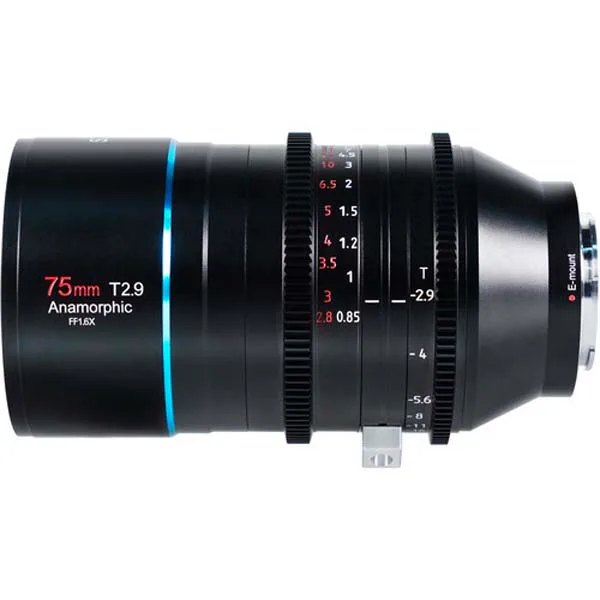
- Rule 4: Decide spherical or anamorphic before mount: Anamorphic lenses like the Sirui Venus 75mm T2.9 1.6x create a specific widescreen look and flare character. If you want that look, you also need to accept the mount it is built for, which here is Sony E. Your desired look can narrow your mount options before you start.
Mount options in this catalog
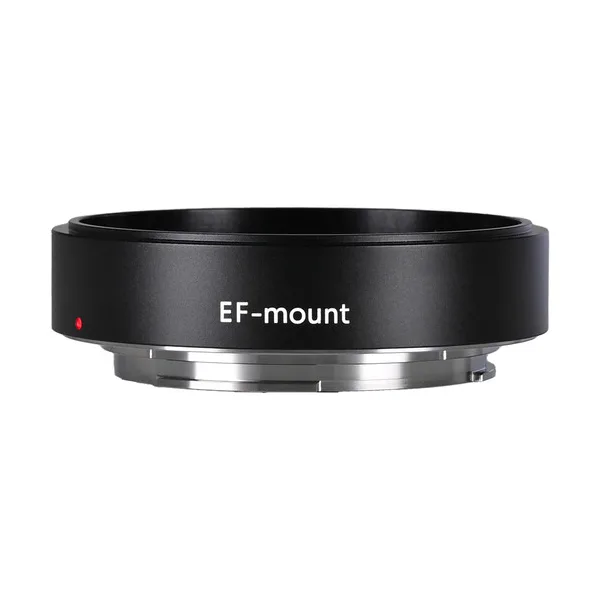
- Laowa Sword 35mm T2.9 (Canon EF) – Monture Interchangeable: Laowa Sword 35mm T2.9 (Canon EF) – Monture Interchangeable is an interchangeable mount dedicated to the 35mm focal length in the Laowa Sword series, letting you use that lens on Canon EF cameras while keeping the series' optical and mechanical performance. If you already own or plan to buy the Laowa Sword 35mm, this module is what makes EF-body compatibility possible. It is focal-length specific, so it will not fit other Sword focal lengths.
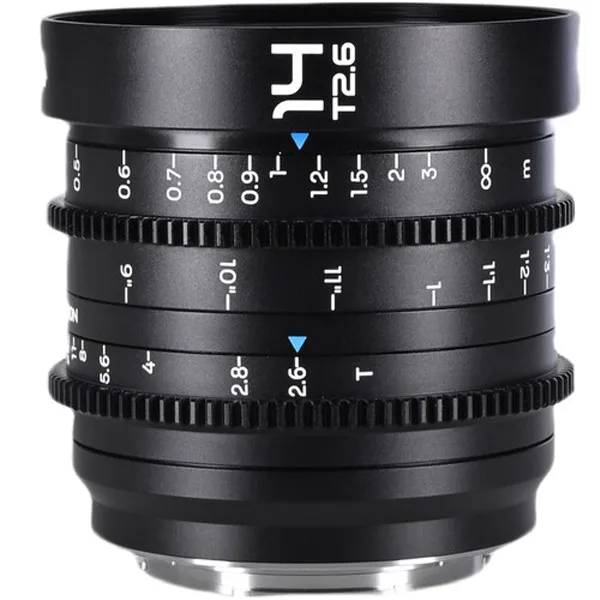
- Laowa 14mm T2.6 Zero-D VV (Canon EF) – Objectif Cinéma: Laowa 14mm T2.6 Zero-D VV (Canon EF) is a super-wide cinema lens for Canon EF mount cameras, compatible with full-frame and VistaVision sensors including RED RAPTOR 8K VV and ARRI ALEXA LF Open Gate, with a 117.8° horizontal field of view. This is a native EF lens with large-format coverage, so it suits EF-mount cinema bodies and VistaVision workflows without an adapter. The extreme wide angle is a specific creative choice, not a general-purpose focal length.
- Sirui Venus 75mm T2.9 1.6x (Sony E) – Objectif anamorphique: Sirui Venus 75mm T2.9 1.6x (Sony E) is a full-frame anamorphic lens with a 1.6x compression factor that produces a horizontal angle of view equal to a 46mm spherical lens and horizontal blue flares when pointed at a light source. Choose this only if you shoot Sony E and want anamorphic character. The 1.6x squeeze and blue flares are deliberate stylistic traits, and the E mount means it will not fit EF bodies without an adapter that may compromise the look.
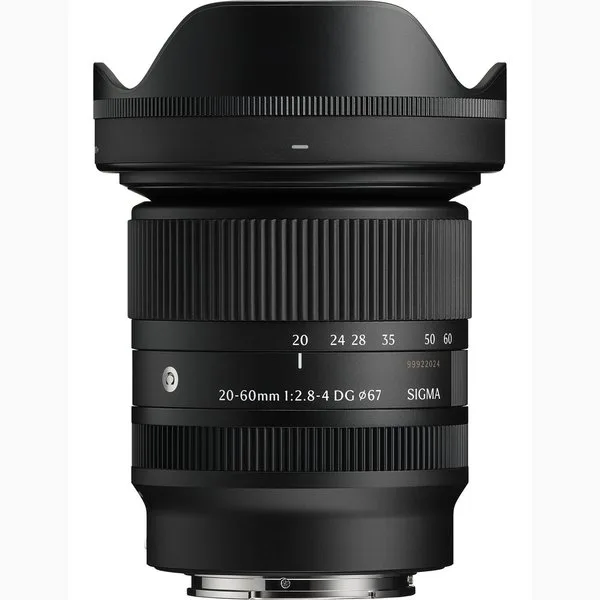
- Sigma 20–60mm f/2.8–4 DG Contemporary (Sony E) – Objectif: Sigma 20–60mm f/2.8–4 DG Contemporary is a compact full-frame zoom covering wide-angle to standard, offered in Sony E and L-Mount, with maximum aperture varying from f/2.8 at 20mm to f/4 at the long end and closing to f/22-32 depending on the setting. This is a photo zoom rather than a cinema lens, so it suits hybrid shooters who need one lightweight lens for stills and video on Sony E. It does not offer the geared, consistent-aperture design that dedicated cinema glass provides.
Who should choose which mount
Best for
- Canon EF camera owners who want native-mount cinema glass such as the Laowa 14mm T2.6 Zero-D VV
- Sony E shooters who want anamorphic character from the Sirui Venus 75mm T2.9 1.6x
- Hybrid shooters on Sony E who need one compact full-frame zoom like the Sigma 20–60mm f/2.8–4 DG Contemporary
- Owner-operators or rental houses that need one lens to move across multiple camera systems via an interchangeable mount
Not for
- Buyers who only own one camera body and will never switch systems
- Shooters who want to adapt an E-mount lens to a Canon EF body, which is not practical due to flange distance
- Anyone who needs a single lens to cover every focal length, since cinema primes are focal-length specific
- Buyers who have not confirmed the mount on their camera body before ordering