Quick answer
Choose a clear zinc face sunscreen with at least SPF 30, water resistance, and non-nano mineral ingredients so it stays effective during sweat and play without irritating your child's skin.
Why clear zinc matters for active kids
Clear zinc sunscreens use non-nano zinc oxide particles that sit on top of the skin to reflect UV rays. Unlike chemical sunscreens that absorb into the skin, mineral formulas start working immediately and are less likely to cause stinging or allergic reactions—key for children who are already running, swimming, or playing outdoors.
The "clear" finish means you don’t get the thick white cast that older mineral sunscreens leave behind. That makes it easier to apply on wiggly kids and ensures you cover every spot without missing a patch.
What to look for in a face sunscreen for kids
SPF 30 or higher is the baseline for extended outdoor play, but SPF 50 gives extra margin when kids are sweating or in and out of water. Water resistance (40 or 80 minutes) is critical—without it, the sunscreen slides off the moment they start running. Look for a product labeled "broad spectrum" to guarantee UVA and UVB protection.
Ingredients matter too. Non-nano zinc oxide stays on the surface rather than being absorbed, which is why many pediatricians recommend mineral sunscreens for children with sensitive skin. Avoid fragrances and oxybenzone, which can cause irritation or hormone disruption.
How to choose the right clear zinc face sunscreen for your active kid
- Check the SPF and broad-spectrum label: Look for SPF 30 or higher and the words "broad spectrum" on the bottle. This ensures protection against both UVA (aging) and UVB (burning) rays. A common mistake: assuming any sunscreen with a high SPF automatically blocks UVA—it doesn’t unless it says broad spectrum. SPF 50 gives extra safety margin for all-day outdoor activities.
- Confirm water resistance duration: Read the label for "water resistant (40 minutes)" or "water resistant (80 minutes)." If it doesn’t say water resistant, reapply every time your child sweats or gets wet. Many parents forget that water resistance expires after the stated time—set a timer to reapply. For long beach days or sports, choose 80-minute water resistance.
- Verify non-nano mineral ingredients: The active ingredient should be zinc oxide or titanium dioxide labeled as "non-nano." Non-nano particles are large enough to stay on the skin’s surface, reducing the risk of absorption and irritation. A common mistake: buying a "mineral" sunscreen that still contains chemical filters like oxybenzone or octinoxate. Non-nano zinc oxide is the safest choice for kids with eczema or sensitive skin.
- Test the texture and finish: Clear zinc formulas spread more easily and leave less white residue than traditional zinc sunscreens. Squeeze a pea-sized amount on your child’s arm to see how it blends. If it feels sticky or leaves a ghostly layer, your child may resist reapplication. A common mistake: assuming all clear zinc sunscreens feel the same—some still have a slight tint or thicker consistency. A lightweight, clear finish encourages kids to let you reapply without a fight.
- Match the sunscreen to the activity: For swimming, sports, or hiking, pick a sweat- and water-resistant formula. For everyday school or short park visits, a lighter daily moisturizer with SPF 30 may suffice. A common mistake: using a daily moisturizer with SPF for a full day at the beach—it won’t hold up to sweat and water. Keep two sunscreens: one for daily use and one for active outdoor play.
Product facts
-
Thinksport SPF 50 Clear Zinc Face Sunscreen (3 oz): Thinksport SPF 50 Clear Zinc Face Sunscreen uses non-nano zinc oxide for broad spectrum protection and is sweat and water-resistant. It stays on during active play and swimming, and the non-nano mineral formula is gentle on sensitive skin—no need to wait 15 minutes before going outside.
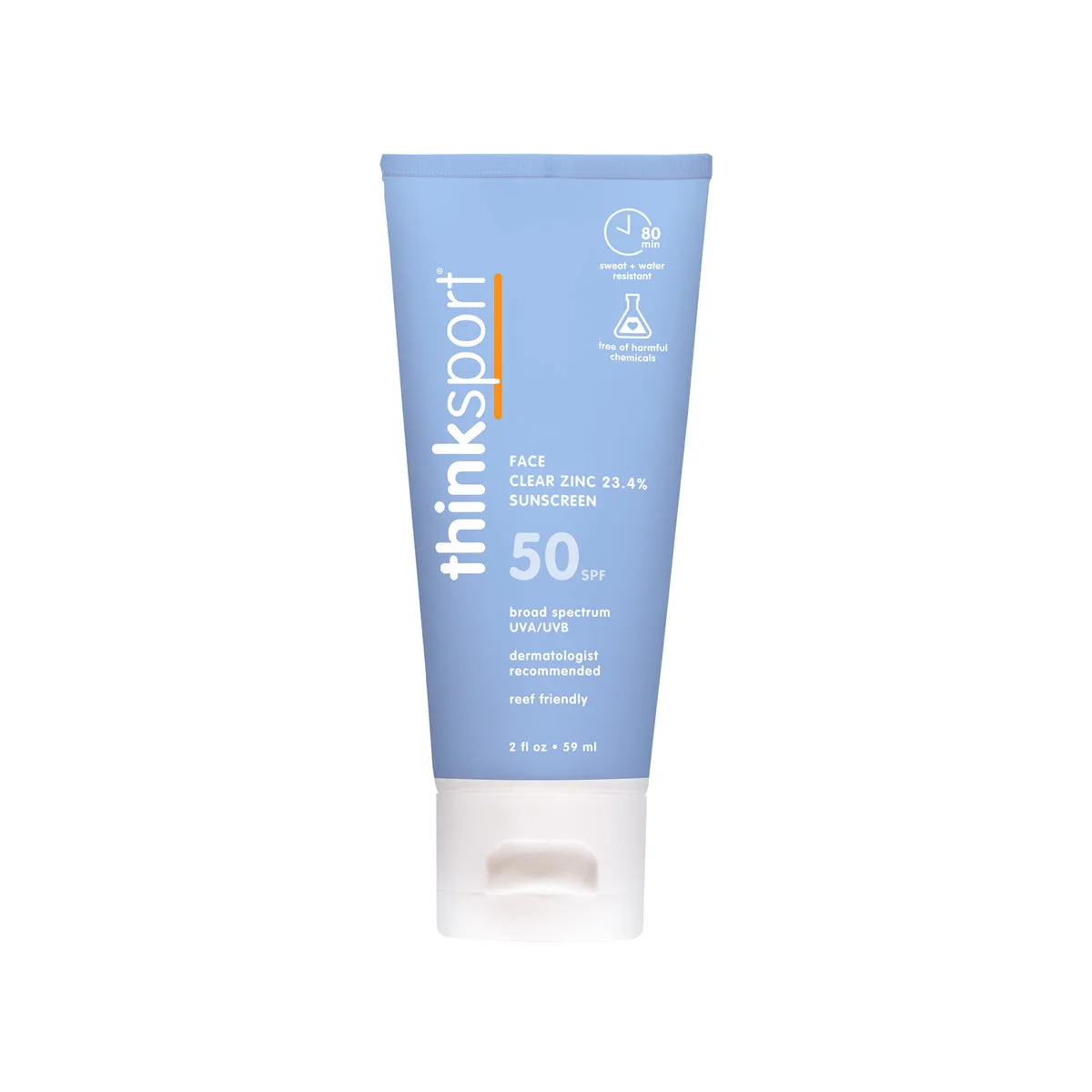
Thinksport SPF 50 Clear Zinc Face Sunscreen (3 oz)