Quick answer
For treated lumber and outdoor decks, choose a coated exterior screw long enough to bite through the board and into the joist without poking through the far side. Protec-Kote Deck Screws in 51 mm are built for 25 mm-thick decking and use a three-layer coating for outdoor performance. If your project stays dry and indoors, zinc pocket-hole screws are the affordable alternative.
Coating is the first decision, not the last
Treated lumber holds moisture and chemicals that attack plain steel. A coating buys time, but coatings are not equal. Protec-Kote screws use a three-layer coating for long-lasting outdoor performance. Zinc screws offer adequate rust protection and are an affordable alternative for indoor projects with limited exposure to the elements. If you are choosing deck screws for a wet or coastal site, step up to a more protective coating or stainless rather than defaulting to zinc.
Match screw length to board thickness and joist bite
A 51 mm deck screw is sized for 25 mm-thick decking, which is the common nominal 5/4 board. The screw must pass through the board and grip the joist without breaking through the bottom. If you use thicker decking or need more embedment, the same Protec-Kote line is also available in 67 mm. Measure your actual board thickness before buying; treated lumber can vary slightly from its nominal size.
Head and tip features that prevent callbacks
Two features do most of the work on a deck. A self-tapping tip starts the screw and drives it easily, while a smooth upper shank draws the deck board tightly against the joist. A compact head with a flat underside helps prevent wood splitting. Together these reduce stripped heads, squeaks, and split boards. When comparing options, treat these as must-haves for exterior decking rather than upsells.
Strength matters when you drive hundreds of screws
Case-hardened steel gives Protec-Kote screws high strength without bending or snapping. That matters when you are driving a few hundred screws with an impact driver and do not want to stop for broken shanks. For indoor furniture and cabinet frames, the lower torque demands make zinc pocket-hole screws a practical, lower-cost choice. Match the screw to the driving conditions, not just the price tag.
Decision rules for buying deck screws
- Wet or treated exterior deck: Choose a coated exterior screw such as Protec-Kote in the length that matches your board thickness. If the deck stays wet, do not substitute zinc.
- 25 mm-thick decking: Use 51 mm screws. For thicker decking, move up to 67 mm in the same line. Check that the tip bites the joist without breaking through.
- Indoor project with limited moisture: Zinc pocket-hole screws are the affordable choice when the build stays dry. Save the exterior coating for the deck, not the cabinet.
Products that fit these rules
- Protec-Kote™ Deck Screws - 51 mm: Protec-Kote Deck Screws - 51 mm use a three-layer coating for long-lasting outdoor performance and are designed for use with the Kreg Deck Jig. This is the direct match for 25 mm-thick treated decking where corrosion protection and consistent driving matter.
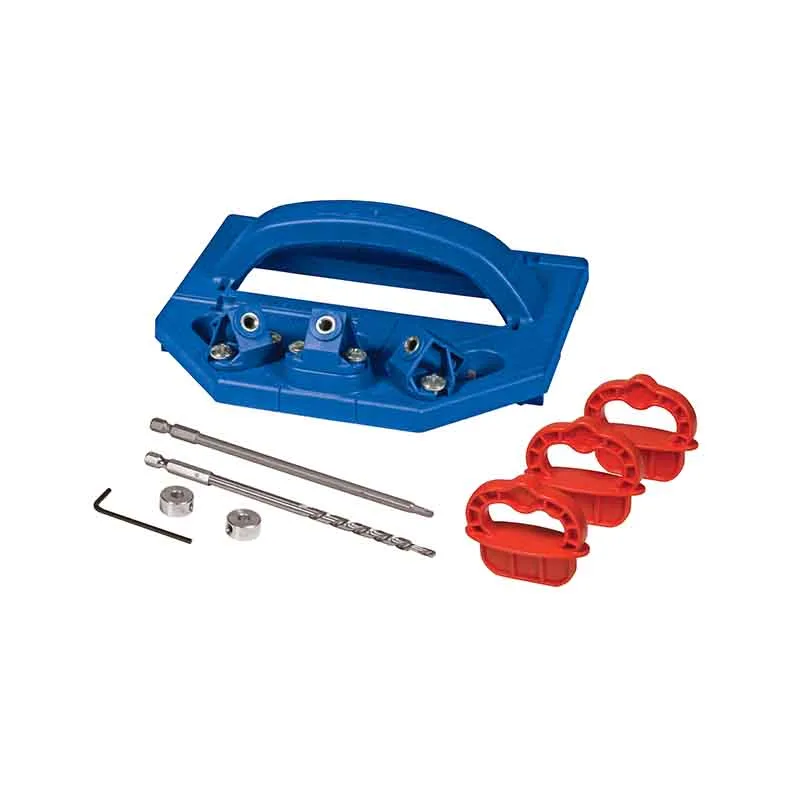
Deck Jig
- Zinc Pocket-Hole Screws: Zinc Pocket-Hole Screws provide adequate rust protection and serve as an affordable alternative to more protective Blue-Kote and stainless varieties. Use these for indoor projects with limited exposure to the elements, not for a wet exterior deck.
Who should buy which screw
Best for
- DIY deck builders using treated lumber and 25 mm-thick deck boards
- Anyone driving hundreds of exterior screws who wants fewer broken or stripped screws
- Projects where a smooth upper shank and flat underside head reduce splitting
Not for
- Indoor furniture or cabinet frames where zinc pocket-hole screws cost less and perform well
- Wet or coastal sites that need stainless or a higher-protection coating
- Thicker decking where a 51 mm screw is too short