Quick Answer
For safe bike riding with your dog, choose a padded dog harness designed for cycling that distributes pulling force through the chest, fits snugly without restricting movement, and gives you reliable control.
Why Padding Matters for Cycling
When your dog pulls during a bike ride, the force can strain the neck and cause discomfort. A padded dog harness cycling design helps reduce that strain by spreading the load across the chest. This is especially important for active dogs that naturally pull or for bikejoring, where the dog's pulling is part of the activity.
Look for padding that is thick enough to cushion but not so bulky that it limits movement or causes overheating. The right padding should feel comfortable against your dog's skin even during longer rides.
Control and Safety Considerations
A bike riding dog harness needs to give you control without restricting your dog's natural gait. The harness should have a sturdy attachment point that keeps the leash away from the bike wheels and your dog's legs. It should also allow your dog to move freely while still giving you the ability to steer or stop safely.
Consider the harness's overall build quality. Reinforced stitching and durable materials are important because the harness will face repeated pulling and exposure to the elements.
Fit and Sizing Trade-offs
A harness that is too loose can slip or cause chafing, while one that is too tight can restrict breathing or movement. Since dogs come in many shapes, it is essential to measure your dog and check the manufacturer's sizing chart. Some harnesses offer adjustable straps to fine-tune the fit, which is a plus for growing dogs or those with unusual proportions.
Remember that a perfect fit may require trying a harness on your dog and making adjustments. Be prepared to spend a few minutes fitting the harness properly before the first ride.
Decision Rules for Choosing a Bike Riding Harness
- Measure your dog first: Use a soft tape to measure the chest girth and neck circumference. Compare these numbers to the manufacturer's size chart before ordering. Keep a record of your dog's measurements for future purchases.
- Check the padding: Choose a harness with adequate padding on the chest and under the armpits to prevent chafing and distribute pulling force.
- Evaluate the attachment point: Look for a sturdy D-ring or attachment point on the back or chest that keeps the leash away from the wheels and allows for easy control. Test the attachment point by gently pulling the leash before the ride.
- Test the fit: Put the harness on your dog and check that you can fit two fingers between the harness and your dog's body. Adjust straps as needed. Re-check the fit before every ride, especially if your dog is still growing.
- Consider your dog's pulling style: If your dog is a strong puller, a padded harness designed for pulling, like the Activedogs Padded Dog Harness, is a better choice than a standard walking harness.
Product Spotlight
-
Activedogs Padded Dog Harness for Bike Riding & Cycling: The Activedogs Padded Dog Harness for Bike Riding & Cycling is designed specifically for dog cycling and bikejoring, with padding that reduces neck strain and improves pulling comfort. This harness is built to handle the demands of active biking, making it a solid choice for dogs that pull or for owners who want extra safety and comfort.
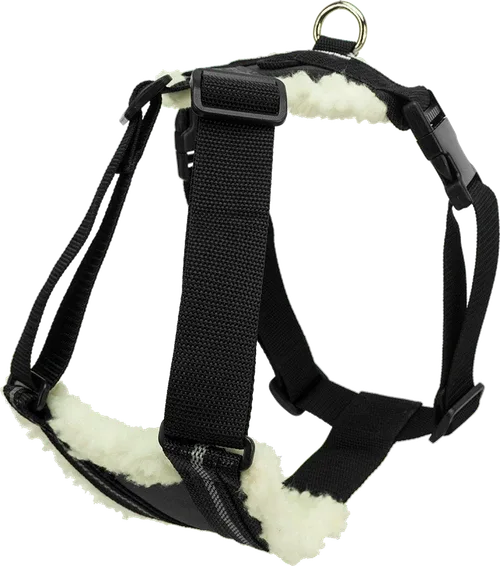
Activedogs Padded Dog Harness for Bike Riding & Cycling
Who Should Use This Type of Harness?
Best for
- Active dogs that enjoy running or pulling during bike rides
- Owners who want a safe, comfortable harness for regular cycling with their dog
Not for
- Dogs that are not yet trained to walk calmly on a leash
- Very small dogs or those with respiratory issues where a harness with chest pressure might be problematic