Quick answer
For most people, a duffel in the 40-55 liter range covers a two-to-three-day weekend trip and doubles as a gym bag during the week. If you fly carry-on only, choose a duffel with a luggage trolley sleeve and a dedicated shoe compartment so it slides over your rolling bag and keeps dirty gear separate. Buy a smaller duffel only if you pack light or use it mostly for the gym.
A duffel is the most flexible bag you can own: it swallows a weekend's worth of clothes, survives a gym session, and slides under an airplane seat when you pack it right. The problem is that duffels come in wildly different sizes and shapes, and the wrong one becomes a heavy, disorganized sack you stop using.
This guide gives you concrete decision rules for choosing a duffel for weekend trips and gym days. You'll learn how to match capacity to trip length, which carry features actually matter, and when a duffel makes more sense than a suitcase.
Start with trip length, not liter count
Most people shop by liter count, but liters only tell you volume, not how the bag carries. A better first question is: how many nights will you be gone, and will you do laundry? For one to two nights, a compact duffel with a shoe compartment is enough. For three to four nights, you need a large duffel with padded shoulder straps so the weight stays comfortable. For anything longer, a duffel plus packing cubes or a rolling bag is more realistic.
If you fly carry-on only, check the airline's carry-on size before you buy. A soft-sided duffel can often squeeze into a sizer that a hard suitcase cannot, but an overstuffed duffel is the fastest way to get gate-checked. Measure your packed load at home once, and you'll know your real size limit.
- 1-2 nights: compact duffel, 30-40L
- 3-4 nights: large duffel, 45-55L, with padded straps
- 5+ nights: duffel plus packing cubes, or switch to a carry-on suitcase
Choose your carry style before your color
A duffel can be carried by a top handle, a shoulder strap, or backpack-style padded straps. Top handles are fine for short walks from the car to the gym, but they get painful on a long airport walk. A removable crossbody strap spreads weight across your body and is the most versatile option. Padded shoulder straps turn a heavy duffel into something you can actually carry for 20 minutes without stopping.
If you travel with a rolling suitcase, look for a luggage trolley sleeve. It slides over the suitcase handle and lets you move through a terminal with one hand free. This single feature is the difference between a duffel you tolerate and a duffel you reach for every trip.
- Gym-only use: top handle and a crossbody strap are enough
- Airport days: padded shoulder straps and a trolley sleeve matter most
- Heavy loads: backpack straps beat a single crossbody strap
Know when a duffel beats a suitcase
A duffel wins when your trip is short, your destination is casual, and you need to cram odd-shaped gear like shoes, a water bottle, or gym clothes. Soft sides flex around what you pack, so a duffel often holds more than a same-size suitcase. It also stores flat when empty, which matters if you live in a small apartment.
A suitcase wins when you need structure, wheels, and protection for fragile items. If you're doing a business trip with a suit or a two-week trip with multiple outfits, a rolling carry-on is easier on your back. Many travelers keep both: a duffel for weekends and the gym, a suitcase for longer or more formal trips.
- Pick a duffel for casual weekends, gym days, and road trips
- Pick a suitcase for business travel, long trips, and fragile gear
- Own both if you travel often; they solve different problems
Match the duffel to how you actually pack
Organization is where cheap duffels fall apart. A dedicated shoe compartment keeps dirty sneakers away from clean clothes, which is essential if you use the same bag for the gym and travel. A padded laptop sleeve turns a duffel into a work-to-gym bag, but only if the sleeve fits your laptop. A hidden back pocket or interior zip pocket keeps keys, wallet, and phone from disappearing into the main compartment.
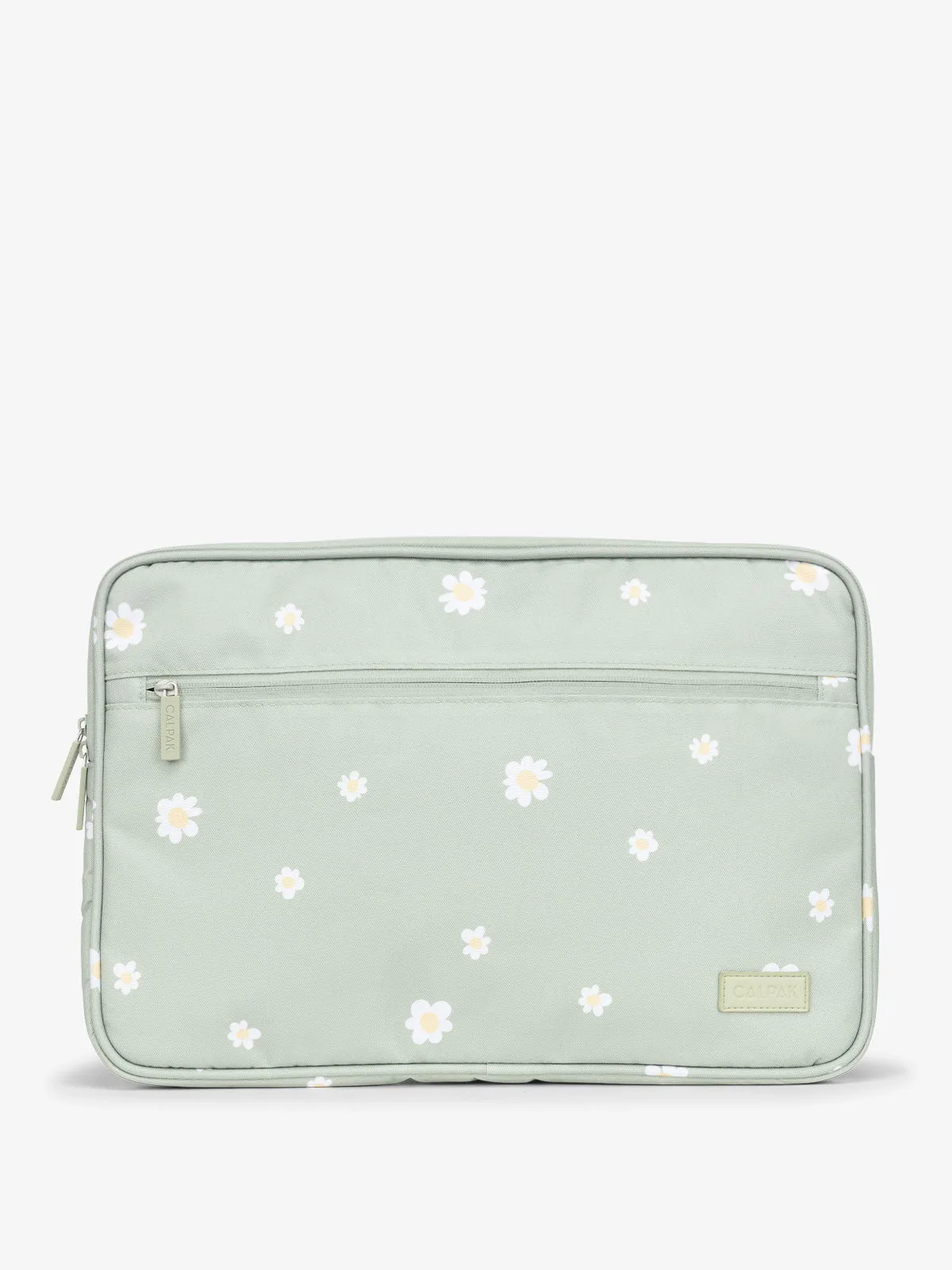
padded laptop sleeve
If you carry cables, chargers, and small tech, a separate organizer pouch keeps them from tangling at the bottom of the bag. This is a small add-on that makes a big difference in how quickly you can find things.
- Shoe compartment: non-negotiable if you mix gym and travel
- Laptop sleeve: only useful if it matches your laptop size
- Packing cubes or a tech organizer: keep the main compartment from becoming a black hole
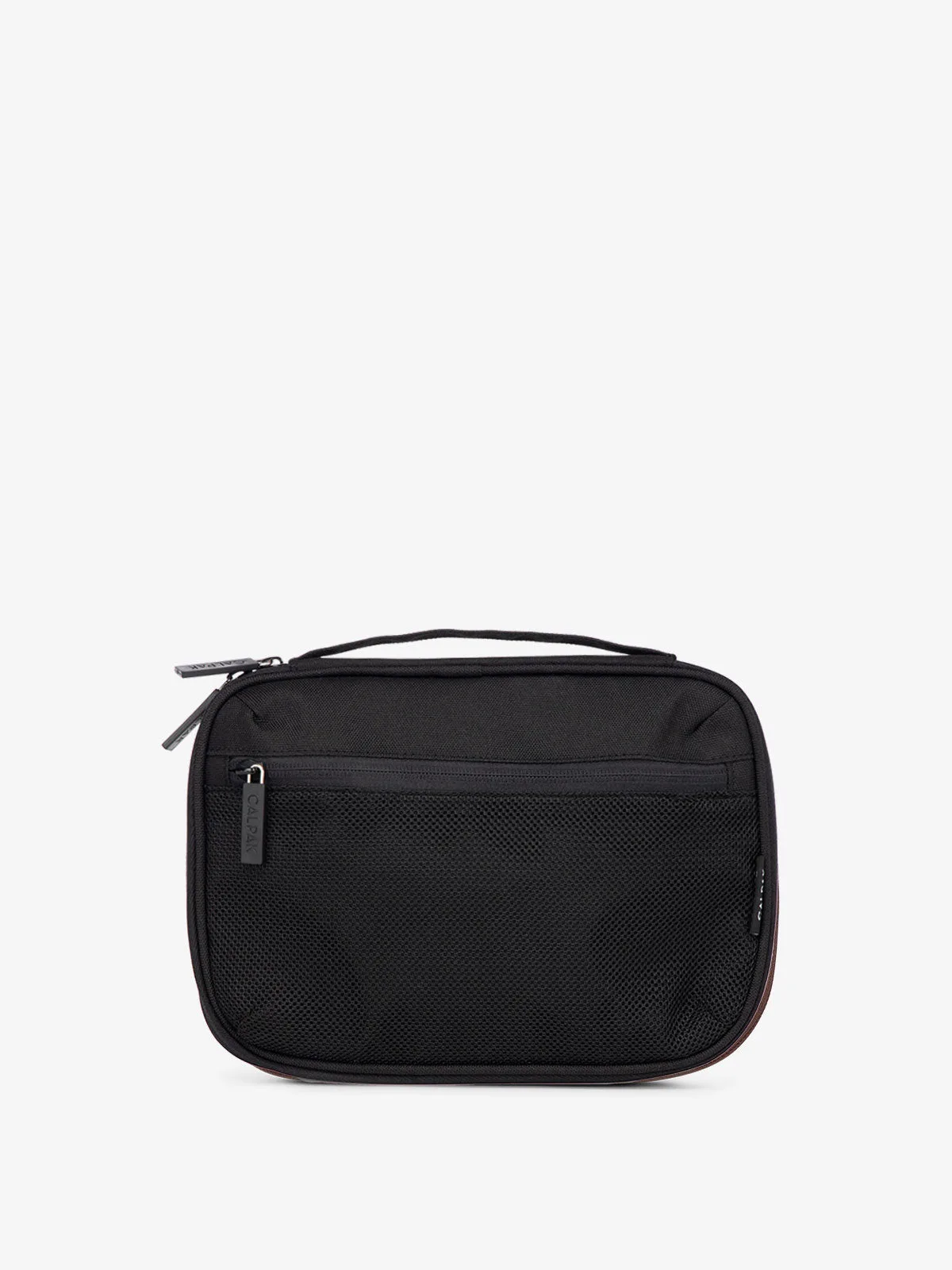
tech organizer
Decision rules for buying a duffel
- If you fly carry-on only: Choose a duffel with a luggage trolley sleeve and check your airline's carry-on dimensions before packing. Soft-sided duffels can fit sizers that hard cases cannot, but only if you do not overstuff them. Trolley sleeve + measured packed size = fewer gate-check surprises.
- If you mix gym and travel: Prioritize a dedicated shoe compartment and a wipeable or clear interior lining. This keeps sweaty shoes and damp gear away from clean clothes without extra bags. Shoe compartment first, color second.
- If you carry a laptop: Look for a padded laptop sleeve that matches your laptop size, plus a trolley sleeve if you also roll a suitcase. A duffel without a laptop sleeve forces you to carry a separate case. Laptop sleeve + trolley sleeve = one-bag commute and travel.
- If your trip is longer than four nights: A duffel alone gets heavy and disorganized. Add packing cubes to compress clothes, or switch to a rolling carry-on and use the duffel as a personal item. Duffel for short trips, suitcase for long ones, or combine both.
CALPAK duffels and add-ons that fit these rules
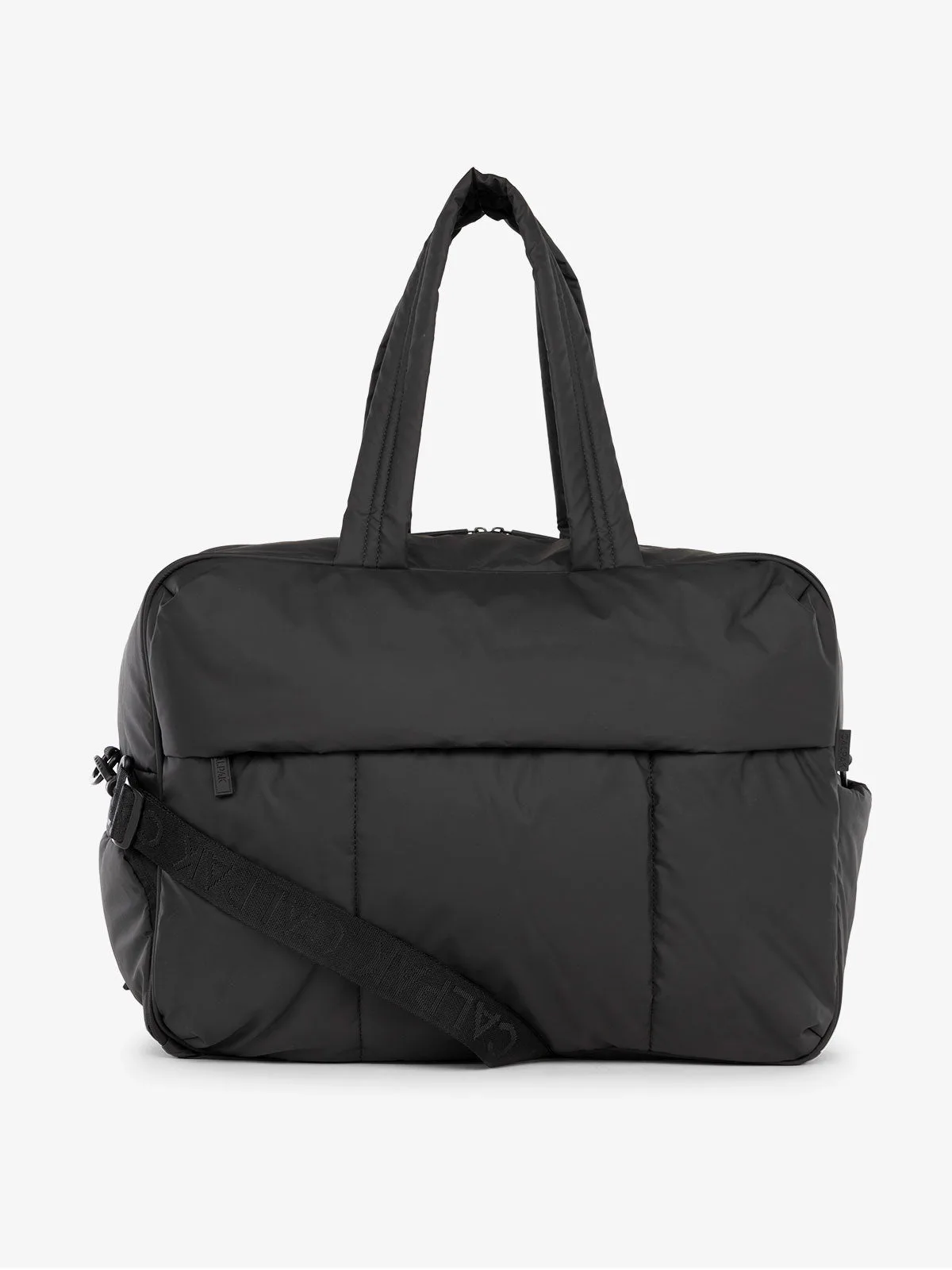
- Luka Large Duffel: Made from puffy, cloud-like fabric with a high-capacity interior, padded shoulder straps, a removable crossbody strap, and a dedicated shoe compartment. The padded straps and shoe compartment make it a strong pick for three-to-four-night weekend trips where you want comfort and clean/dirty separation.
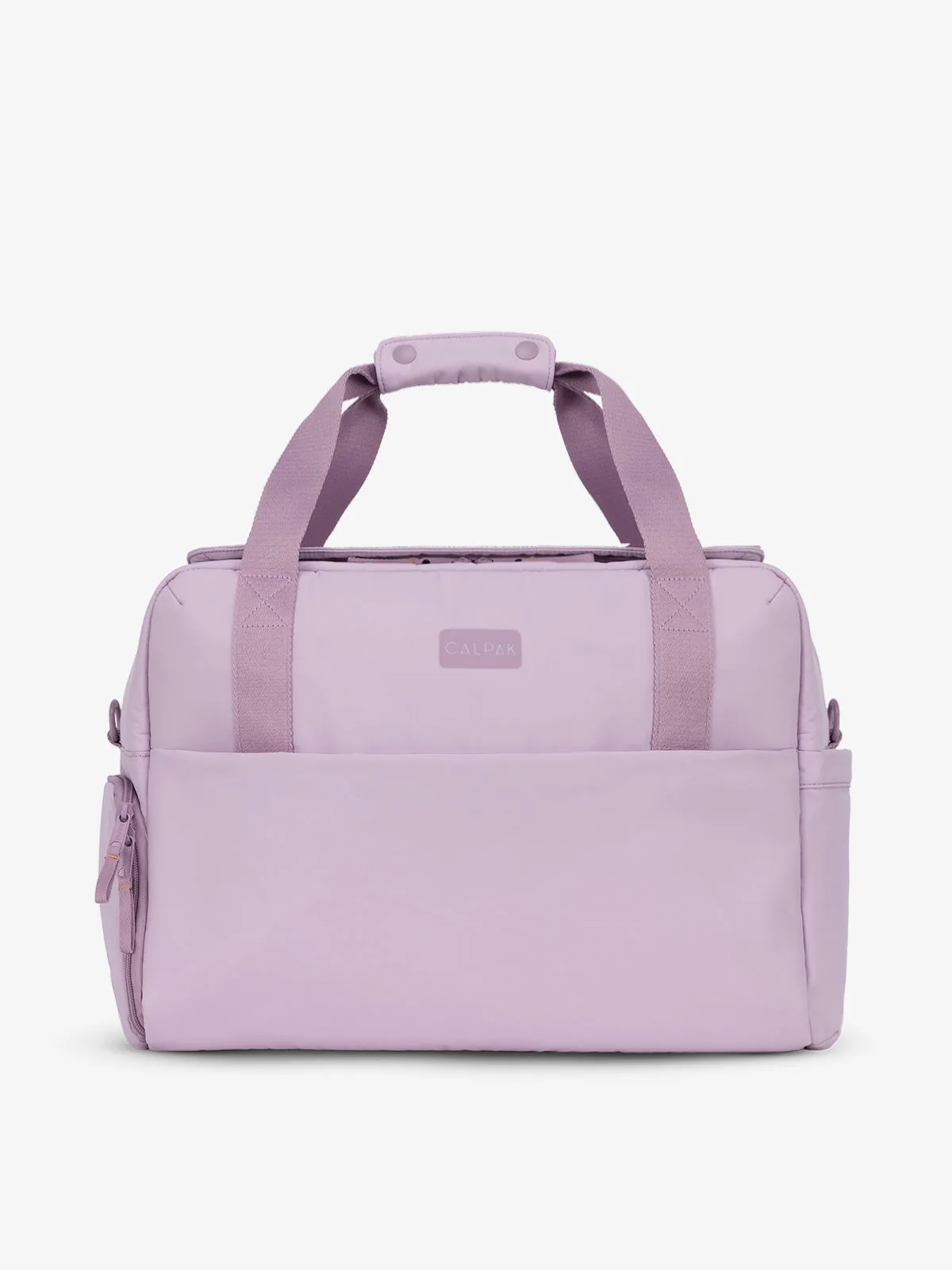
- Connect Laptop Duffel: Includes a padded laptop sleeve, dedicated shoe compartment, and luggage trolley sleeve, with space for tech, workout gear, and travel essentials. The trolley sleeve and laptop sleeve make it the better choice if you commute, fly carry-on, or go straight from work to the gym.
- Tech Organizer: Designed to simplify how you pack cables, chargers, and small essentials, and fits easily into backpacks, totes, or carry-ons. Keeps small tech from sinking to the bottom of a duffel, so you can find a charger without unpacking the whole bag.
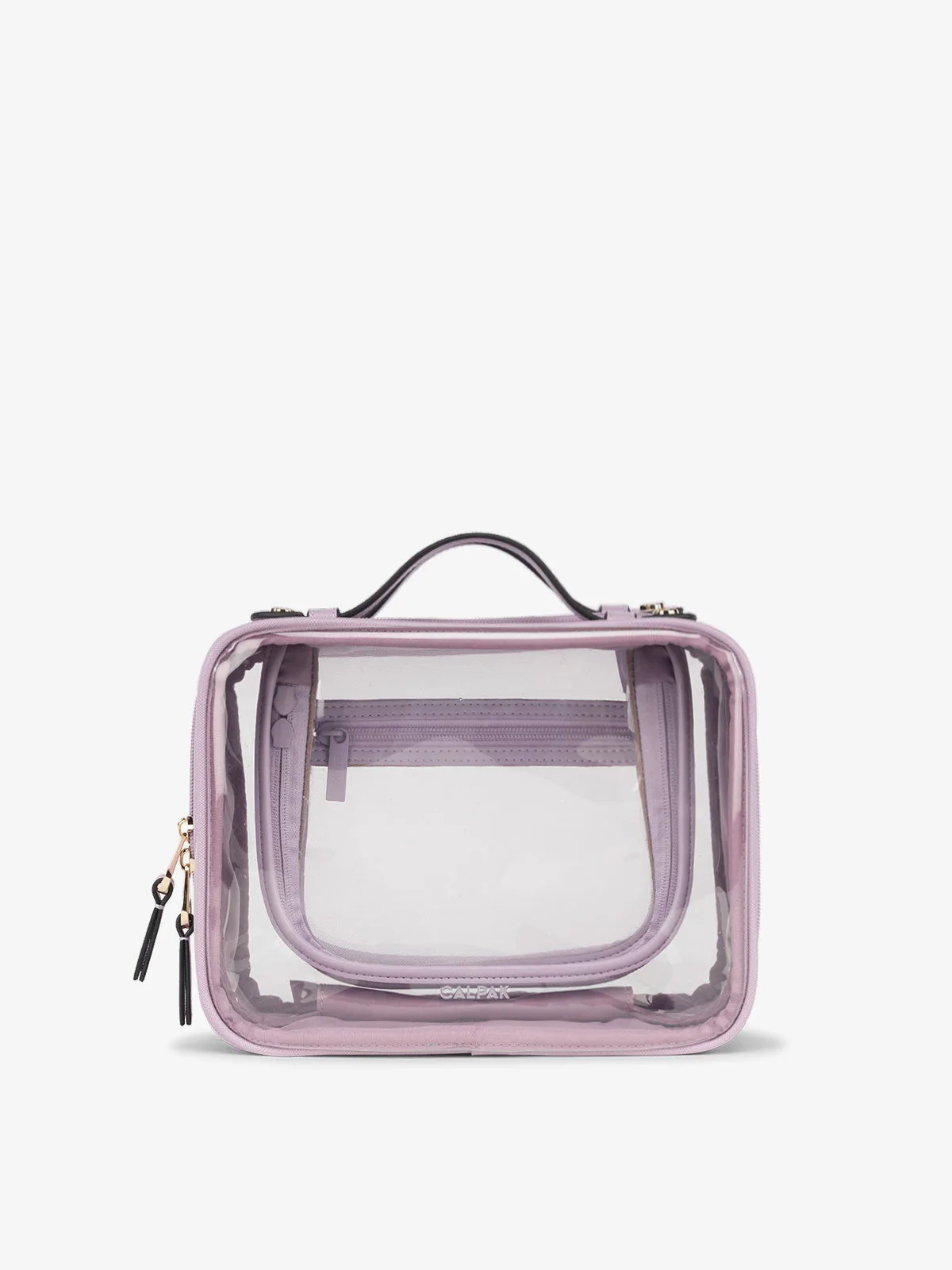
- Medium Clear Cosmetics Case: Compact yet spacious, fits neatly into your carry-on while keeping beauty essentials visible and easy to access. A clear case speeds up security checks and keeps toiletry spills away from your clothes in a soft-sided duffel.
Who should buy which duffel
Best for
- Weekend travelers who want one bag for two to four nights
- Gym-goers who need shoe separation and easy carry
- Commuters who want a laptop sleeve and trolley sleeve in one bag
Not for
- Business travelers who need structured packing and wheels
- Trips longer than four nights without packing cubes or a second bag
- Anyone who needs hard-shell protection for fragile items
Choose your duffel by trip length and carry style first, then by features like a shoe compartment, laptop sleeve, and trolley sleeve. A large duffel with padded straps covers weekend trips and gym days; a laptop duffel with a trolley sleeve covers commutes and carry-on flights. Buy the one that matches your most common trip, and add a tech organizer or clear cosmetics case to keep the inside from turning into a pile.