Quick answer
Buy for the milestone your baby is working on right now, not the one three months away. For a baby who is just starting to reach and bat, choose a play gym with hanging sensory toys. For a baby who is sitting and grabbing, choose small attachable sensory toys. For a baby pulling up or cruising, choose a push walker with steady support. And for a toddler already moving fast, choose a ride-on that converts as balance improves.
Start with what your baby can do, not the age on the box
Milestone ranges overlap, so the calendar month is a rough guide at best. Watch for three signals instead: head and trunk control, intentional reaching, and weight shifting through the feet. A baby with steady head control but no reaching yet is not ready for the same toy as a baby who grabs everything within arm's reach.
Use the toy's stated age rating as a safety floor, not a developmental promise. If a toy says 0+ months, that tells you it is safe from birth, not that a 7-month-old will find it challenging. The better question is whether the toy rewards the exact action your baby is practicing this week.
Match the toy to the milestone your baby is practicing
Reaching and batting (roughly 0-4 months): your baby needs a target that stays put and reacts. Hanging toys that squeak, rattle, or crinkle give immediate feedback, which is how cause and effect starts to click. A sturdy frame matters here because a wobbly one moves away from a swiping hand and removes the reward.
Sitting and grabbing (roughly 5-8 months): your baby can now hold an object and bring it to the mouth. Small, light sensory toys with different textures and sounds let them compare one object to another. Portability becomes useful now too, because these toys work best when they come along to the stroller or car seat.
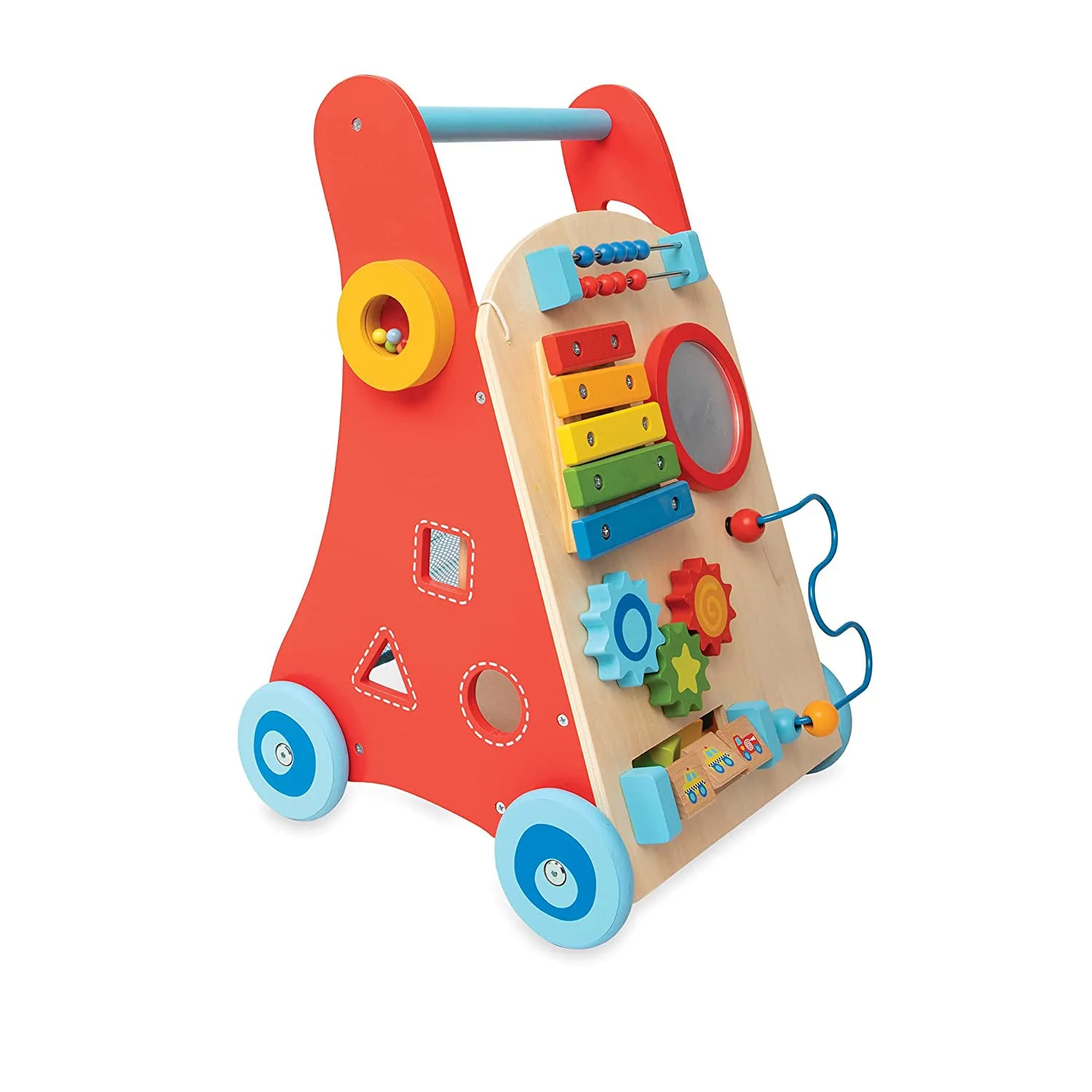
Crawling and pulling up (roughly 8-12 months): your baby is testing balance against a stable object. Push-and-pull support teaches them how much weight to put through their hands and feet. Look for a wide base and a handle at the right height so they are not reaching up or hunching over.
Cruising and early walking (roughly 12 months and up): your toddler wants speed and independence, but still falls. A convertible ride-on that starts as a walker and later becomes a scooter or caster board stretches one purchase across several months of changing ability.
Use three checks before you buy anything
First, does the toy require the action your baby is already doing? If your baby is not yet pushing up on hands, a push walker will sit unused. Second, can you clean it the way you actually live? Fabric hanging toys and foam ride-ons need different care routines, and a toy you avoid cleaning is a toy you stop using. Third, does it have a second job? A toy that only works in one position gets outgrown faster than one that adapts.
One honest trade-off: wooden toys tend to be sturdier and hold their shape, while foam toys tend to be lighter and softer on floors and furniture. Neither is automatically better. Wood suits a stationary play gym or a walker that takes repeated weight. Foam suits a ride-on that will bump into walls and needs to be lifted by an adult.
Decision rules for buying developmental toys
- If your baby is not yet reaching: Choose a stationary play gym with hanging toys that make sound or texture feedback. Skip anything that requires grasping or pushing. Checkpoint: can your baby hold their head steady and swipe at an object? If not, wait on walkers and ride-ons.
- If your baby is sitting and mouthing everything: Choose small, light sensory toys that attach to gear you already use, so the toy travels with you. Prioritize cleanable surfaces and varied sounds. Checkpoint: can you wipe or wash it in under a minute? If not, it will stay in the bag.
- If your baby is pulling up on furniture: Choose a push walker with a wide, stable base and a handle at chest height. This is the moment support matters more than features. Checkpoint: does your baby already shift weight onto their feet? If yes, a walker is a good fit now.
- If your toddler is already walking and climbing: Choose a convertible ride-on rated for 12+ months that changes mode as balance improves, rather than a single-purpose push toy. Checkpoint: does the toy still have a use after walking is mastered? If not, it will be outgrown in weeks.
Products that fit specific milestones
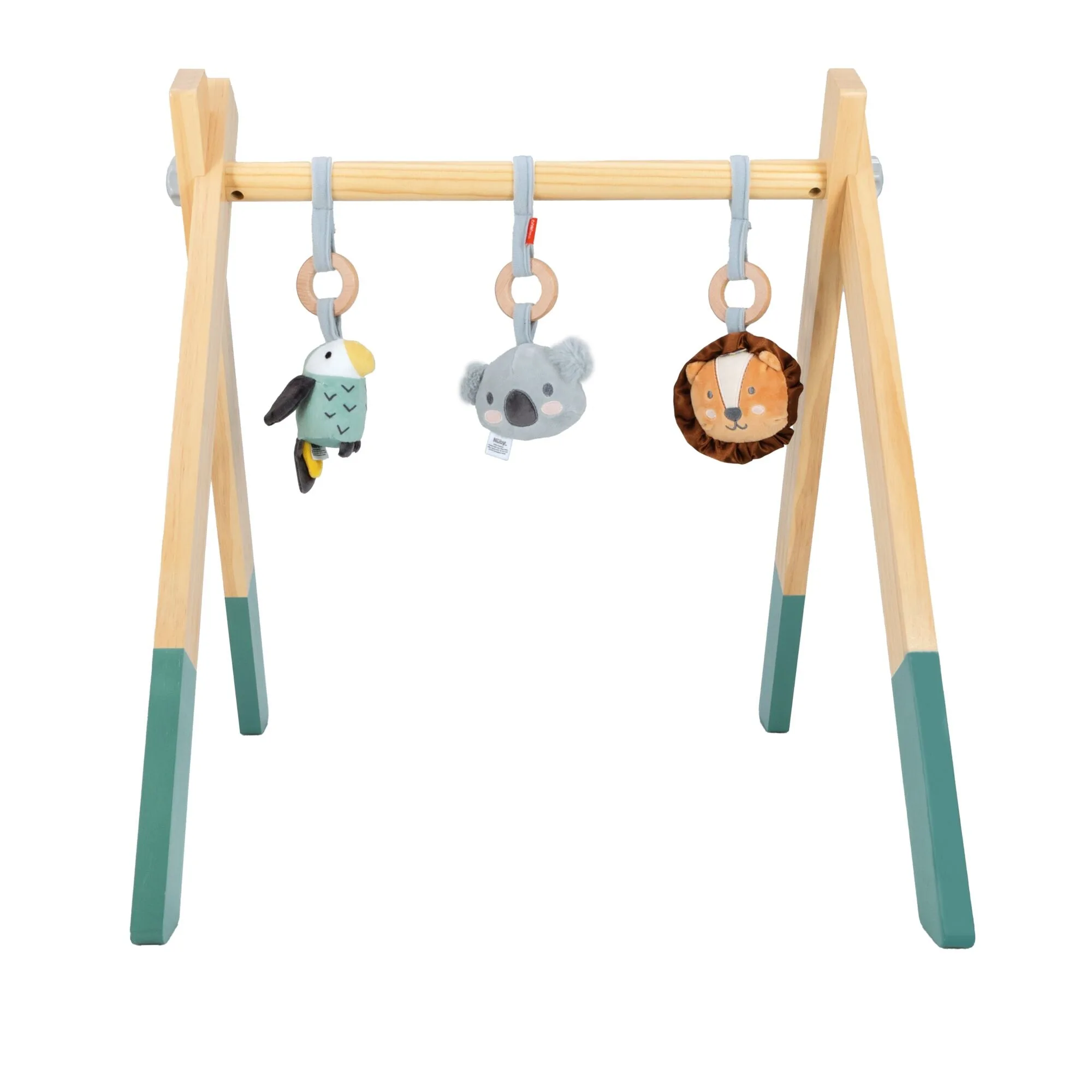
- Wooden Play Gym: The Animal Adventures Wooden Play Gym has a solid wood A-frame with soft hanging toys, including a squeaking koala, rattling parrot, and scrunching lion, designed to encourage reaching and grabbing while supporting hand-eye coordination. The sturdy frame keeps the hanging toys in one place, so a swiping hand actually connects and gets a sound back. That repetition is what builds early cause-and-effect learning.
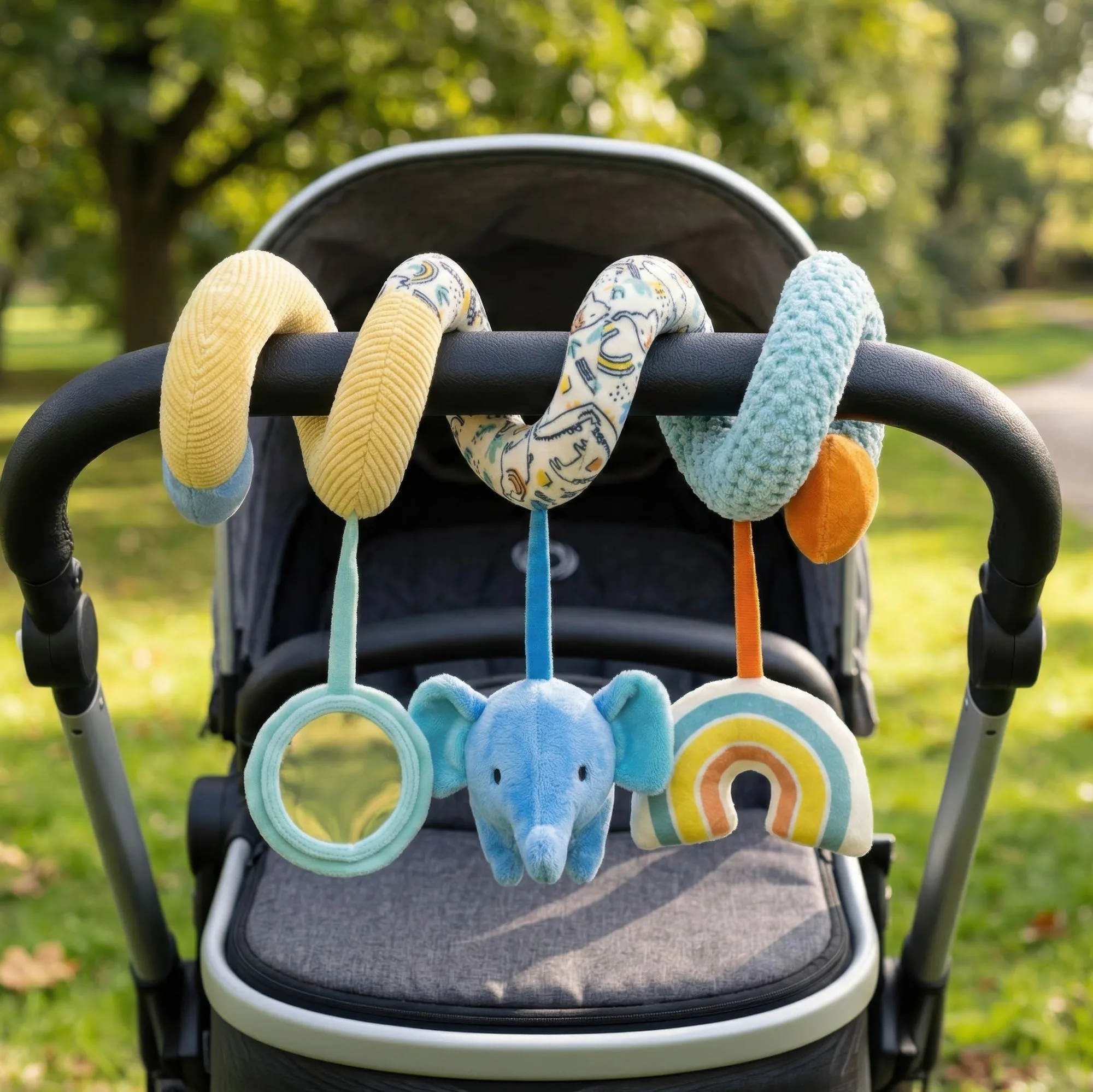
- Animal Adventures Spiral Activity Toy | Elephant: The Animal Adventures Spiral Activity Toy attaches to stroller or car seat handles and has three hanging sensory toys with squeaks, crinkles, and rattles; it is rated 0+ months. This is the portable option for sitting-and-grabbing babies. Because it clips on, the same toy works at home and on outings, which means fewer toys to pack and more chances to practice the same skill.
- Wooden Baby Walker: The Wooden Baby Walker has a push-and-pull function that gives little hands sturdy support for first steps while encouraging confidence and independence. Push-and-pull support lets a crawling or pulling-up baby practice balance without you holding both their hands. It is the right pick when your baby is already pulling to stand.
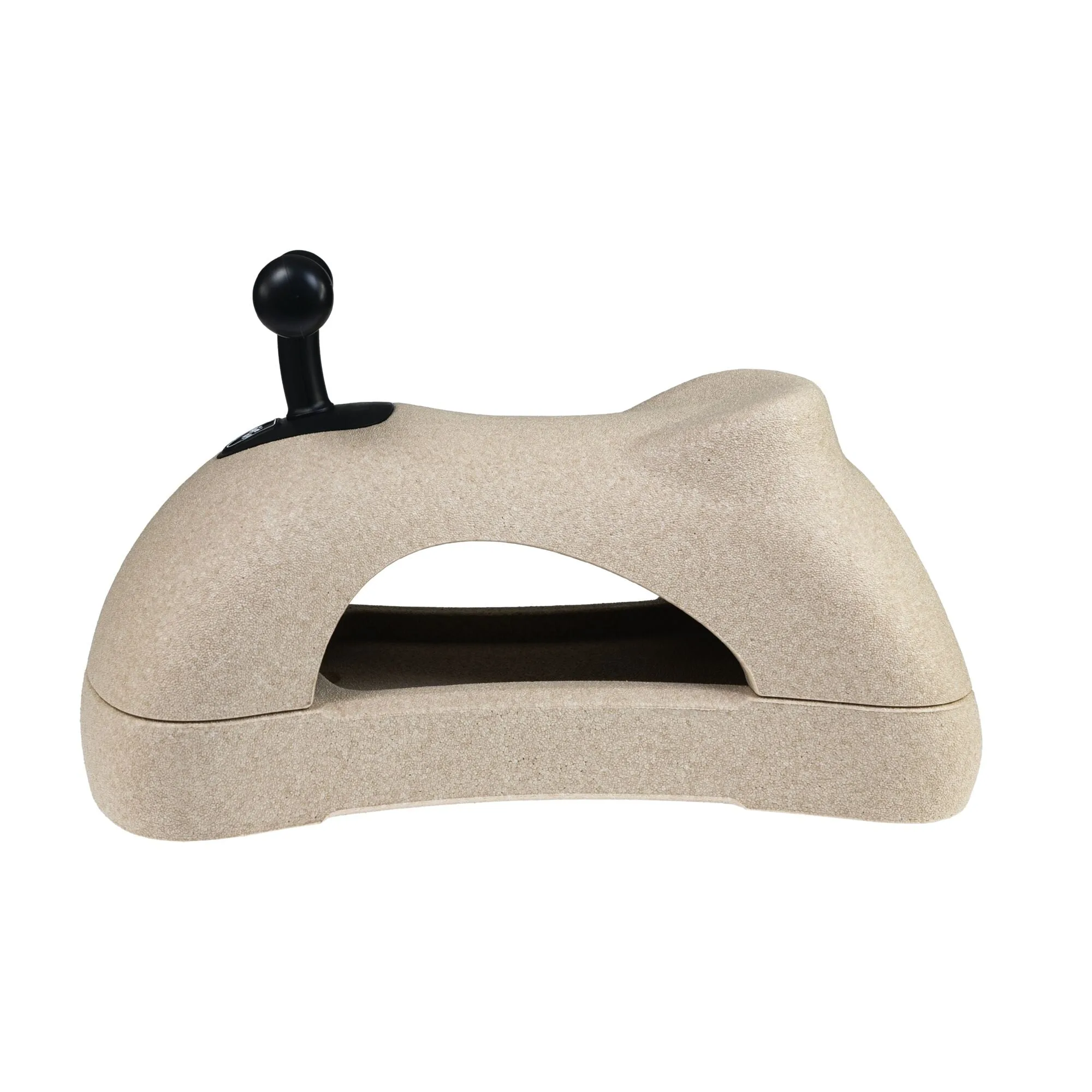
- Boogie Buggy | Beige: The Boogie Buggy is a 3-in-1 scooter, walker, and caster board made of waterproof EPP foam, lightweight enough to lift and easy to wipe clean, rated 12+ months. The three modes mean it keeps working as balance improves, and the foam construction is soft on floors and furniture while still handling toddler energy. The 12+ month rating makes it a later purchase, not a newborn one.
Who this approach fits
Best for
- Parents buying one toy at a time and wanting it to match what their baby is practicing this month
- Caregivers who want a portable option for stroller and car seat use
- Families who prefer a sturdier wooden toy for stationary play and a lighter foam toy for ride-on play
Not for
- Shoppers looking for a single toy that covers every stage from birth to toddler
- Parents who want to buy ahead for a milestone several months away, since the toy may sit unused
- Anyone shopping only by age label without checking their baby's current physical skills