Quick Answer
Choose dog eye protection goggles only if your dog will actually wear them and the lens matches the hazard: UV400 and polycarbonate for sun, wind, and trail debris. Fit is the deciding factor. Measure head width and eye spacing, confirm the strap adjusts without pressing the eyes, and size up or skip goggles entirely if the frame pinches. For small to medium dogs on hikes, the W1 Eye Defender Goggles are a practical starting point; for dogs that paw at eyewear, a well-fitted hoodie and patch setup may be more realistic.
What Dog Eye Protection Actually Solves
Dog eye protection is not a fashion upgrade. It solves three concrete problems: UV exposure on long, bright hikes, wind and dust at speed, and impact from brush, gravel, or debris on trails. If your dog rides in an open truck bed, runs alongside a bike, or works in tall cover, the case for protective dog eyewear is stronger than for a dog that only walks shaded sidewalks.
Goggles do not replace veterinary care. If your dog has an eye injury, discharge, or squints constantly, see a vet before buying any eyewear. Goggles are prevention, not treatment.
Fit Rules That Decide Whether Goggles Stay On
Fit is the reason most dog goggles fail. A frame that is too narrow presses the eye rims; too wide and the strap slides down the neck. Start by measuring the widest part of the head behind the ears and the distance between the outside corners of the eyes. Then check the frame sits on the muzzle bridge without touching the eyeball.
Adjust the strap so two fingers fit under it. The dog should be able to blink fully, pant, and turn the head without the frame shifting. If the goggles slide when the dog looks down, tighten one side at a time and retest. If the frame still pinches after adjustment, the size is wrong, not the strap.
Lens and Frame Choices That Matter
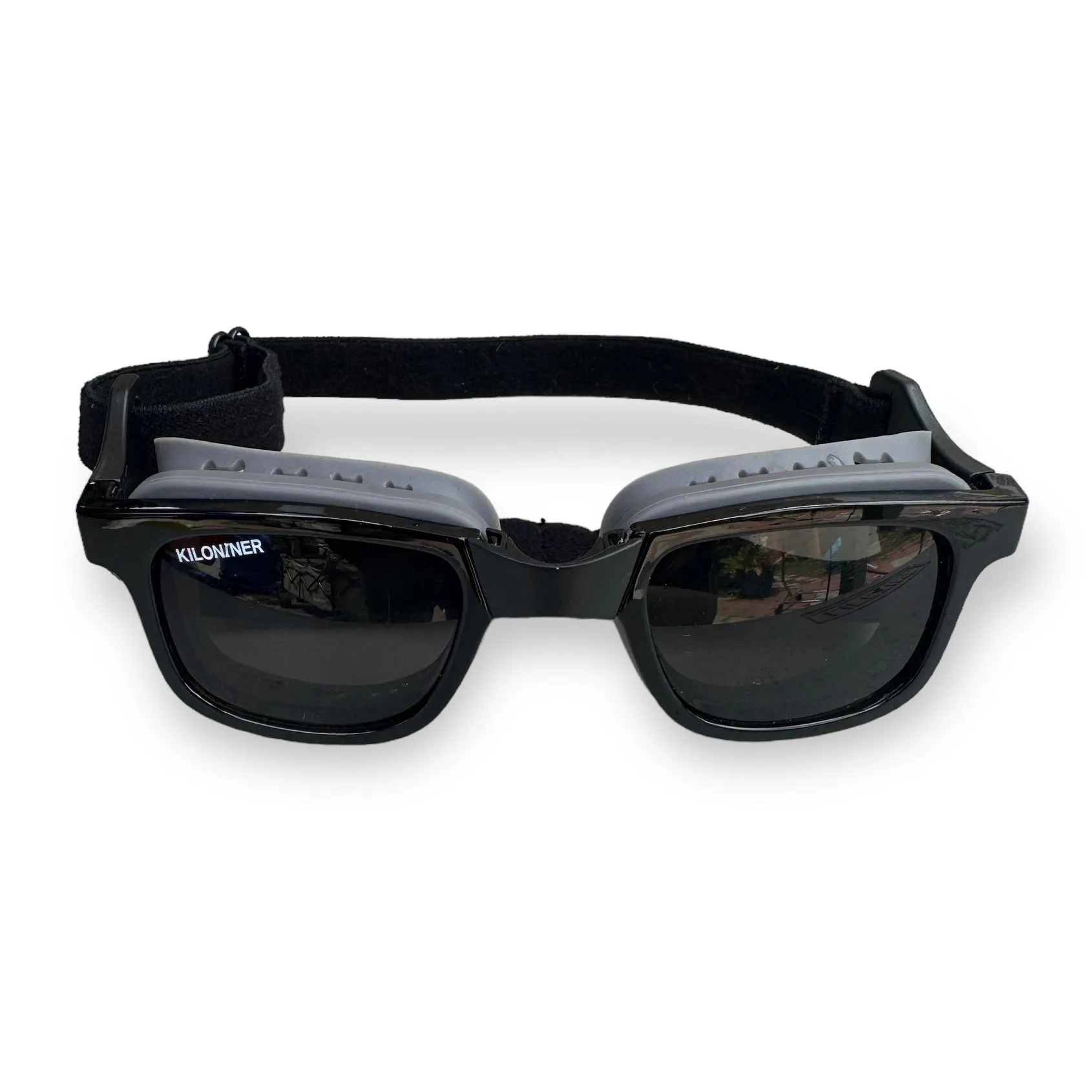
Look for UV400 protection and a polycarbonate lens if you want sun and impact coverage in one pair. Polycarbonate resists wind, dirt, and debris better than thin acrylic. Soft rubber eye shields improve comfort and reduce gaps where dust enters. Tint matters less than coverage for most dogs, but a darker lens helps in bright snow or water glare.
Ventilation is the trade-off. Fully sealed goggles protect more but fog faster on humid days. Vented frames clear better but let in fine dust. For hiking, a vented frame with rubber shields is usually the better balance.
When Goggles Are Not the Right Answer
Some dogs never accept eyewear. If your dog paws at the frame, freezes, or tries to rub it off after several short sessions, forcing it creates stress and defeats the purpose. In that case, manage the environment instead: choose shaded trails, avoid peak sun hours, and use a hoodie for cold-weather coverage rather than eyewear.
Also skip goggles for dogs with very short muzzles or eyes set far to the sides if no frame in your size range clears the eye without contact. Absent a proper fit, the honest recommendation is not to buy.
Decision Rules for Buying Dog Goggles
- If your dog hikes in bright sun, wind, or brush: Prioritize UV400 and polycarbonate lenses with rubber eye shields. The W1 Eye Defender Goggles match this use case for small to medium dogs. Buy only after measuring head width and eye spacing.
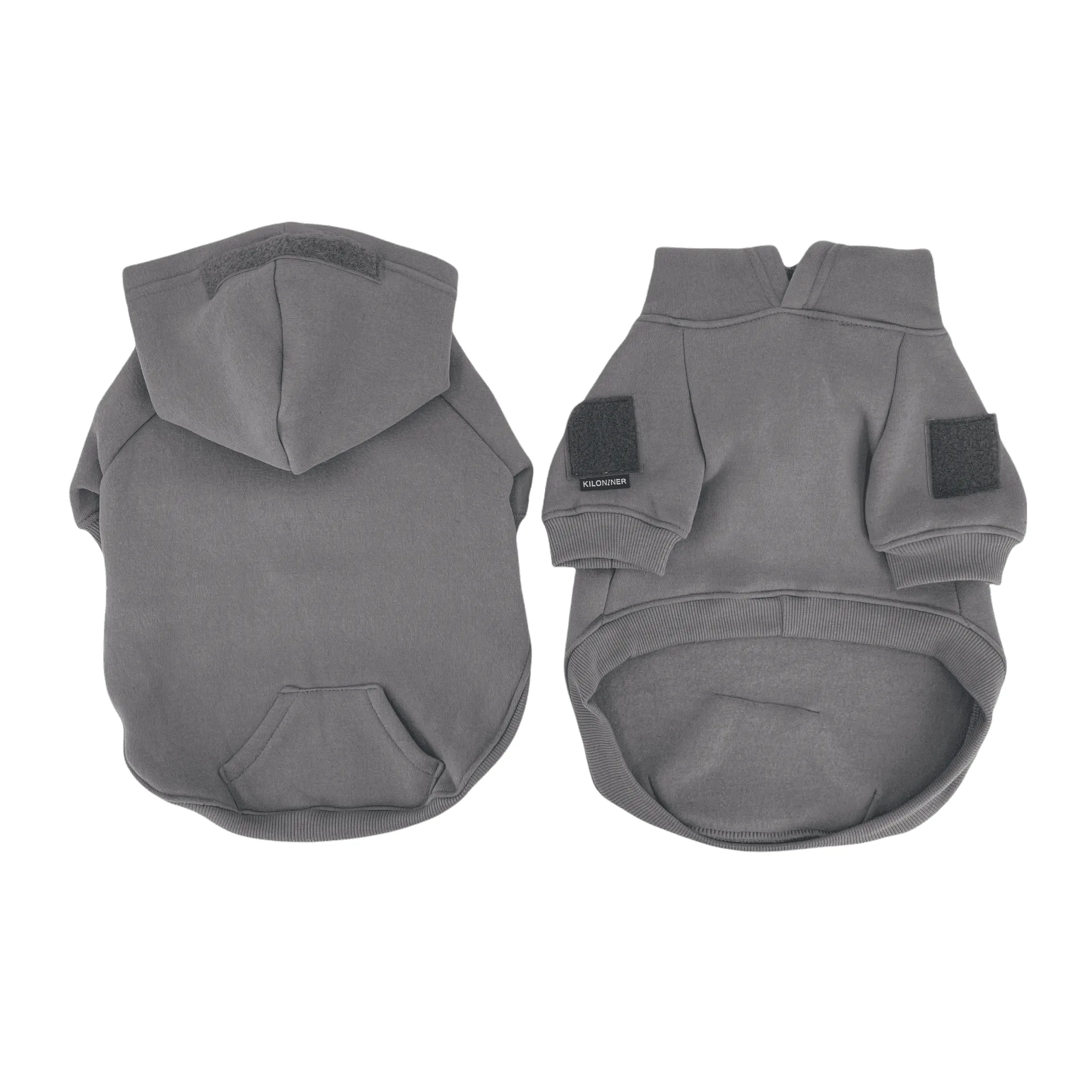
- If your dog paws at eyewear or freezes: Do not force goggles. Switch to environmental management and a hoodie such as the H1 Tactical Dog Hoodie for cold-weather protection. Comfort beats coverage when the dog will not wear the frame.
- If the frame pinches or slides after adjustment: The size is wrong. Return or size up rather than tightening the strap further, because pressure on the eye rims causes injury risk. A loose-but-stable fit is safer than a tight one.
- If you want to personalize gear without goggles: Add a morale patch like the I Got That Dog In Me Morale Patch to a loop panel on a harness, vest, or hoodie. Patches are a low-risk upgrade when eyewear is not an option.
K9R Products That Support This Setup
- W1 Eye Defender Goggles: W1 Eye Defender Goggles offer UV400 sun protection, a polycarbonate lens for impact protection from wind, dirt, and debris, and soft touch rubber eye shields, sized for small to medium pets. This is the core product for dog eye protection for hiking and light working use, provided the frame fits your dog's head width and eye spacing.
- H1 Tactical Dog Hoodie: H1 Tactical Dog Hoodie is a thick cotton blend with velcro panels on both shoulders and an additional panel on the hood for a name tape. Useful when your dog rejects goggles but still needs cold-weather coverage, and the panels let you add patches without extra gear.
- I Got That Dog In Me Morale Patch: I Got That Dog In Me Morale Patch is 3 x 2 inches, woven, with hook fastener backing compatible with most loop panel surfaces. A low-cost way to personalize a harness or hoodie so your dog is easier to spot, and it swaps between gear setups.
Who Should Buy Dog Goggles
Best for
- Small to medium dogs that hike, run, or ride in open vehicles
- Dogs with a history of wind, dust, or debris irritation on trails
- Owners willing to do short, positive introduction sessions
Not for
- Dogs that panic or paw persistently at eyewear
- Dogs with eye injuries or active discharge (see a vet first)
- Dogs whose head shape prevents a no-contact fit in available sizes