Quick answer
For a structured, everyday tote that stands up on its own, choose 12oz waxed canvas. For a lightweight, packable tote that resists water and folds flat, choose polyester ripstop. For a tote that needs a printable, durable face with a little more body than plain ripstop, choose Hexatex.
Choosing fabric for a tote bag comes down to three things: how much structure you want, how much water resistance you need, and how heavy the finished bag can be. Get those three right and the rest of the build — interfacing, lining, straps — falls into place.
This guide gives you decision rules instead of vague advice. You'll see how ripstop, waxed canvas, and Hexatex behave in real tote builds, what each one is genuinely good at, and where each one will frustrate you.
Start with the job the tote has to do
A market tote that gets shoved into a car trunk and rained on has different needs than a lightweight shopper that lives folded in a purse. Before you buy fabric, write down the three conditions the bag will face most often: weather, load weight, and how it will be stored. Those answers point to one fabric family.
If the tote will carry heavy, boxy items and needs to hold its shape when set down, prioritize structure. If it will be folded, stuffed into a bag, or carried long distances, prioritize low weight. If it will regularly get wet, prioritize water resistance over everything else. You can only optimize for one or two of these at a time.
- Heavy loads + standing upright = structured fabric like waxed canvas
- Folding + portability = lightweight fabric like ripstop
- Frequent rain = water-resistant face fabric, not absorbent cotton
Understand the trade-offs of each fabric family
Waxed canvas is the classic tote fabric because it is durable, water resistant, and holds a shape without heavy interfacing. The trade-off is weight and care: it is heavier than synthetic options, it arrives folded, and it develops a worn look over time. It also cannot be thrown in a washing machine without stripping the wax.
Polyester ripstop is the opposite: ultrathin, lightweight, and water resistant, with a sleek finish. It folds down small and works as either a lining or an exterior. The trade-off is that it has almost no body on its own, so a tote made only from ripstop will collapse unless you add interfacing or a structured lining.
Hexatex sits between them. It has a durable, printable face that takes patterns and prints well, and it gives a tote more presence than plain ripstop while staying lighter than waxed canvas. The trade-off is that it is a specialty material, so you should confirm the weight and hand feel suit your specific pattern before committing.
- Waxed canvas: structure and weather resistance, heavier, special care
- Ripstop: light and packable, needs interfacing for shape
- Hexatex: durable printed face, middle ground on structure
Match fabric weight to the tote's size
A small tote for a tablet and wallet does not need the same fabric as a beach bag hauling towels. As a rule, the larger the tote, the more structure the fabric needs to keep the bag from sagging at the base and stretching at the handles. Small totes can get away with lighter fabric plus interfacing.
If you are making a large tote from ripstop, plan on a structured lining or a stiff base panel. If you are making a small tote from waxed canvas, you may be able to skip interfacing entirely. Hexatex works well for medium totes where you want a printed exterior without adding a lot of weight.
- Small totes: lighter fabric is fine, add interfacing only if needed
- Medium totes: Hexatex or mid-weight canvas balances structure and weight
- Large totes: choose structured fabric or add a stiff base and lining
Decide how the tote will be cleaned
Cleaning method is the most overlooked part of choosing tote fabric. Waxed canvas repels water but should be spot cleaned and re-waxed over time rather than machine washed. Ripstop and Hexatex are synthetic and generally easier to wipe clean, but you should still check the specific care instructions for the product you buy.
If the tote will be used for groceries, garden tools, or anything that gets genuinely dirty, choose a fabric you can wipe down without ruining the finish. If the tote is for light everyday use and you like the look of waxed canvas, the extra care is a reasonable trade.
- Waxed canvas: spot clean, re-wax periodically, no machine washing
- Ripstop and Hexatex: wipe clean, check product care notes
- Grocery or garden totes: prioritize easy-clean synthetic faces
Decision rules for picking tote fabric
- If the tote must stand up on its own: Choose 12oz waxed canvas. It is rated heavyweight and holds shape with minimal interfacing, so the bag keeps its structure under load. Skip heavy interfacing and keep the pattern simple to show off the fabric.
- If the tote must fold flat or pack small: Choose polyester ripstop 420D. It is ultrathin and water resistant, so it folds down without bulk. Add a structured lining or base panel if you still want some shape.
- If the tote needs a printed or patterned face: Choose Hexatex. It gives you a durable, printable surface with more body than plain ripstop. Confirm the hand feel suits your pattern before cutting, since Hexatex is a specialty material.
- If the tote will get rained on or wiped down often: Choose a water-resistant fabric: waxed canvas, ripstop, or Hexatex all resist water. Avoid absorbent cotton canvas for wet-use totes. Match the cleaning method to the fabric: spot clean waxed canvas, wipe down synthetics.
- If you are unsure between two fabrics: Buy a half yard of each and sew a small test tote or sample panel. Check how each one creases, presses, and holds a seam before committing to a full yard. A half-yard test is cheaper than remaking a full tote.
Fabric facts that affect your tote build
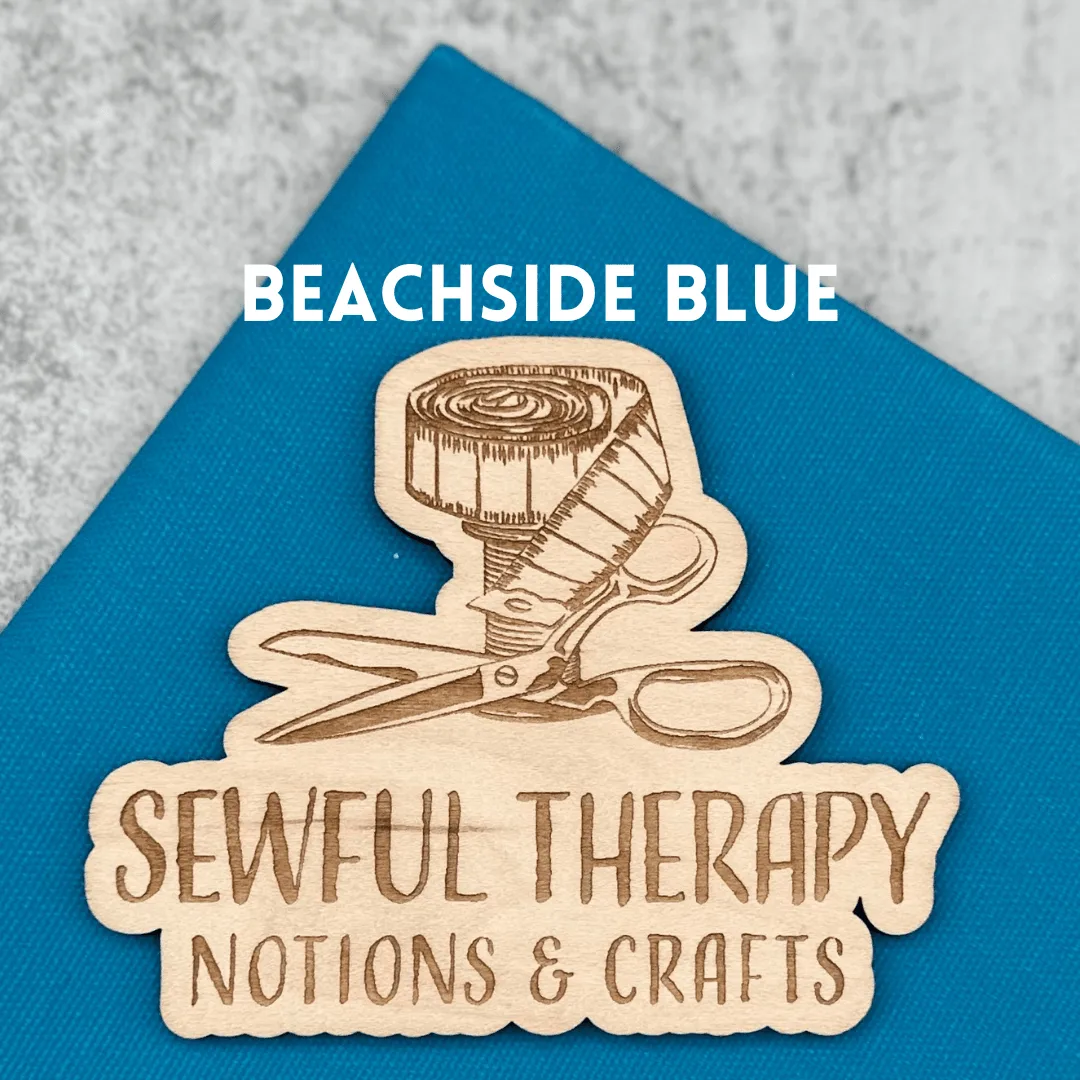
- 12oz Waxed Canvas Beachside Blue: 12oz weight waxed canvas, rated heavyweight for durability and sturdiness, waxed with anti-bacterial mold proof crystal wax imported from South Korea, water resistant, sold by the half yard and ships folded. This is the structured choice for totes that need to stand up and handle weather. Because it ships folded, press or steam out creases before cutting, and plan on spot cleaning rather than machine washing.
- Hex Polyester Ripstop 420D White (Yard): Polyester ripstop 420D, durable and ultrathin, water-resistant, with a sleek and slick finish, suitable as a lining or exterior fabric. Use this for lightweight, packable totes or as a water-resistant lining in a structured tote. It has little body on its own, so add interfacing or pair it with a structured exterior.
- Adhesive Hex Polyester Ripstop 420D (HALF Yard) Teal: Adhesive polyester ripstop 420D, durable and ultrathin, water-resistant, with a sleek and slick finish, suitable as a lining or exterior fabric. The adhesive backing simplifies lining and reinforcing a tote, which is helpful when you want ripstop's light weight without fighting it during assembly.
- The Book Lover Hexatex (YD): Hexatex sold by the yard, with base shipping starting at $11.99 and overages over $2 refunded when the order is processed. Hexatex gives you a durable printed face for a tote that needs more presence than plain ripstop. Factor shipping into your total cost if you are ordering a single yard.
Who each fabric is right for
Best for
- Bag makers who want a structured, weather-resistant everyday tote
- Sewists making lightweight, packable totes for travel or shopping
- Makers who want a printed or patterned tote face without heavy weight
Not for
- Sewists who want a machine-washable tote with zero special care
- Makers who need a single fabric to do every job without interfacing
- Anyone unwilling to test a half yard before buying a full project's worth
Pick the fabric that matches the tote's real job, not the one that looks best in a photo. Structure, water resistance, and weight pull against each other, so decide which two matter most and let the third go. A half-yard test will tell you more than any description.