Quick answer
For most 1-year-olds, start with a wooden peg puzzle that has 3-5 chunky pieces and large knobs they can grip with a whole hand. Move to 6-12 piece knob puzzles around 18-24 months, then to jigsaw-style puzzles without knobs after age 2. Prioritize piece size, non-toxic finishes, and a board thick enough to stay flat when your child presses down.
Match the puzzle to your child's grip, not just their age
Age ranges on puzzle boxes are a starting point, but grip strength and hand size matter more. A 14-month-old with a strong pincer grasp may handle small knobs, while a 20-month-old who still palmar-grasps will do better with large, easy-to-hold knobs. Watch how your child picks up a spoon or a block: if they use their whole hand, choose chunky puzzle knobs; if they use thumb and index finger, smaller knobs are fine.
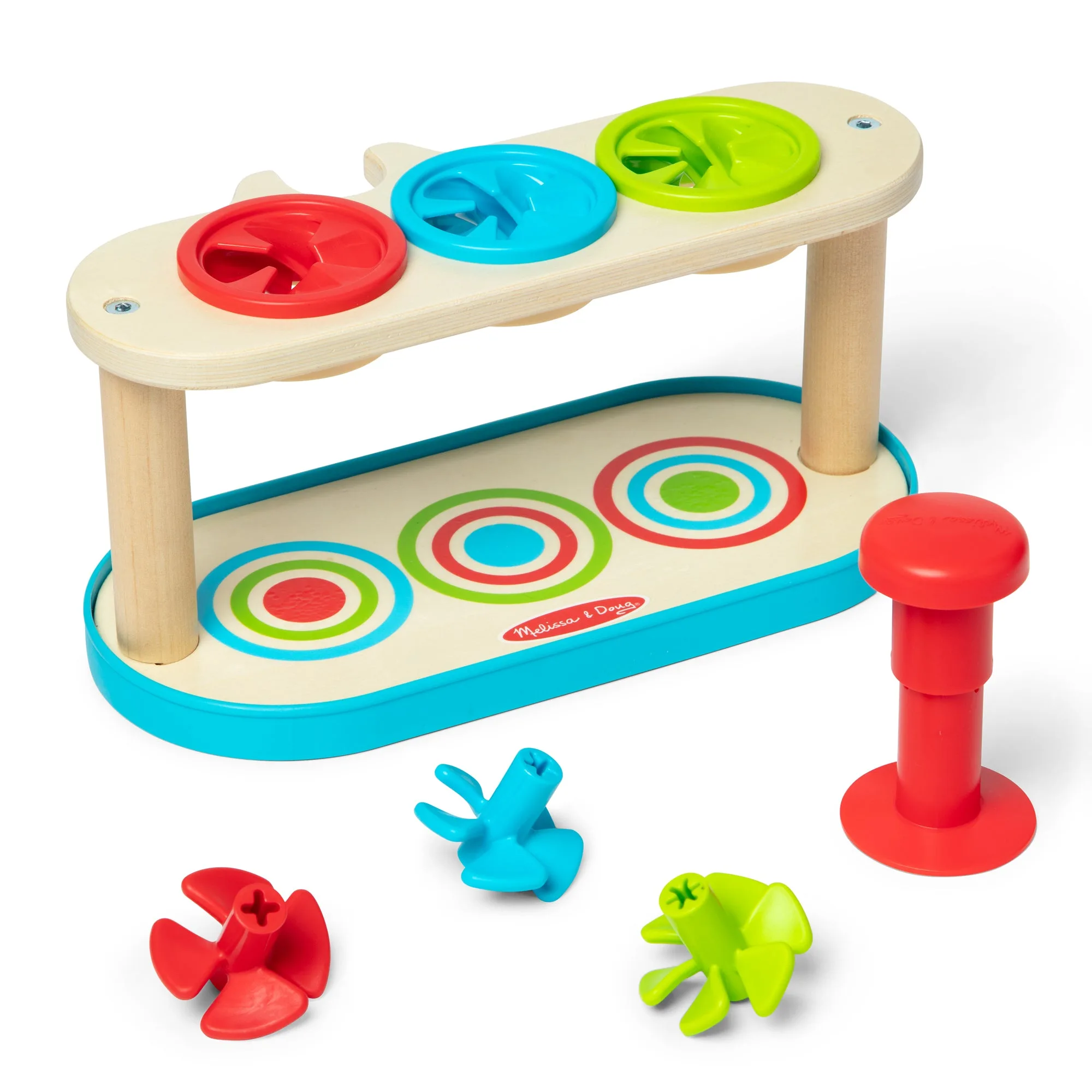
Board thickness also affects success. A thin board tips when a toddler presses down, which causes frustration. Look for a sturdy wooden base that stays flat. Melissa & Doug's Match & Push Spinning Tops uses a sturdy wooden base and an easy-to-grasp plunger, which is a good example of how a stable base supports cause-and-effect play before puzzle skills fully develop.
Piece count and shape: the 3-5 rule for beginners
Start with 3-5 pieces. More pieces mean more decisions and a higher chance of overwhelm. Simple shapes (circle, square, triangle) with matching wells are easiest because the shape itself signals where the piece goes. As your child masters that, move to themed puzzles with 6-9 pieces, then to 12-piece puzzles with pictures underneath for guidance.
If your child loses interest quickly, try a puzzle that adds a physical action. The Match & Push Spinning Tops combines matching with a push-and-spin result, which keeps cause-and-effect learners engaged while still practicing color recognition and matching.
Safety checks before you buy
Check for small parts that could detach. Knobs should be securely attached and not come off when pulled. Avoid puzzles with peeling paint or loose magnets. Look for non-toxic, water-based finishes and smooth-sanded edges. The right size matters too: pieces should be large enough to not fit entirely into a mouth, but small enough for a toddler to handle.
If a product listing does not state the finish or piece dimensions, treat that as a limitation and ask the seller or check the packaging before buying. Do not assume safety features that are not listed.
When to skip puzzles and choose a different first toy
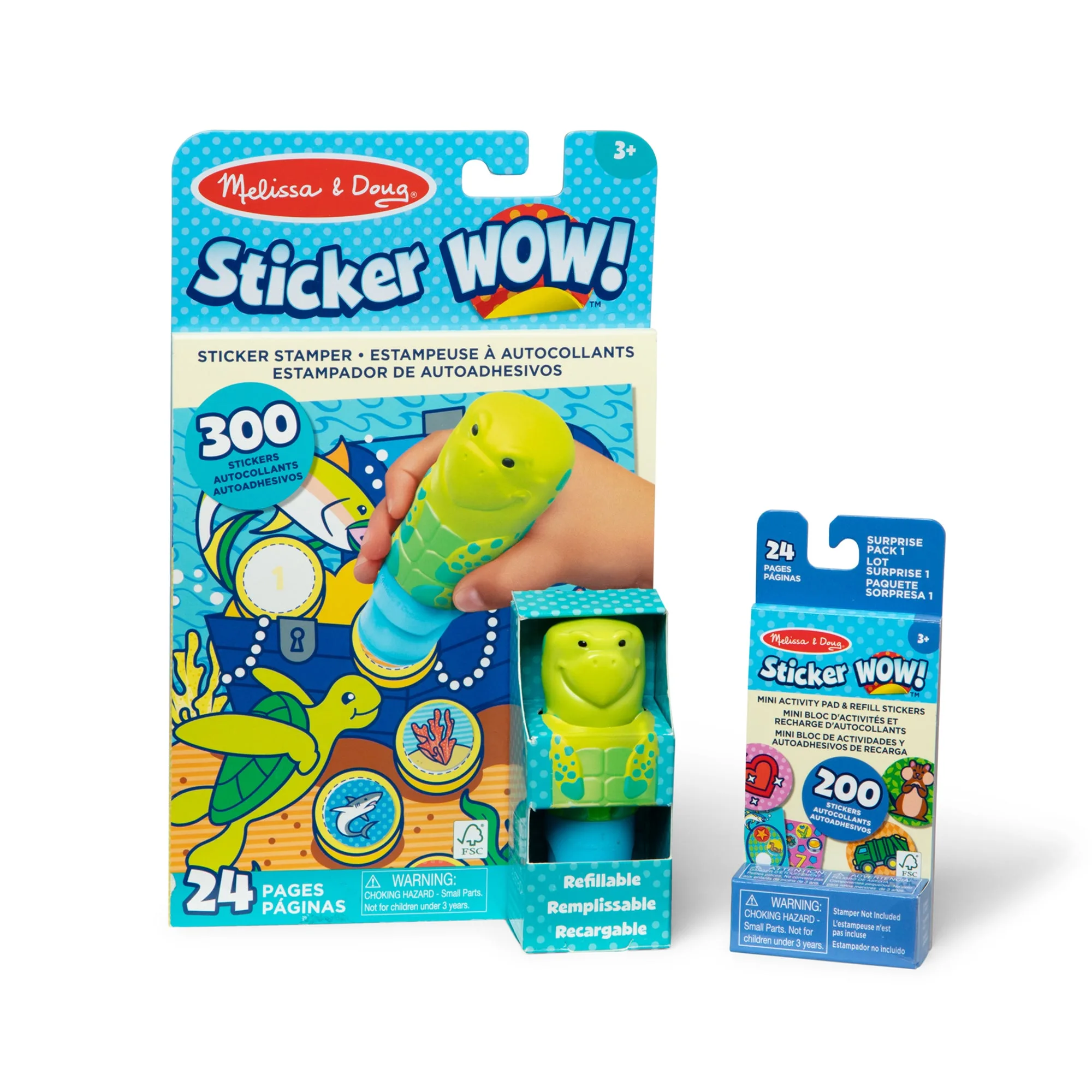
If your toddler is still mouthing everything or cannot sit for more than a minute, a puzzle may not be the best first choice. Consider a cause-and-effect toy like the Match & Push Spinning Tops or a sticker activity that builds fine motor skills without small pieces. The Sticker WOW! Sea Turtle Bundle uses a stamper to place stickers, which practices counting and matching without loose puzzle pieces.
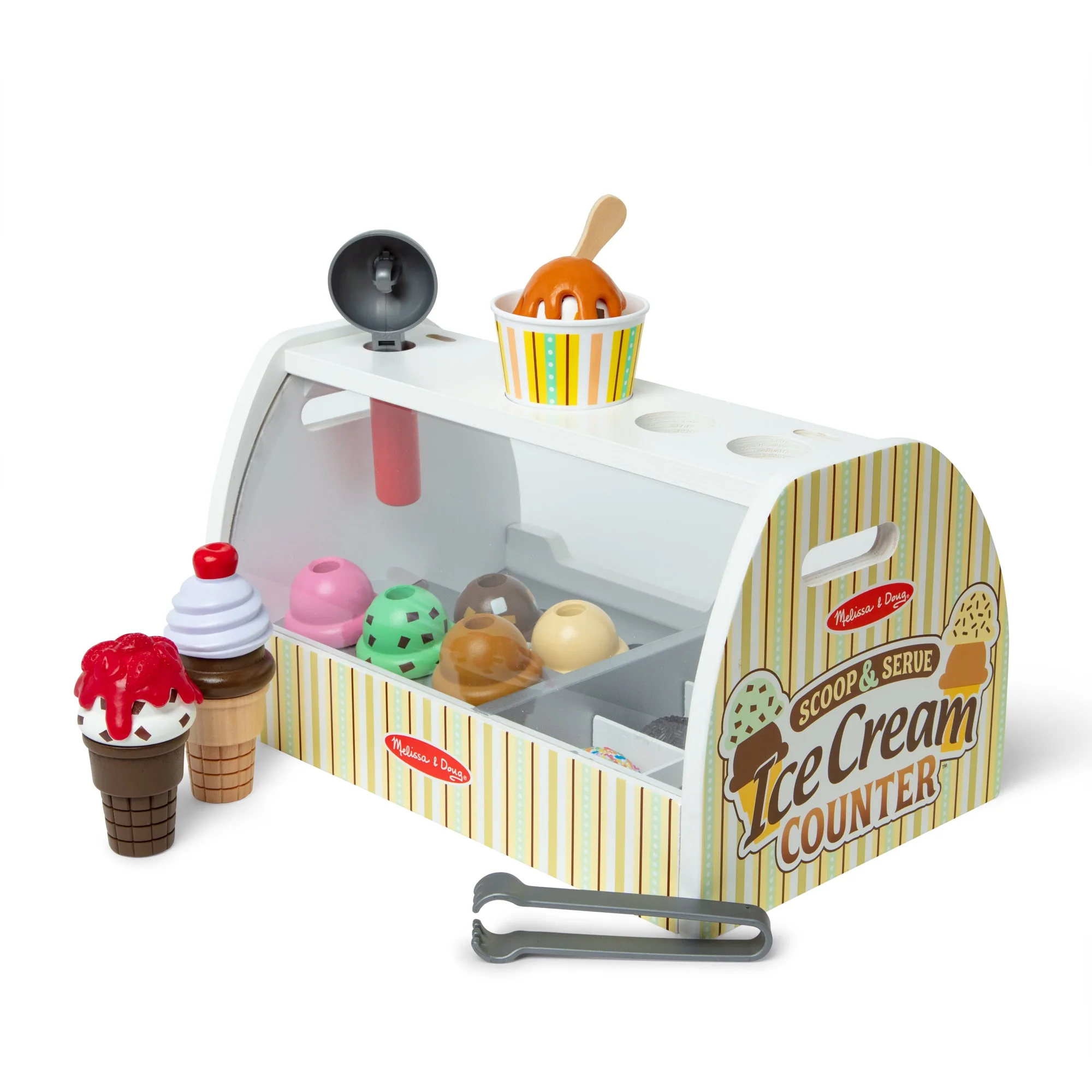
For children who love pretend play, a play set can build the same hand skills. The Scoop & Serve Ice Cream Counter has a scooper that clicks into scoops, letting kids lift, stack, and release, which develops wrist control similar to puzzle manipulation.
Decision rules for your first puzzle purchase
- If your child is 12-18 months: Choose a 3-5 piece wooden peg puzzle with large knobs and a thick board. Avoid pieces smaller than a golf ball. Look for chunky puzzle knobs and a stable base.
- If your child is 18-24 months: Move to 6-9 piece puzzles with smaller knobs or no knobs if they can pinch. Add a theme they recognize, like animals or vehicles. Match piece count to attention span, not just age.
- If your child still mouths toys: Skip puzzles with small pieces and choose a cause-and-effect toy or sticker stamper until mouthing stops. Safety first: no loose small parts.
- If your child gets frustrated easily: Pick a puzzle with picture cues under each piece and only 3-4 pieces. Increase difficulty only after repeated success. Success builds persistence.
Products that support early puzzle skills
- Match & Push Spinning Tops: Match & Push Spinning Tops includes three colorful tops, a sturdy wooden base, and an easy-to-grasp plunger for push-and-spin play. Builds cause-and-effect understanding and color matching before a child is ready for traditional knob puzzles.
- Sticker WOW!™ Sea Turtle Bundle: Activity Pad & Sticker Stamper + Mini Activity Pad and 200 Refill Stickers: Sticker WOW! Sea Turtle Bundle includes a collectible stamper, a 24-page activity pad, a bonus mini pad, and 500 total stickers. Offers a no-loose-pieces way to practice counting and matching, useful for toddlers who still mouth small objects.
- Scoop & Serve Ice Cream Counter: Scoop & Serve Ice Cream Counter is a 28-piece wooden set with a scooper that clicks into scoops and toppings that fit snugly. Develops hand strength and wrist control through lifting, stacking, and releasing, which transfers to puzzle play.
Who this guide is for
Best for
- Parents buying a first puzzle for a 1-2 year old
- Caregivers who want a wooden puzzle buying guide with safety checks
- Gift givers choosing a developmentally appropriate puzzle
Not for
- Parents of children over 3 who need 24+ piece jigsaw puzzles
- Buyers looking for electronic or app-based puzzles
- Those who need a puzzle for a child who still puts everything in their mouth