Quick Answer
For most toddlers, start with a wooden puzzle that has 3–5 large, easy-to-grip pieces and a theme they already love, like animals or letters. Choose chunky knobs or peg pieces for little hands, and always check for smooth edges and non-toxic finishes.
Why Start with Wooden Puzzles?
Wooden puzzles are a classic first choice for toddlers because they are durable, tactile, and offer a satisfying weight that helps little hands learn to grasp and place pieces. Unlike cardboard puzzles, wooden pieces are easier to handle and less likely to bend or tear, making them ideal for enthusiastic beginners.
Beyond durability, wooden puzzles support early development by encouraging fine motor skills, hand-eye coordination, and problem-solving. They also introduce concepts like shapes, colors, and letters in a hands-on way that feels like play, not learning.
The Trade-Off: Piece Count vs. Challenge
A common mistake is choosing a puzzle with too many pieces for a toddler's skill level. While a 13-piece puzzle might seem like a good value, it can overwhelm a child who is just starting out. The goal is to build confidence, not frustration.
Start with 3–5 pieces and gradually increase as your child masters each level. A puzzle with a familiar theme—like animals or the alphabet—can also boost engagement, as children are more motivated to complete a picture they recognize.
- Look for puzzles with large, chunky pieces that are easy for small hands to grip.
- Consider puzzles with peg or knob handles if your toddler is still developing a pincer grasp.
- Check that pieces fit snugly but not too tightly, so your child can place them without help.
Safety and Material Considerations
When choosing a wooden puzzle, safety is paramount. Look for puzzles made from non-toxic, water-based paints and finishes, and ensure all pieces are free from sharp edges or splinters. For children under three, avoid puzzles with small parts that could pose a choking hazard.
Also consider the size of the pieces. Larger pieces are not only easier to grip but also safer, as they are less likely to be swallowed. Always supervise play, especially with younger toddlers who might still put things in their mouths.
Decision Rules for Choosing a First Wooden Puzzle
- Age and Skill Level: For babies 12–18 months, choose puzzles with 2–4 large pieces and chunky knobs. For toddlers 18–24 months, you can move to 5–8 pieces with peg handles. After age 2, consider puzzles with up to 13 pieces and more complex themes. Match the piece count to your child's current ability, not their age alone.
- Piece Size and Grip: Ensure pieces are large enough to hold comfortably and have easy-grip handles if your child hasn't mastered a pincer grip yet. Pieces should be at least 2 inches across to avoid choking hazards. Test the grip yourself: if it's hard for you, it's too hard for them.
- Theme and Engagement: Pick a theme your child is excited about—animals, vehicles, or letters. Familiar images increase motivation and help with vocabulary building as you name the pieces together. Rotate puzzles to keep interest fresh, and don't force it if your child isn't ready.
Product Spotlight
-
Alphabet Wooden Tab Puzzle - 13 pcs: The Alphabet Wooden Tab Puzzle includes 13 pieces and measures 30cm x 22.4cm (11.8” x 8.7”), with a recommended age of 18 months and up. This puzzle offers a step up from the simplest 3–5 piece puzzles, making it a good next challenge for toddlers who have mastered basic matching and are ready to explore letters.
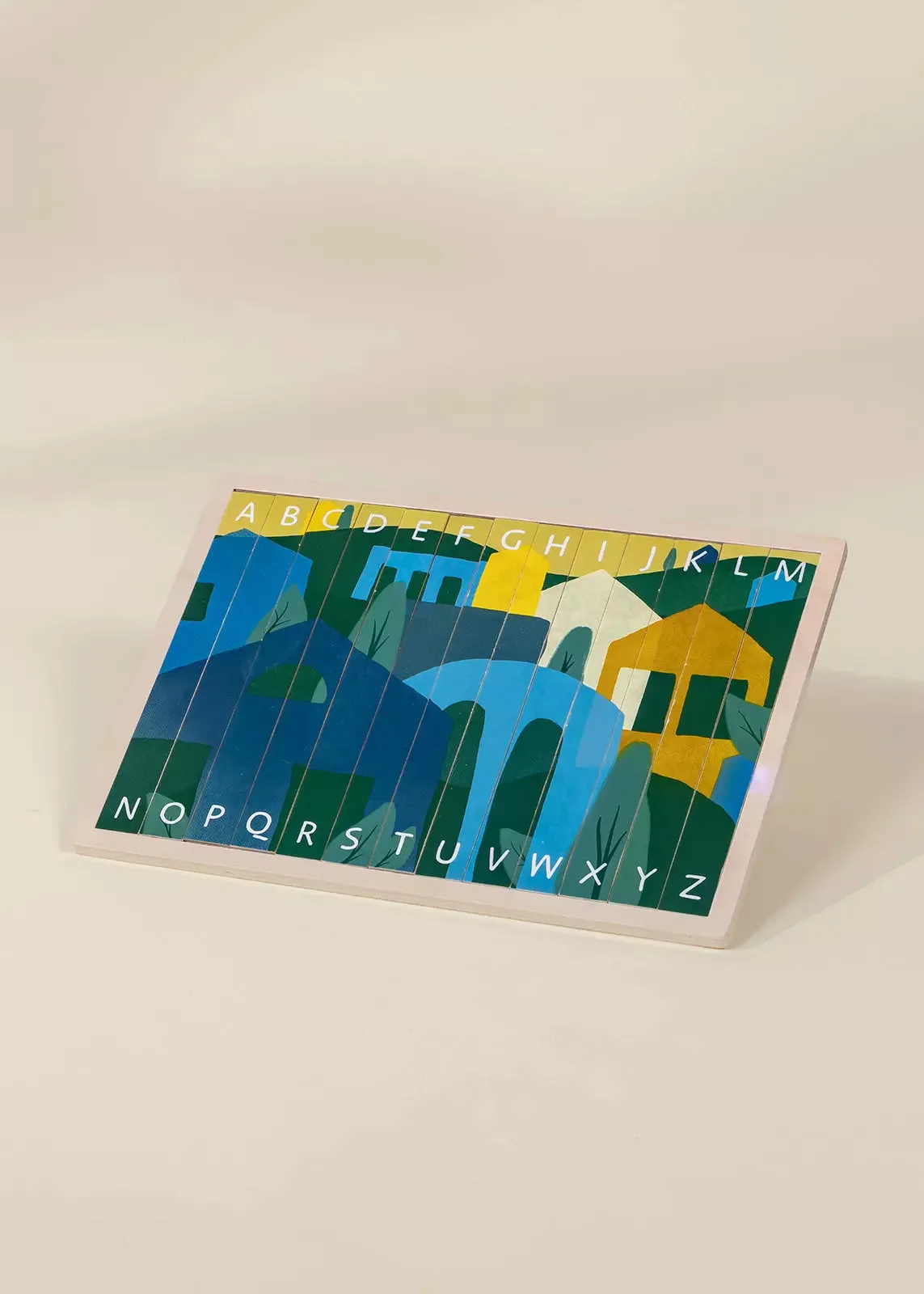
Alphabet Wooden Tab Puzzle - 13 pcs
Who Should Choose What
Best for
- Toddlers 18 months and up who have outgrown simple shape sorters and are ready for their first real puzzle challenge.
- Parents looking for a durable, educational toy that will last through multiple children.
Not for
- Babies under 12 months who still mouth toys heavily—opt for soft fabric or vinyl puzzles instead.
- Toddlers who get easily frustrated—start with fewer pieces and build up slowly.