Quick Answer
Choose footwear that matches your longest standing or walking stretch, not your shortest errand. Prioritize a secure heel, a thumb's width of toe room, and a sole that flexes at the ball of your foot. If you stand all day, look for cushioning and arch support; if you walk long distances, prioritize lightweight flexibility and breathability.
Most people buy shoes for the wrong moment. They test a pair on a five-minute walk through a store, then wear them for a ten-hour day and wonder why their feet ache. All-day comfort comes from matching the shoe to your real routine, not the fantasy version where you sit down every hour.
This comfortable footwear guide gives you concrete decision rules and footwear fit tips so you can choose shoes for standing all day, long walks, or mixed days without guessing. You will also see how small accessories, like a roomy pouch or a backpack, keep your hands free while you shop or commute.
Start With Your Longest Stretch, Not Your Average Day
Before you look at any shoe, estimate the longest continuous time you will spend on your feet. A nurse, a teacher, and a commuter who walks to a train all need different things. If your longest stretch is four hours or more, cushioning and stability matter more than a sleek profile. If your longest stretch is under two hours, you have more freedom to choose style-first shoes.
Write down two numbers: your longest standing time and your longest walking distance. Those numbers become your filter. A shoe that feels fine for a twenty-minute errand may fail at hour six because the midsole compresses or the heel slips. Match the shoe to the maximum, not the minimum.
- Stand on a hard floor for two minutes in the store. If you feel pressure points immediately, they will get worse, not better.
- Wear the socks you plan to use most often when you try shoes on.
The Three Fit Checks That Prevent Most Discomfort
A secure heel, a roomy toe box, and a flex point that matches your foot do most of the work. Your heel should stay put when you walk, with no sliding up and down. Your longest toe should have about a thumb's width of space in front of it, because feet swell during the day. The shoe should bend where your foot bends, at the ball, not in the middle of the arch.
Width matters as much as length. If the widest part of your foot feels pinched, going up a half size rarely fixes it; you may need a wider fit. Laces or straps should let you adjust across the instep without cutting off circulation. A shoe that fits well at 9 a.m. should still feel comfortable at 4 p.m.
- Shop for shoes in the afternoon or evening, when your feet are at their largest.
- If one foot is bigger, fit the larger foot and adjust the other with laces or an insole.
Sole and Cushioning: Match the Surface You Walk On
Hard surfaces like concrete and tile send more impact through your joints, so they reward thicker cushioning and a slightly more structured sole. Soft surfaces like carpet or trails reward flexibility and grip. If you split your day between both, choose a moderate cushion that still lets you feel the ground, which helps with balance.
Cushioning is not the same as softness. A very soft shoe can feel great for an hour and then feel unstable. Look for a sole that compresses slightly under your thumb but springs back. A removable insole is a bonus because you can replace it when it flattens, which is often the first part of a shoe to wear out.
- Test grip by walking on a smooth floor. If the sole feels slick, it will be worse on wet pavement.
- Rotate between two pairs if you stand all day. Giving cushioning a day to recover extends its life.
How to Read Materials and Breathability
Breathability affects comfort more than most people expect. Feet sweat, and trapped moisture leads to hot spots and blisters. Knit and mesh uppers let air move, which suits long walks and warm indoor spaces. Leather and coated materials resist water and hold their shape, which suits rainy commutes and cooler-3890018730-06da099bcbeb4f99c2261556-1640965">cooler-3890018733-0015f896f87c8473c7f48aed-1640959">cooler-37212n38-6bfa8a4b64b32cfde2a87cf7-1640957">cooler-37212481-37a3fb21b2ce5a95e999edae-1640950">cooler weather, but they need more break-in time.
Think about the whole day, not just the walk. If you go from a cold morning commute to a warm office, a breathable shoe with a moisture-wicking sock beats a heavy waterproof boot. If you spend time outdoors in wet conditions, prioritize water resistance and accept slightly less airflow.
- Pair breathable shoes with socks that wick moisture rather than hold it.
- If a shoe needs break-in, wear it for short stretches first, not a full workday.
Accessories That Keep You Comfortable on the Move
Footwear comfort is partly about what you carry. A heavy tote that you shift from shoulder to shoulder changes your gait and tires your feet faster. A backpack distributes weight across both shoulders, and a pouch keeps small items from rolling around. These small choices reduce the fidgeting that makes a long day feel longer.
For travel days, keep your essentials in one place so you are not digging through a bag while standing in line. A luggage tag also saves you from hauling your bags in circles at baggage claim, which is its own kind of foot fatigue.
- Switch to a backpack for days when you carry more than a wallet, phone, and keys.
- Keep earbuds and small tech in a dedicated charm or pouch so they do not tangle in your bag.
Decision Rules for All-Day Footwear
- If you stand in one place for more than four hours: Choose a shoe with cushioned midsoles and a stable heel. Avoid flat, minimal soles that feel every hard floor. Prioritize cushioning and stability over lightness.
- If you walk more than three miles a day: Choose a lightweight, flexible shoe with a breathable upper and a sole that flexes at the ball of your foot. Prioritize flexibility and breathability over heavy structure.
- If your day mixes sitting, standing, and walking: Choose a moderate cushion shoe with a secure heel and adjustable laces or straps so you can fine-tune the fit as your feet swell. Adjustability is your best friend on mixed days.
- If you have wide feet or bunions: Look for a wide toe box and avoid pointed shapes. Going up a half size is not a substitute for proper width. Fit the widest part of your foot first, then check length.
- If you need one pair for everything: Accept the trade-off: a versatile shoe will not be the absolute best at any single task. Choose moderate cushion, moderate flexibility, and a neutral color. One pair can work if you do not demand peak performance in every category.
Products That Support Comfortable Days
- Outlet Essential Large Backpack: This large backpack has a laptop compartment, three compartments, two exterior side pockets, a trolley sleeve, and zip closures. Balanced carrying takes pressure off your feet and posture, and the trolley sleeve slides over luggage handles for travel days.
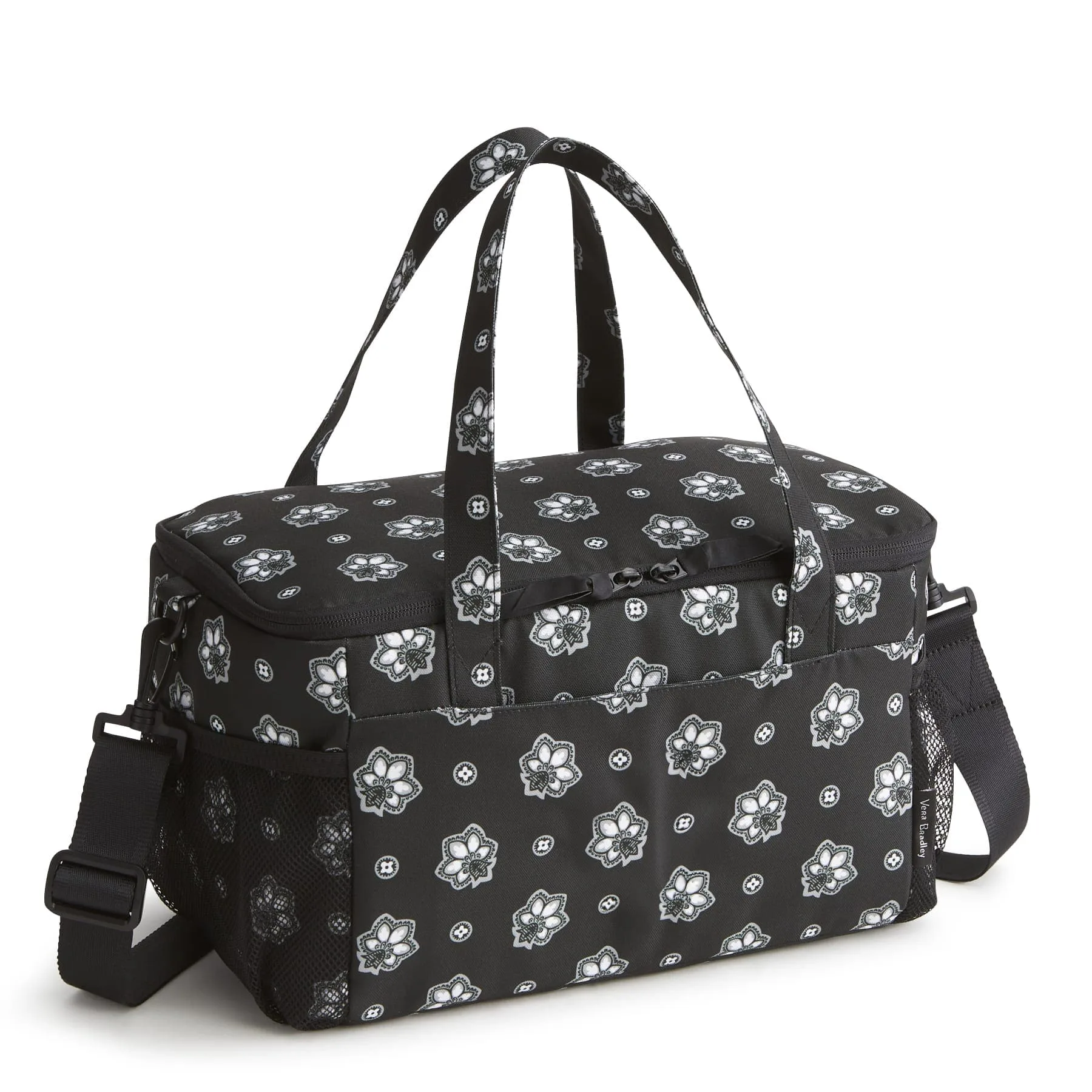
- Large Original Duffel Bag: The Large Original Duffel offers ample storage space and is designed for travel, the gym, or errands, with pattern options. A single duffel keeps you from juggling multiple bags, so you walk more steadily and stop less often to rearrange.
- Outlet Essential Luggage Tag: The Outlet Essential Luggage Tag has an ID window and a 6.0-inch strap drop. A visible tag helps you spot your bag quickly at baggage claim, cutting down on time spent standing and waiting.
- Outlet Large Essential Earbud Bag Charm: This earbud bag charm has a hinge ring and zip closure, with dimensions of 2.5 inches wide by 3.25 inches high by 1.5 inches deep. Clipping earbuds to the outside of your bag keeps them accessible without digging, so you stay hands-free and moving.
Who This Guide Is For
Best for
- People who stand or walk for most of the workday
- Shoppers who want a repeatable way to test fit in the store
- Travelers who need one pair to handle airports and sightseeing
Not for
- Athletes seeking sport-specific performance shoes
- Anyone looking for medical advice about foot pain or conditions
- Shoppers who only care about formal dress codes and cannot compromise on style
All-day comfort comes from matching the shoe to your longest stretch on your feet, then checking heel security, toe room, and flex point before you buy. Use the decision rules above, shop later in the day, and keep your carry weight balanced so your feet are not doing extra work. A little planning at the store saves a lot of aching at home.