Quick answer
For indoor guinea pig housing, prioritize a cage with at least 7.5 square feet of uninterrupted floor space, solid flooring, good ventilation, and easy access for cleaning. Modular designs like the Ferplast Modular 4 let you expand the habitat as your guinea pigs grow.
Why floor space matters more than height
Guinea pigs are ground-dwelling animals that need room to run, explore, and establish separate areas for eating, sleeping, and toileting. A long, wide cage with a single level is far better than a tall multi-level cage with small platforms. Aim for a minimum of 7.5 square feet for one guinea pig, and add at least 2–3 square feet for each additional pig. The Ferplast Modular 4 offers a generous footprint that meets these requirements and can be combined with other Modular units to create even larger layouts.
Ventilation and safety indoors
Indoor cages need good airflow to prevent ammonia buildup from urine and to keep the environment fresh. Wire or mesh sides allow air to circulate, while solid plastic bases contain bedding and mess. Avoid fully enclosed glass or acrylic tanks, as they trap humidity and heat. The Modular 4 uses a sturdy plastic base with a wire top, balancing containment with ventilation.
Ease of cleaning for daily maintenance
A cage that is difficult to clean will quickly become unsanitary. Look for a removable or hinged top, a smooth plastic base that wipes down easily, and a design that lets you reach all corners without crawling inside. Modular cages like the Modular 4 allow you to disassemble sections for thorough cleaning, and the base tray is simple to rinse.
Decision rules for choosing an indoor guinea pig cage
- Rule 1: Measure your available space first: Indoor cages need to fit in your room without blocking doors, windows, or heat sources. Measure the floor area where the cage will sit and compare it to the cage's footprint. The Modular 4 has a spacious base that fits well in most living rooms or bedrooms. Always confirm the cage dimensions against your room layout before purchasing.
- Rule 2: Prioritize solid flooring over wire grates: Guinea pigs have sensitive feet and can develop bumblefoot on wire floors. Choose a cage with a solid plastic base that holds bedding and prevents foot injuries. The Modular 4's deep plastic tray is ideal for soft bedding like fleece or paper. Avoid any cage with wire flooring, even if it has a solid section.
- Rule 3: Check for easy access doors: You'll need to reach in daily for feeding, spot cleaning, and interacting with your guinea pigs. A cage with a large front door or a removable top makes this much easier. The Modular 4 features a top that lifts off completely, giving you full access. Test the door size and mechanism in person if possible.
Product facts
-
MODULAR 4: The Modular cage by Ferplast is designed to ensure maximum animal well-being and is available in four different models. Modular cages can be combined with each other to create new configurations. This means you can start with the Modular 4 and expand later, adapting the habitat as your guinea pig family grows without buying a whole new cage.
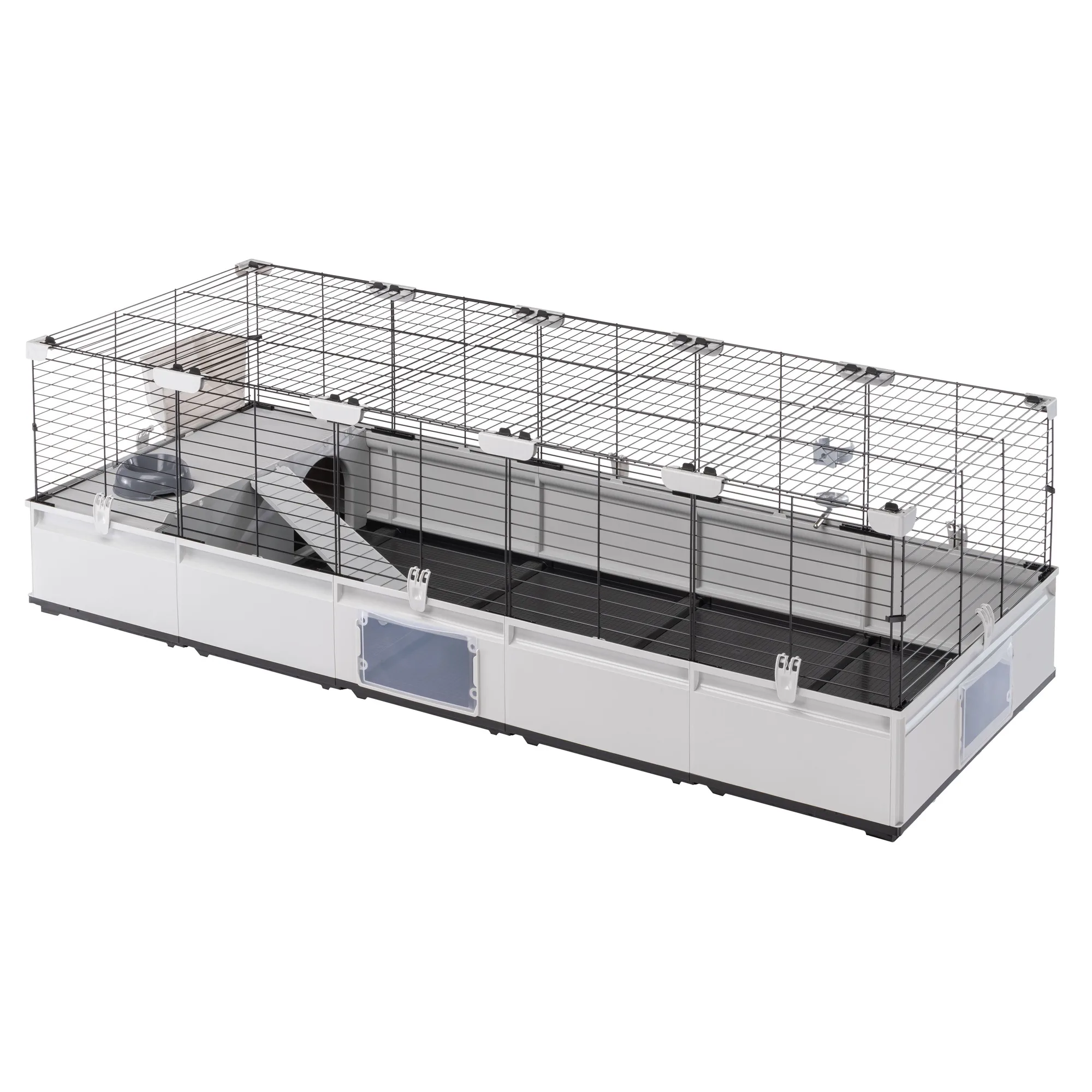
MODULAR 4
Who should choose this cage
Best for
- First-time guinea pig owners who want a spacious, expandable indoor habitat
- Owners with 1–2 guinea pigs who plan to add more in the future
Not for
- Owners who need a cage with built-in shelves or ramps for older or disabled guinea pigs
- Those with very limited floor space who need a tall, narrow cage