Quick answer
For everyday wear, choose a soft organic cotton jersey or ribbed knit. For water or sun exposure, a UPF 40+ swim shirt is safer. The right fabric balances breathability, stretch, and durability based on your child's activity.
Why fabric choice matters for kids' t-shirts
Kids move constantly, so the fabric needs to stretch without losing shape, breathe to prevent overheating, and withstand frequent washing. Cotton is the most popular choice because it's naturally soft and absorbent, but not all cotton t-shirts are the same. The weave—jersey, ribbed, or pointelle—changes how the shirt fits and feels.
Organic cotton vs. conventional cotton
Organic cotton is grown without synthetic pesticides and is often gentler on sensitive skin. Many parents prefer it for babies and toddlers who may have eczema or allergies. Conventional cotton can be just as soft, but the environmental and skin benefits of organic cotton make it a worthwhile upgrade for daily use.
Ribbed knits vs. jersey knits
Ribbed t-shirts have a textured, stretchy fabric that hugs the body without being tight. They are excellent for layering under sweaters or jackets because they add warmth without bulk. Jersey knits are smoother and more breathable, ideal for warm weather or active play. The choice depends on whether you need a base layer or a standalone top.
How to choose the right t-shirt fabric
- Check the fiber content: Look for 100% organic cotton or cotton blended with a small amount of elastane (2-5%) for stretch. Avoid synthetic-heavy blends for everyday wear as they trap heat.
- Match the weave to the season: Ribbed and pointelle knits are more breathable and dry faster, making them ideal for spring and summer. Jersey knits offer more warmth and are better for fall and winter layering. For year-round use, buy a mix of ribbed short sleeves and jersey long sleeves.
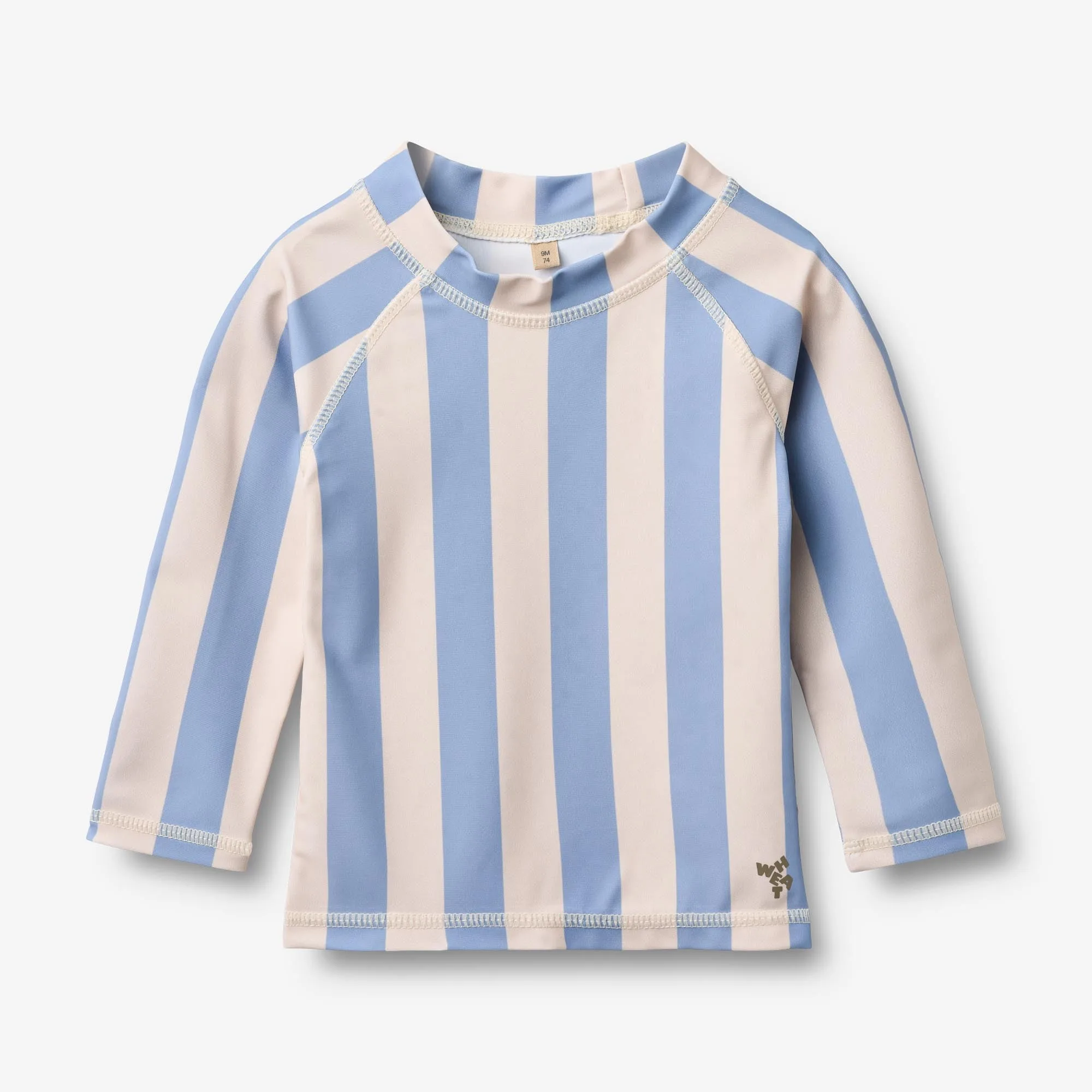
- Consider special features for specific activities: If your child will be in the sun or water, a swim shirt with UPF 40+ is safer than a regular cotton t-shirt. Cotton absorbs water and loses UV protection when wet. A dedicated swim shirt like the Langærmet Badebluse Dilan is a smart purchase for beach or pool days.
- Prioritize ease of dressing for babies: T-shirts with a front button placket or oversized shoulders make dressing and diaper changes faster. Ribbed fabrics also have more give, so they slide on easier than stiff jersey.
Fabric features in Wheat t-shirts
-
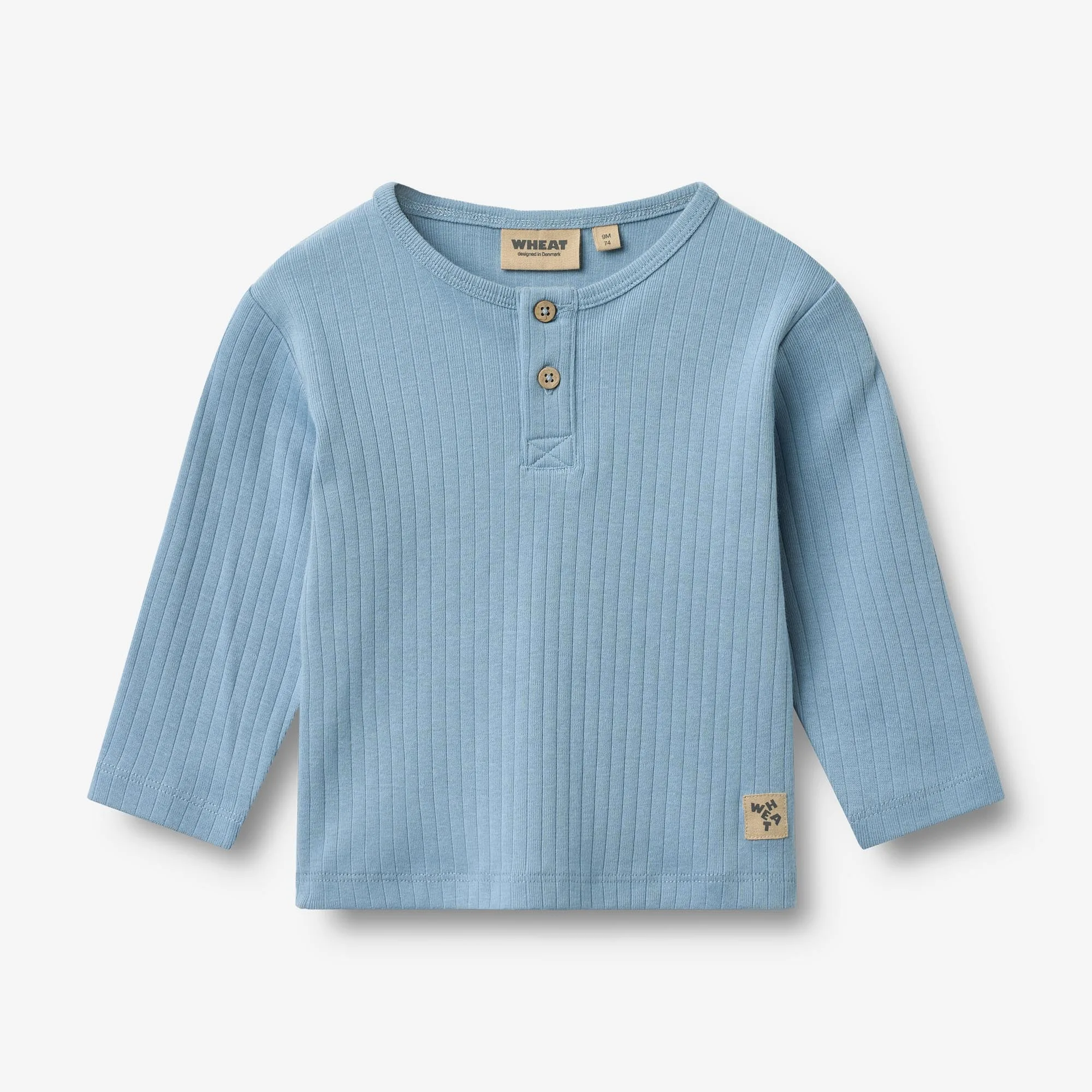
Langærmet T-shirt Morris - faded denim: Ribbed organic cotton with a soft stretch and a button placket for easy dressing. The ribbed structure gives a snug yet flexible fit that moves with your baby, and the front buttons make diaper changes simpler.
Langærmet T-shirt Morris - faded denim
-
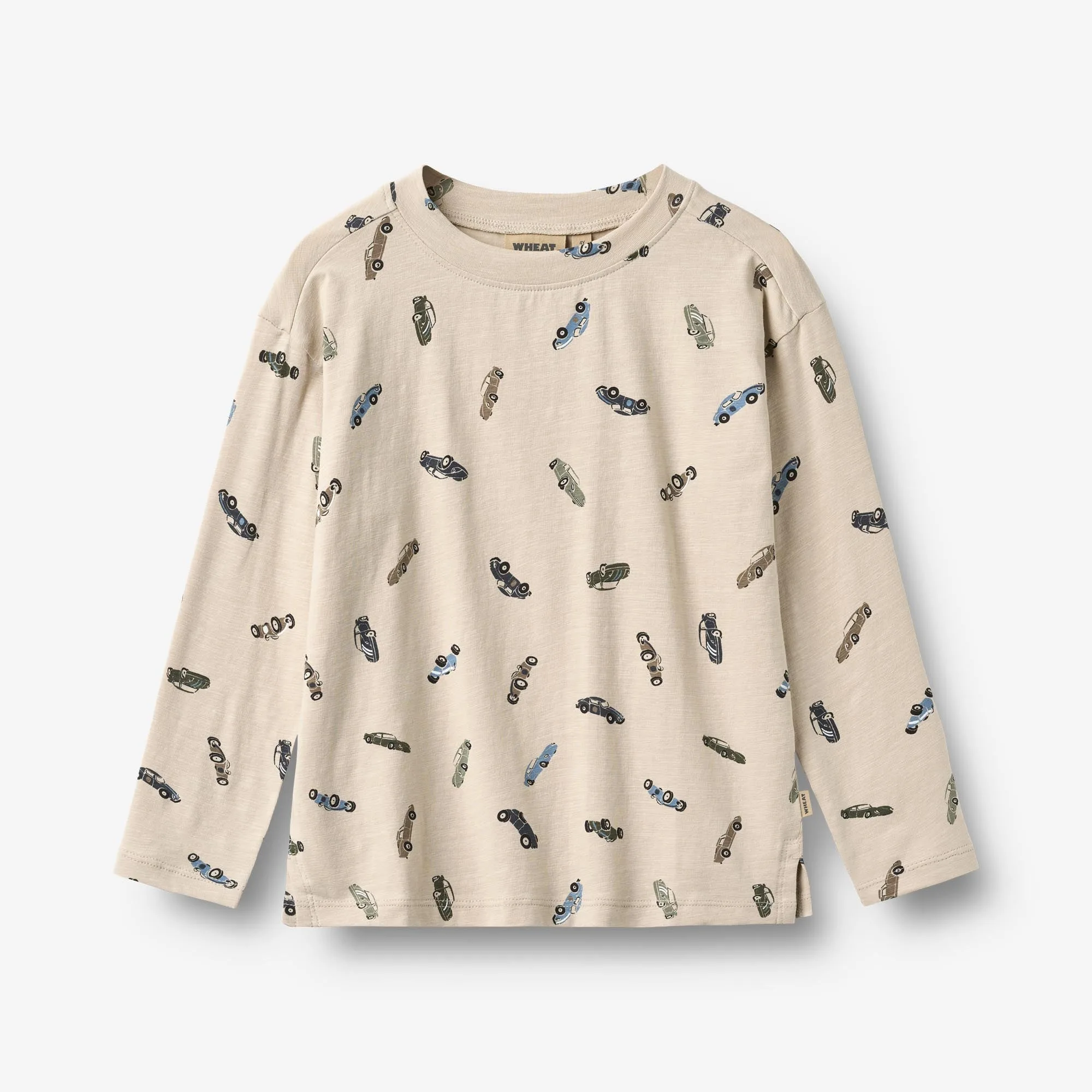
Langærmet T-shirt Ebbe - cars: Soft organic cotton jersey with elastane and a hand-drawn signature print. The added elastane provides extra stretch for active toddlers, and the playful print makes it easy to style as a fun everyday top.
Langærmet T-shirt Ebbe - cars
-
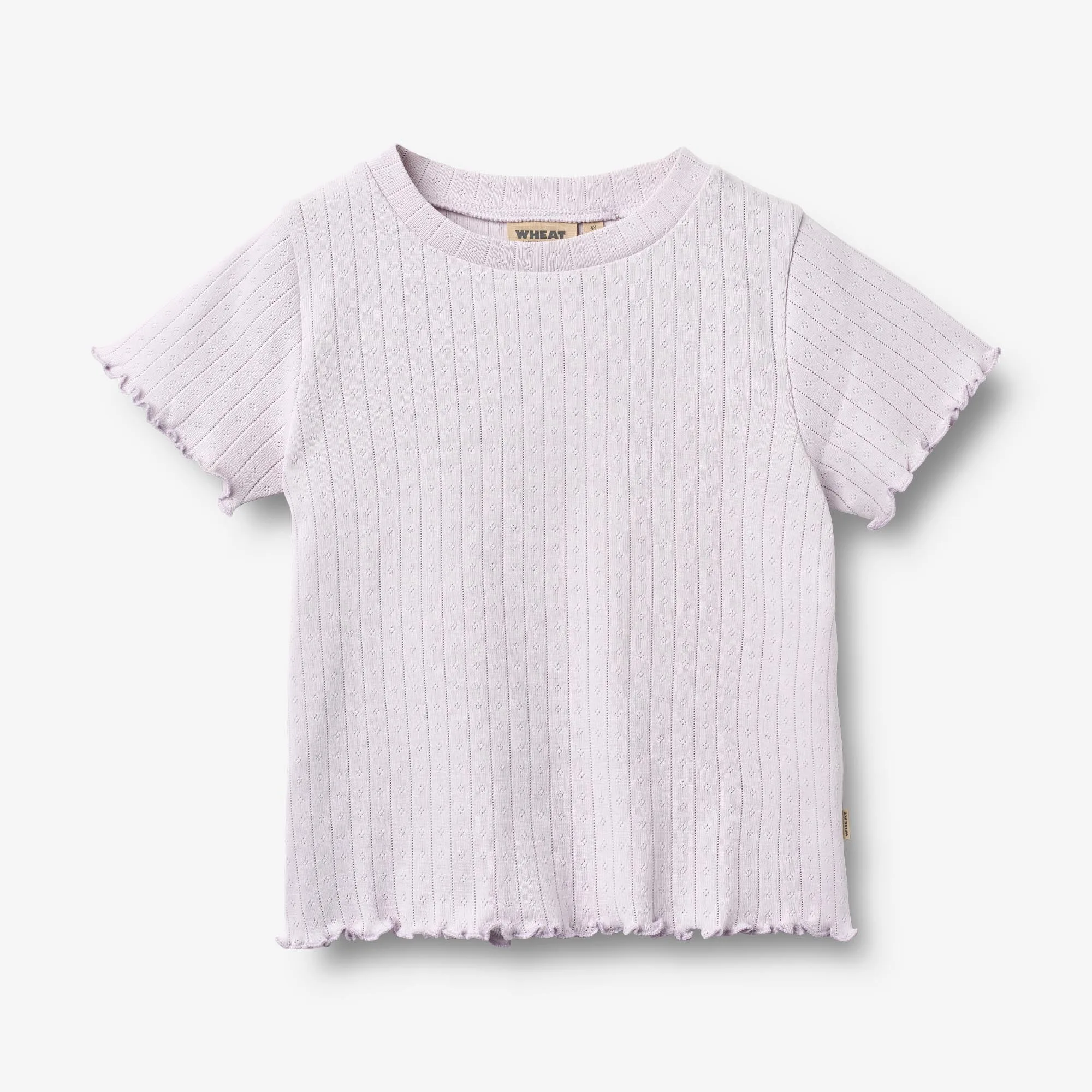
Kortærmet Rib T-shirt Irene - purple light: Short-sleeve ribbed pointelle knit with a loose fit and overlocked edges. The pointelle pattern adds breathability and a delicate texture, making it a great warm-weather choice that still holds its shape.
-
Langærmet Badebluse Dilan - bold blue stripe: Long-sleeve swim shirt with built-in UPF 40+ protection and stretchy swim jersey. Designed for water and sun, this shirt protects delicate skin from UV rays while allowing freedom to splash and play.
Which t-shirt fabric is best for your child?
Best for
- Everyday play and school: soft organic cotton jersey (e.g., Langærmet T-shirt Ebbe)
- Warm weather or layering: breathable ribbed or pointelle knits (e.g., Kortærmet Rib T-shirt Irene)
- Babies and toddlers: ribbed t-shirts with button plackets (e.g., Langærmet T-shirt Morris)
- Water and sun safety: UPF 40+ swim shirts (e.g., Langærmet Badebluse Dilan)
Not for
- Heavy outdoor sports in hot weather: thick jersey without ventilation can cause overheating
- Formal occasions: ribbed or pointelle textures may look too casual