Quick answer
Start with your routine, not the label. If you sit most of the day, prioritize breathable mesh and a 5-inch inseam; if you train hard, look for a contoured pouch and air vents. Buy one or two pairs first, test them through a full day, then commit to a multi-pack.
Most guys buy underwear the way they buy socks: grab a pack, hope for the best, repeat every couple of years. That works until you spend a long day in a pair that rides up, traps heat, or loses shape after a few washes. The fix isn't finding one perfect pair. It's matching fit, fabric, and cut to what your week actually looks like.
This guide walks through a simple decision process you can run in a few minutes. You'll figure out your true size, choose a cut that suits your body and activities, and pick a fabric that handles your climate and laundry habits. Along the way, we'll use real examples from the Pair of Thieves lineup to show how those choices play out.
Step 1: Measure before you shop
Grab a soft tape measure and check your waist at the height where you actually wear your waistband, not where your jeans sit if you wear them low. Write that number down. Then check your hip measurement around the fullest part of your seat. Most underwear sizing runs on waist alone, but hip size tells you whether you need a roomier cut or a stretchier fabric.
The most common mistake is sizing up to get comfort. If a pair feels tight in the waist but loose in the legs, the cut is wrong, not the size. A 5-inch inseam, like the one used across Pair of Thieves boxer briefs, sits high enough to avoid bunching under shorts while still covering the inner thigh.
- Measure at the end of the day when your body is at its natural size, not first thing in the morning.
- If you're between sizes, check the fabric content. Higher spandex percentages forgive a slightly snug fit.
Step 2: Match the cut to your body and your day
Boxer briefs vs briefs comes down to thigh coverage and how much you move. Boxer briefs stay put during walks, commutes, and workouts because the legs hold the fabric in place. Briefs offer more airflow and less fabric, which some guys prefer under slim trousers or in hot weather. Neither is better; they solve different problems.
If your thighs touch when you walk, boxer briefs reduce chafing. If you mostly sit at a desk and run hot, a brief or a very breathable boxer brief works. The key is to pick one cut for your default day and a second cut for specific situations, like workouts or formal events.
- Test a new cut on a day you'll be moving a lot, not a lazy Sunday.
- If a boxer brief rides up, the leg opening is too loose or the inseam is too short for your thigh shape.
Step 3: Choose fabric based on climate and activity
Choosing underwear fabric is where most comfort is won or lost. Mesh and synthetic blends dry fast and move heat away, which makes them strong for workouts and hot commutes. Cotton blends feel softer and more familiar, but they hold moisture longer. There's no universal winner, just tradeoffs.
For everyday wear in mild weather, a cotton-rich blend like the one in Superiair Boxer Briefs balances softness with durability. For gym sessions or humid days, a mesh or jersey fabric with a high spandex content stretches and recovers better. If you sweat heavily, look for air vents or a mesh pouch, which increase airflow exactly where you need it.
- Hot sleepers and heavy sweaters should lean toward mesh or vented fabrics.
- If you air-dry your laundry, synthetic blends dry overnight; cotton blends take longer.
Step 4: Check the details that affect daily wear
Waistbands, seams, and leg openings decide whether a pair disappears under clothes or announces itself all day. A flat, wide waistband won't roll or dig. Flatlock seams reduce rubbing under fitted pants. A contoured pouch adds support without compression, which matters if you're active or on your feet.
Care instructions also belong in this step. Some fabrics want warm water and gentle cycles; others want cold. Ignoring that shortens the life of the pair and can cause pilling or fading. Pick fabrics whose care routine you'll actually follow, because the best pair is the one that still fits after twenty washes.
- Check whether the care tag says warm or cold wash before you buy a whole pack.
- If you hate sorting laundry, choose pairs with similar care instructions so you can wash them together.
Step 5: Build a small rotation instead of one big gamble
Buy one or two pairs of a new style, wear them through a full week, then decide. This avoids ending up with five identical pairs that ride up or trap heat. Once you know a style works, multi-packs bring the cost per pair down and keep you from doing laundry midweek.
A practical rotation looks like this: three to five everyday pairs in your favorite cut and fabric, two workout-specific pairs with vents or mesh, and one or two pairs for dressier occasions. That covers most weeks without overbuying. Replace pairs when the waistband stops recovering or the fabric thins at the seams.
- Wash new pairs once before a full day of wear to check for shrinkage or fit changes.
- Keep a dedicated workout pair separate so sweat and wear don't shorten the life of your everyday pairs.
Your five-step underwear decision checklist
- Measure your waist and hips: Use a soft tape at the height you actually wear your waistband. Write both numbers down before browsing. If the waist fits but the legs billow or bind, change the cut, not the size.
- Pick a default cut for your average day: Choose boxer briefs for thigh coverage and movement, or briefs for airflow and less fabric. Match the cut to your most common activity, not your most extreme one. Test the cut on a busy day. If it rides up or bunches, try a different inseam or leg opening.
- Choose fabric by climate and sweat level: Mesh and synthetic blends dry fast and vent heat. Cotton blends feel softer but hold moisture. Pick based on where you'll wear the pair most. Heavy sweaters and hot climates: go mesh or vented. Mild weather and desk days: a cotton blend works well.
- Inspect waistband, seams, and care tag: A flat waistband won't roll. Flatlock seams reduce rubbing. Check whether the care instructions match your laundry habits. If you won't follow the care instructions, pick a different fabric. Fit fades fast when washing is wrong.
- Buy a test pair, then commit: Start with one or two pairs of a new style. Wear them for a full week. If they pass, buy a multi-pack to lower the cost per pair. Replace any pair whose waistband stops recovering or whose fabric thins at the seams.
How specific Pair of Thieves pairs fit these steps
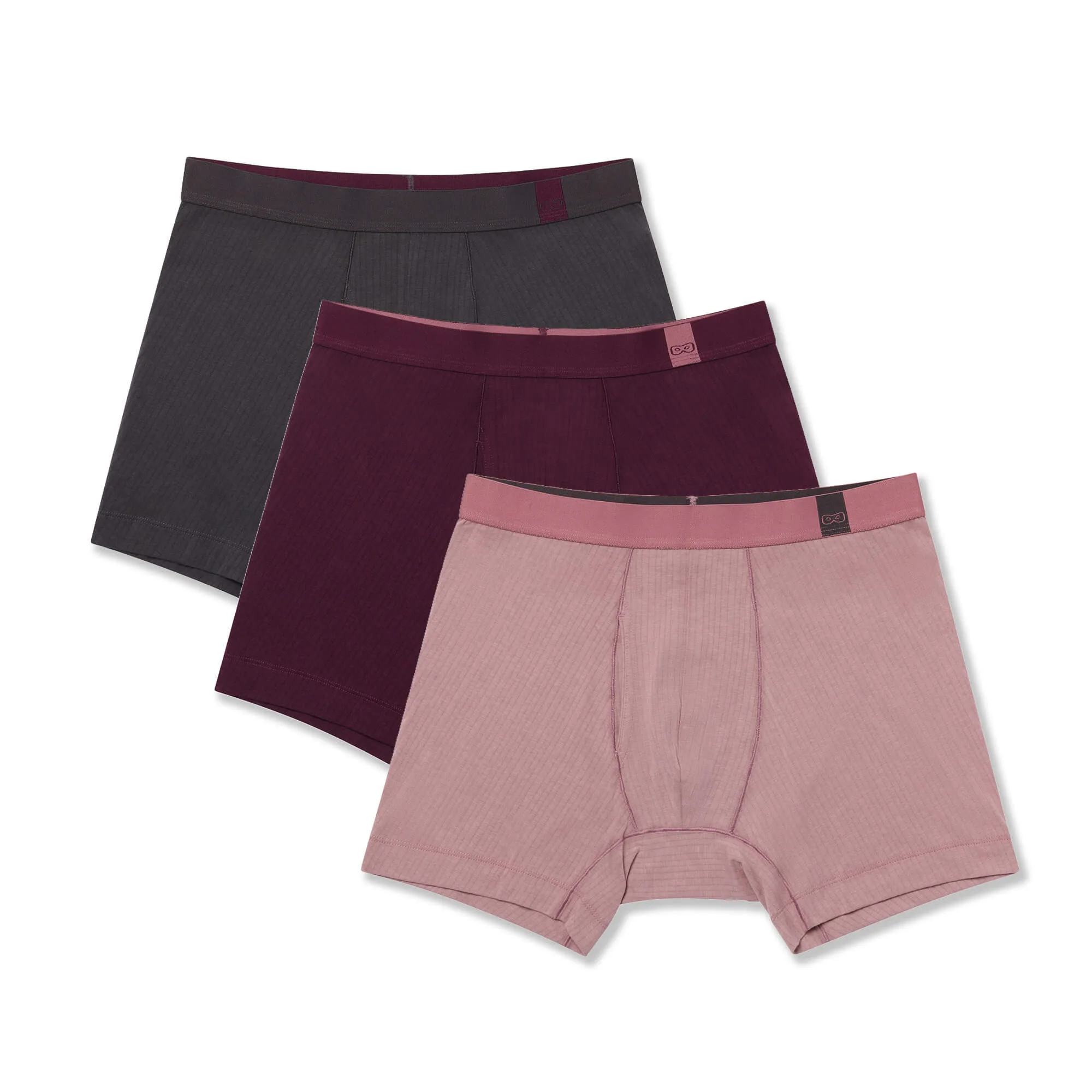
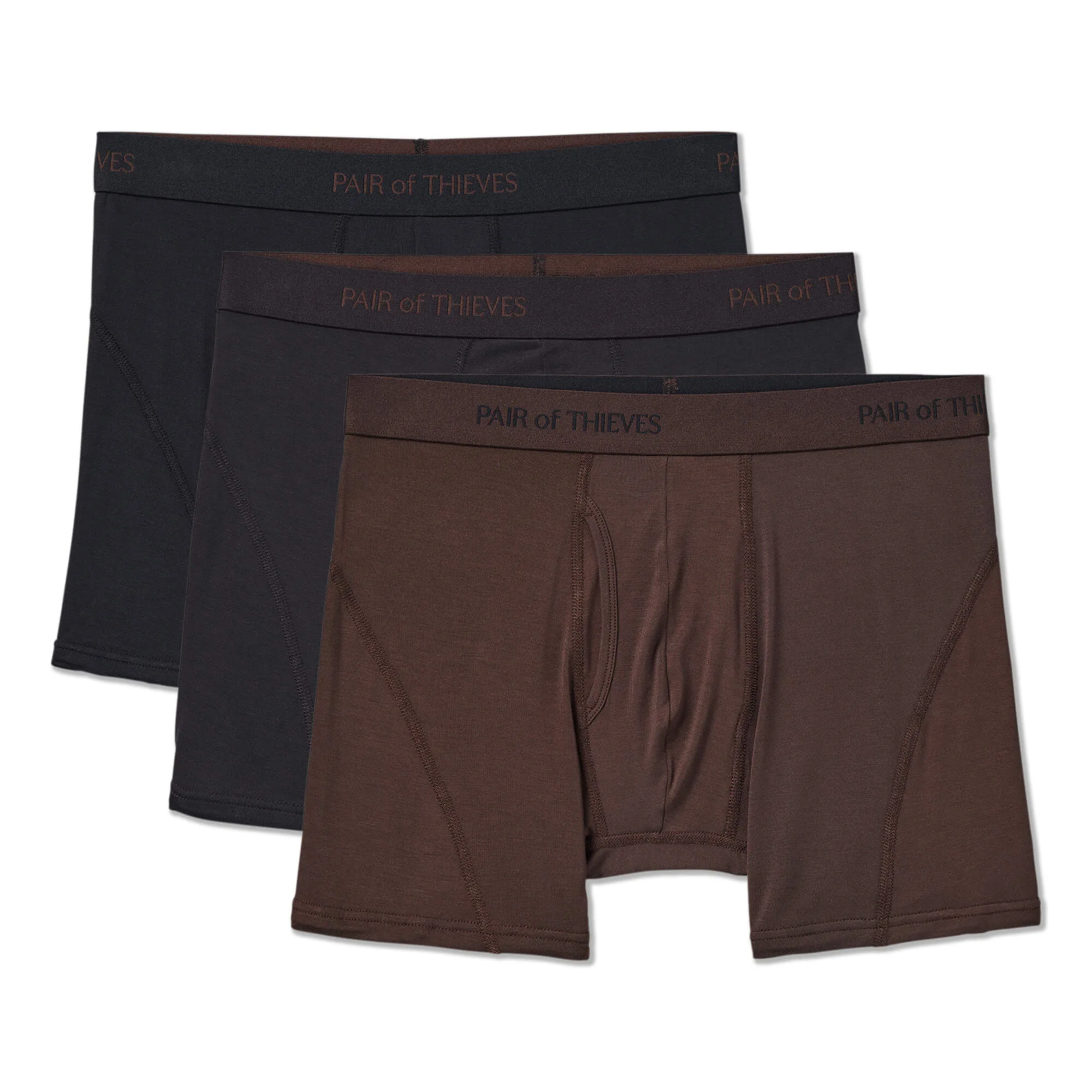
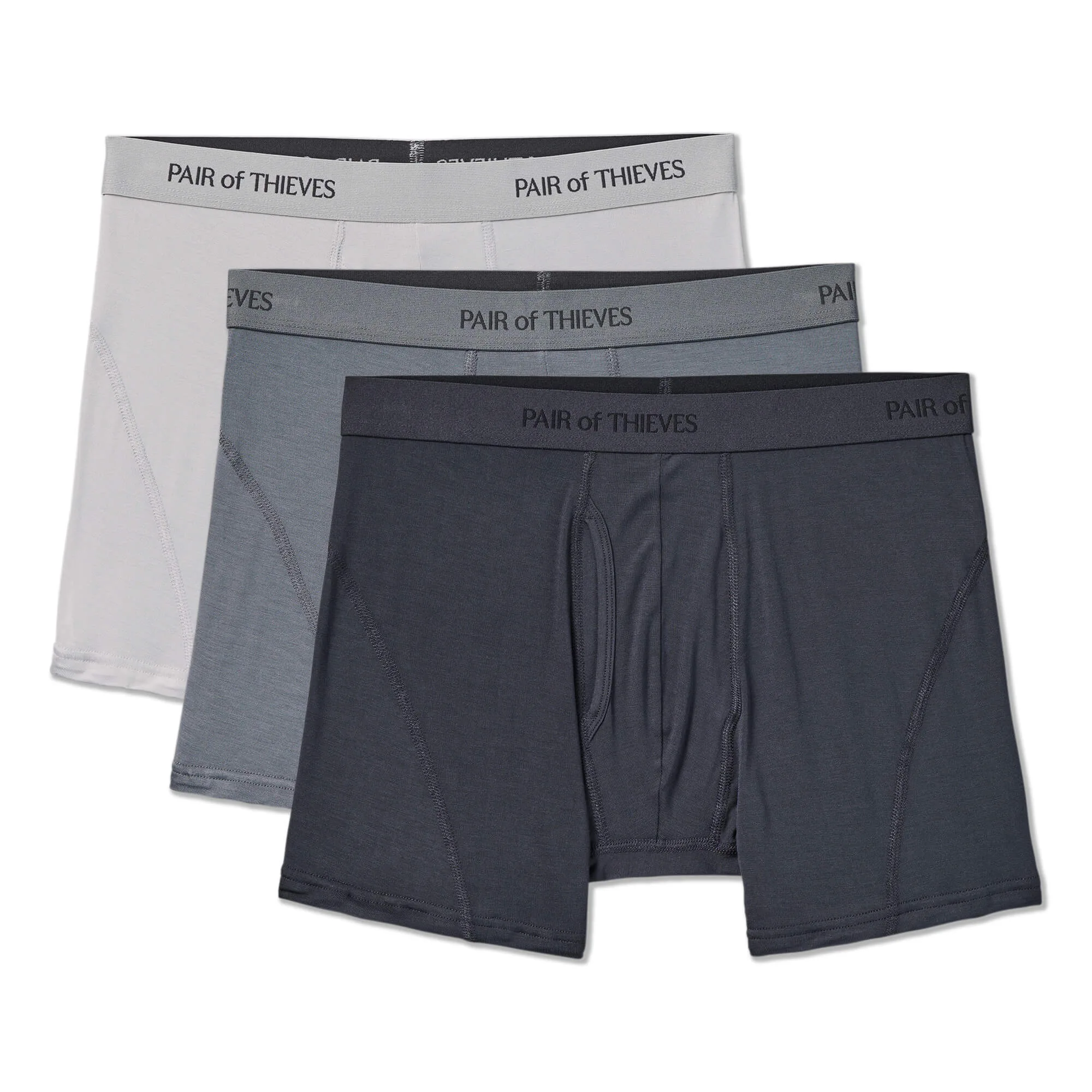
- https://pairofthievesinm.com/products/superfit-boxer-briefs-guava-underwear-2-pack-102268-800-431a46bae184b2fc885f6801-1500721https://pairofthievesinm.com/products/superfit-boxer-briefs-black-black-grey-underwear-2-pack-3e115211558942f4e9ae6067-1500725https://pairofthievesinm.com/products/superfit-boxer-briefs-black-underwear-2-pack-102527-000-385692f01d4d21f304f0de02-1500727https://pairofthievesinm.com/products/superfit-mesh-boxer-briefs-natural-underwear-2-pack-12131642923fcf39df808828-1500730SuperFit Mesh Boxer Briefs (2-Pack): 85% Polyamide, 15% Spandex with a 5-inch inseam and mesh fabric described as cooling and breathable. The high spandex content helps the pair hold its shape, while the mesh construction suits hot days or active commutes. The 5-inch inseam reduces bunching under shorts.
- SuperFit Sport Boxer Briefs (2-Pack): Contoured pouch with air vents, jersey fabric of 87% Polyester and 13% Spandex, 5-inch inseam. The vents and pouch target airflow and support, which is useful for workouts or long days on your feet. The jersey blend stretches and recovers for movement.
- Superiair Boxer Briefs (3-Pack): 57% Cotton, 38% Polyester, 5% Spandex with Stay-Fab fabrics that resist abrasion and pilling. A cotton-rich blend feels softer for everyday wear and the durability claims mean the color and surface hold up over repeated washes.
- BOWO Cushion No Show (3-Pack): 4-way stretch with arch support and reinforced heel and toe, designed for a snug, no-shift fit. These socks complement the underwear rotation by staying put during activity and adding durability where socks wear out first.
Choosing the right men's underwear comes down to a few repeatable decisions: measure honestly, match the cut to your routine, pick a fabric for your climate, and test before you stock up. Get those right and you'll stop thinking about your underwear, which is exactly the point.