Quick answer
Use the desk pad as a weekly planning surface, not a running to-do list. On Sunday or Monday, write three weekly goals in the pad's notes area, then map one concrete action per goal onto each day of the week. Each morning, check the day's action, log habits and mood, and move anything unfinished to a specific later day rather than rewriting it.
Set up the pad before you write a single goal
An undated pad only works as a goal-setting tool if it has a fixed home and a fixed review time. Put it where you already sit to work, and choose one weekly moment to plan. If you plan on Sunday evening, keep the pad open to the coming week so Monday morning starts with the plan already visible.
Because the pad is undated, you control the week's start. Write the date range at the top of the sheet so you can flip back and compare weeks later. This is the difference between a pad that tracks progress and a pad that becomes loose paper.
Choose three weekly goals, not seven
Weekly goal setting fails most often because the list is too long to survive a normal week. Three goals is enough to make real progress and still leave room for the tasks that arrive unplanned. If a goal is large, shrink it until it fits inside one week.
Write each goal in a way you can verify on Friday. 'Get healthier' cannot be checked; 'walk three times before work' can. The pad's daily columns then give each goal a place to land instead of leaving it as an intention.
Map one action per goal onto each day
A goal without a day attached rarely happens. Take your three weekly goals and assign one specific action to a specific day. Monday might hold the first draft, Wednesday the follow-up email, Friday the review. The rest of the day's tasks fill in around those anchors.
This is where a desk pad beats a notebook: the whole week is visible at once, so you can see when two goals collide on the same day and move one before the week starts. If a day already looks crowded, that is useful information, not a failure.
Use the habit and mood rows as evidence, not judgment
The pad tracks habits, mood, water intake, and mindful notes alongside tasks. Treat those rows as data about how the week actually went. A low mood day next to a missed goal tells you something about scheduling that a plain task list would hide.
Keep the entries short. A word for mood and a check for a habit take seconds and give you a pattern to review at the end of the month.
Close the week with a ten-minute review
At the end of the week, read the sheet before you turn the page. Note which goal moved, which stalled, and why. Then carry forward only what still matters, and let the rest go. Carrying everything forward is how a pad turns into clutter.
If you journal alongside planning, a pen kept with the pad removes the friction of searching for one. The 24k Gold Engraved Create Pen is a refillable ballpoint with a motivational engraving, which suits a pad you write on daily rather than occasionally.
Seven steps to run the routine
- Pick your planning moment: Choose one fixed time each week, such as Sunday evening or Monday morning, and write the date range at the top of the sheet. Checkpoint: if you have skipped two weeks in a row, move the planning moment to a time you are already sitting at your desk.
- Write three weekly goals: Limit yourself to three, and phrase each one so it can be verified on Friday. Common mistake: writing goals you cannot check, which makes the Friday review meaningless.
- Assign one action per goal to a day: Place each action on a specific day in the pad's schedule area so the goal has a time and a place. Checkpoint: if two actions land on the same crowded day, move one now rather than hoping to fit both.
- Fill in the day's tasks around the anchors: Add ordinary tasks after the goal actions are placed, so the goals are not pushed to the bottom of the list. Common mistake: writing the task list first and leaving no room for the goals.
- Log habits, mood, and water as you go: Keep entries to a word or a check so logging never becomes a separate chore. Checkpoint: two weeks of entries is enough to spot a pattern worth changing.
- Move unfinished items to a named day: When something does not happen, write it onto a specific later day instead of leaving it to drift. Common mistake: rewriting the same task every day, which hides the fact that it needs to be broken down or dropped.
- Review the sheet before turning the page: Spend ten minutes noting what moved, what stalled, and what you will carry forward. Next step: carry forward only what still matters, and start the new sheet with three fresh goals.
Product facts
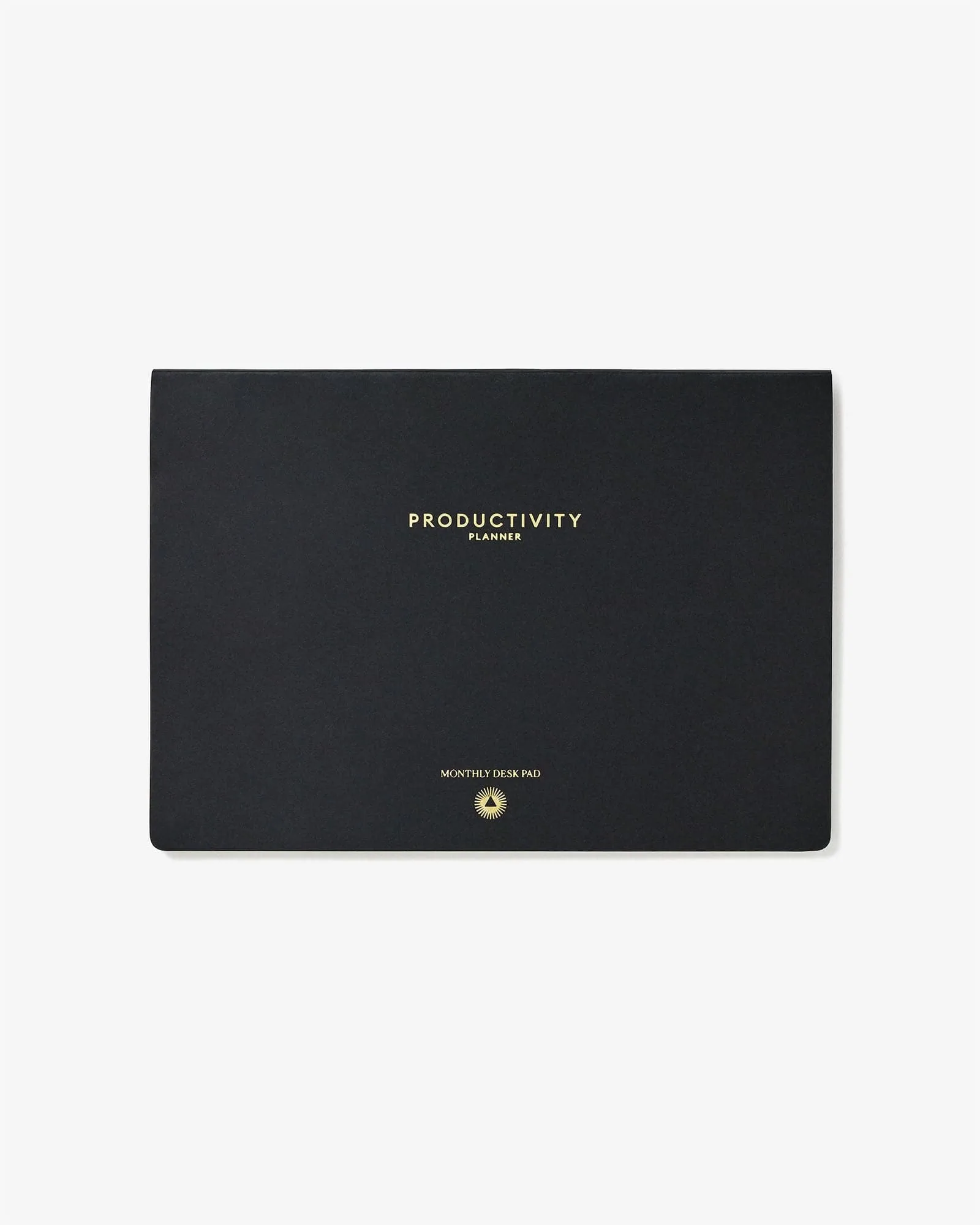
- Productivity Daily Desk Pad: Undated all-in-one desk pad that tracks schedule, tasks, habits, mood, water intake, and mindful notes every day. One sheet holds both your weekly goals and the daily evidence of how you worked toward them, so you do not need a separate habit tracker.
- 24k Gold Engraved Create Pen: 24k gold-plated brass pen with a refillable black ink ballpoint cartridge, engraved with 'Thank Yesterday. Love Today. Create Tomorrow.' A refillable pen stays with the pad long-term, which matters if your weekly routine depends on writing in it every day.