Quick answer
Choose toys that match the motor skill your baby is working on right now, not the age on the box. For 6 to 12 months, that means one toy for sitting and grasping, one for mouthing and texture, and one for pulling up or crawling. Buy two or three at a time and rotate them.
Between 6 and 12 months, your baby changes faster than at almost any other stage. A toy that is perfect at 7 months can be boring by 10 months, and a toy that is too advanced just gets ignored. The fix is not to buy more, but to buy for the milestone your baby is practicing this month.
This guide gives you decision rules instead of a long list. You will see how to read a product page, which materials hold up to daily mouthing, and which specific toys from Montessori Generation fit each phase. Every recommendation is based on the catalog facts supplied for each product.
Montessori
Start with the milestone, not the age range
Age labels on Montessori toys are a starting point, not a rule. A 7-month-old who sits steadily and reaches for everything needs different input than a 7-month-old who is still wobbly. Watch what your baby does for ten minutes: if they swat, grab, and bring things to their mouth, they are in a grasping phase. If they rock on hands and knees or pull on furniture, they are in a movement phase.
Match the toy to the phase you see. Grasping babies do well with light, easy-to-hold objects. Movement babies need something that rewards reaching, rolling, or pulling up. If you buy for the phase your baby is in, the toy gets used every day instead of sitting in a basket.
- Sitting and grasping: choose light toys under about 1 lb that fit in one hand.
- Mouthing: choose washable materials with no small detachable parts.
- Crawling and pulling up: choose toys that stay put or roll slowly, not ones that shoot away.
Use three buying rules for first Montessori toys
Rule one: one toy, one skill. A toy that tries to teach colors, numbers, and motor skills at once usually does none of them well for an infant. Rule two: simple materials over batteries. Wood, food-grade silicone, and cloth let your baby control the action, which is the whole point of Montessori play. Rule three: check the care instructions before you buy, because everything at this age ends up in a mouth.
A practical test: if you cannot explain in one sentence what your baby will do with the toy, skip it. 'She will bat it and hear a sound' or 'he will pull it toward himself' are good answers. If the answer is 'it looks cute on the shelf,' it is not a first toy.
- Prefer toys your baby can operate alone, without you pressing a button.
- Check the material and cleaning method on the product page before checkout.
- Rotate two or three toys at a time; store the rest out of sight.
Match materials to your daily routine
Cloth and plush toys are the easiest to keep clean because most are machine washable, which matters when a baby mouths everything. They are also the softest option for a baby who is just learning to hold and hug. Wood toys hold up for years and give clear, satisfying feedback, but they need damp-cloth cleaning and should not sit in water. Silicone sits in the middle: it is soft enough for sore gums and easy to hand wash.
Think about where the toy will live. A toy for the crib or stroller should be light and washable. A toy for the floor should be stable enough to survive being sat on and dropped. If a toy needs spot cleaning only, that is fine, but know it before you buy so you are not surprised.
- Machine washable: best for car rides, strollers, and daycare bags.
- Wood: best for floor play at home, but keep it dry.
- Silicone: best for teething babies who chew constantly.
Build a small rotation instead of a big collection
Infants get more from a few toys they see every day than from a full shelf. A workable 6-to-12-month rotation is three toys: one soft comfort or contrast toy, one grasping toy, and one movement toy. Swap one out every week or two, or when your baby stops reaching for it. This keeps novelty high without spending more.
If you are shopping for a holiday or birthday, this is also the easiest way to avoid duplicates. One toy per skill means grandparents can add something new without overlapping what you already own.
- Keep the rotation to three toys and store the rest.
- Replace a toy when your baby ignores it for several days in a row.
- Write the milestone on a note if you are buying ahead for a gift.
Decision rules for buying Montessori toys at 6 to 12 months
- If your baby is mostly sitting and grabbing: Choose one light grasping toy and one soft cloth toy. The Montessori Newborn Contrast Book at 1.8oz and the Montessori Spinning Drum both fit this phase because your baby can operate them without help. Buy these two first; they cover grasping and cause-and-effect.
- If your baby mouths everything constantly: Prioritize washable or food-grade materials. The Montessori Squeaky Block Set is food-grade silicone and hand washes in warm water, while the Montessori Newborn Contrast Book is machine washable on lower settings. Check the care line on the product page before you buy.
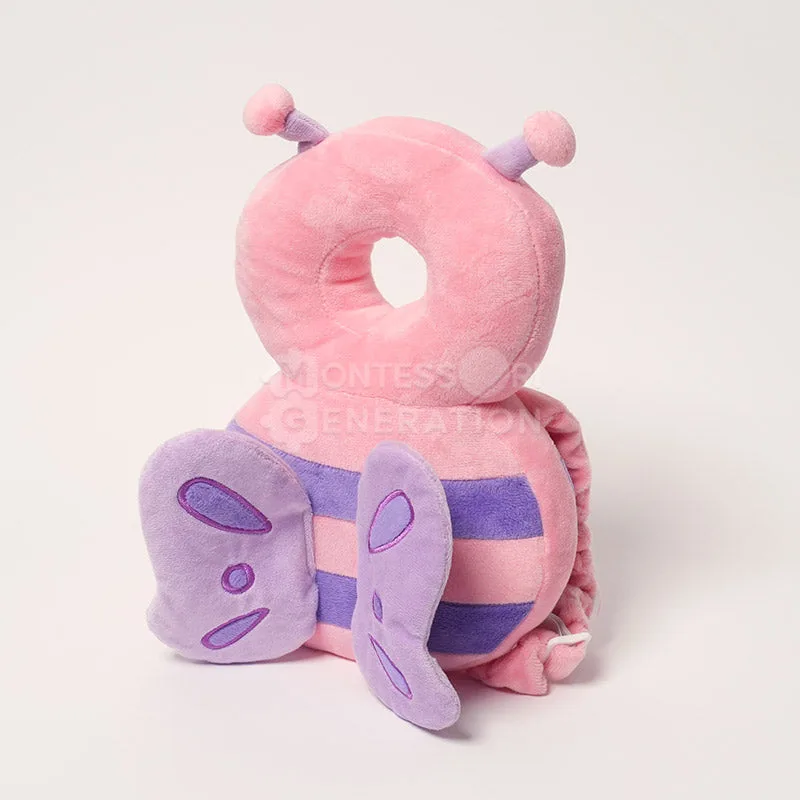
- If your baby is pulling up, cruising, or crawling: Add one movement toy. The Montessori Baby Guardian is designed for the first-steps stage at 6+ months, and it is machine washable after floor use. Keep the total rotation at three toys and store the rest.
- If you are buying a gift without knowing the milestone: Pick a toy that spans a wide age range with a simple action, such as the Montessori Spinning Drum (age 0+) or the Montessori Squeaky Block Set (age 6+ months). Avoid toys that depend on a specific skill the baby may not have yet. A wide age range plus one clear action is the safest gift.
Catalog facts that matter at this stage
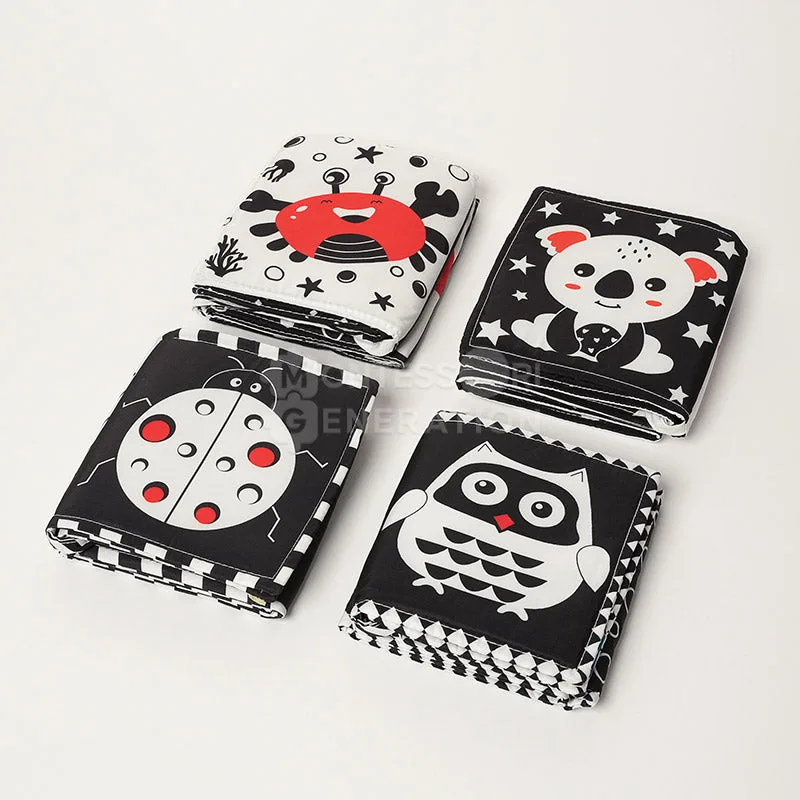
- Montessori Newborn Contrast Book: Age 0+, soft 100% safe cloth, 6.5" x 5.9" x 1.3", 1.8oz, machine washable on lower settings. It is light enough for a 6-month-old to hold and soft enough to survive daily mouthing, and it can be washed instead of wiped.
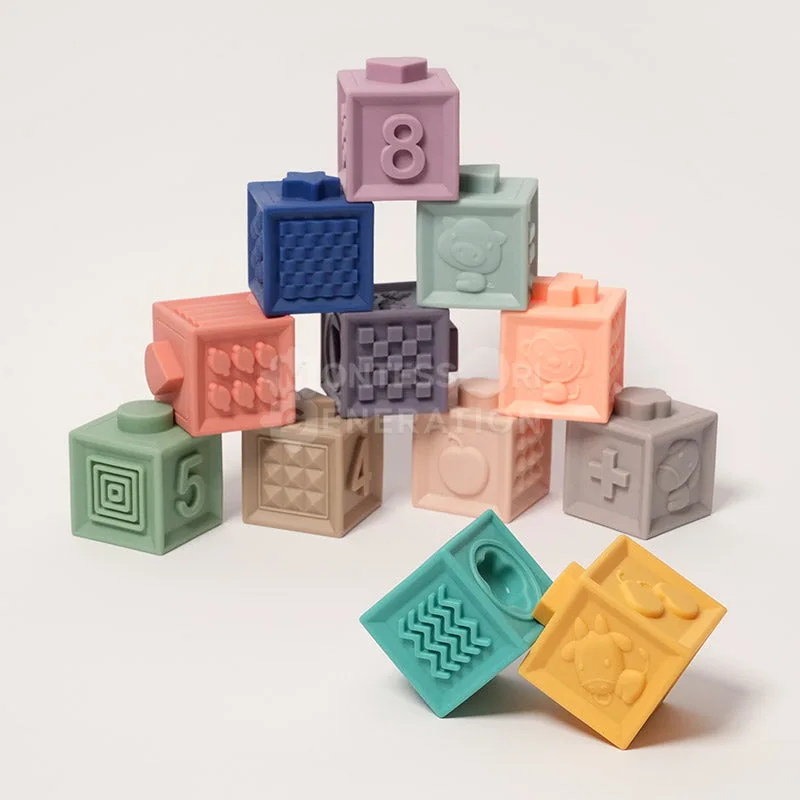
- Montessori Squeaky Block Set: Age 6+ months, (12) silicone blocks, food-grade silicone, 8.3" x 2.0" x 6.0", 1lb 2.9oz, handwash with warm water and mild detergent. Food-grade silicone is a practical choice for a teething baby, and the blocks work for grasping now and stacking later.
- Montessori Spinning Drum: Age 0+, eco-friendly wood with non-toxic paint, 6.9" x 4.9" x 5.8", 15.0oz, clean with a damp cloth and mild soap, avoid prolonged contact with liquids. It gives a sitting baby a simple cause-and-effect action to repeat, and the wood construction holds up beyond the first year.
- Montessori Baby Guardian: Age 6+ months, 7.9" x 11.8", 6.3oz, soft elastic plush material with PP cotton filler, machine washable at lower temperatures. It supports the pulling-up and first-steps phase while staying light enough to wear, and it can go in the wash after floor time.
Who this approach fits
Best for
- Parents buying a first small set of Montessori toys for a baby between 6 and 12 months
- Gift buyers who know the baby's current milestone and want one useful toy
- Families who prefer washable, battery-free toys for daily floor and stroller use
Not for
- Parents looking for a large all-in-one toy collection for the whole first year
- Buyers who want electronic toys with lights, music, or app features
- Anyone shopping for a baby under 6 months who is not yet reaching or grasping
Pick two or three toys that match what your baby is doing this month, check the material and cleaning method, and rotate them instead of buying more. The right first Montessori toys are the ones your baby can use without your help.