Quick answer
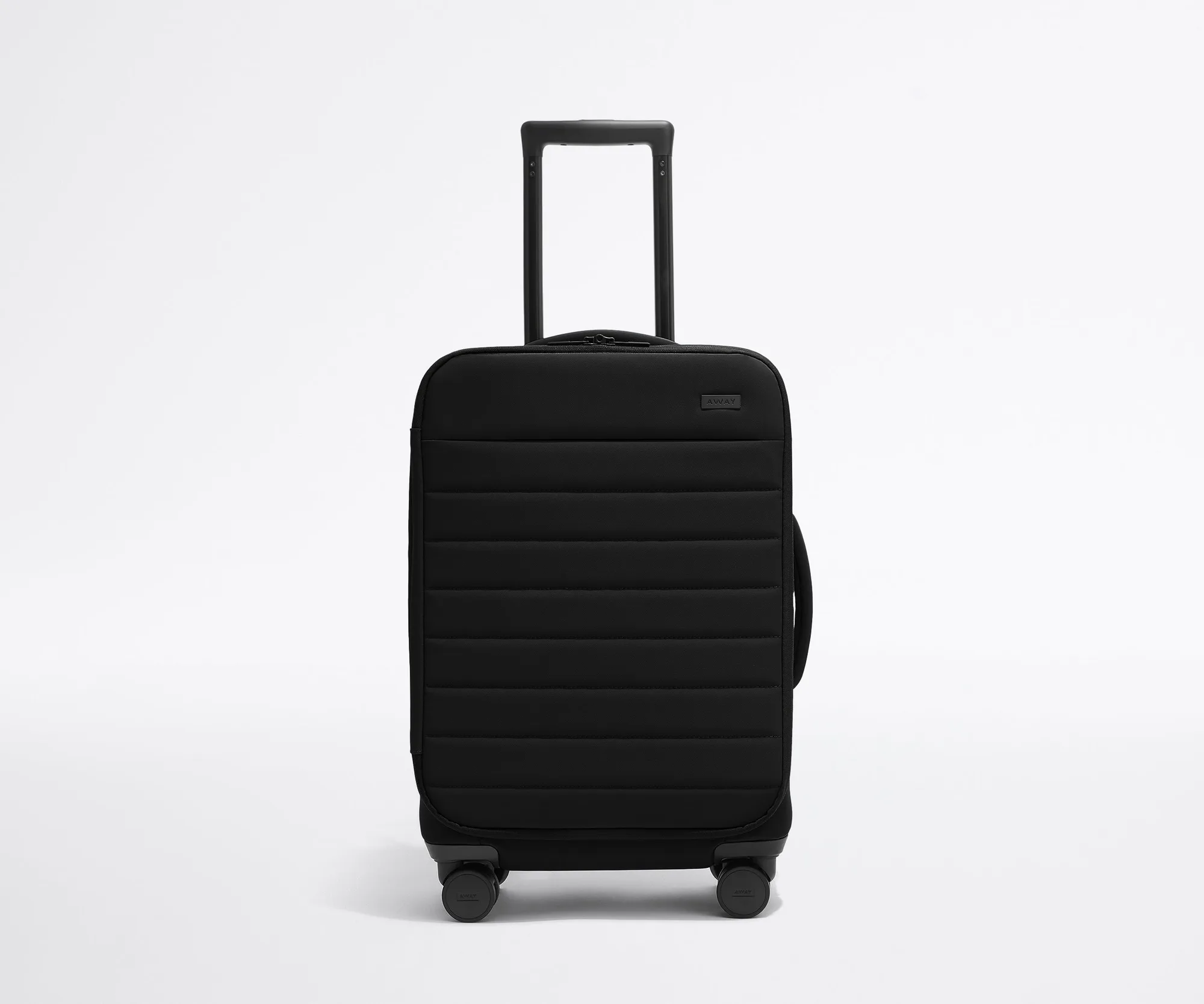
For most U.S. domestic flights, choose a carry-on that fits within 22 x 14 x 9 inches; for international or budget airlines, stay closer to 21 x 14 x 8 inches and always confirm the specific carrier's published limits. If you fly a mix of both, a smaller softside carry-on like the Softside Carry-On in is the safer everyday choice because it is designed to fit in the overhead bin of most major airlines and suits 2–4 day trips.
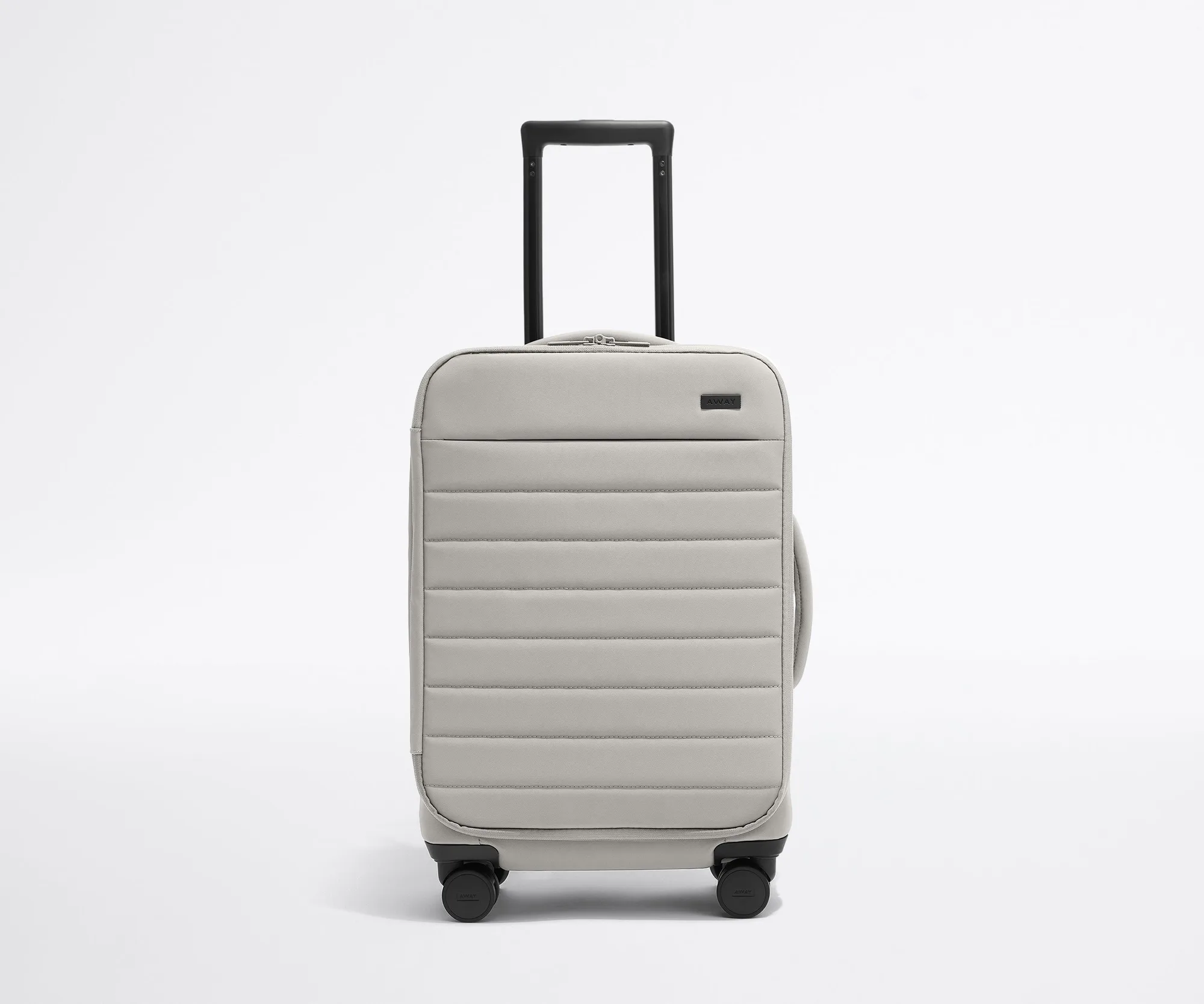
Softside Carry-On in
Carry-on rules are not one-size-fits-all. Two bags can both be called 'carry-on' yet only one squeezes into a regional jet's overhead bin or passes a strict international sizer. The difference usually comes down to a few inches in height, depth, and how much the bag expands when packed.
This guide walks through the real decision points: how to read airline carry-on dimensions, when an international carry-on size matters, and how Away carry-on sizes map to different trip lengths. You will also see which features on a softside bag make the biggest difference when space is tight.
Start with the airline, not the bag
Before you compare carry-on luggage size charts, pull up the specific airline's current carry-on page. Most major U.S. carriers allow a bag around 22 x 14 x 9 inches, but budget and international airlines often cap height at 21 inches or less. The published dimensions are the only ones that matter at the gate, and they can change without much notice.
Measure your packed bag, not the empty shell. Softside bags can bulge when full, and a bag that measures 22 inches empty may exceed the sizer once you add a laptop and a pair of shoes. If you are close to the limit, pack it, then measure height, width, and depth at the widest points.
- Write down the exact limits for every airline you fly most often, then buy for the strictest one.
- Check whether the airline measures wheels and handles; most do, so include them in your measurement.
Match carry-on size to trip length
A carry-on that is too large for a 2-day trip wastes effort, and one that is too small for a 10-day trip forces a checked bag anyway. As a rule of thumb, a carry-on works best for 2–4 day trips, while a medium checked suitcase is the better fit for 1–2 week getaways. If you regularly take both short and long trips, owning one of each size is more practical than trying to make one bag do everything.
For weekenders and short work trips, prioritize a bag that fits in the overhead bin on most major airlines and has quick-access pockets for a laptop or jacket. For longer trips, a medium suitcase with expansion gives you room to bring home souvenirs without paying for a second bag.
- If most of your trips are 2–4 days, a carry-on is the only bag you need.
- If you routinely travel 1–2 weeks, plan for a medium checked suitcase plus a personal item.
Know when international carry-on size matters
International carry-on size is often smaller than the U.S. standard, especially on European and Asian carriers. A bag marketed as a carry-on in the U.S. may be too tall for an international sizer, which means you could be forced to check it at the gate. If you fly internationally even a few times a year, choose a bag that stays within the tighter limits rather than one that maxes out domestic allowances.
The trade-off is capacity. A smaller international-friendly carry-on holds less, so you will pack lighter or bring a personal item. That is usually worth it if it keeps you out of the checked-bag line and avoids gate-check fees.
- For international trips, aim for a bag no taller than 21 inches including wheels.
- Use packing cubes to get more usable space out of a smaller carry-on.
Softside vs. hard shell for tight spaces
Softside bags have a practical advantage when overhead space is tight: the exterior can flex slightly, and front pockets keep small items accessible without opening the main compartment. The Softside Carry-On in has two hidden, easy-access front pockets and a front lid opening, which means you can reach a book or charger without unpacking the whole bag in the aisle.
Hard-shell bags offer more structure and protection, but they do not compress the same way. If you frequently fly regional jets or airlines with smaller bins, a softside carry-on is often the more forgiving choice. Just remember that softside bags still have to meet the same published size limits.
- Choose softside if you want front-pocket access and a bit of flex in tight bins.
- Choose hard shell if you check your bag often and want maximum protection.
Decision rules for choosing your carry-on size
- If you fly mostly domestic U.S. carriers: Measure for 22 x 14 x 9 inches and choose a carry-on that fits within those limits when packed. The Softside Carry-On in is designed for this range and fits in the overhead bin of most major airlines. Verify the strictest airline you fly before you buy.
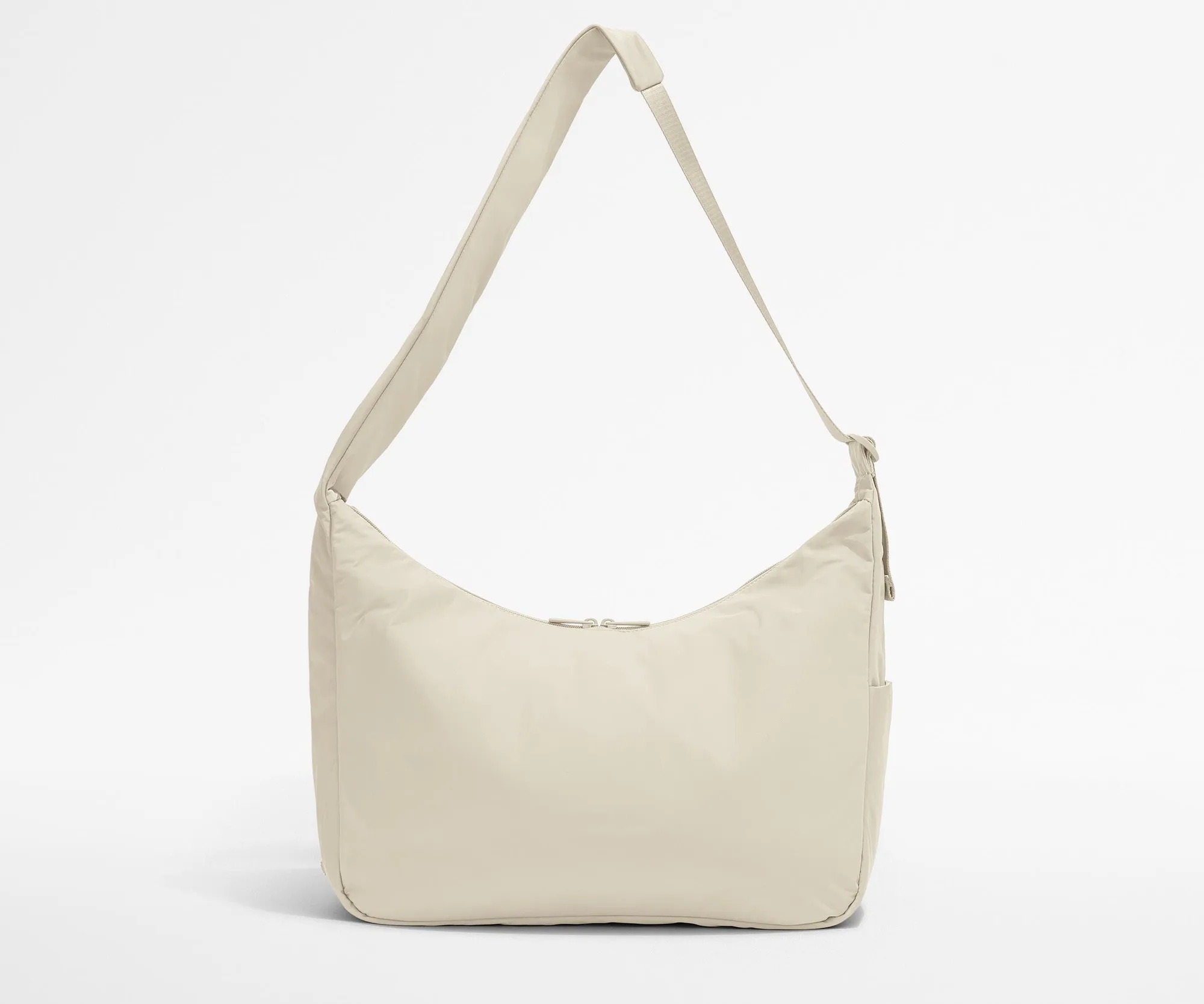
- If you fly international or budget airlines: Stay at or below 21 inches tall including wheels, and expect to pack lighter. A smaller carry-on plus a personal item like the https://awaytravelenm.com/products/featherlight-crossbody-large-salt-white-d9662ddebdce9aa488137b26-1800763Large Featherlight Crossbody in Salt White gives you more total capacity without exceeding the sizer. Smaller bag, lighter packing, no gate-check surprises.
- If your trips run 1–2 weeks: A carry-on alone will likely be too tight. Choose a medium checked suitcase such as the Softside Medium, which is sized for 1–2 week getaways and includes expansion for extra packing room. Pair it with a carry-on for the best of both sizes.
Away carry-on sizes and features that affect fit
- Softside Carry-On in: As the smallest of four size options, our Carry-On can easily fit in the overhead bin of most major airlines and is ideal for 2-4 day trips. It also features two hidden, easy-access front pockets, a front lid opening, and a durable, high-strength nylon exterior. This is the safest carry-on size for mixed domestic and international travel, and the front pockets keep essentials reachable without opening the main compartment.
- Softside Medium: Our Medium suitcase size is perfect for any 1-2 week getaway. We've even incorporated our iconic expansion feature for effortless packing. If your trips regularly run longer than four days, a medium checked suitcase with expansion gives you the capacity a carry-on cannot, while still being easy to manage.
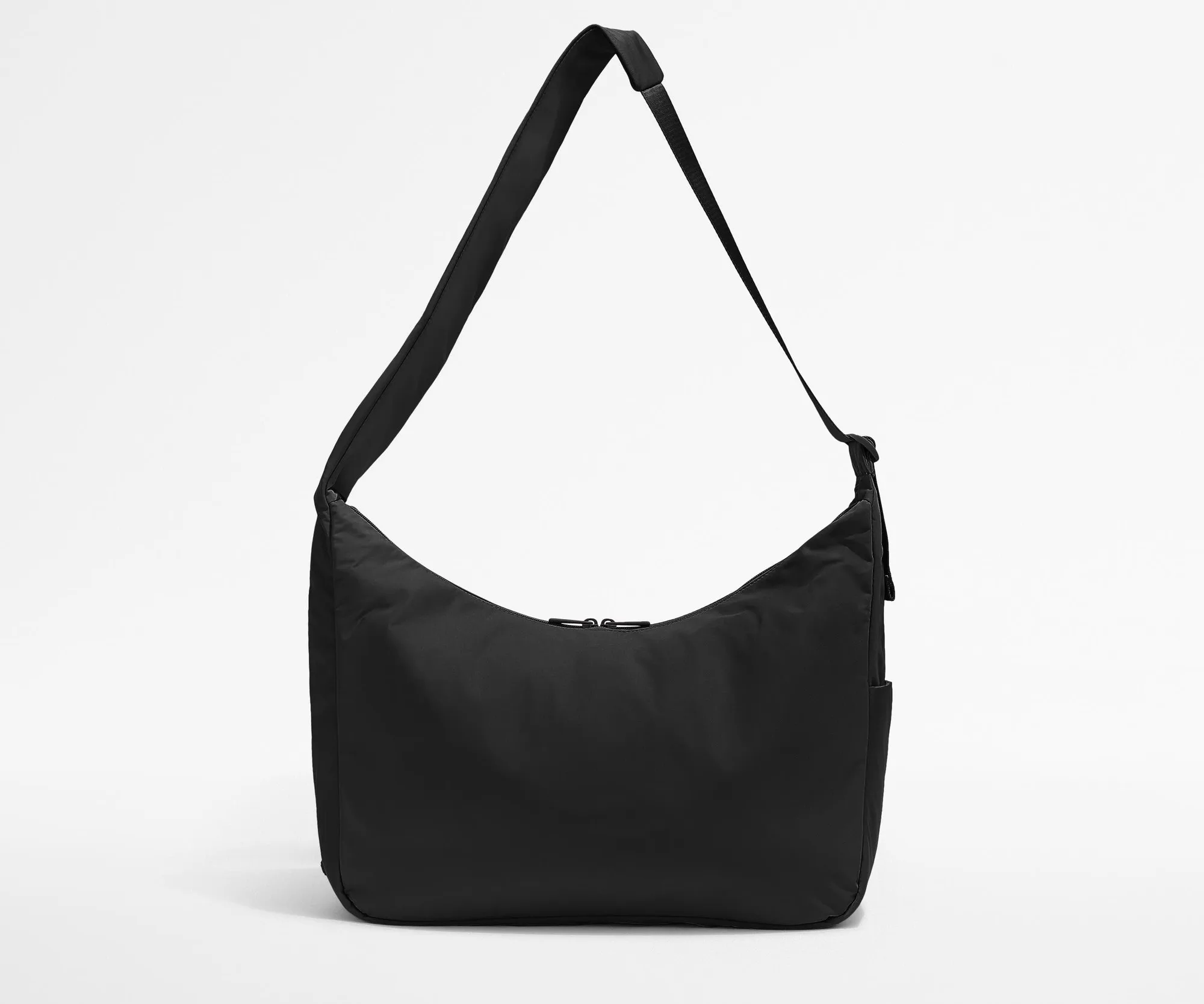
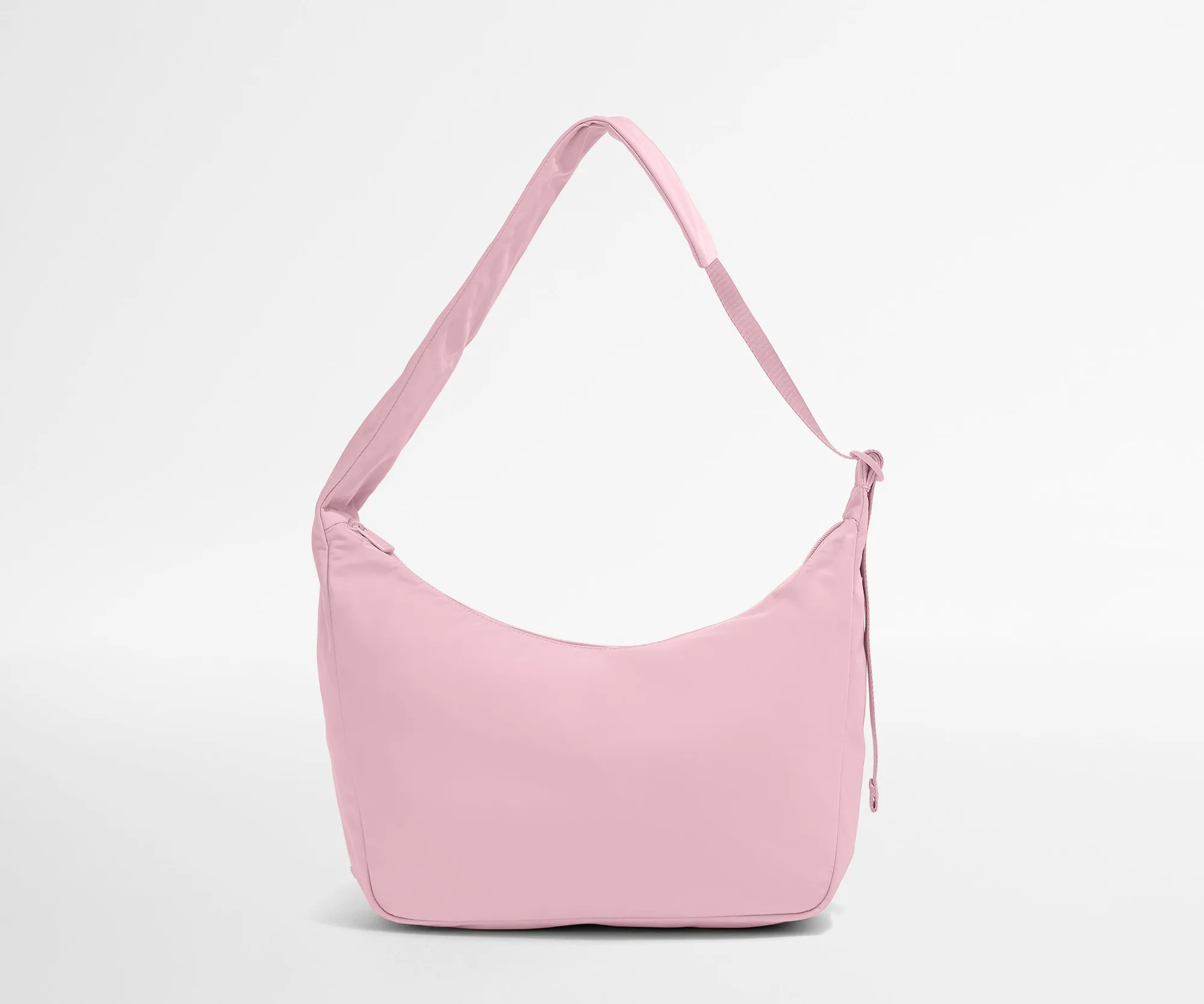
- Large Featherlight Crossbody in Salt White: Weighing in at just under a pound, this large crossbody bag's softly structured shape drapes well when worn, and it has a 16" laptop sleeve, an extra inner zip pocket, an interior water bottle pocket, and another side pocket. A lightweight personal item like this keeps your carry-on under the size limit by moving your laptop and water bottle out of the main bag.
Who should choose which carry-on size
Best for
- Travelers who take 2–4 day trips and want a bag that fits in most major airline overhead bins
- Frequent flyers who mix domestic and international routes and need a flexible softside carry-on
- Anyone who wants quick-access front pockets and a front lid opening instead of a single clamshell
Not for
- Travelers taking 1–2 week trips who need a checked suitcase like the Softside Medium
- Flyers who prefer a hard-shell exterior and do not need front-pocket access
- Anyone who regularly packs more than a carry-on can hold and would rather check a bag
The right carry-on size is the one that fits the airlines you actually fly and the trips you actually take. Check the strictest carrier's limits, measure your packed bag, and choose a size that matches your typical trip length. If you fly a mix of routes, the Softside Carry-On in is a practical starting point, with the Softside Medium ready when your itinerary stretches past a few days.