Quick answer
For a playroom or reading nook, choose a floor pillow for kids that is firm enough to support sitting, sized to fit your space, and easy to clean. If your child uses the nook for active play, pick a smaller, lighter pillow they can move themselves. For long reading sessions, choose a larger, thicker pillow with a washable cover.
A pillow can make or break a playroom or reading nook. The right one turns a hard floor into a comfortable spot for stories, building, and quiet time. The wrong one slides around, flattens too fast, or ends up shoved in a corner.
This guide gives you concrete decision rules for choosing a pillow for kids. You will learn how size, support, and material affect daily use, and how to match a pillow to your child's age and the way your space is used. We will also look at how a pillow fits into a larger playroom setup, including climbing frames and playroom bundles.
Start with how the space is used
Before you compare pillows, decide what the spot is for. A reading nook needs a pillow that supports a child sitting upright for 20 to 30 minutes. A playroom corner used for building and floor games needs a pillow that is easy to move and does not trap toys. If the same spot does both, choose a medium-firm floor pillow that holds its shape but is light enough for a child to drag.
Measure the available floor area. A pillow that covers most of the nook leaves no room for a book basket or a small toy bin. Leave at least 30 cm of open floor around the pillow so your child can get on and off without stepping on the pillow edge.
- Reading nook: prioritize back and seat support over size.
- Active play corner: prioritize a lightweight, easy-to-move pillow.
- Shared space: choose a medium-firm pillow with a removable cover.
Size and thickness: match the pillow to your child
A pillow that is too thick can be uncomfortable for a small child because their legs dangle or their back rounds. A pillow that is too thin offers little support on a hard floor. As a rule, a floor pillow for kids should be thick enough that your child's hips are slightly higher than their knees when seated, but not so thick that they need to climb onto it.
For toddlers, a smaller pillow around 40–50 cm wide is usually enough. For school-age children, a larger pillow around 60–80 cm wide gives them room to shift position during a longer story. If two children often share the nook, choose a wider pillow or two smaller ones so each child has their own space.
- Toddler: small, low pillow they can climb onto easily.
- School-age: larger, medium-thick pillow for longer sitting.
- Two children: two small pillows or one wide pillow with a flat center.
Support and fill: what to look for
Support matters more than softness for a playroom pillow. A pillow that is too soft bottoms out quickly and leaves your child sitting on the floor. Look for a fill that springs back after you press it. If the pillow stays compressed, it will not support a child for long.
A removable, washable cover is practical in a playroom because spills, crumbs, and craft messes happen. Check that the cover has a secure closure so the fill does not escape during play. If the pillow will sit near a climbing frame or Swedish wall, choose a cover that can be wiped or machine washed often.
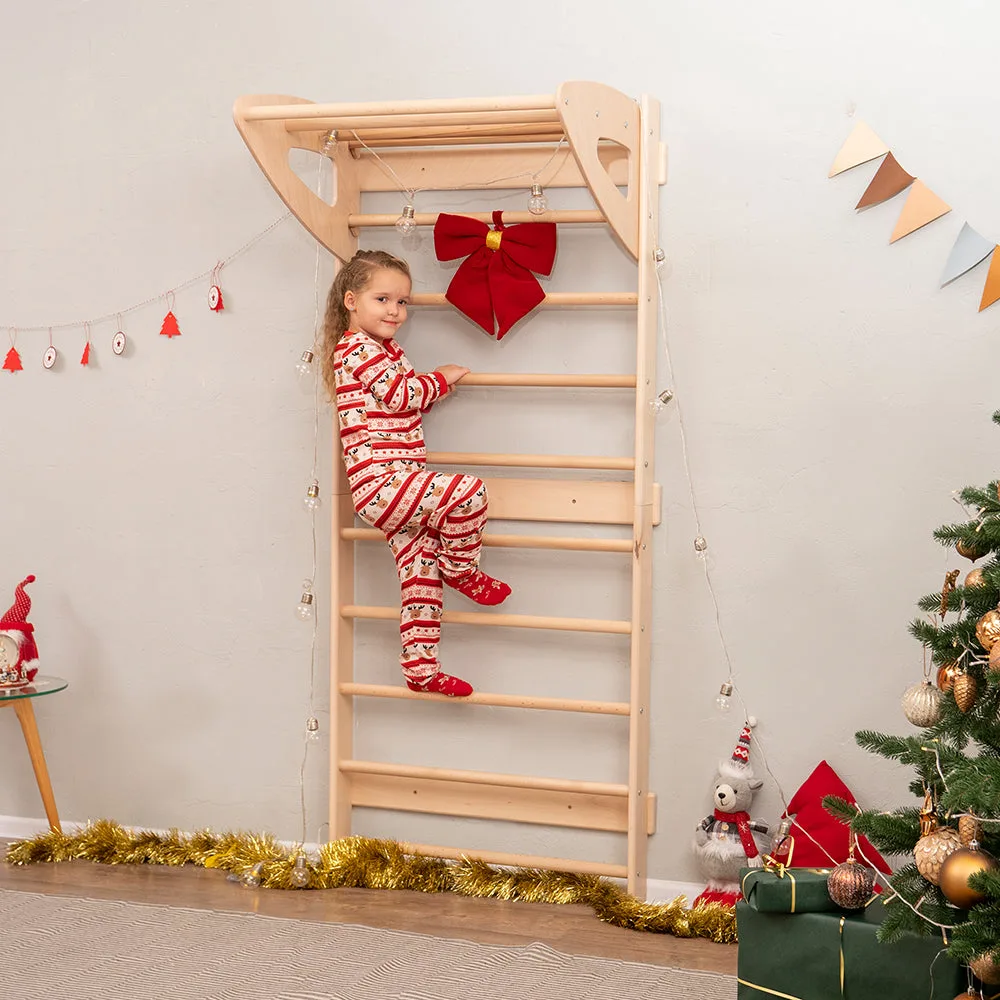
Swedish wall
- Press the pillow: it should return to shape within a few seconds.
- Choose a removable cover if the pillow will be used daily.
- Avoid loose fills that shift to one side and create uneven support.
Safety and placement rules
Pillows are not for sleeping for babies under one year, and they should not be placed inside a crib or floor bed for infants. In a playroom, keep pillows out of active climbing zones where they can become a tripping hazard. If your child uses a climbing frame or indoor climbing wall, store the pillow away from the landing area.
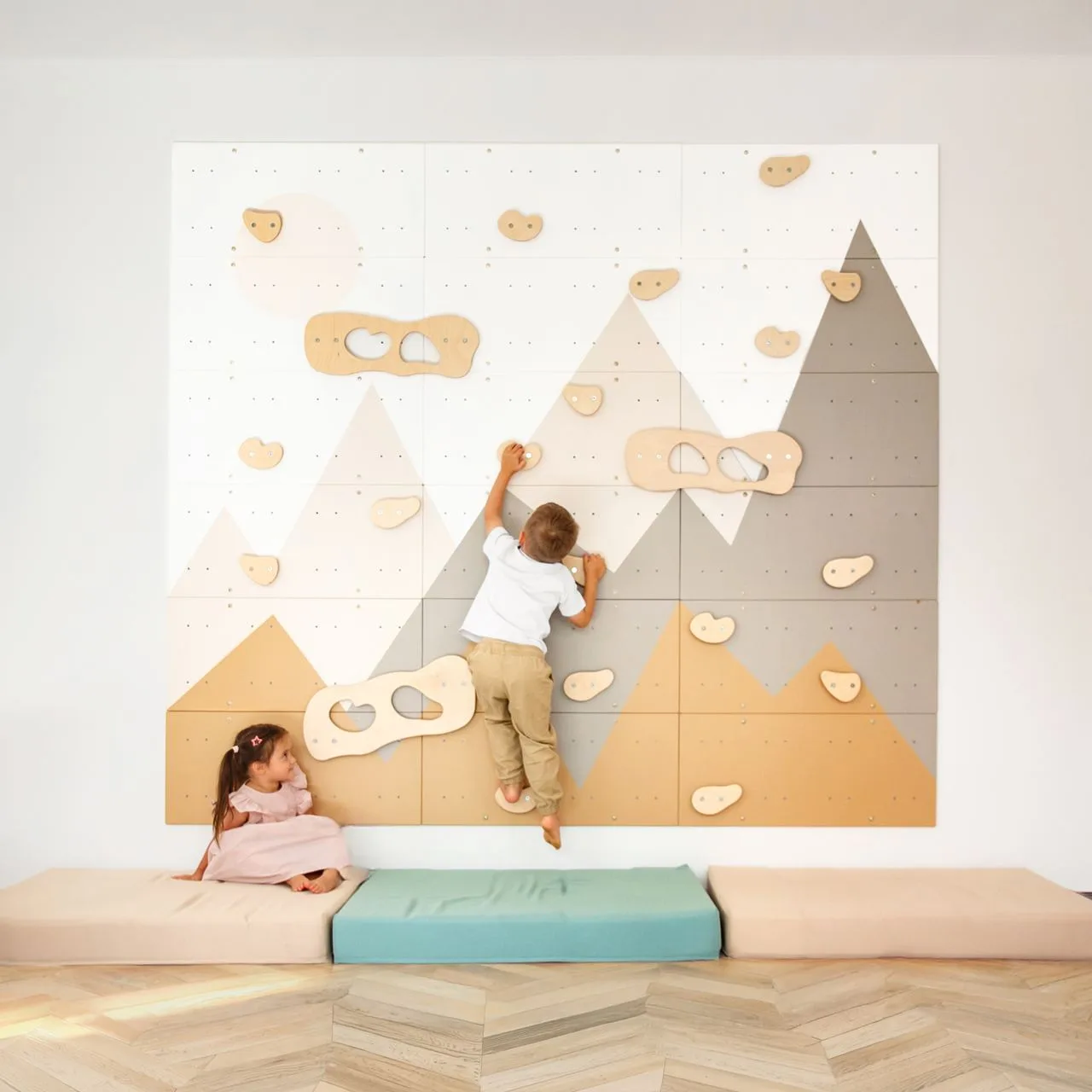
indoor climbing wall
Place the pillow against a wall or a low shelf so it does not slide during use. If the floor is smooth, consider a pillow with a non-slip base or place a small rug underneath. Check the pillow regularly for tears or flattened spots, especially if it is used near wooden play equipment.
- Keep pillows out of cribs and infant sleep spaces.
- Move pillows away from climbing and swinging zones.
- Check seams and fill monthly for wear.
How a pillow fits into a larger playroom setup
A pillow is a small piece, but it affects how the whole room works. In a playroom with a climbing frame, a pillow gives your child a rest spot between active bursts. In a reading nook, it defines the quiet zone. If you are building a playroom from scratch, decide on the pillow after you know the footprint of the larger pieces.
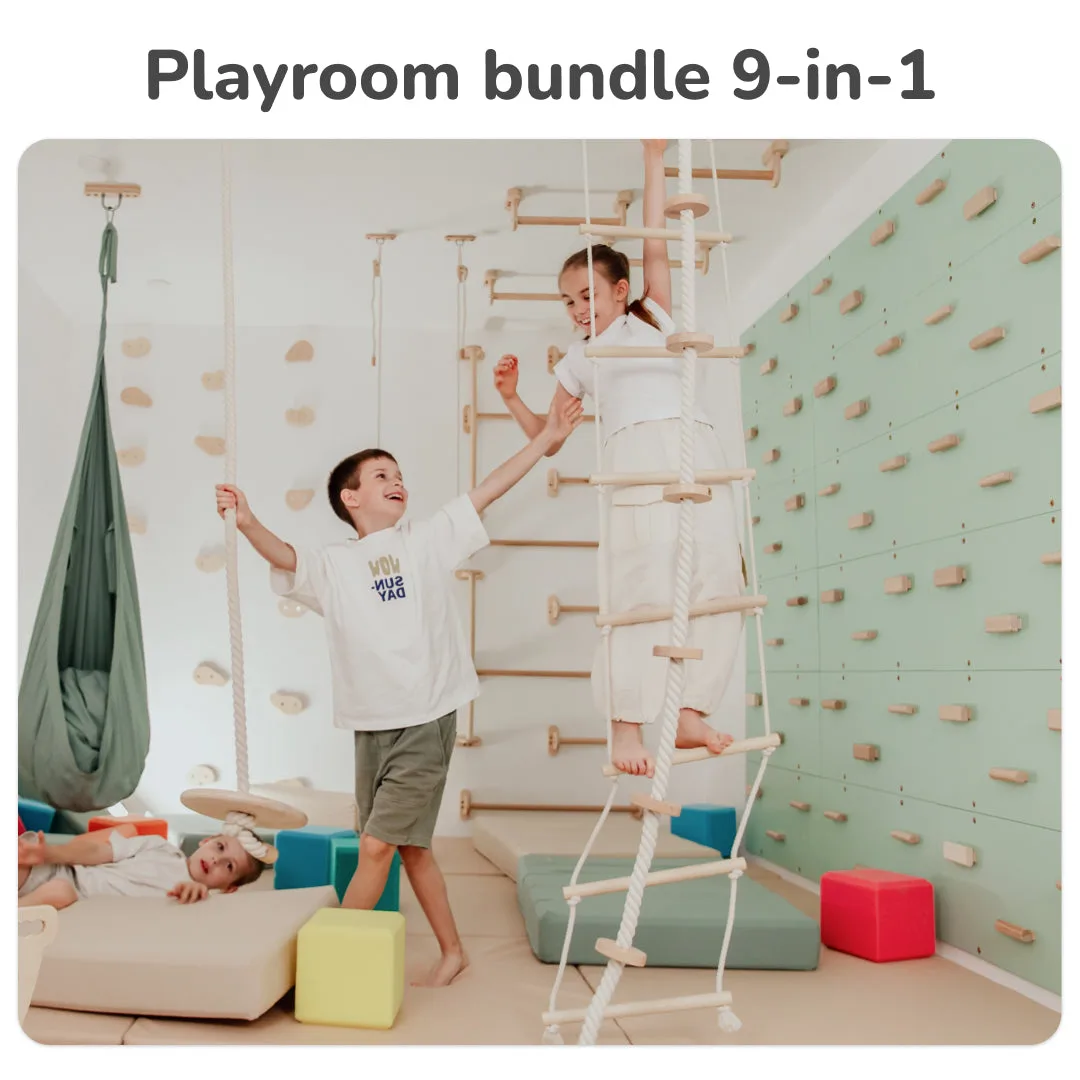
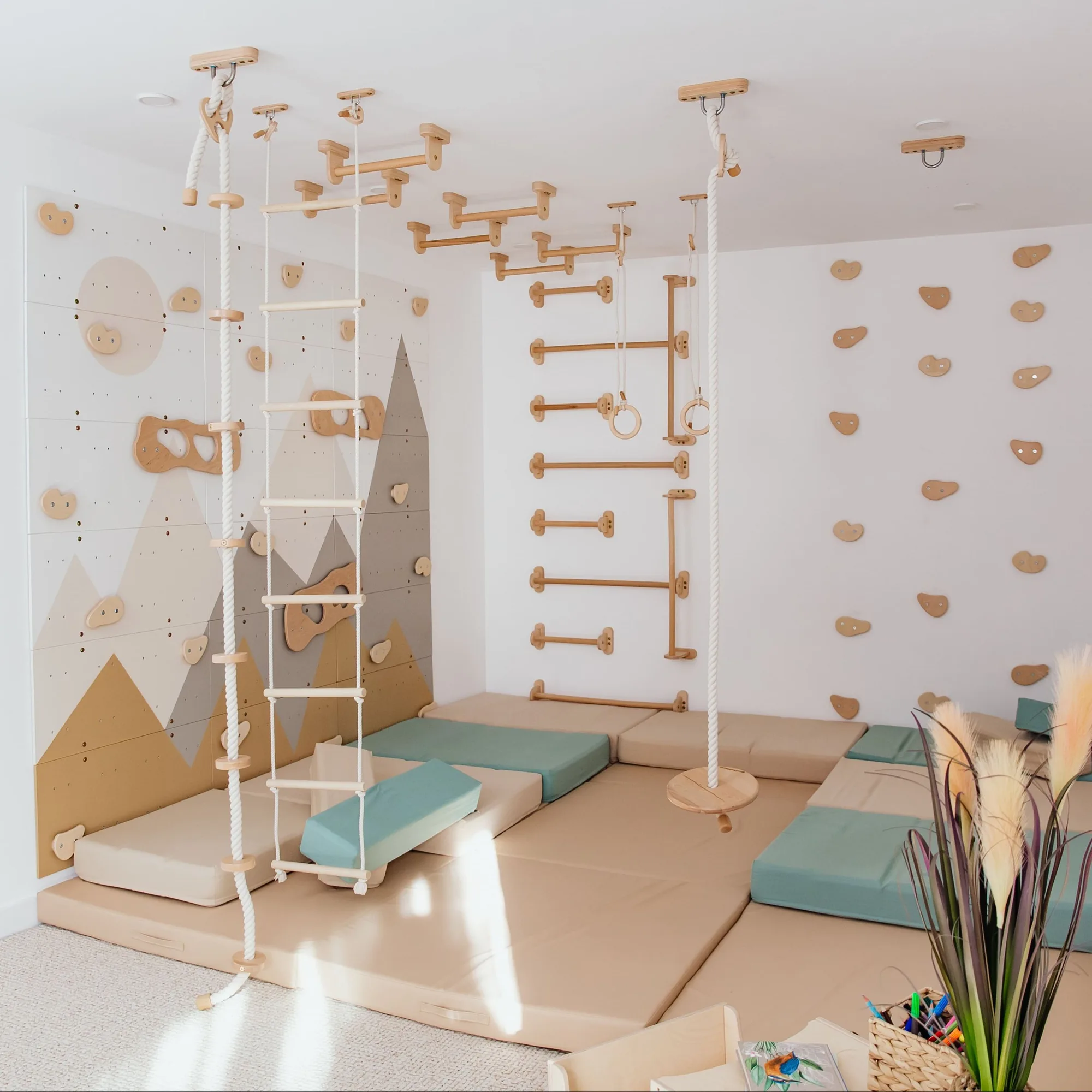
WoodandHearts playroom sets include climbing and sensory elements, and a pillow can complement them without taking over the room. For example, the Complete 9-in-1 Adventure Playroom combines climbing, swinging, building, and sensory play, so a compact floor pillow works better than a large beanbag that blocks movement. The Climbing Wall Playground is designed for kids from 3 years and up and fosters motor skill development, balance, and confidence, so a firm pillow placed nearby gives children a comfortable place to pause.
- Choose a pillow that can be moved out of the way during active play.
- Match pillow size to the open floor area left by larger equipment.
- Keep the reading nook separate from the climbing zone.
Decision rules for choosing a playroom or reading nook pillow
- If the space is mainly for reading: Choose a medium-firm floor pillow that is thick enough to support an upright sitting position and wide enough for your child to shift comfortably. Prioritize back and seat support over portability.
- If the space is mainly for active play: Choose a smaller, lightweight pillow that your child can move without help and that can be stored out of the climbing zone. Prioritize easy storage and a non-slip base.
- If the room is small: Measure the open floor area after placing larger equipment like a climbing wall or playroom set. Choose a pillow that leaves at least 30 cm of clear floor around it. A pillow that blocks movement will end up unused.
- If two or more children share the space: Choose two smaller pillows rather than one large one so each child has their own spot and the pillows can be separated when needed. Separate pillows reduce conflict and are easier to clean.
- If you are unsure about the fill: Press the pillow firmly. If it springs back quickly, it will support a child. If it stays flat, it will not last through daily use. A quick press test saves a return later.
Product facts that affect your pillow choice
- Complete 9-in-1 Adventure Playroom: This all-in-one playroom solution combines climbing, swinging, building, and sensory play elements, making it perfect for active kids of different ages. Because the set already fills the room with active play, a compact, easy-to-move pillow is a better fit than a large fixed cushion.
- Climbing Wall Playground: Ideal for kids from 3 years and up and who love adventure and physical activity, this gym fosters motor skill development, balance, and confidence. A firm pillow placed away from the climbing wall gives children a comfortable rest spot without interfering with the climbing area.
- Indoor Climbing Wall: The compact Indoor Climbing Wall from WoodandHearts is perfect for even the smallest room, and toddlers and preschoolers can practice with ease, requiring no special preparation. In a small room with a climbing wall, choose a small pillow that can be stored on a shelf or under the wall when not in use.
Is a floor pillow right for your playroom?
Best for
- Families with a dedicated reading nook or quiet corner.
- Playrooms with open floor space and active play equipment.
- Children aged 3 and up who can move a pillow themselves.
Not for
- Infants under one year or any sleep space.
- Rooms with no clear floor area around climbing equipment.
- Families who need a fixed, heavy seating piece that will not move.
A good pillow for kids is the one that matches how your child actually uses the space. Measure the floor, test the fill, and choose a size that leaves room for play. If you are setting up a playroom with climbing equipment, pick a pillow that can move out of the way and store easily. That way, the reading nook stays comfortable and the active zone stays clear.