Quick answer
For most card game events, buy a playmat that covers your play area plus a card-width margin on each side, choose a smooth cloth surface if you double-sleeve or use glossy sleeves, and pick a thickness that rolls or folds without creasing. If you play at crowded tables, prioritize a compact mat over a larger one; if you play at home, thickness matters less than surface feel.
Start with the table, not the artwork
Event tables are often narrower than home tables. Before you shop, measure the usable depth and width of the table you play on most, then subtract space for a drink, a deck box, and a sideboard. A mat that overhangs the table edge will curl or slide, and a mat that leaves no room for your elbow forces you to lift cards constantly.
If you play at multiple venues, measure the smallest table you expect to use. That number becomes your maximum mat size. Players who only play at home can size up for comfort.
Match surface material to your sleeves
Playmat surfaces are not interchangeable. A smooth, tightly woven cloth lets glossy or double-sleeved cards slide when you need them to and stay put when you set them down. A softer, brushed surface adds friction, which helps single-sleeved or matte cards stay in place but can make shuffling and picking up cards feel sticky.
There is no universal best surface. The practical test is your sleeve type: if you double-sleeve, lean smooth; if you play unsleeved or with matte sleeves and hate cards drifting, lean brushed.
Thickness: the travel trade-off
Thicker mats cushion cards and feel premium on a hard table, but they roll into a larger tube and take longer to flatten. Thin mats pack flat in a bag and lie down quickly, but they offer less protection against a rough table surface.
For events where you carry your own bag, a mid-weight mat that rolls into a standard tube is the usual compromise. For home play, thickness is mostly a comfort preference.
Features that actually matter at events
Stitched edges resist fraying after repeated rolling, which matters if you travel weekly. A non-slip backing keeps the mat from sliding on smooth venue tables. Artwork is a personal choice, but a busy, high-contrast print can make small card text harder to read under venue lighting.
Skip features you will not use. A mat with a built-in zone diagram helps new players, but experienced players often prefer a clean surface.
Decision rules for event playmats
- Measure your smallest table first: Use the narrowest table you expect to play on as your size ceiling, then subtract space for a deck box and drink. If the mat would overhang, size down.
- Match surface to sleeve type: Smooth cloth for double-sleeved or glossy cards; brushed cloth for single-sleeved or matte cards that drift. Bring a sleeve to the store if you can feel the surface.
- Choose thickness by transport: Rolled mats travel in tubes; thicker mats are heavier and flatten slower. If you walk or bike to events, go thinner. If you drive and play at one venue, thickness is a comfort choice.
- Check edge stitching and backing: Stitched edges resist fraying; non-slip backing keeps the mat planted on smooth tables. These two features matter more than artwork for weekly play.
- Set a budget before you compare art: Store listings show a catalog comparison price, so compare the actual price against what you get in size and surface. A USD 15-18 mat is a sensible event mat; spend more only for a specific surface or size.
Current playmat options in the store
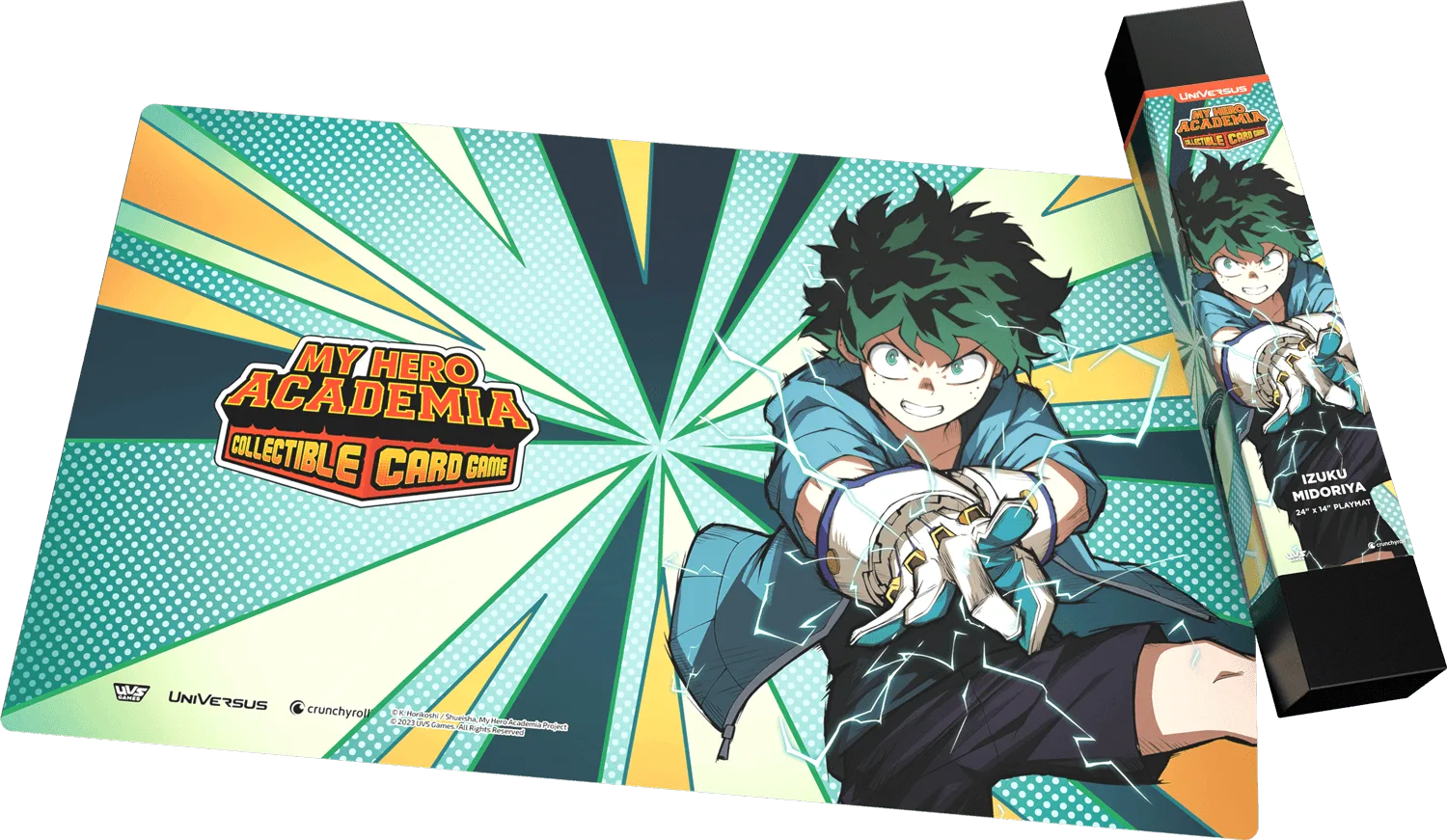
- My Hero Academia Collectible Card Game Set 6: Jet Burn Playmat - Midoriya: My Hero Academia Collectible Card Game Set 6: Jet Burn Playmat - Midoriya is listed at USD 15.49, compared with a catalog comparison price of USD 24.99. A lower entry price makes this a reasonable first event mat if you are still deciding on size and material.
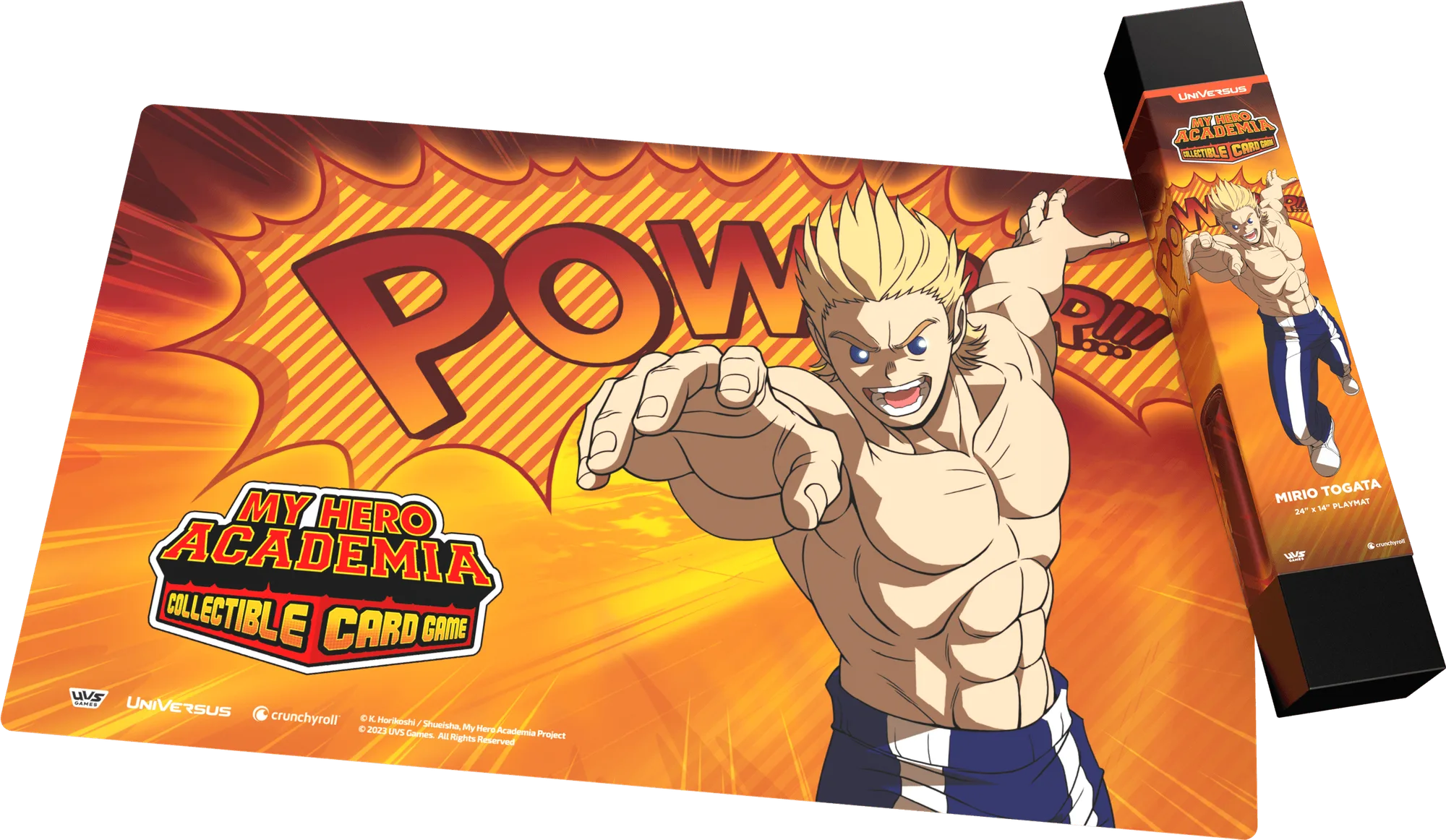
- My Hero Academia Collectible Card Game December 2023 Playmat - Mirio Togata: My Hero Academia Collectible Card Game December 2023 Playmat - Mirio Togata is listed at USD 17.74, compared with a catalog comparison price of USD 24.99. Slightly more than the Midoriya mat, so compare surface feel and artwork before paying the difference.
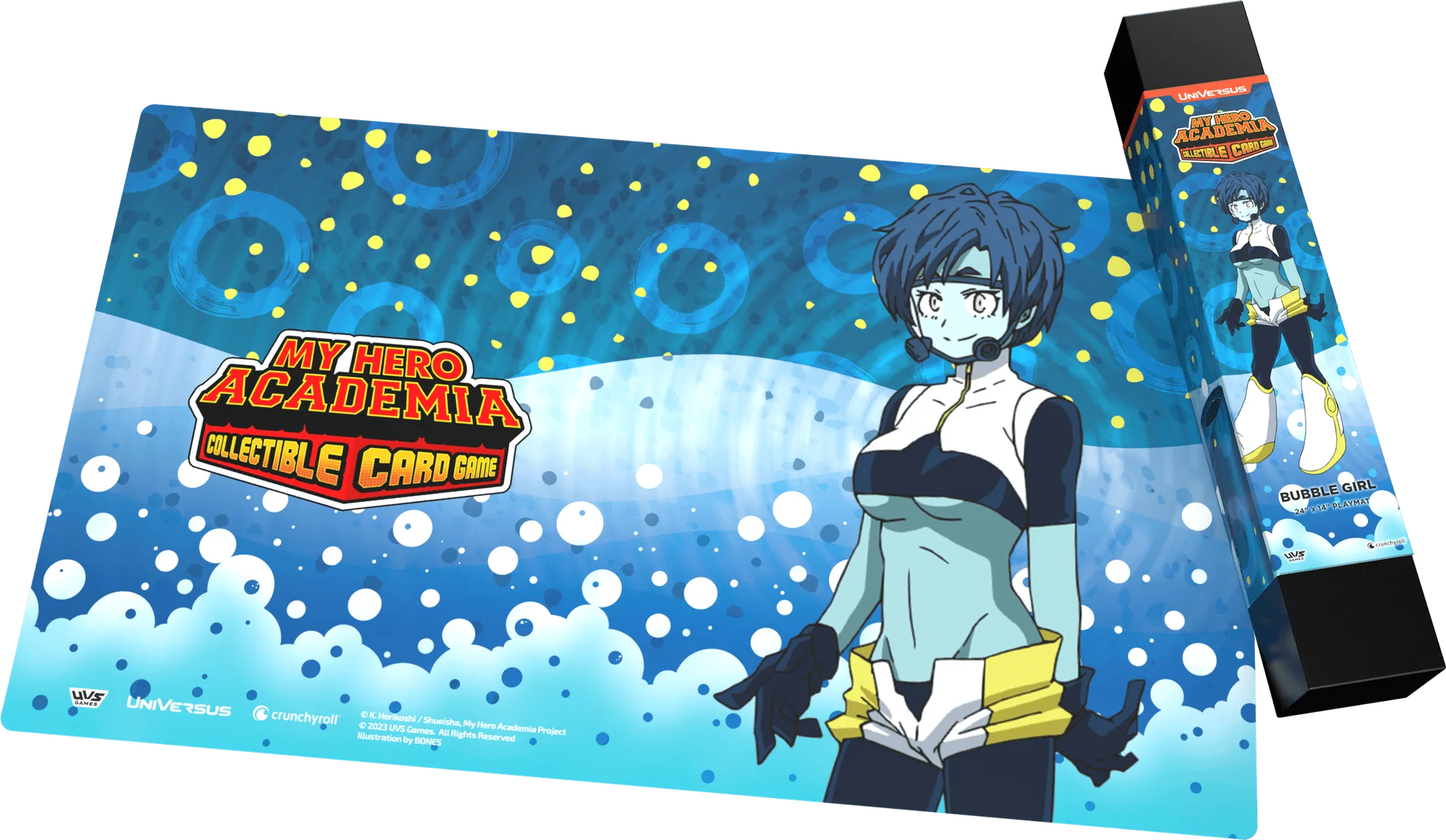
- My Hero Academia Collectible Card Game December 2023 Playmat - Bubble Girl: My Hero Academia Collectible Card Game December 2023 Playmat - Bubble Girl is listed at USD 15.99, compared with a catalog comparison price of USD 24.99. Another sub-USD 16 option, useful if you want a spare mat for travel or a second deck.
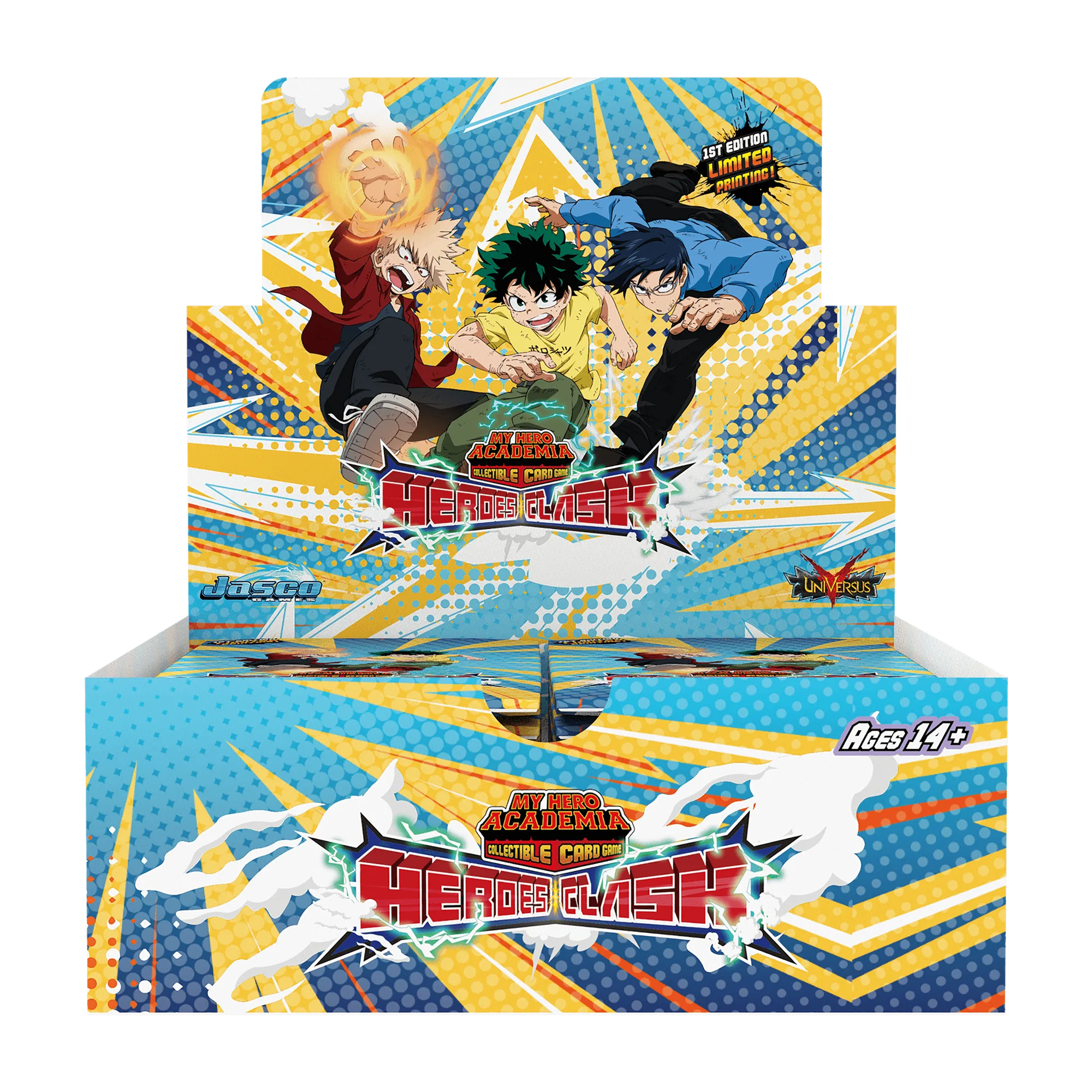
- My Hero Academia Collectible Card Game Set 3: Heroes Clash Booster Display: My Hero Academia Collectible Card Game Set 3: Heroes Clash Booster Display features 8 new characters and introduces Chrome Rare alternate art characters. If you are buying a display for event play, pair it with a mat so your cards have a consistent surface.
Who should buy which playmat
Best for
- Players who attend weekly events and need a mat that rolls into a bag without creasing
- Players who double-sleeve and want a smooth surface for easy card pickup
- Players buying a first mat alongside a booster display
Not for
- Collectors who want a display-only mat and never plan to play on it
- Players who need a custom-sized mat for a non-standard table
- Anyone who prefers a rigid game board over a cloth mat