Quick answer
For sensitive skin, prioritize a facial formula you will actually reapply: very high SPF50+ protection, a short and gentle filter system, no added fragrance, and a finish that does not sting the eyes or pill under makeup. If your skin reacts to many products, start with one facial fluid and test it on a small area for three days before using it daily. A tinted option can replace foundation, but only if the tint does not separate on your skin.
Start with the filter question, not the SPF number
Mineral versus chemical sunscreen is the first decision most sensitive-skin shoppers face. Mineral filters sit on top of the skin and reflect UV, which many reactive users tolerate well, but they can leave a white cast and feel heavier. Chemical or hybrid filters absorb UV and tend to feel lighter and more invisible, but some sensitive users report stinging or redness with certain filter combinations. There is no universally safe filter list; the only reliable test is patch-testing the specific formula on your jawline or inner forearm for three consecutive days. If your skin stays calm, the filter system is likely compatible. If it itches, burns, or turns red, stop and try a different formula rather than layering more products on top.
Match the finish to your skin type and daily routine
The finish decides whether you actually wear the product every day. A fluid or oil-free texture suits oily and combination sensitive skin because it absorbs quickly and reduces the chance of clogged pores. A cream or oil-based texture suits dry or dehydrated sensitive skin because it supports the barrier while protecting. If you wear makeup, choose a formula that dries down without tackiness; a tinted fluid can unify tone and improve luminosity while doubling as a light base. If you reapply over makeup, a stick or a lightweight fluid is easier to layer than a rich cream. The best sunscreen for sensitive skin is the one that feels comfortable enough to reapply, not the one with the most impressive label.
Read the label for what is missing, not just what is added
Sensitive skin often reacts to fragrance, drying alcohol, and essential oils more than to UV filters themselves. Check the ingredient list for fragrance and parfum, denatured alcohol high in the list, and botanical extracts that can irritate. Also look for claims about eye tolerance if you apply near the eyes, and non-comedogenic labeling if you are acne-prone. Be cautious with products that promise anti-aging, brightening, and sun protection in one step: extra actives can increase irritation risk, especially if you are already using retinal or retinol-like serums at night. If a specification such as exact filter percentages is not listed, treat that as a decision limitation and patch-test rather than assuming it is gentle.
Build the routine around the sunscreen, not the other way around
Apply sunscreen as the last step of your morning skincare, after serum and moisturizer, and wait about two minutes before makeup. Use roughly two finger-lengths for the face and neck; most people under-apply, which lowers real-world protection. Reapply every two hours outdoors or after sweating and swimming. If you use a retinal or retinol-like serum at night, your morning sunscreen is non-negotiable because those actives increase photosensitivity. For the body, a spray format is faster and easier to reach, and an invisible oil finish encourages reapplication on arms and legs. Keep one facial formula and one body format so you are never tempted to skip the body because the facial product is too small or too expensive to use generously.
Decision rules for sensitive skin
- If your skin stings or turns red easily: Choose a fragrance-free facial fluid and patch-test for three days before daily use. Avoid layering it with exfoliating acids in the morning. Calm skin first; add anti-aging actives only at night.
- If you wear makeup daily: Pick a tinted SPF50+ fluid so you use one product instead of two. Check that it does not pill under your foundation before committing. Fewer layers usually means fewer reactions.
- If you are outdoors or sweating: Use a water-resistant body format and reapply every two hours. A spray oil is faster for arms, legs, and shoulders than a cream. Reapplication matters more than the initial SPF number.
- If you use retinal or retinol-like serums at night: Treat morning SPF50+ as mandatory, not optional. Photosensitivity increases with these actives, so protection directly affects results. No sunscreen means the serum works against your skin.
Products that fit these rules
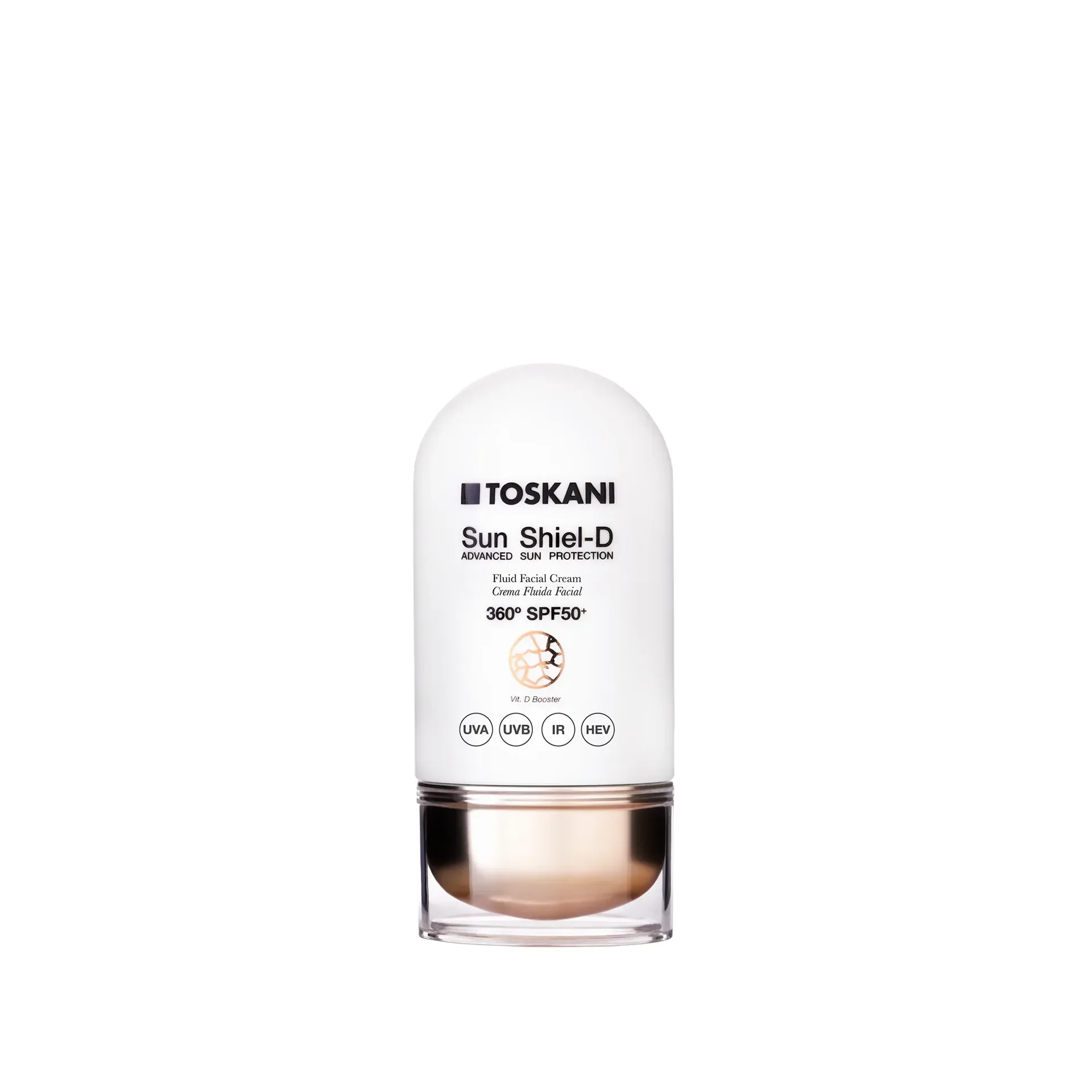
- Sun Shiel-D fluid cream SPF50+: Sun Shiel-D fluid cream SPF50+ is a very high protection facial fluid that helps protect skin against UV, IR, and blue light while contributing to hydration and supporting vitamin D synthesis. The fluid texture suits sensitive skin that dislikes heavy creams, and the blue-light and IR protection addresses daily indoor and screen exposure, not just direct sun.
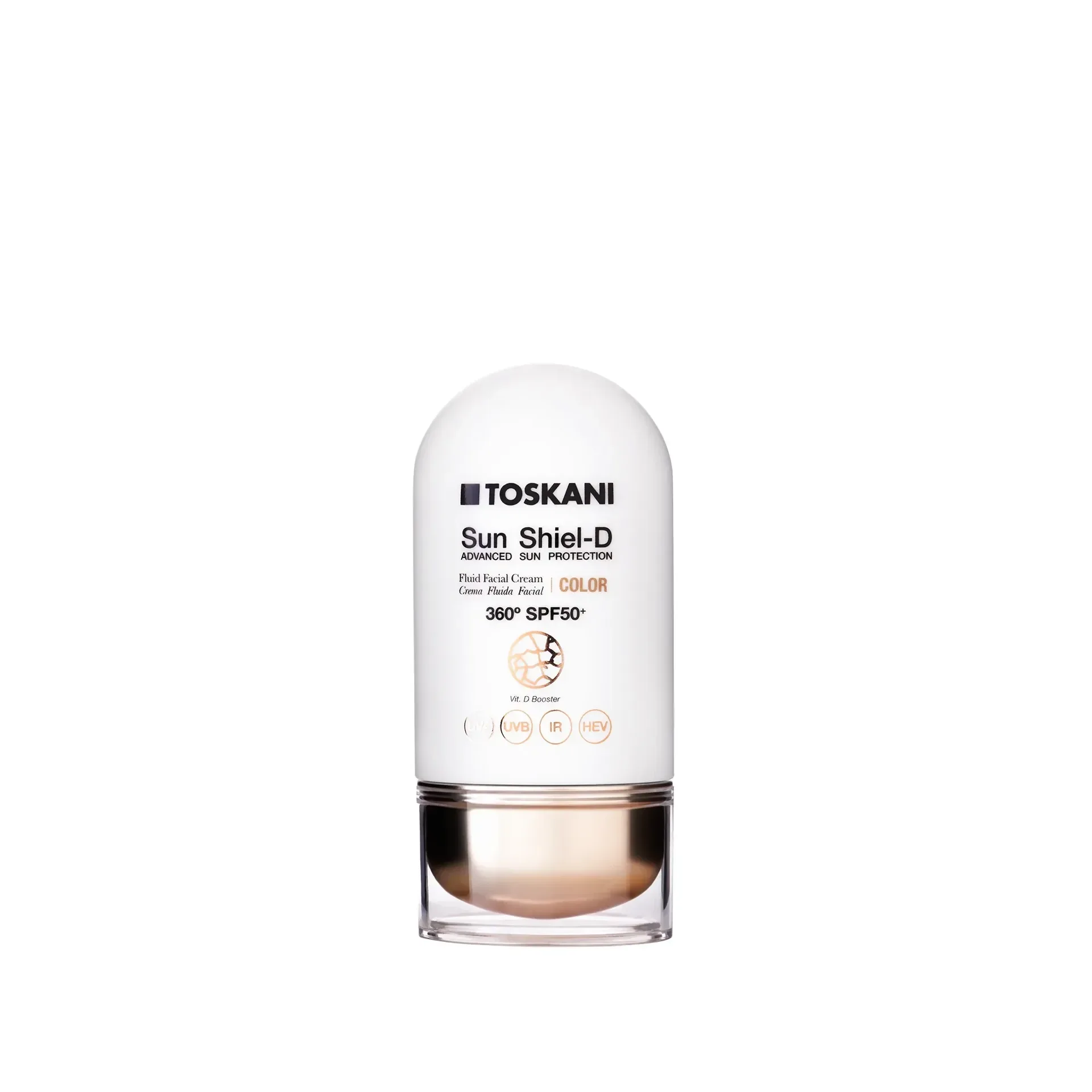
- Sun Shiel-D fluid cream color SPF50+: Sun Shiel-D fluid cream color SPF50+ is a tinted very high protection facial fluid that helps protect against UV, IR, and blue light while unifying tone and improving skin luminosity. If you want to skip foundation or reduce layering, the tint replaces a base product, which lowers the number of products touching reactive skin.
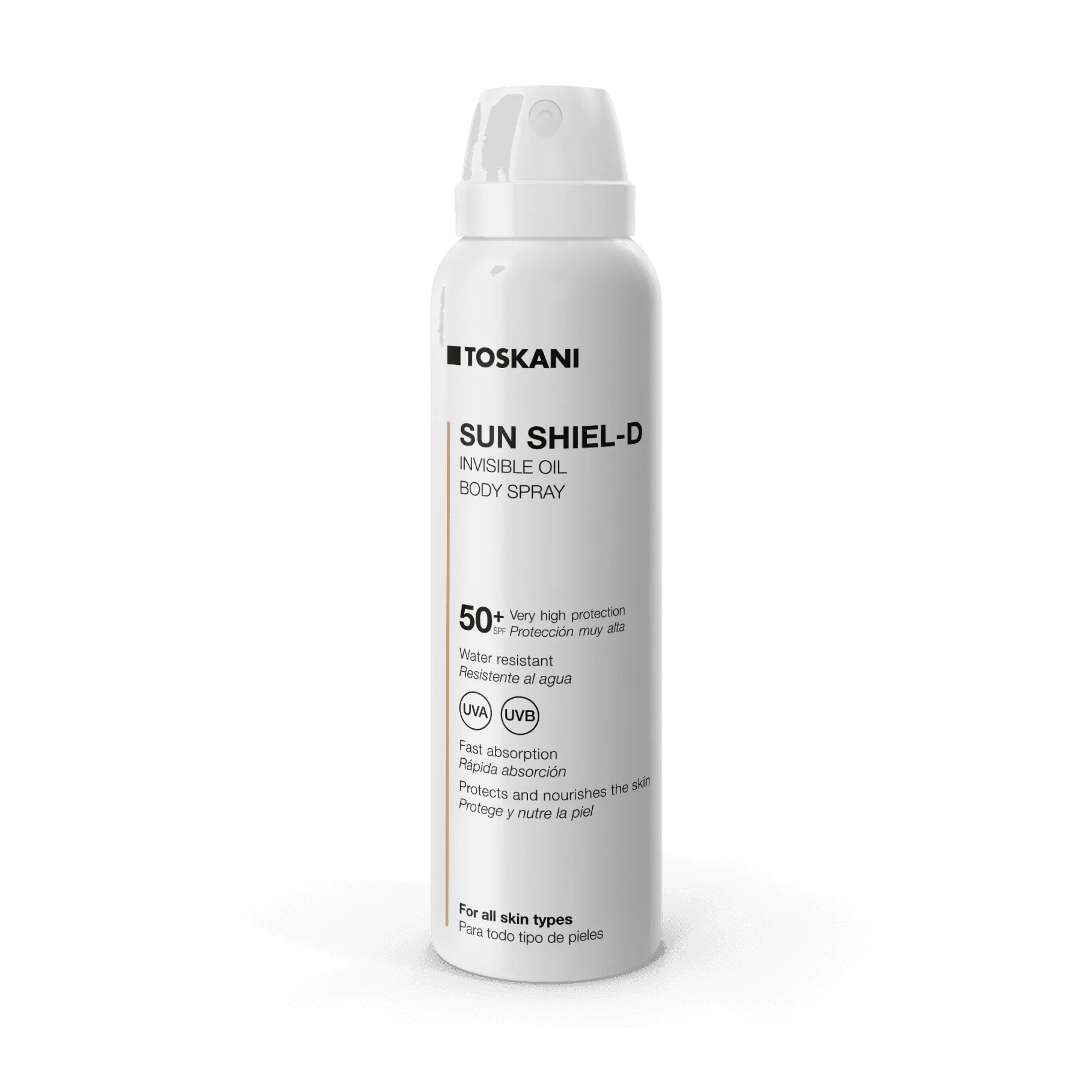
- Sun Shiel-D Invisible oil body spray: Sun Shiel-D Invisible oil body spray is an SPF50+ body sunscreen designed for easy absorption with an invisible, non-greasy finish that helps moisturize and care for the skin, suitable for all skin types. A fast-absorbing spray makes body reapplication realistic, which matters because sensitive skin on the body also needs consistent protection without a greasy residue.
Who this approach fits
Best for
- Sensitive or reactive skin that stings with many sunscreens
- Combination or oily skin that wants a lightweight facial fluid
- People who want SPF50+ protection with blue-light and IR coverage for daily indoor and outdoor use
- Anyone using retinal or retinol-like serums who needs reliable morning protection
Not for
- Skin that has an active rash, burn, or diagnosed condition needing a dermatologist's specific recommendation
- Users who refuse to patch-test and want a guaranteed zero-reaction product
- People looking for a waterproof sport sunscreen for prolonged swimming, which needs a dedicated water-resistant formula