Quick answer
Look for a puffer jacket with a roomy silhouette that accommodates your bump and layers, lightweight insulation that doesn't weigh you down, and a water-resistant shell for weather protection. A design that works postpartum—with easy access for nursing or carrying a baby—adds long-term value.
Why a regular puffer may not work during pregnancy
Standard puffers are cut straight through the torso, which can feel tight over a growing belly and restrictive when you sit or bend. A maternity-specific design uses a cocoon or A-line silhouette to create extra room exactly where you need it, without adding bulk everywhere else.
Another common issue is length. A cropped jacket may leave your bump exposed to cold air, while an overly long coat can be cumbersome. The right length hits below the hips or mid-thigh, covering your bump fully while still allowing easy movement.
Postpartum versatility matters more than you think
After birth, your body changes shape gradually, and you'll likely want a coat that still fits well—not one that suddenly feels baggy or too tight. A puffer with adjustable features (like a drawcord hem or elastic cuffs) can adapt to your changing silhouette.
Nursing access is another practical consideration. While zippered puffers naturally allow front opening, consider how easy it is to unzip one-handed while holding a baby. Ribbed storm cuffs and lined pockets add warmth and convenience for postpartum walks or errands.
Weight vs. warmth: finding the balance
Pregnancy and postpartum come with enough physical fatigue—your coat shouldn't add to it. Heavily insulated puffers can feel like a burden when you're already carrying extra weight or a baby carrier. Look for featherlight fill that traps warmth without the bulk.
Down fill is warm but loses insulation when wet. Synthetic fills, while slightly heavier, retain heat even in damp conditions. For most winter climates, a water-resistant shell combined with lightweight synthetic or featherlight fill offers the best trade-off between warmth and comfort.
Decision rules for choosing your maternity puffer
- Rule 1: Check the silhouette: Choose a cocoon or A-line cut that gives your bump room to grow without being tent-like. Avoid straight or slim-fit puffers that may become unwearable by the third trimester.
- Rule 2: Prioritize lightweight insulation: Look for featherlight fill or synthetic insulation that keeps you warm without adding heavy bulk. This matters more during pregnancy when extra weight can cause fatigue.
- Rule 3: Verify weather protection: A water-resistant and wind-resistant shell extends the coat's usefulness across seasons. You won't need to swap layers constantly, and it protects both you and your baby carrier.
- Rule 4: Evaluate postpartum usability: Ensure the coat still fits well after birth and allows easy nursing access. Features like a full front zipper, adjustable hem, and roomy pockets make daily life easier with a newborn. If you plan to wear the coat through both pregnancy and postpartum, a design that works for both stages saves you from buying two coats.
Product spotlight
-
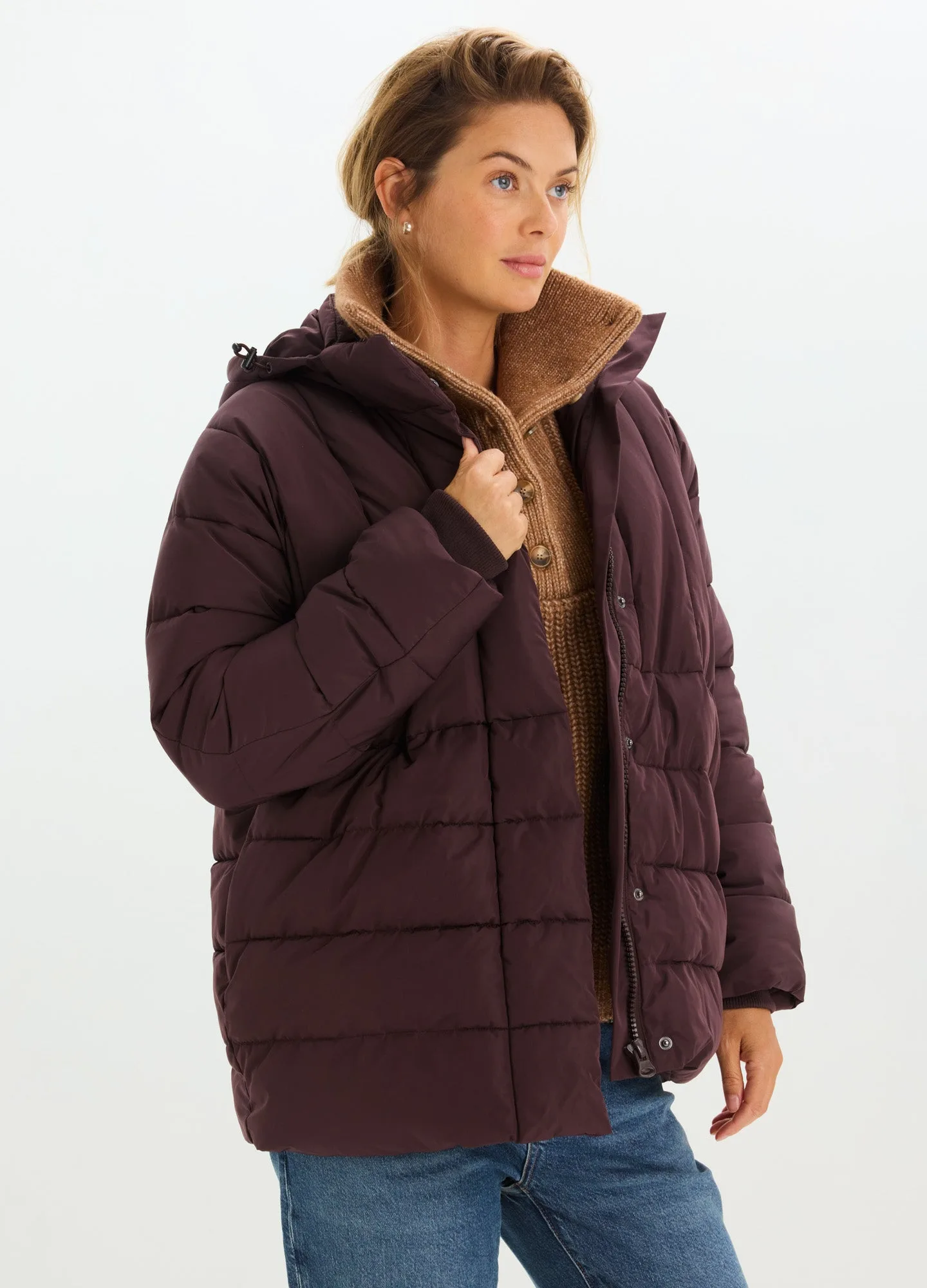
The Mother Puffer: Cocoon silhouette creates room throughout pregnancy. You won't outgrow the fit as your bump grows, and the shape still looks intentional postpartum rather than oversized.
The Mother Puffer
-
The Mother Puffer: Featherlight fill provides lightweight warmth and comfort. You stay warm without feeling weighed down, which is especially helpful during the third trimester or when carrying a baby.
-
The Mother Puffer: Water and wind resistant nylon shell protects from the elements. It handles light rain and wind, so you can rely on one coat for most winter conditions without needing an extra layer.
-
The Mother Puffer: Ribbed storm cuffs and lined pockets help keep warmth in. Small details like cuffs and lined pockets make a real difference in everyday comfort, especially during postpartum walks or outdoor errands.
Who this works best for
Best for
- Anyone pregnant during fall or winter who wants a single coat that works through all trimesters
- New parents who need a warm, lightweight outer layer for postpartum walks and errands
- Those who prefer a non-maternity look that still fits well after baby arrives
Not ideal for
- People in extremely cold climates who need heavy down insulation rated for sub-zero temperatures
- Those who prefer a cropped jacket style that ends above the waist