Quick answer
For most babies starting purees, choose 3.4 oz pouches; move to 5 oz for toddlers who eat a full snack in one sitting, and use 7 oz or variety packs for batch prep and bigger kids. Prioritize a secure, leakproof seal and freezer-safe construction over color or brand, then fill pouches no more than about three-quarters full to leave room for expansion.
Match pouch size to your child's stage, not the label
Pouch sizes are not one-size-fits-all because a baby's stomach capacity changes quickly in the first two years. A 3.4 oz pouch suits early puree meals and first-stage feeding, where a few ounces is a full serving. A 5 oz pouch fits a toddler snack or a meal replacement on the go. A 7 oz pouch works best for older kids, smoothies, or yogurt portions that would otherwise be split across two smaller pouches.
If you are unsure, buy a smaller set first and track how much your child actually finishes. Wasting half a pouch every day is a sign you sized up too early; finishing a pouch and asking for more is a sign to move up.
3.4 oz vs 5 oz pouch: the practical difference
The main difference between a 3.4 oz and a 5 oz pouch is how many servings you get per fill and how the pouch fits in a diaper bag or lunchbox. The 3.4 oz size is easier for small hands to hold and less likely to be abandoned half-eaten. The 5 oz size reduces how many pouches you need to pack for a full day out, but it can be too much for a baby who is still learning to eat solids.
A variety pack is often the most useful first purchase because it lets you test both sizes with your child's real appetite instead of guessing. Once you know which size disappears first, buy more of that size.
Check the seal, freezer safety, and filling opening
A reusable pouch is only as good as its seal. Look for twist-on or secure closures that are described as leakproof, because a pouch that leaks in a diaper bag defeats the purpose of batch prepping. Freezer-safe construction matters if you plan to prep a week of meals at once, and a wide filling opening makes the pouch easier to fill from a blender, spoon, or pitcher.
Do not assume every pouch is dishwasher-safe or microwave-safe unless the product information says so. If a specification is not listed, treat it as a limitation and hand wash or thaw in the refrigerator instead.
Reusable pouch filling tips that prevent leaks and waste
Fill pouches no more than about three-quarters full. Purees and smoothies expand as they freeze, and an overfilled pouch can split a seam or push food out through the closure. Thick mixtures like oatmeal or mashed avocado may need a little water, breast milk, or formula to move through a filling opening without clogging.
Label each pouch with the contents and the date before freezing. Use the oldest pouches first, and thaw overnight in the refrigerator rather than at room temperature. If you are packing a pouch for later in the day, keep it cold with an ice pack until your child is ready to eat.
Decision rules for buying reusable food pouches
- If your baby is new to purees: Start with 3.4 oz pouches so a full serving is not wasted when your baby stops after a few spoonfuls. Buy a small set first, then size up once your baby consistently finishes the pouch.
- If your toddler eats a full snack on the go: Choose 5 oz pouches to reduce how many you pack, but keep a few 3.4 oz pouches for short outings. A mix of 3.4 oz and 5 oz covers most toddler days without overfilling.
- If you batch prep once a week: Use 7 oz pouches or a variety pack and fill only three-quarters full so freezer expansion has room. Label with contents and date, then rotate the oldest pouches to the front of the freezer.
- If you want one storage system for home and travel: Pair pouches for travel with 4 oz containers or glass jars for spoon-fed meals at home. Choose the format that matches how your child eats in each setting, not a single all-purpose container.
- If leakproof performance matters most: Prioritize a secure, leakproof seal and freezer-safe construction over color or pattern. Check the closure and freezer guidance before buying a larger set.
Product facts to compare
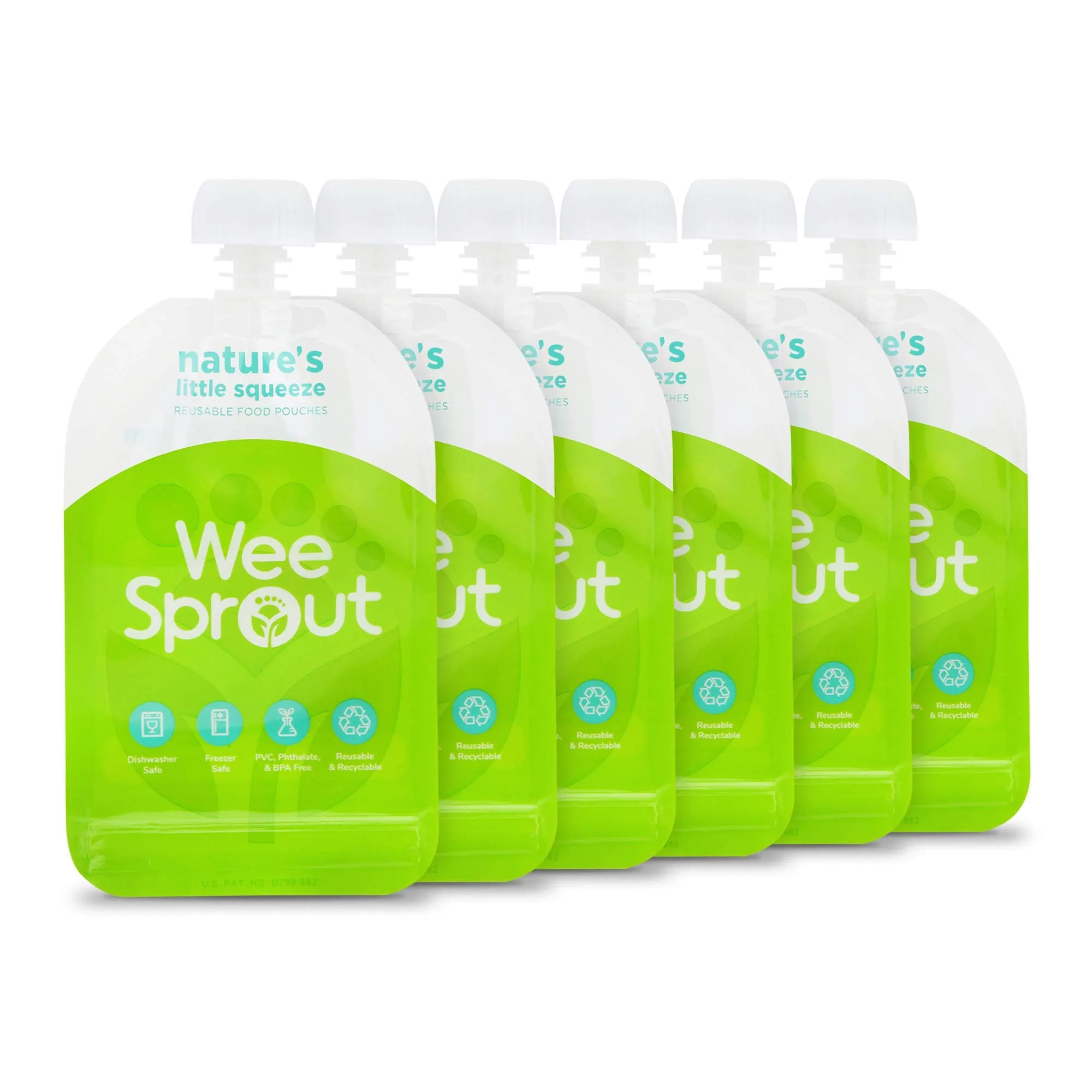
- Reusable Food Pouches – Available in 3.4 oz, 5 oz, 7 oz (original): Reusable Food Pouches available in 3.4 oz, 5 oz, and 7 oz, described as refillable and freezer-safe for homemade yogurt, oatmeal, smoothies, and purees. The three-size range lets you match a pouch to your child's current appetite instead of buying a single size and hoping it fits.
- Reusable Food Pouches – Available in 3.4 oz, 5 oz, 7 oz, and Variety Packs: Reusable Food Pouches available in 3.4 oz, 5 oz, 7 oz, and variety packs, positioned for batch prepping on-the-go meals and snacks. A variety pack is the lowest-risk way to test which reusable food pouch size your child actually finishes before you commit to a larger set.
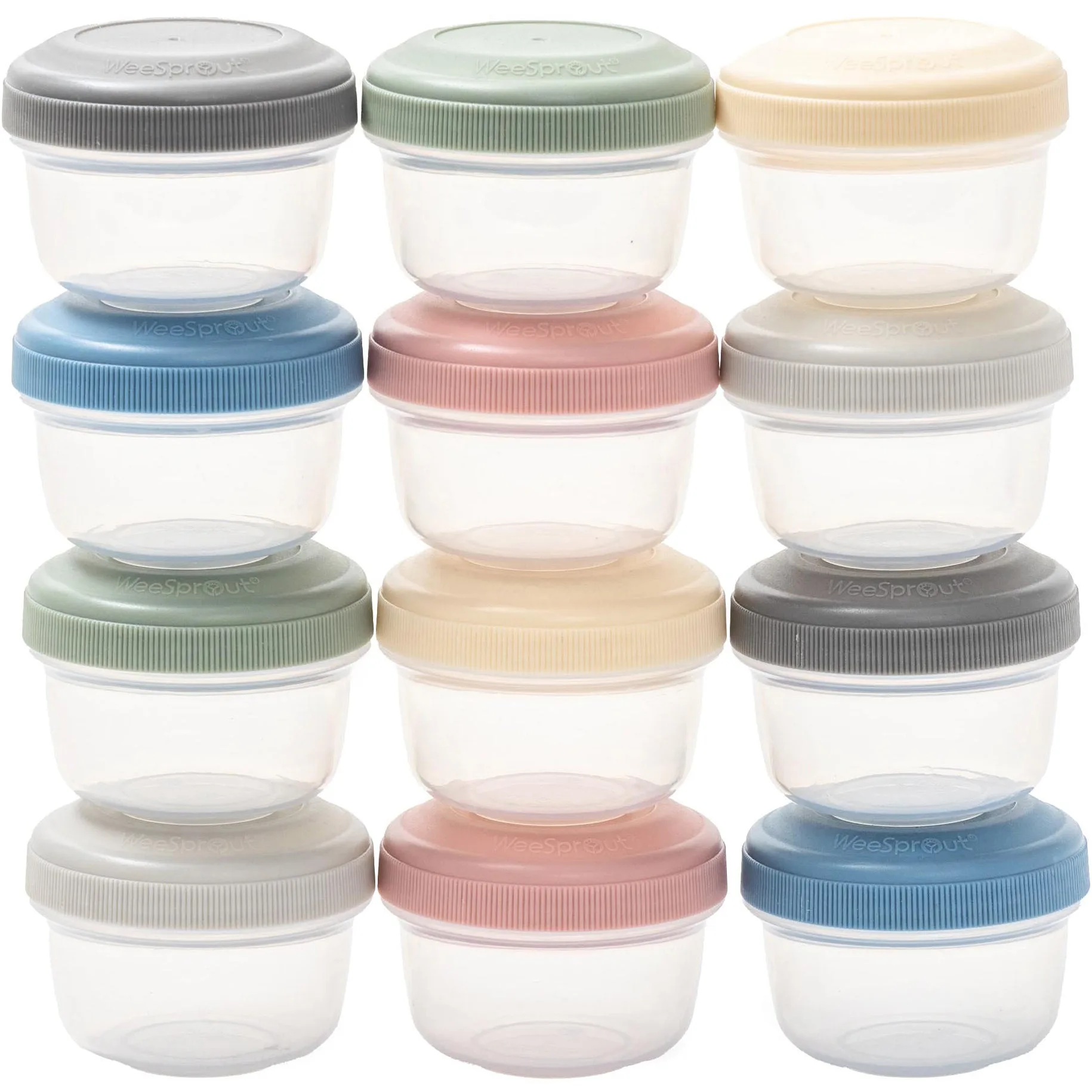
- Plastic Baby Food Storage Containers (Set of 12): Plastic Baby Food Storage Containers come as a set of 12, with each 4 oz container portioned for first-stage feeding and twist-on lids described as creating a secure, leakproof seal. If you prefer spoon-feeding at home and pouches only for travel, 4 oz containers give you a portioned home-storage option that pairs with pouch prep.
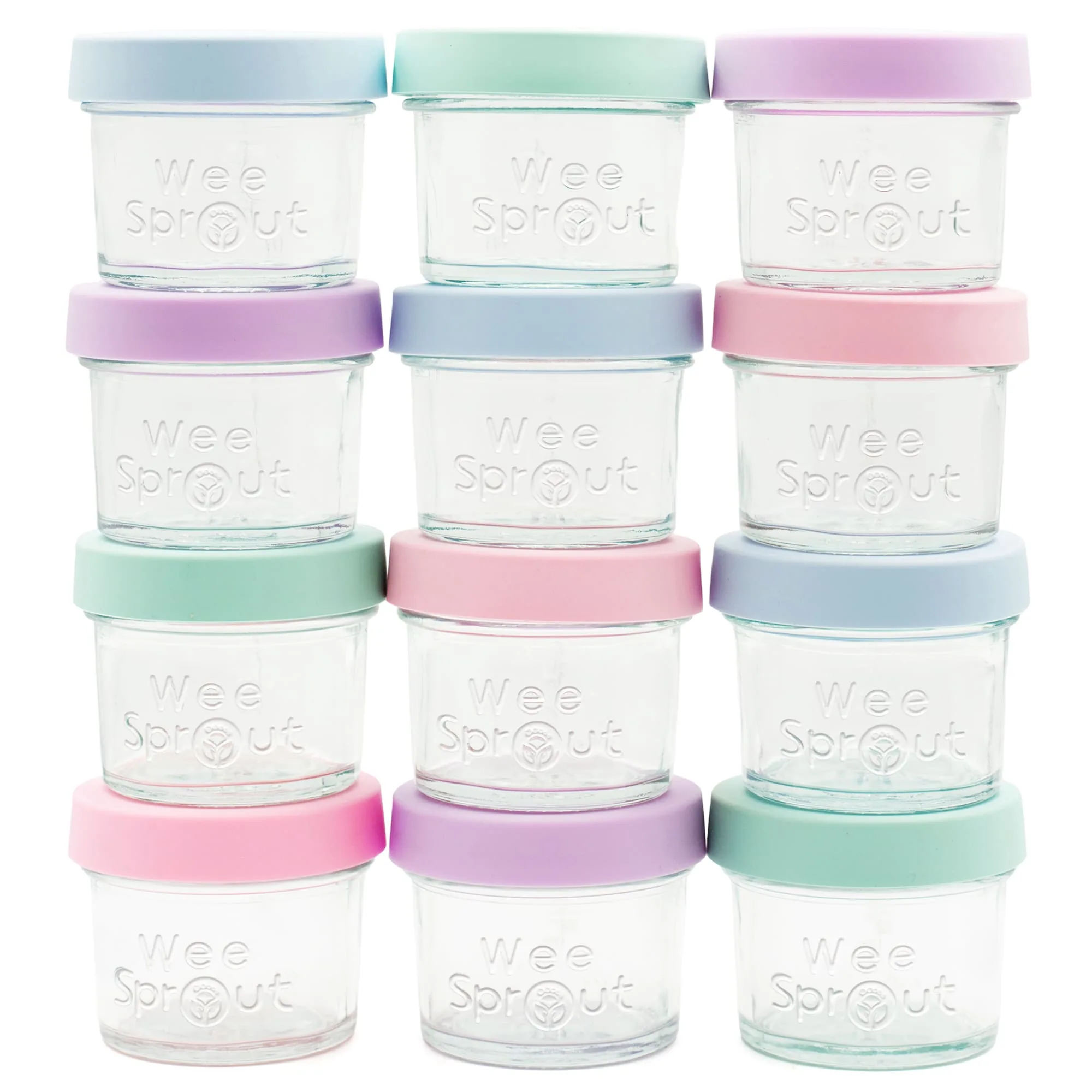
- Glass Baby Food Storage Jars – 4 oz & 8 oz Mixed Set (12-Pack): Glass Baby Food Storage Jars come as a 4 oz and 8 oz mixed set of 12, described as flexible, eco-friendly storage for batch prepping make-ahead meals. Glass jars are a reusable alternative for families who want to store purees at home and reserve pouches for on-the-go feeding.
Who should buy which pouch setup
Best for
- Parents starting purees who want small, portioned 3.4 oz pouches
- Toddler families who need 5 oz pouches for snacks and outings
- Batch preppers who want 7 oz pouches or variety packs for weekly meal prep
- Families who want to control ingredients instead of buying single-use store pouches
Not for
- Families who prefer spoon-feeding at home and rarely pack food to go
- Parents who want a single container size for every age and meal
- Anyone unwilling to hand wash or check dishwasher and microwave guidance before use