Quick answer
For most hunting, a low-end magnification of 3x to 4x and a top end of 12x to 18x covers nearly every realistic shot. If you regularly shoot past 500 yards, choose a scope with a top end of at least 20x and a 34mm tube for more adjustment travel. First focal plane is worth it if you use holdovers at varying zoom.
Match the low end to your closest shot
The minimum magnification matters more than most buyers expect. A 6x low end is too tight for timber, brush, or a moving animal at 30 yards. A 3x or 4x low end gives you enough field of view to find the target quickly. If you hunt thick cover or take running shots, stay at 4x or lower. If you only shoot from a fixed position at distance, a higher low end like 5x or 6x is acceptable.
Set the top end by your maximum ethical distance
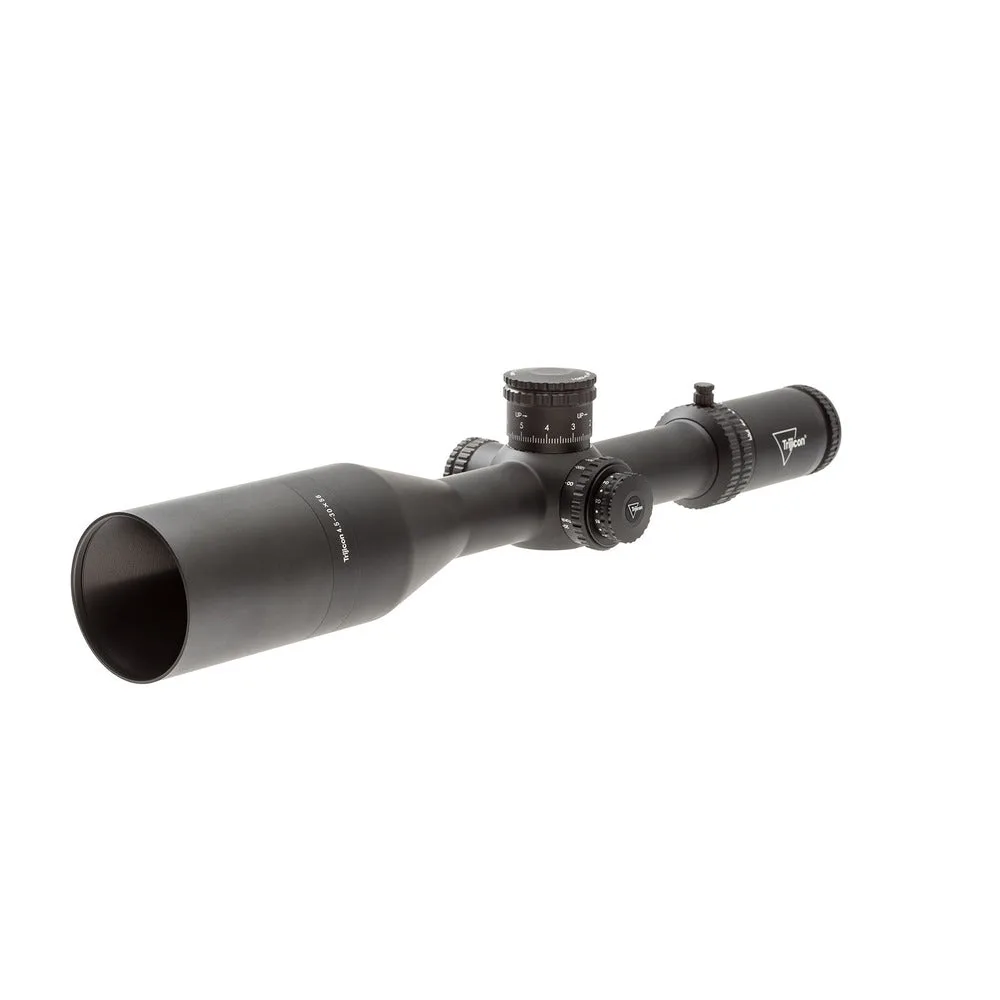
Use this rule: for every 100 yards of distance, you want about 2x to 3x of magnification. That means 500 yards calls for roughly 10x to 15x, and 1,000 yards calls for 20x to 30x. More magnification than that does not create accuracy; it only magnifies mirage and your own movement. A 4.5-30x56 scope like the Trijicon Tenmile gives you room to dial up for long-range paper or steel, but you will rarely use 30x in the field.
Tube diameter, adjustment travel, and why 34mm matters
A 34mm tube scope is not automatically better glass, but it gives you more internal room for elevation and windage travel. That matters when you dial for long distances or use a 20 MOA rail. A 1-inch or 30mm tube can run out of adjustment before you reach your maximum range. If you plan to shoot past 600 yards regularly, a 34mm tube is a practical choice. The trade-off is weight and larger rings.
First focal plane vs second focal plane for holdovers
In a first focal plane scope, the reticle scales with magnification. That means your holdover marks stay valid at any zoom setting. If you range a target, dial nothing, and use the reticle to hold for drop or wind, first focal plane is the clearer choice. In a second focal plane scope, the reticle is only true at one magnification, usually the highest. That is fine if you always dial your turrets and rarely use holdovers. For a hunting scope where you might take a quick 200-yard shot at 6x and a 500-yard shot at 18x, first focal plane removes a mental step.
MOA vs MRAD reticles and matching your turrets
MOA and MRAD are both angular measurements. The important rule is to match your reticle to your turrets. If your scope has MOA turrets, get an MOA reticle scope so your holds and clicks speak the same language. A 1/4 MOA click moves your point of impact about a quarter inch at 100 yards. MRAD users often prefer 0.1 mil clicks. Neither is more accurate; consistency is what matters. If you already think in inches, MOA is usually easier to learn.
Weight, size, and hunting reality
A 4-25x50 scope is a popular balance for hunting and long-range practice. It is lighter and more compact than a 56mm objective, but still gives you a 25x top end. The 50mm objective also keeps the scope closer to the bore, which can help with cheek weld. A larger 56mm objective gathers more light at dusk, but it adds weight and requires higher rings. If you walk miles, weigh the scope before you buy. If you sit in a blind over a field, the extra light may be worth the bulk.
Decision rules for rifle scope magnification
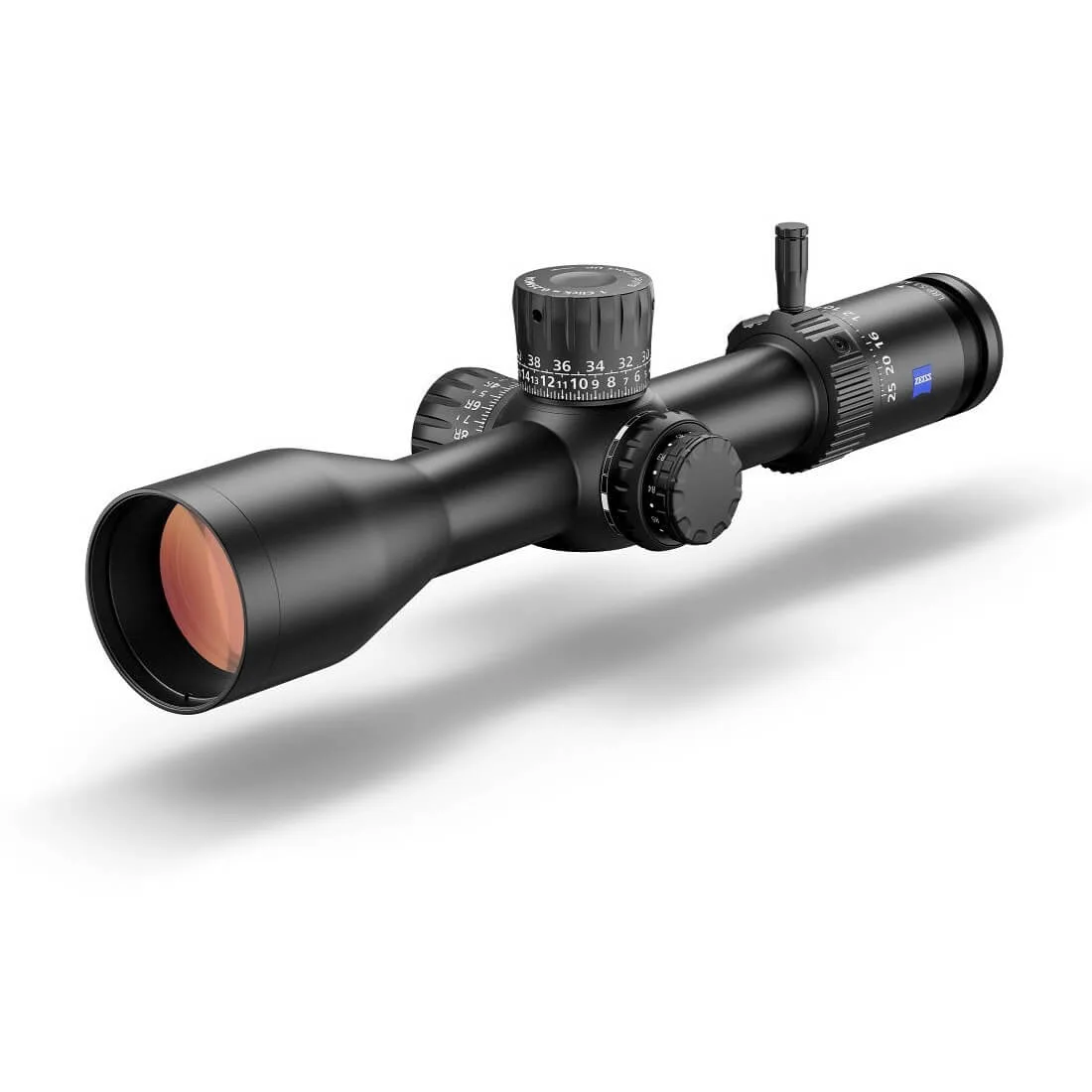
- Hunting in mixed cover: Choose a low end of 3x or 4x and a top end of 12x to 18x. This covers close shots in timber and still reaches 400-500 yards. A 4-25x50 scope like the Zeiss LRP S3 gives you extra top end without much weight penalty. Best all-around range for most hunters.
- Long-range target or steel: Choose a top end of at least 24x and a 34mm tube. You need adjustment travel for dialing elevation and a reticle that matches your turrets. The Trijicon Tenmile 4.5-30x56 offers 34mm travel and a 30x top end for reaching out. Prioritize travel and a first focal plane reticle.
- Budget or lightweight build: Stay with a 1-inch or 30mm tube and a top end of 12x to 16x. You give up some adjustment travel but save weight and cost. Use a second focal plane scope if you always dial rather than hold over. Accept less travel for a lighter rifle.
Product facts
- Trijicon 3000014 Tenmile Matte Black 4.5-30 56mm 34mm Tube LED Illuminated Red/Green MOA Long Range Reticle: Trijicon Tenmile 4.5-30x56 with 34mm tube, LED illuminated red/green MOA long-range reticle, zero stop, and extra-low dispersion glass. The 34mm tube provides generous elevation and windage travel for dialing long distances. The 4.5x low end is still usable for closer shots, and the 30x top end suits long-range target or steel shooting. Dual red/green illumination helps in low light.
- Zeiss LRP S3 4-25x50 mm: Zeiss LRP S3 4-25x50 first focal plane riflescope with best-in-class total elevation travel and advanced optical system for low-light conditions. The 4-25x range covers most hunting and long-range needs without the bulk of a 56mm objective. First focal plane keeps holdovers valid at any magnification, and the 50mm objective balances light gathering with a lower mounting profile.
Who should buy which magnification range
Best for
- Hunters who need a versatile 4-25x50 scope for mixed cover and occasional long shots
- Long-range shooters who want a 34mm tube scope with a first focal plane scope and MOA reticle scope for dialing and holding
Not for
- Shooters who only take close shots under 100 yards and want a simple, lightweight red dot or fixed-power scope
- Hunters who refuse to carry extra weight and never shoot past 300 yards