Quick answer
Choose cardstock when you need structure, a crisp fold, or a die-cut shape that holds its form. Choose patterned paper when the design itself is the star and you will layer it onto a sturdier base. Choose mount board when you need a rigid panel for a box, a mixed-media base, or a piece that must stay flat. Match the material to the job first, then pick the weight and finish.
Most card-making problems start before you pick up a tool. The paper buckles at the fold, the die cuts ragged, or the finished card feels flimsy. The fix is usually the material, not the technique.
This guide gives you a cardstock buying guide you can apply in the aisle or online. You will learn how weight, finish, and structure change what a material can do, and which products in our range match each job.
Start with the job, not the weight
The single most useful question is: what must this material do? A card base must fold cleanly and stand up. A die-cut butterfly must release from the die without tearing. A gift box must hold its shape. A scrapbook page must stay flat for years. Each job points to a different material.
Weight is a clue, not a rule. A 225gsm cardstock is heavyweight and offers durability and structure, which suits card bases and crisp mats and layers. Lighter paper suits lining, layering, and detailed die cuts. If a product listing does not state a weight or finish, treat that as a limitation: you cannot predict how it will fold or cut, so buy a small pack first or choose a product that does list the specification.
- Card base: heavyweight cardstock that scores and folds without cracking.
- Die cutting: smooth, dense cardstock; textured or coated surfaces can tear.
- Layering: patterned paper or lighter cardstock, adhered to a sturdy base.
- Boxes and 3D: rigid mount board or heavyweight cardstock with a score line.
- Mixed media: mount board, because it resists warping better than thin paper.
Paper vs cardstock for cards
Paper is thin and flexible. It is ideal for lining envelopes, covering a card front, and adding pattern without bulk. Cardstock is thicker and holds a fold, which is why it is the standard for card bases. If you use paper as a base, the card will flop and the fold will look soft.
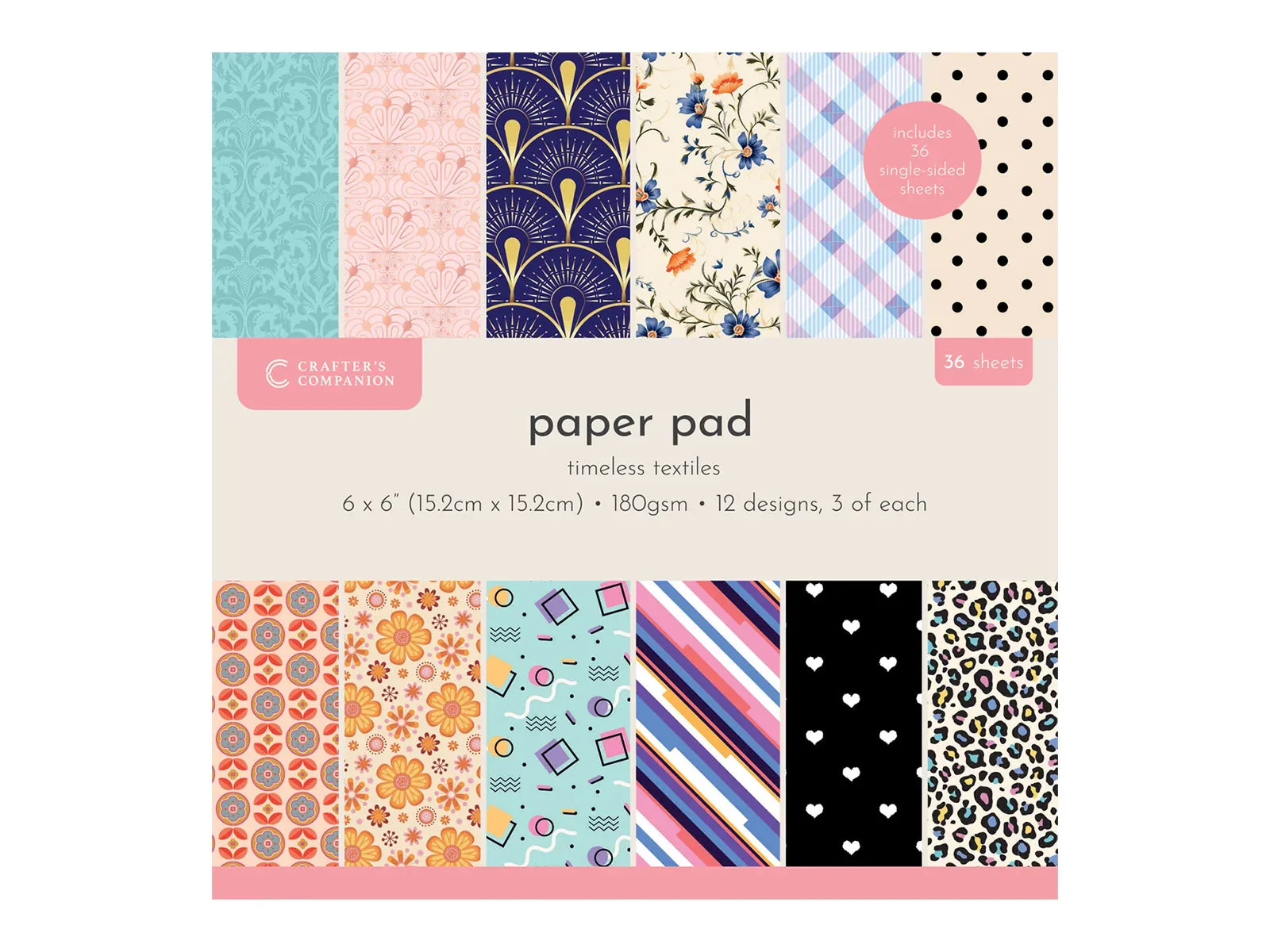
A practical rule: use cardstock for anything structural and paper for anything decorative. A 6" x 6" paper pad such as Timeless Textiles gives you 12 patterned designs in vintage colours for card fronts, gift boxes, and scrapbook pages. Layer those patterns onto a navy or neutral cardstock base so the finished card has a crisp edge and a clean fold.
- If it must fold, stand, or hold a shape, choose cardstock.
- If it must show a pattern or colour, paper is usually enough.
- If you are unsure, buy one pack of each and compare a folded sample.
What makes cardstock good for die cutting
Die cutting rewards smooth, consistent cardstock. A smooth finish lets the die release cleanly, and a dense sheet holds fine details without tearing. Heavier cardstock can need a shim or a second pass, so check your machine's guidance before assuming a thick sheet will cut first time.
For intricate shapes, a paper-piecing die such as Gemini Create-a-card Paper Piecing Die – Butterflies and Blooms is designed to remove the difficulty from the technique. Small die-cut pieces add colour to an outline image, and the right cardstock makes that process faster and cleaner. If you want a decorative edge rather than a full shape, an Edgeables die such as Cascading Butterflies is placed along the opening edge of a card, so the cardstock you choose must score and fold well as well as cut.
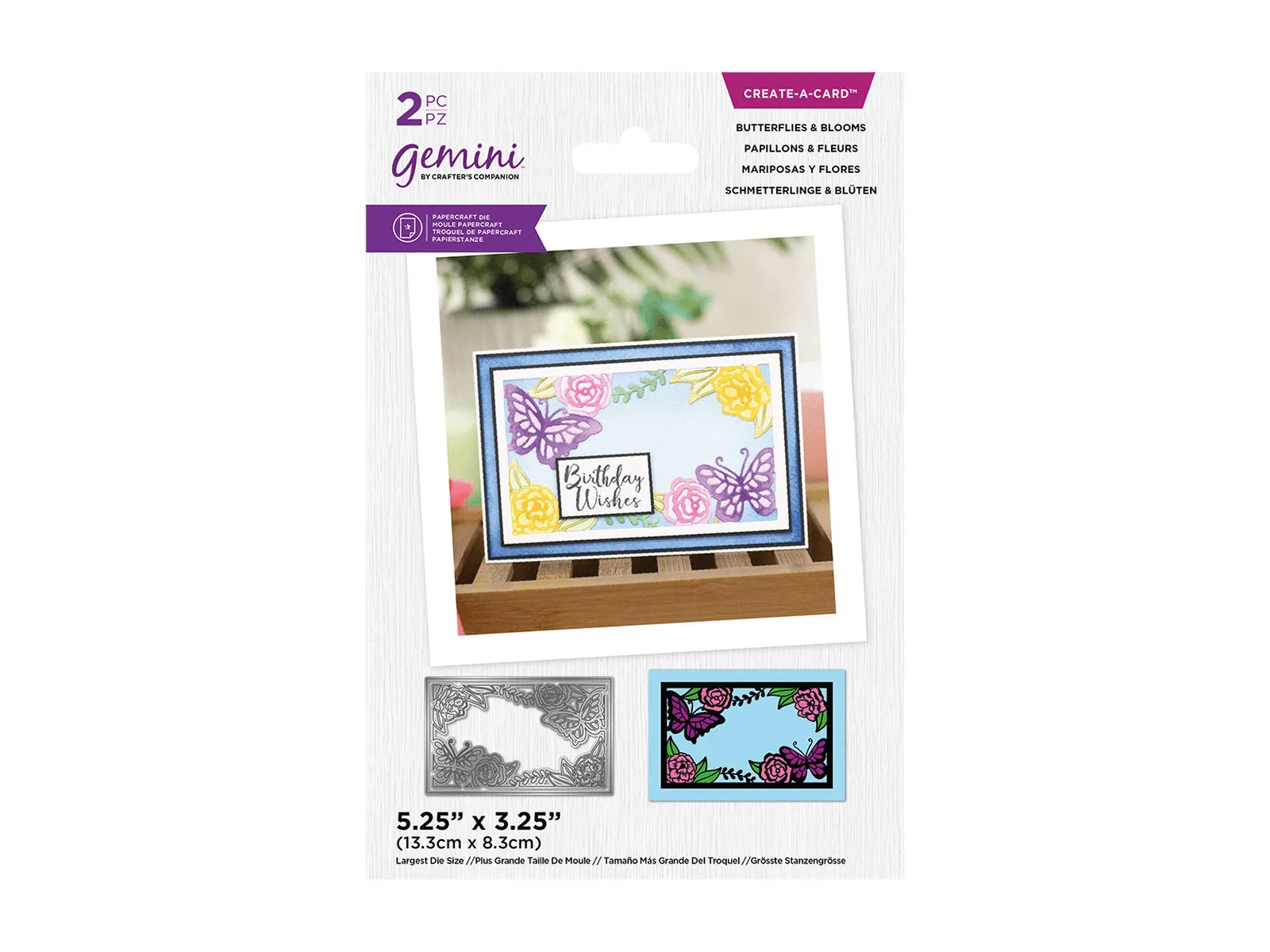
Gemini Create-a-card Paper Piecing Die – Butterflies and Blooms
- Test a new cardstock with a detailed die before committing to a full project.
- Keep a plastic shim handy for heavier sheets.
- Smooth beats textured when the die has fine lines.
When mount board is the right choice
Mount board is a rigid board, not a folding paper. Reach for it when the project needs a flat, stable panel: box lids, mixed-media bases, display pieces, and anything that must not curl when wet media is applied. It also works as a backing that keeps a finished piece from warping.
Because mount board is stiff, it does not fold like cardstock. If your project needs a hinge or a crease, score it first or use a thinner cardstock for the folding parts and mount board for the panels. This is a trade-off: you gain rigidity and lose flexibility.
- Use mount board for panels, not for card bases that must fold.
- Score before folding to avoid a cracked edge.
- Pair mount board panels with cardstock hinges for boxes.
Finish, colour, and how they change your choice
Finish affects both look and performance. Smooth cardstock takes stamping and ink blending evenly. Textured or coated surfaces can resist ink and cause dies to drag. If you plan to stamp directly onto the base, choose a smooth sheet; if you plan to layer, the base finish matters less because it will be covered.
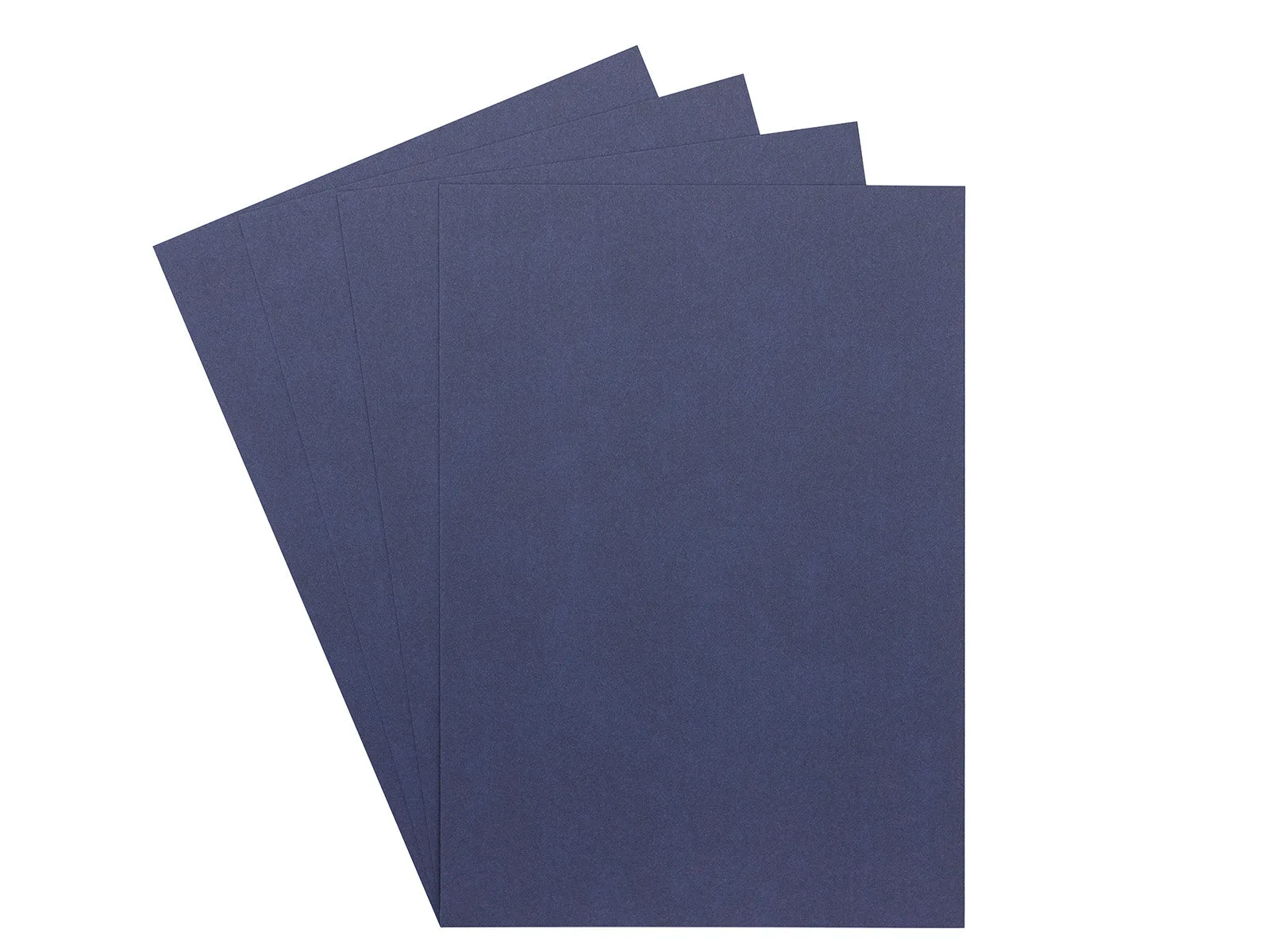
Colour matters for coverage. A deep shade such as Arden Creative Studio Premium Cardstock Navy Blue A4 gives you a bold, timeless base for cardmaking and layering. Because it is 225gsm, it offers durability and structure, so it works as a card base as well as for mats and layers. Buy a colour you can use across a set of cards, and keep a neutral cardstock for the parts that will be hidden.
- Smooth finish for stamping and ink blending.
- Textured finish for backgrounds you will cover or emboss.
- Buy one dark and one neutral cardstock to cover most projects.
Decision rules for cardstock, paper, and mount board
- If the piece must fold and stand: Choose heavyweight cardstock. A 225gsm sheet such as Arden Creative Studio Premium Cardstock Navy Blue A4 gives durability and structure for handmade cards. Score first, then fold away from the score line.
- If the piece is decorative only: Choose patterned paper. A 6" x 6" pad such as Timeless Textiles gives 12 designs for card fronts, boxes, and scrapbook pages. Adhere paper to a cardstock base so the finished card stays crisp.
- If the die has fine detail: Choose smooth, dense cardstock and test one cut before a full run. Paper-piecing dies such as Butterflies and Blooms depend on clean release. Keep a shim nearby for heavier sheets.
- If the edge is the feature: An Edgeables die such as Cascading Butterflies sits along the card opening, so the sheet must cut and fold well. Avoid brittle or heavily coated cardstock for edge dies.
- If the panel must stay flat: Choose mount board for box lids, mixed-media bases, and display pieces. It is rigid, so it does not fold like cardstock. Score before folding, or use cardstock for the hinge.
Products that match these jobs
- Arden Creative Studio Premium Cardstock Navy Blue A4 - 20 Pack: 225gsm heavyweight cardstock with a smooth finish, suitable for stamping, die-cutting, scoring, and crisp mats and layers. A reliable card base and layering sheet that folds and cuts without the flimsiness of lighter paper.
- Crafters Companion 6” x 6” Paper Pad - Timeless Textiles: Includes 12 patterned designs in vintage colours for cards, gift boxes, and scrapbook pages. Best used as a decorative layer over cardstock rather than as a structural base.
- Gemini Create-a-card Paper Piecing Die – Butterflies and Blooms: A paper-piecing die set that uses small die-cut pieces to add colour to an outline image. Choose smooth, dense cardstock so the small pieces release cleanly and sit flat.
- Crafters Companion - Die Cutting & Embossing - Cascading Butterflies: An Edgeables die designed for placement along the opening edge of a card, compatible with most leading die-cutting machines. The cardstock must both cut cleanly and fold well, so pick a sheet that scores without cracking.
Who this guide is for
Best for
- Card makers choosing a base that folds cleanly and holds shape
- Die cutters who need smooth cardstock for detailed shapes
- Crafters building boxes, panels, or mixed-media pieces
Not for
- Crafters looking for a single material that does every job
- Shoppers who cannot check weight or finish before buying
- Projects where fabric, felt, or foam is the intended material
Pick the material by the job it must do: cardstock for structure, paper for pattern, mount board for rigidity. Check the weight and finish when they are listed, and test a small piece before you commit a whole project to a new sheet.