Quick answer
Match the climbing set to your child's current abilities, not the age on the box. For toddlers around 18 months to 3 years, start with a low, single-piece wooden set such as the Wooden Climbing Set that includes a small triangle and slide. For preschoolers and older kids, add modular pieces like a Jungle Gym Playset or a larger indoor playground. Always confirm the set fits your room and that you can supervise every climb.
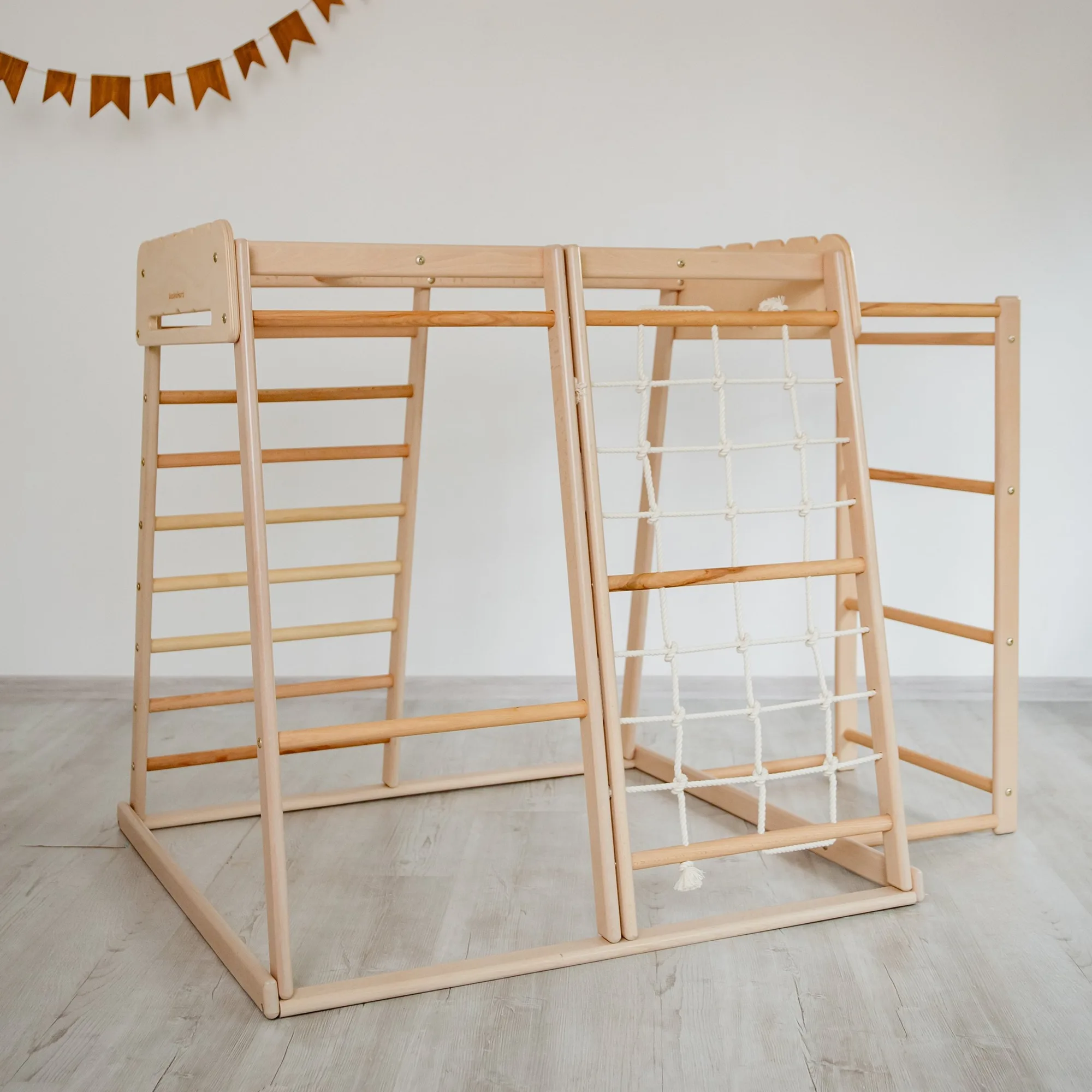
Jungle Gym Playset
A climbing set can be one of the best purchases you make for your child's physical development, but only if it matches their age and stage. Buy too small and it becomes boring within months; buy too advanced and it becomes a safety risk. The goal is to find a set that challenges your child right now and can adapt as they grow.
This guide gives you concrete decision rules based on age, space, and supervision. You will also see how specific products from the Woodandhearts catalog fit different stages, so you can choose a climbing set with confidence.
Why age is a starting point, not a rule
Age tells you roughly what a child's body can handle, but it does not tell you everything. A tall 2-year-old may climb better than a cautious 4-year-old. Use age as a first filter, then adjust for your child's confidence, coordination, and ability to follow safety instructions. The American Academy of Pediatrics recommends active play for young children, but the specific equipment should match their physical abilities.
The most reliable approach is to choose a set that offers adjustable difficulty. For example, a climbing triangle with a slide can be used at a low angle for beginners and raised as skills improve. This flexibility means you are not replacing the set every year.
- Watch your child on playground equipment: what do they climb confidently?
- Choose a set with at least one adjustable element, such as a slide that can be repositioned.
- Avoid sets that require skills your child has not yet shown, like sustained hanging or high balancing.
Climbing set for toddlers (18 months to 3 years)
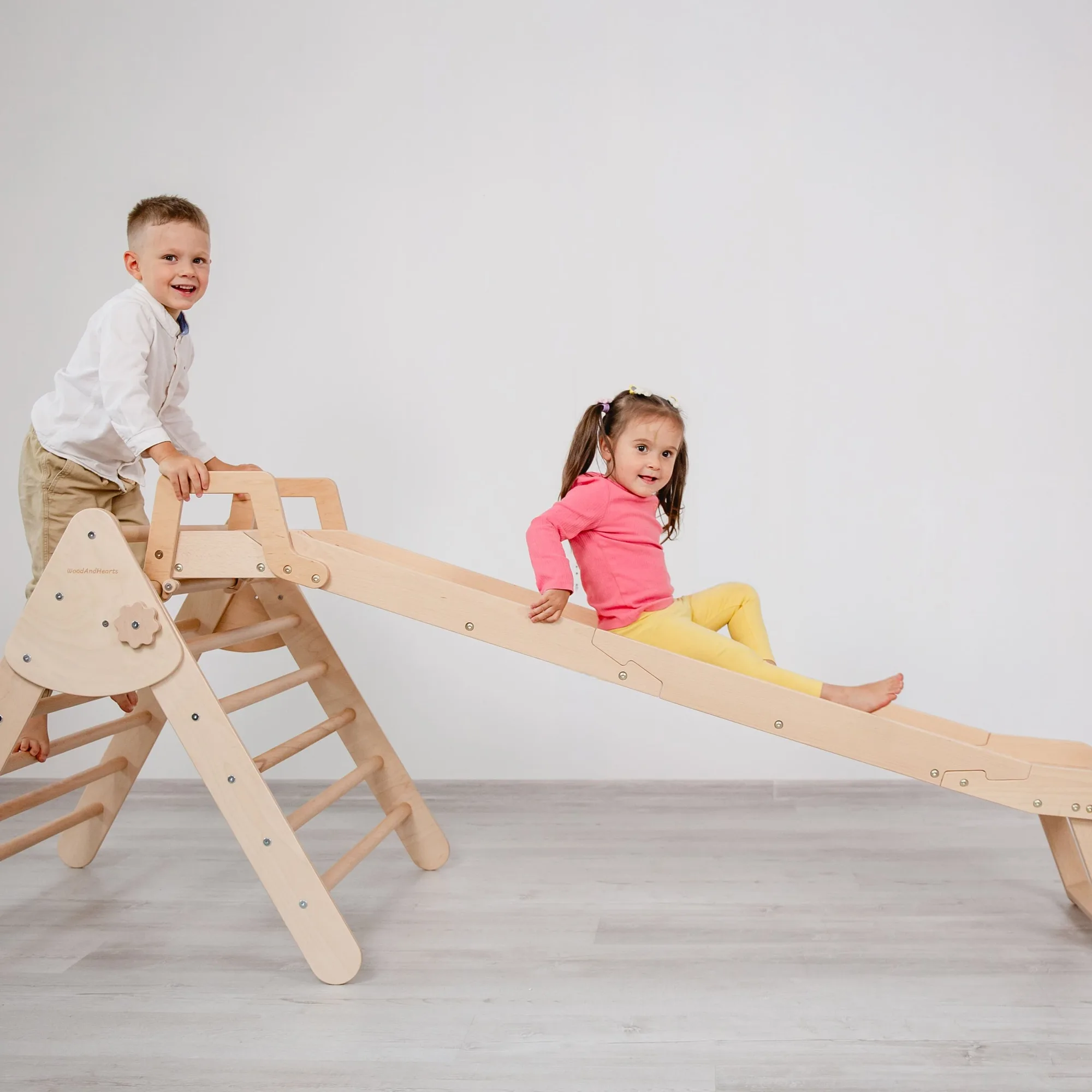
Toddlers need low heights, stable bases, and simple shapes. A good toddler climbing set has a maximum height of around 2 feet and no gaps where small feet can get stuck. The Wooden Climbing Set is a strong fit here: it is a 2-in-1 Montessori triangle and slide, and the triangle is large but can be used at a low angle. The set supports climbing up and sliding down, which builds strength and coordination without overwhelming a beginner.
At this age, you will still supervise closely. Place the set on a soft surface such as a rug or foam mat, and keep it away from hard furniture. If your child is still unsteady, start with just the triangle and add the slide later.
- Look for a set with a wide base and non-slip feet.
- Avoid rope ladders or hanging elements until your child can follow 'hold tight' instructions.
- Check that the slide angle can be lowered for first attempts.
Climbing set for preschoolers (3 to 5 years)
Preschoolers are ready for more variety: ladders, ramps, and small climbing walls. They can follow simple rules and often want to climb higher. A set like the Jungle Gym Playset works well because it includes a climbing trapeze frame and is designed for ages 18 months to 6 years, so it grows with your child. The natural wood construction keeps it stable, and the open design lets you see your child from multiple angles.
If you have space, you can combine a climbing triangle with a separate ramp or balance board. This creates a circuit that challenges balance, strength, and planning. At this stage, many parents add a Kids Climbing Rope to an existing frame to introduce rope climbing without a full new structure.
- Choose a set with multiple entry points so your child can problem-solve.
- Add a mat or rug underneath to soften falls.
- Check the weight limit: most wooden sets support up to 100–150 pounds, but verify for your specific product.
Climbing set for older kids (5 to 8 years)
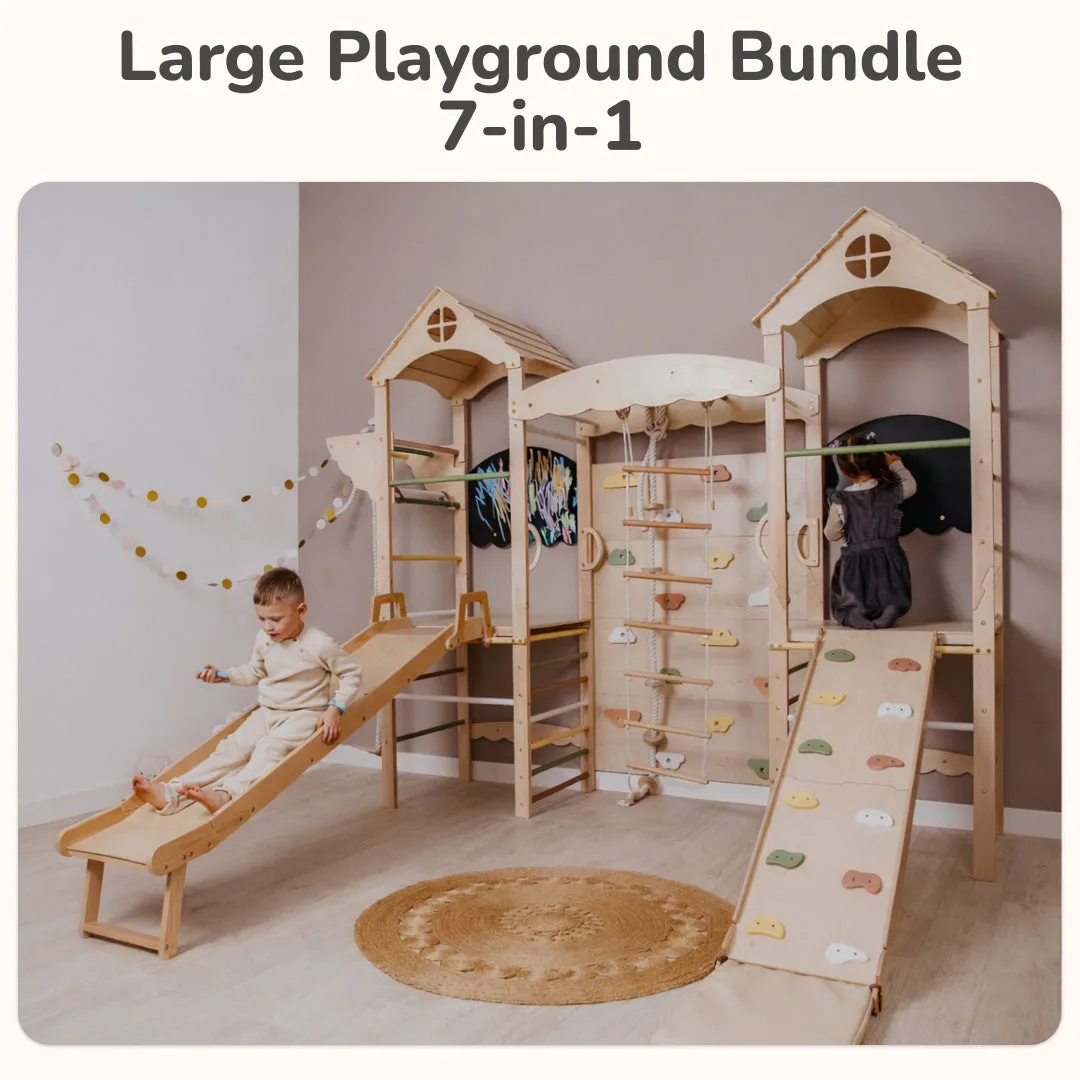
Older kids need height and complexity. A small toddler triangle will not hold their interest. Instead, look for a larger indoor playground or a modular system that includes a climbing wall, monkey bars, or a swing. The Large Kids Indoor Playground, Complete Playspace for Kids is designed for ages 3–8 and combines climbing, swinging, and sliding. It is a bigger investment and needs more floor space, but it can serve multiple children and last for years.
If you already have a Swedish wall or a sturdy frame, you can add accessories like the Ceiling Mounted Climbing Ladder. It has 8 wooden pegs and mounts to the ceiling, turning unused vertical space into a climbing challenge. This is a good option for older kids who need a harder climb but have limited floor space.
- Measure your ceiling height before buying any ceiling-mounted equipment.
- Ensure the mounting hardware is rated for dynamic loads; consult a professional if unsure.
- For multiple children, choose a set with a wide base and separate activity zones.
Space and supervision: the two non-negotiables
No matter your child's age, you need a clear safety zone. The set should sit at least 3 feet away from walls, furniture, and windows. If the set has a slide, add extra clearance at the bottom. For ceiling-mounted items, check that the ceiling is structurally sound and that the ladder hangs high enough to avoid head bumps but low enough to reach.
Supervision looks different by age. Toddlers need you within arm's reach. Preschoolers can climb while you are in the same room, but you should still watch for risky moves. Older kids can have more independence, but you should set rules about no pushing, no climbing with shoes, and no using the set when an adult is not home.
- Use a rug or foam mat that extends at least 3 feet beyond the set.
- Anchor wall-mounted items into studs, not drywall alone.
- Teach a 'feet first' rule for sliding and a 'one at a time' rule for ladders.
Decision rules for choosing a climbing set by age
- If your child is under 3 and new to climbing: Choose a low, stable set with a wide base, such as a wooden triangle used at a low angle. Avoid hanging elements and heights above 2 feet. Start with the Wooden Climbing Set and use only the triangle until your child climbs confidently.
- If your child is 3 to 5 and climbs confidently: Add variety: a slide, a small ladder, or a trapeze frame. Look for a set that allows multiple entry points and can be rearranged. The Jungle Gym Playset fits this stage and can stay in use until age 6.
- If your child is 5 to 8 and needs a challenge: Prioritize height and complexity. A larger indoor playground or a ceiling-mounted ladder provides the difficulty older kids want. The Large Kids Indoor Playground or Ceiling Mounted Climbing Ladder are better matches than a toddler triangle.
- If you have limited floor space: Use vertical space with a ceiling-mounted ladder or wall-mounted elements. Measure ceiling height and joist locations before purchasing. The Ceiling Mounted Climbing Ladder adds climbing without taking up floor area.
Product facts that matter for age fit
- Wooden Climbing Set: This 2-in-1 set includes a Montessori Triangle (Large size) and a Slide. Kids can easily climb up and slide down. The triangle and slide can be used together or separately, so you can start with just the triangle for a toddler and add the slide as confidence grows. The large triangle size gives more room for climbing than a small one.
- Jungle Gym Playset: Designed for children aged 18 months to 6 years, it includes a Climbing Trapeze Frame and is inspired by Montessori principles. The wide age range means it can serve a toddler and an older sibling at the same time. The trapeze frame adds a hanging element that many preschoolers enjoy, but it requires supervision.
- Large Kids Indoor Playground, Complete Playspace for Kids: A multifunctional Montessori-inspired setup with climbing, swinging, and sliding elements, ideal for children aged 3–8 years. This is a long-term investment for families with older kids or multiple children. It offers more variety than a single climbing triangle, but it needs significant floor space and a higher budget.
- Ceiling Mounted Climbing Ladder: This ceiling-mounted rope ladder features 8 wooden pegs and is designed for climbing, balancing, and movement-based play. It adds a vertical challenge without taking up floor space, making it a good fit for older kids in smaller rooms. Installation requires a suitable ceiling and careful anchoring.
Is this climbing set right for your family?
Best for
- Families with a toddler or preschooler who need a first climbing structure that can be adjusted as skills grow.
- Parents who want a wooden, Montessori-inspired set that supports active play and can be used indoors.
- Households with enough floor space for a dedicated movement zone and close adult supervision.
Not for
- Families looking for a set that can be left outside year-round; these are indoor wooden products.
- Parents who cannot supervise climbing sessions or who need a fully enclosed playpen alternative.
- Homes with very limited floor space and no ability to mount equipment to walls or ceilings.
Choosing a climbing set by age comes down to matching your child's current abilities with a structure that can adapt. Start with a low, stable option for toddlers, add variety for preschoolers, and prioritize height and complexity for older kids. Always measure your space and plan for supervision. With the right fit, a climbing set becomes a daily source of active, confident play.