Quick answer
If you cut fabric strips, squares, or multiple layers, start with a 28mm rotary cutter and a non-slip acrylic ruler set, then add a pair of sharp fabric scissors for trimming and curves. A craft knife is a detail tool for paper, templates, and tight corners, not your main fabric cutter. Buy one good rotary blade pack and one ruler size that matches your most common strip width, then expand only when a project demands it.
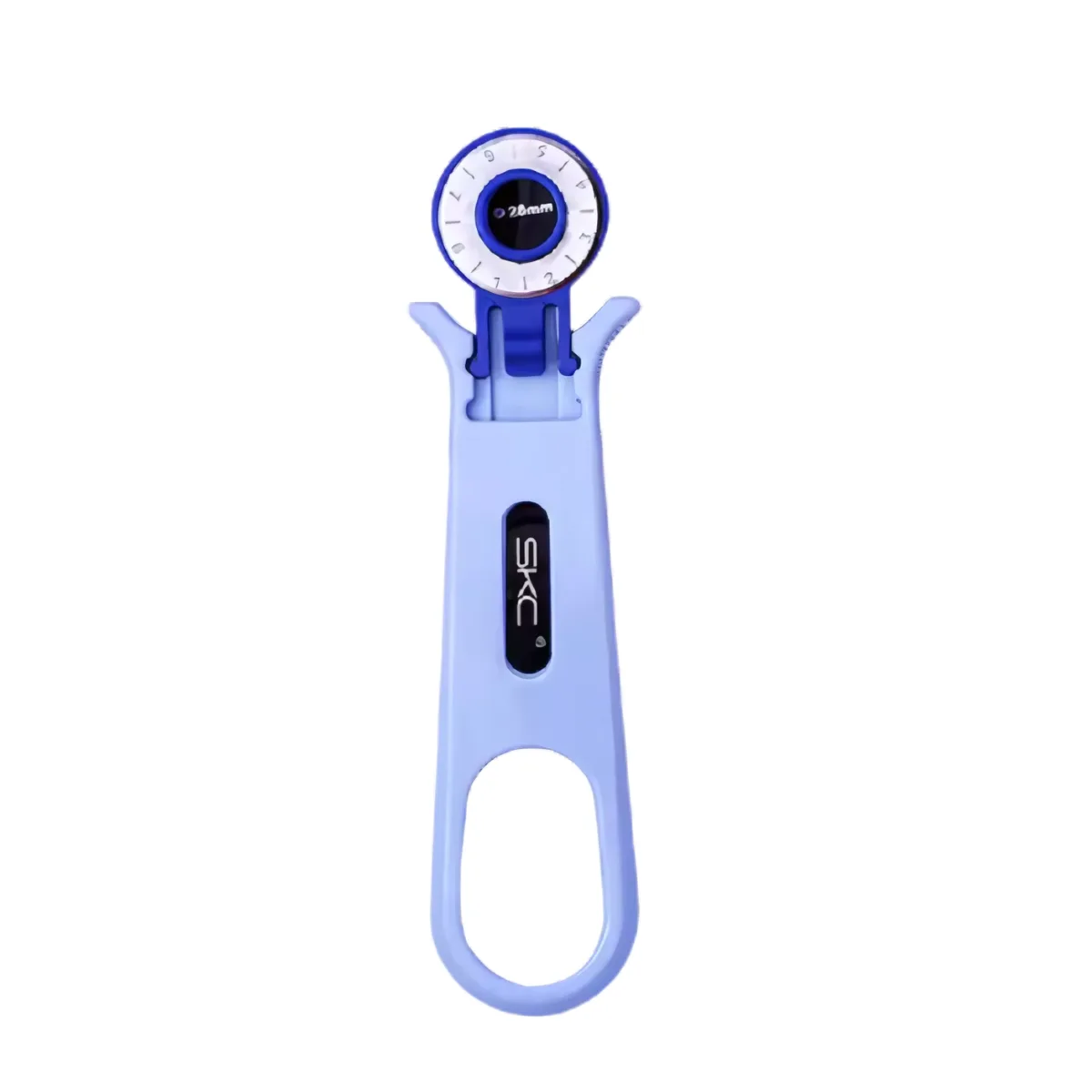
28mm rotary cutter
Cutting tools are the first place quilting accuracy is won or lost. A ruler that shifts, a dull blade, or the wrong cutter for the job shows up later as mismatched seams and wavy borders. The goal is not to own every tool, but to match three or four reliable tools to the way you actually cut.
This buying guide walks through the real trade-offs: rotary cutter versus craft knife, blade size, ruler grip, and when fabric scissors still earn their place on your table. You will also see how specific Mrs Quilty tools fit those decisions, so you can build a cutting kit that works for your space and budget.
Start with how you cut, not what is on sale
Before you buy anything, answer three questions. Do you mostly cut straight strips and squares, or do you cut curves and appliqué shapes? How many layers do you usually cut at once? And how much table space do you have? Straight strip cutting points to a rotary cutter and long ruler. Curves and small shapes point to sharp scissors or a craft knife for templates. Limited space favors a smaller rotary cutter and a compact ruler.
Your answers set a priority order. Most quilters get the most accuracy per dollar from a rotary cutter, a non-slip ruler, and a fresh blade. Scissors and craft knives are supporting tools, not replacements for that core. If you are just starting, buy the core first and add specialty tools when a specific project requires them.
- Write down your two most common cuts before shopping; buy for those first.
- If you cut mostly 2.5-inch strips, a ruler with that line clearly marked saves time.
- Replace blades at the first sign of skipping or frayed edges, not after a mistake.
Rotary cutter versus craft knife: choose by material and shape
A rotary cutter rolls through fabric and is the standard tool for strips, squares, and multiple layers. It pairs with a self-healing mat and an acrylic ruler, and it is fast once you learn to hold the ruler steady. A craft knife uses a fixed blade to cut around templates, trim tight corners, and handle paper or fusible web. It is more precise for detail work but slower and less suited to long fabric cuts.
The practical rule: if the cut is straight and longer than a few inches, use a rotary cutter. If the cut follows a small curve, a drawn line, or a template, use a craft knife or scissors. Many quilters keep both, but they are not interchangeable for the same task. Buying a craft knife first usually means you will still need a rotary cutter for basic piecing.
- Rotary cutter: strips, squares, multiple layers, straight cuts.
- Craft knife: templates, curves, trimming, paper and fusible web.
- Scissors: trimming threads, clipping curves, cutting small pieces when a cutter is awkward.
Blade size and ruler grip matter more than brand
Rotary blades come in common sizes, and the size should match your cutting job. A 28mm blade is nimble for small pieces, curves, and trimming, while larger blades suit thick stacks and long strips. If you mostly cut 10-inch squares or layer cake pieces, a 28mm cutter is often easier to control than a large one, especially on a crowded table. Check your cutter's manual for the blade size it accepts before ordering refills.
Ruler grip is the quiet accuracy factor. A ruler that slides mid-cut ruins an otherwise good blade. Non-slip backing holds the ruler in place on fabric, which matters most when you cut narrow strips or slippery fabrics. A set with several sizes lets you match the ruler to the cut instead of forcing one ruler to do everything.
- Match blade size to your cutter; do not assume all rotary blades fit all handles.
- Use a non-slip ruler for narrow strips and bias cuts where slipping is most costly.
- A 10-inch square is a useful starting ruler size for layer cakes and fat quarters.
Build a two-stage kit instead of buying everything at once
Stage one is the everyday kit: one rotary cutter with a fresh blade, one non-slip ruler in your most-used size, and one pair of sharp fabric scissors. This covers strips, squares, trimming, and thread clipping. Stage two adds specialty tools: a craft knife for templates, a second ruler size, and a spare blade pack so a dull blade never stalls a project.
This approach keeps your spending tied to real needs. It also makes replacement simple, because you know which tool does which job. When you do add a tool, add the one that removes your most frequent frustration, whether that is slipping rulers, ragged cuts, or slow template work.
- Stage one: rotary cutter, non-slip ruler, fabric scissors.
- Stage two: craft knife, second ruler size, spare blades.
- Replace the weakest link first; a dull blade makes every other tool feel worse.
Decision rules for buying quilting cutting tools
- If you cut straight strips and squares: Buy a rotary cutter and a non-slip ruler before anything else. Match the blade size to your cutter handle and keep a spare blade pack on hand. This is the core kit that covers most piecing cuts.
- If you cut curves, templates, or fusible web: Add a craft knife or sharp fabric scissors for detail work, but keep the rotary cutter for long straight cuts. Do not try to replace one with the other. Detail tools support the core kit; they do not replace it.
- If your ruler slips during cuts: Switch to a non-slip acrylic ruler or a set with non-slip backing before blaming your blade. Slipping rulers cause more inaccurate cuts than dull blades. Fix the grip first, then check blade sharpness.
- If you cut on a small table: Choose a smaller rotary cutter and a compact ruler size. A 28mm cutter and a 10-inch square ruler are easier to control in tight spaces than large-format tools. Match tool size to your workspace, not to a wish list.
- If you are unsure what to buy next: Replace the tool that causes your most frequent mistake. Ragged cuts point to a dull blade; wavy strips point to ruler slip; slow template work points to a missing detail tool. Buy for the problem you actually have.
Tools that match these decisions
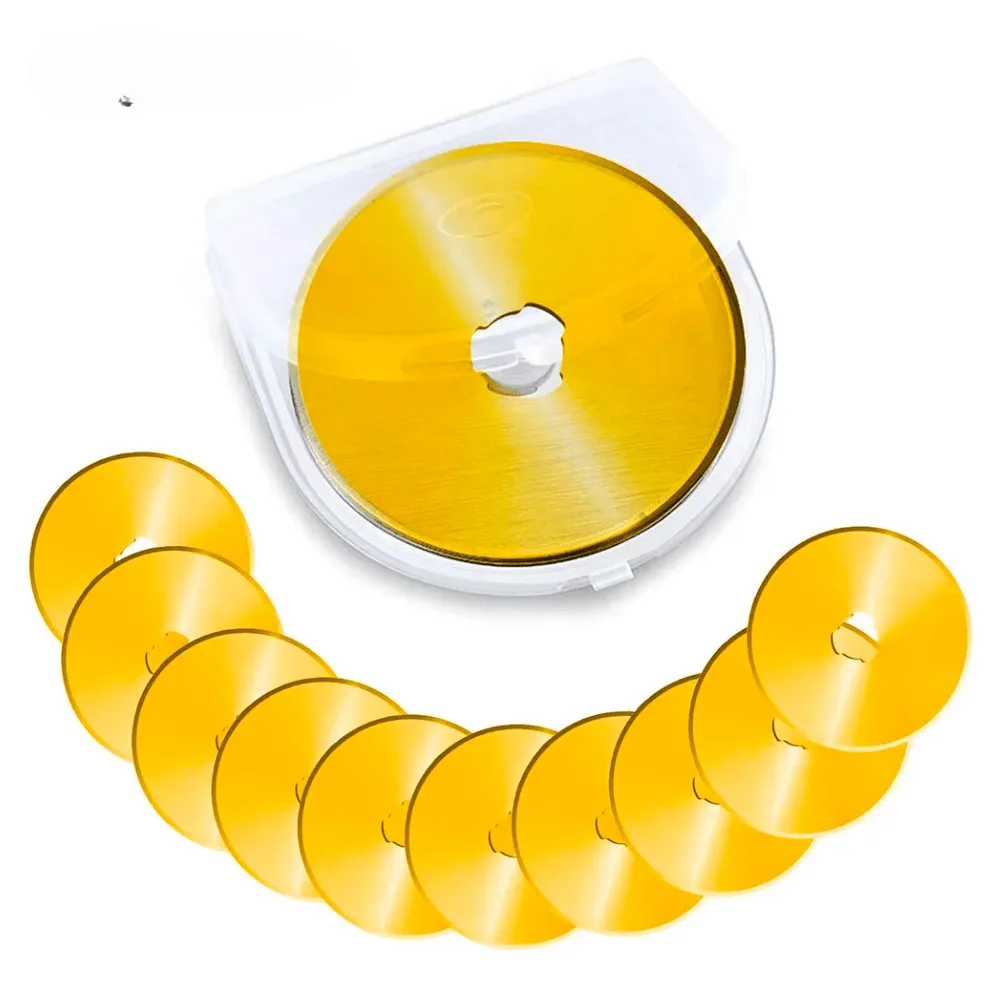
- 28mm Titanium Rotary Cutter Blades 10pcs: These are 28mm titanium rotary cutter blades sold in a 10-pack, described as providing precision and durability for smooth cuts. A 10-pack keeps you cutting through multiple projects without stopping to order replacements, and the 28mm size suits small pieces, curves, and trimming where control matters.
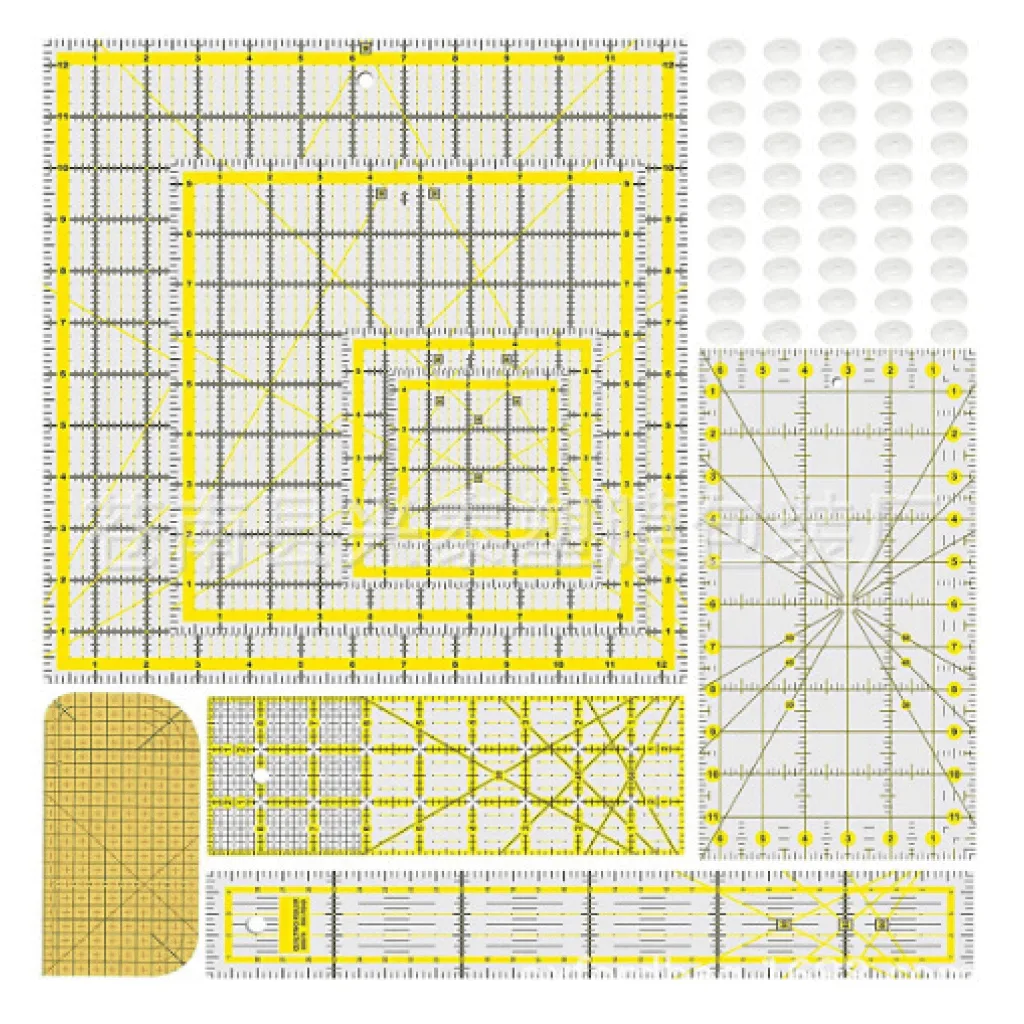
- Non Slip Acrylic Quilting Ruler Set: This set includes 7 rulers with a non-slip backing designed to keep them firmly in place, even on delicate cuts. Multiple sizes let you match the ruler to the cut, and the non-slip backing directly addresses the slipping that causes wavy strips and inaccurate squares.
- Professional Fabric Scissors 6": These 6-inch scissors have stainless steel blades intended for clean, precise cuts through fabric for quilting, embroidery, and sewing. A dedicated pair of fabric scissors handles trimming, thread clipping, and small cuts where a rotary cutter is awkward, and keeping them for fabric only helps them stay sharp.
Who this cutting tool setup fits
Best for
- Beginner and intermediate quilters who cut strips, squares, and layer cake pieces
- Quilters with limited table space who need control over small pieces and trimming
- Anyone replacing slipping rulers or dull blades that are causing inaccurate cuts
Not for
- Quilters who only cut large yardage with a long-arm setup and need industrial-size tools
- Crafters who mainly cut paper or cardboard and need a heavy-duty utility knife
- Shoppers looking for a single all-in-one tool that handles every fabric and template cut
Build your cutting kit around the cuts you make most, not the tools that look impressive. A rotary cutter with fresh blades, a non-slip ruler that stays put, and one sharp pair of fabric scissors will carry most quilting projects. Add a craft knife or extra ruler size only when a specific project asks for it.