Quick answer
Buy one standard 7-piece RPG set first: d4, d6, d8, d10, d10 percentile, d12, and d20. That covers nearly every roll a starting D&D character makes. Pick plastic if you want the cheapest, lightest entry, glass if you want something that catches light at the table, and metal if you want weight and durability and don't mind the price and noise.
Your first set of dice should do two jobs: cover every roll your character sheet asks for, and feel good enough in your hand that you actually want to use it every session. Everything else — finish, theme, collector appeal — is a bonus you can add later.
This guide walks through what a standard set contains, how material changes the feel and the price, and a few decision rules you can apply in the store without second-guessing yourself.
What dice do I actually need for D&D?
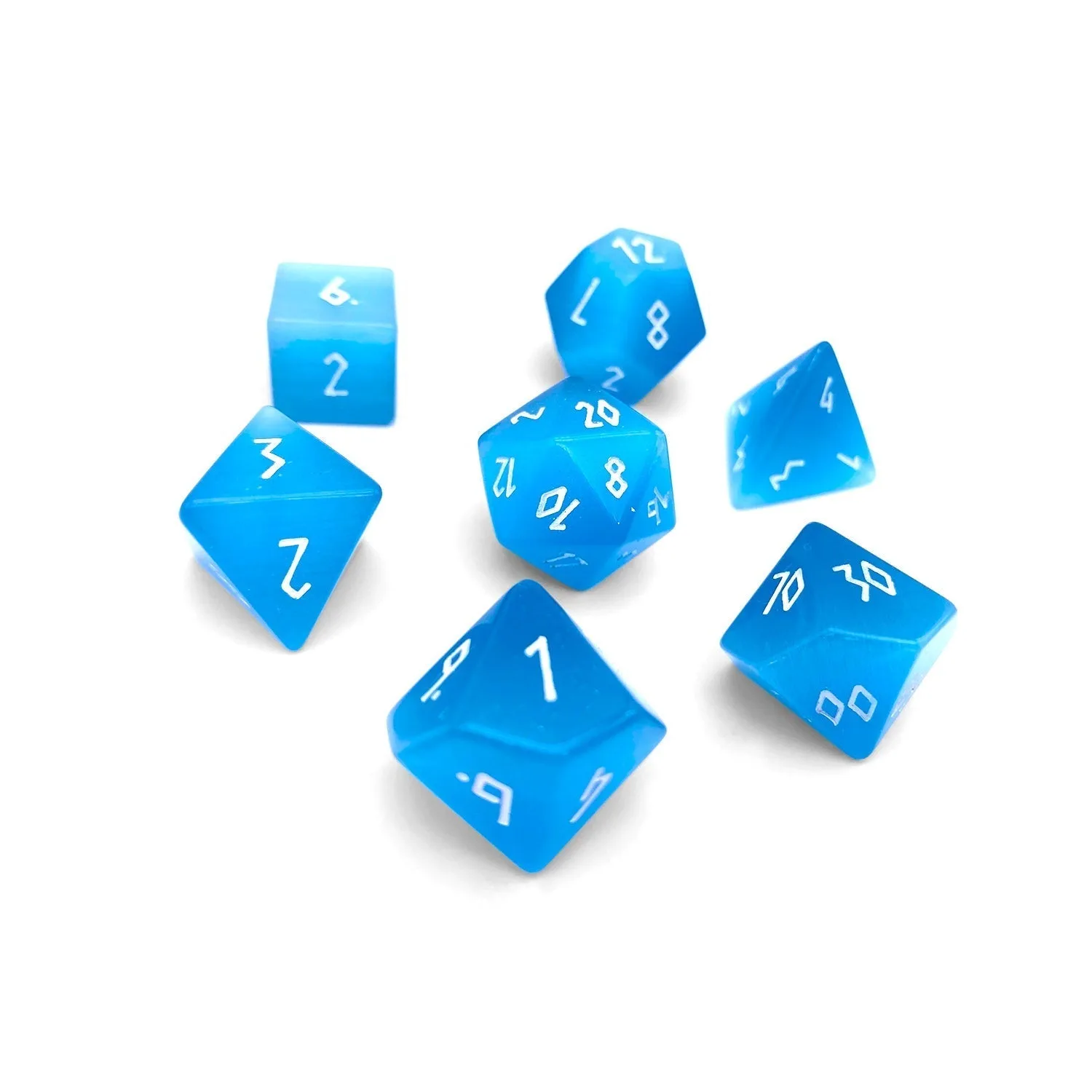
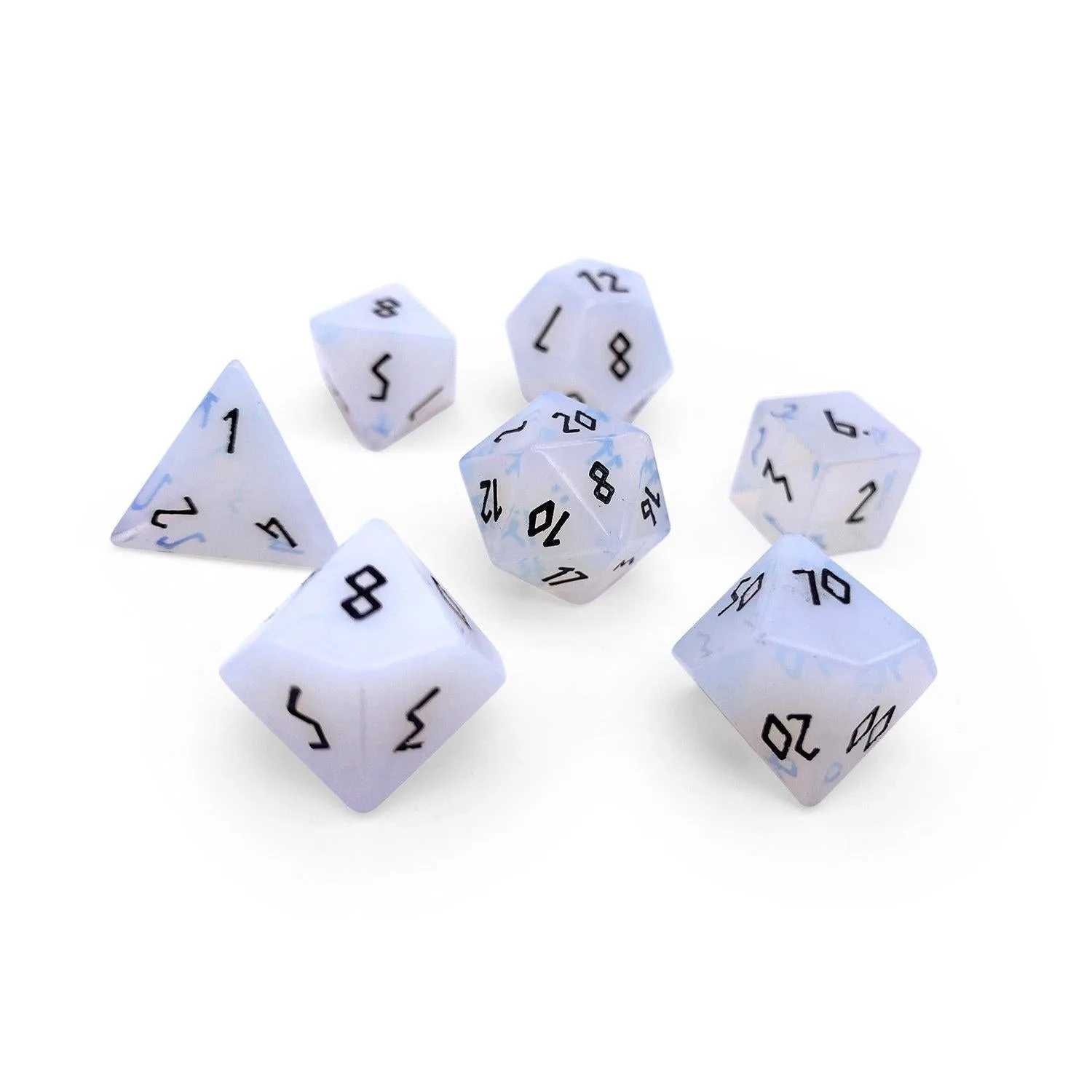
A standard 7-piece RPG set gives you one of each die a player normally rolls: a d4, d6, d8, d10, a percentile d10, a d12, and a d20. The d20 handles attacks, saves, and ability checks; the smaller dice handle damage, hit points, and the occasional table. If you own one complete set, you are ready to sit down at a table.
You do not need multiple sets to start, and you do not need a separate set for each character. Extra sets are useful when you want to roll several dice at once, hand a spare to a friend, or keep one set in a bag and one at home. Start with one, then add a second when you notice yourself borrowing dice.
- Check the listing says 7-piece before buying — that is the standard player loadout.
- A percentile d10 is usually marked 00-90 and pairs with a regular d10 for d100 rolls.
- If your group rolls damage dice together, a second set of the same size helps more than a fancier single set.
How material changes the feel, sound, and price
Plastic dice are the lightest and typically the least expensive, which makes them a low-risk first purchase. They roll quietly, travel easily in a pocket or small bag, and come in the widest range of colors. The tradeoff is that they feel less substantial and can show wear faster than harder materials.
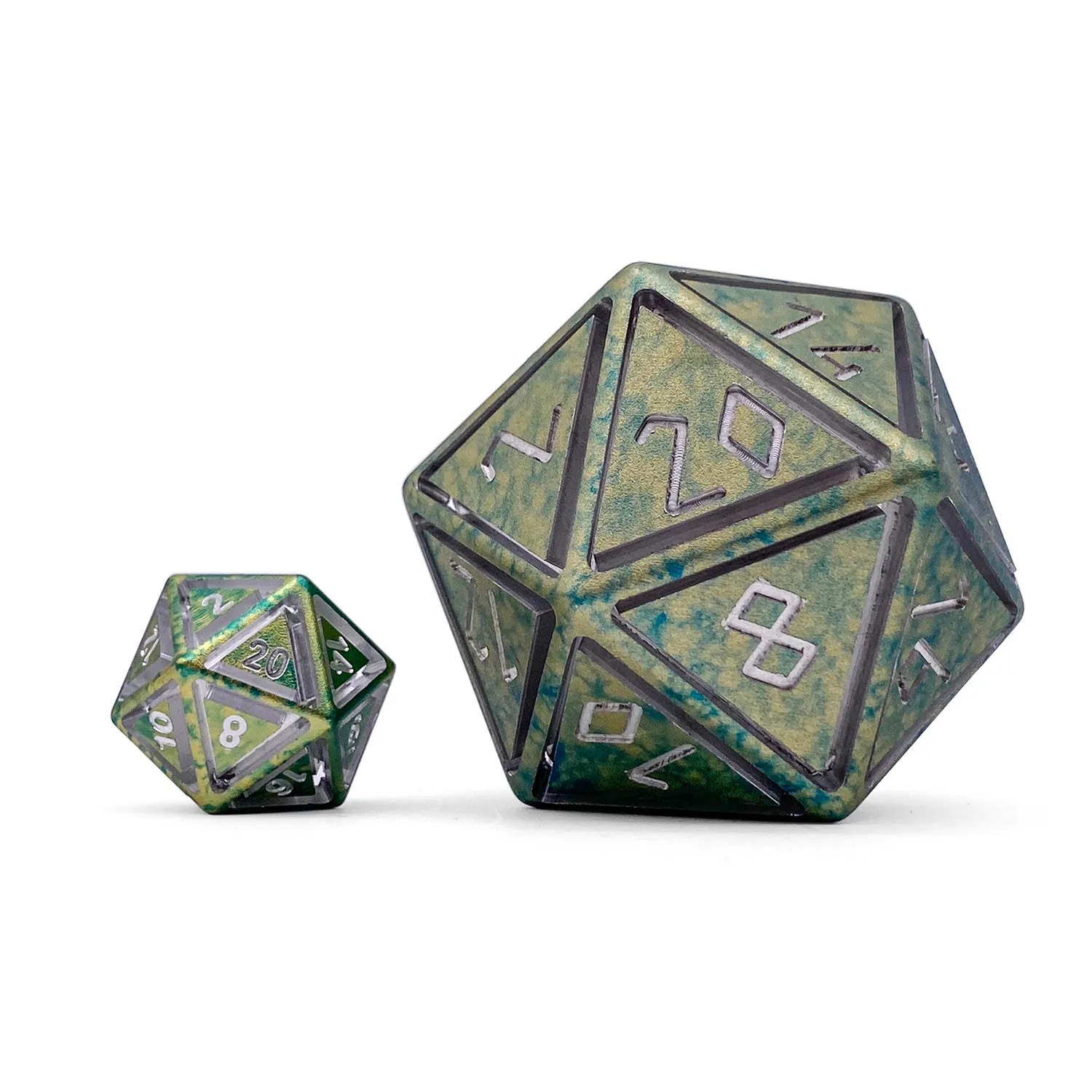
Glass and gemstone-style dice sit in the middle. Zircon glass sets use a material known for withstanding high temperatures and stone-like hardness, so they hold up over many sessions while shimmering under table light. Metal dice are the heaviest and usually the most expensive; they feel deliberate in the hand and survive years of use, but they are loud on hard tables and can dent a cheap tray, so pair them with a mat or tray.
- If you play in a noisy café or share a table, lighter plastic or glass is kinder to everyone's ears.
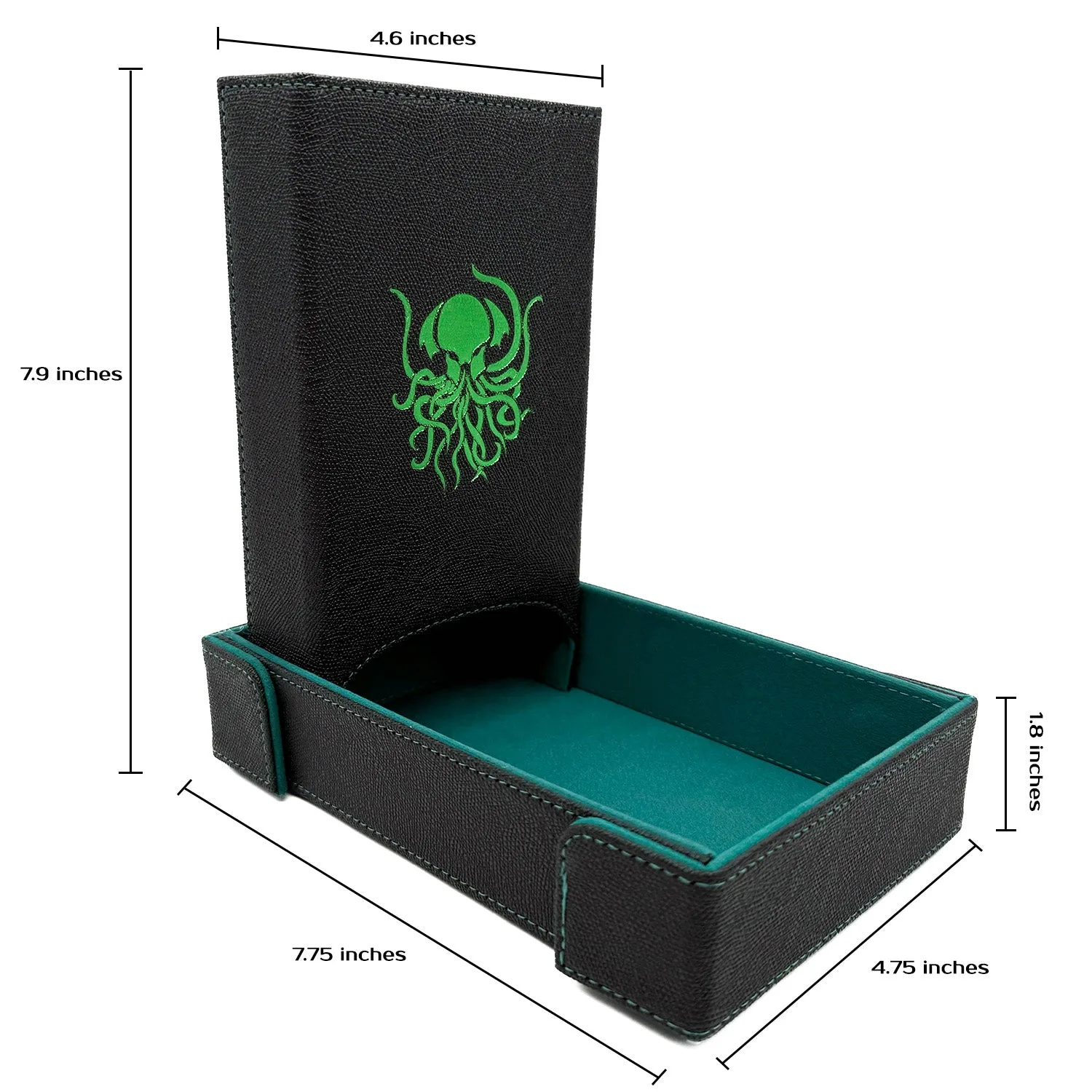
- If you play on a bare wooden table, budget for a dice tray alongside metal dice.
- Weight is personal: some players love the heft, others find metal tiring to roll all night.
Match the set to how you actually play
Think about where your dice live. If they ride loose in a backpack between sessions, a durable material and a bag matter more than a display finish. If they sit on a shelf between games and come out for a weekly home campaign, a set with a distinctive look adds to the ritual without any practical downside.
Also consider your character. A rogue or wizard who rolls a lot of d6s benefits from a set you enjoy handling, because you will touch it constantly. A character built around big d20 moments benefits from a die that is easy to read at a glance — clear, high-contrast numbering beats an intricate finish you have to squint at.
- Readability first: engraved or high-contrast numbers matter more than a busy pattern.
- If you roll in a shared space, quieter materials reduce friction with the group.
- Buy the set you will actually bring, not the one that looks best in a photo.
Where to spend and where to save on a first set
Spend on the material and the readability, save on the extras. A well-made set in a material you enjoy will outlast three cheap sets you replace out of frustration. Accessories like trays, bags, and cases are genuinely useful, but you can add them one at a time as you learn what your table needs.
One honest limitation: product listings do not always state every specification, such as exact die dimensions or included packaging. When a detail is missing, treat it as unknown rather than assuming — check the product page or ask before buying if that detail decides the purchase for you.
- Prioritize a complete 7-piece set over a partial set plus accessories.
- Add a tray if you choose metal dice; add a bag if you travel with dice.
- If a spec you care about is not listed, ask before you buy rather than guessing.
Decision rules for your first set
- Rule 1: Buy a complete 7-piece set first: A d4, d6, d8, d10, percentile d10, d12, and d20 covers essentially every roll a starting character makes. Partial sets or single dice leave gaps you will notice in the first session. If it is not a 7-piece set, it is not your first set.
- Rule 2: Choose material by table, not by hype: Plastic for light and quiet, zircon glass for durability and shimmer, metal for weight and longevity. Match the material to where and how you play, not to what looks best online. Pick the material you will still enjoy handling in session twenty.
- Rule 3: Let readability beat decoration: You will read these numbers hundreds of times. High-contrast or engraved numbering you can read at a glance matters more than an intricate pattern that blurs under dim table light. If you have to squint, keep looking.
- Rule 4: Budget for one accessory, not five: Metal dice need a tray or mat to protect the table and soften the noise. Traveling players need a bag. Buy the one accessory your actual habits require and skip the rest for now. One useful accessory beats a drawer of unused ones.
- Rule 5: Treat missing specs as unknown: Listings do not always state every detail, such as exact dimensions or included packaging. If a missing spec decides your purchase, ask before buying rather than assuming. Unstated is not the same as included.
Real sets that show the trade-offs
- Frosted Zircon Sapphire - Gold Font 7 Piece RPG Set Zircon Glass Dice: A 7-piece RPG set in zircon glass with a gold font, described as an opulent fusion of elegance and luxury for tabletop gaming. A good middle path: you get a full player loadout in a material that shimmers under light, without the weight and noise of metal.
- Zircon Emerald - Gold Font 7 Piece RPG Set Zircon Glass Dice: Made using zircon glass, a material used for filling outdoor fireplaces and known to withstand incredibly high temperatures, with a shattered effect and stone-like hardness. If you want a first set that resists wear across many sessions, the stated hardness is the practical reason to choose glass over basic plastic.
- Copper - 7 Piece RPG Set True Metal Dice: A handcrafted copper polyhedral set from an heirloom collection, where each die develops its own unique personality and green patina over time. The clearest example of metal's appeal and its cost: you pay more and accept weight and noise in exchange for heft and a finish that ages with use.
- Black Obsidian - Gold Font Pebble RPG Set Gemstone Dice: A black raised obsidian gemstone set with a gold font, positioned around using the power of darkness to your advantage. A strong pick if your character's theme matters to you and you want a gemstone look at a lower commitment than a full metal set.
Who this advice fits
Best for
- New players buying their first complete set for a home or store campaign
- Players who want one set that covers every roll on a standard character sheet
- Gift buyers choosing a first set for someone starting D&D
Not for
- Collectors hunting limited finishes or display-only pieces
- Experienced players who already know their preferred material and want to expand a specific collection
- Groups that need bulk dice for many players at once rather than one personal set
Start with one complete 7-piece set in a material that matches how and where you play, then add a second set or an accessory only when a real need shows up at the table. That approach gets you rolling this week without overspending on dice you have not learned to use yet.