Quick answer
Choose adhesive by the materials and the stress the bond must survive, not by brand claims. For card making and papercraft, use a dry tape runner or double-sided tape for flat, clean seams and a glue stick or wet glue for dimensional or repositionable work. For fabric, use a flexible fabric-safe adhesive or sewing thread where the bond must move. For foam and mixed media, use a hot glue gun with the correct glue sticks. If you are unsure, buy one permanent and one removable option and test on a scrap before committing.
Most adhesive failures are not caused by bad glue. They happen because the adhesive was matched to the wrong material, the wrong surface energy, or the wrong amount of movement. Paper wants a dry, low-moisture bond. Fabric wants flexibility. Foam wants gap-filling and heat. Once you know those three rules, the buying decision becomes much simpler.
This guide gives you concrete decision rules for the best glue for crafts across paper, card, fabric, foam, and mixed-media projects. It also explains permanent vs removable adhesive and when tape vs glue for card making actually changes the finished result. Use the product facts below as real examples of what to look for on a label, not as a list of things you must buy.
Start with the material, not the adhesive
The single most useful question is: what happens to the material when it gets wet, hot, or stressed? Paper and card absorb moisture and can cockle or warp if you use a water-based wet glue in a thin sheet. Fabric flexes, so a rigid glue line will crack or feel stiff. Foam and some plastics are low-surface-energy, which means many water-based adhesives bead up instead of gripping. Match the adhesive family to that behavior first.
A second question is whether the bond needs to be permanent, removable, or repositionable. Permanent adhesives are designed to hold and are usually the right choice for structural joins, boxes, and layered cards. Removable adhesives are designed to release cleanly, which is useful for temporary placement, masking, and photography. Repositionable adhesives sit in between: they hold lightly and can be moved a few times before they set. Decide which of those three you need before you compare products.
- Test on an offcut of the exact material, not a similar-looking one.
- Check the label for the material list and drying time before buying.
- Buy one permanent and one removable option if you work across both.
Glue vs tape for card making and papercraft
For flat paper seams, tape usually wins. A dry tape runner or double-sided tape applies a thin, even line with almost no moisture, so cardstock stays flat and the finished card does not curl. Tape is also fast and clean, which matters when you are making multiples. The trade-off is that tape is unforgiving: once it touches the surface, it grabs, and repositioning can tear the paper fibers.
Glue wins when you need wiggle room or a stronger structural bond. A glue stick gives you a few seconds to slide a layer into position, and a wet glue can bond porous surfaces and fill small gaps. The trade-off is moisture and drying time. On thin paper, too much wet glue causes ripples. On coated or glossy card, some water-based glues sit on the surface rather than soaking in, so the bond can stay weak. If you are layering a heavy cardstock like a 225gsm sheet, a thin tape line plus a light glue dot at the corners often gives the best of both.
- Use tape for flat, clean seams and glue for repositionable or structural joins.
- Less adhesive is usually better on paper; too much causes warping.
- Let wet glue dry under a flat weight if the paper tends to curl.
Adhesive for fabric and embroidery projects
Fabric is the material that punishes rigid adhesives. A stiff glue line will feel scratchy against skin and can crack when the fabric bends. For hems, appliqué, and small repairs, choose an adhesive labeled for fabric or use a flexible fabric glue that stays slightly pliable after curing. For anything that will be washed, worn, or stretched, sewing thread is still the most reliable option because it moves with the fabric instead of fighting it.
If you are working with dissolvable embroidery or hooped work, remember that the adhesive is often temporary. A removable adhesive or a water-soluble stabilizer holds the fabric while you stitch, then releases. That is a different job from a permanent fabric bond, so do not assume one product covers both. Check whether the adhesive is meant to stay or to disappear before you commit.
- Choose flexible, fabric-labeled adhesive for anything that bends or is worn.
- Use sewing thread for washable or high-stress seams.
- Keep temporary embroidery adhesives separate from permanent fabric glues.
Gluing foam, mixed media, and dimensional layers
Foam, mount board, and mixed-media builds need an adhesive that fills gaps and grabs quickly. A hot glue gun with the correct glue sticks is the practical default for foam because the melted adhesive fills uneven surfaces and sets fast. The trade-off is heat and bulk: hot glue can melt thin foam or warp delicate materials, and it leaves a visible bead. For fine work, a thin foam-safe liquid adhesive or double-sided foam tape may be cleaner.
When you combine materials, the weakest bond usually fails first. If you glue paper to foam, the paper may tear before the adhesive releases. If you glue foam to plastic, the surface energy of the plastic may be the limiting factor. Build in this order: test the bond, add mechanical support where possible, and avoid mixing a flexible adhesive with a rigid substrate unless the joint is designed to move. A craft mat and a small spatula help you control the amount of adhesive and keep the work area clean.
- Use hot glue for foam and gap-filling, but test heat sensitivity first.
- Add mechanical support for mixed-material joints that will be handled.
- Control the amount of adhesive with a spatula or fine applicator tip.
Permanent vs removable adhesive: how to decide
Permanent adhesive is the right default for anything that must survive handling, shipping, or display. It is designed to form a strong bond and usually cannot be repositioned without damage. Removable adhesive is the right choice when you need to lift, adjust, or temporarily hold something: masking, stenciling, holding a template, or photographing a layout before you commit. The mistake is using a removable product for a permanent job because it was already on the desk.
A practical middle path is to keep both in your stash and label them clearly. Use removable for placement and permanent for the final bond. If you are unsure how a product behaves, test it on a scrap of the same material and let it sit for the full cure time before judging. Some adhesives feel weak when wet and become strong after curing, while others grab instantly and then fail. The cure time on the label is part of the decision, not an afterthought.
- Use permanent for structural joins and removable for placement and masking.
- Label removable and permanent adhesives so you do not mix them up.
- Judge the bond after the full cure time, not immediately after applying.
Decision rules for choosing a craft adhesive
- If the material is thin paper or cardstock: Use a dry tape runner or double-sided tape for flat seams, and a glue stick only when you need a few seconds to reposition. Avoid heavy wet glue on thin sheets because moisture causes ripples. Flat, clean, no curl: choose tape first.
- If the material is fabric or will be washed or worn: Choose an adhesive labeled for fabric that stays flexible after curing, or use sewing thread for high-stress seams. Rigid glue lines crack and feel stiff on fabric. Flexibility is the deciding factor, not initial grab.
- If the material is foam, mount board, or mixed media: Use a hot glue gun with the correct size glue sticks for gap-filling and fast set, but test heat sensitivity first. For fine or heat-sensitive work, use a foam-safe liquid adhesive or foam tape. Match the glue stick size to your gun before you buy.
- If the bond must be permanent: Choose a permanent adhesive and let it cure for the full time on the label before judging the bond. Do not substitute a removable product just because it is nearby. Permanent for structure, removable for placement.
- If the bond must be removable or repositionable: Choose a removable adhesive for masking, templates, and temporary holds. Keep it clearly labeled and separate from your permanent adhesives so you do not use it on a final join. Label both types so you grab the right one.
Real product examples and what they tell you
- Crafter's Companion - Kraft Card 50 sheets: This A4 Kraft Card is 300gsm and comes in a 50-sheet pack, described as suitable for cardmaking, die cutting, and scrapbooking. A 300gsm sheet is heavy enough that a thin tape line or a light glue dot can hold a layer without the card curling, which makes it a good test surface for comparing tape vs glue on cardstock.
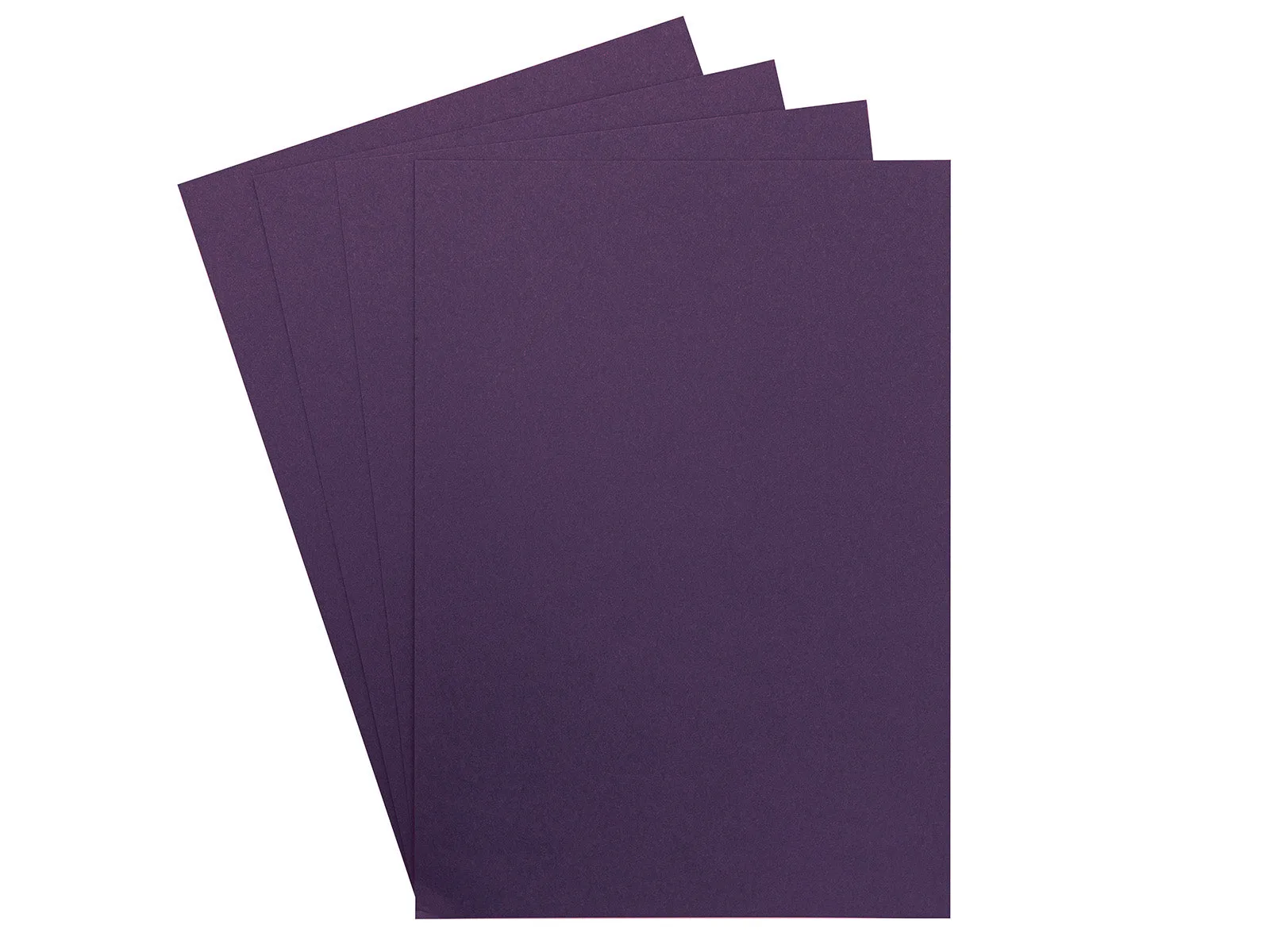
- Arden Creative Studio Premium Cardstock Aubergine Purple A4 - 20 Pack: This is a 225gsm heavyweight cardstock with a smooth finish, described as suitable for stamping, die-cutting, scoring, and crisp mats and layers. Smooth, coated-looking cardstock is exactly where water-based wet glue can sit on the surface instead of soaking in, so a dry tape runner is often the safer choice for flat layers on this stock.
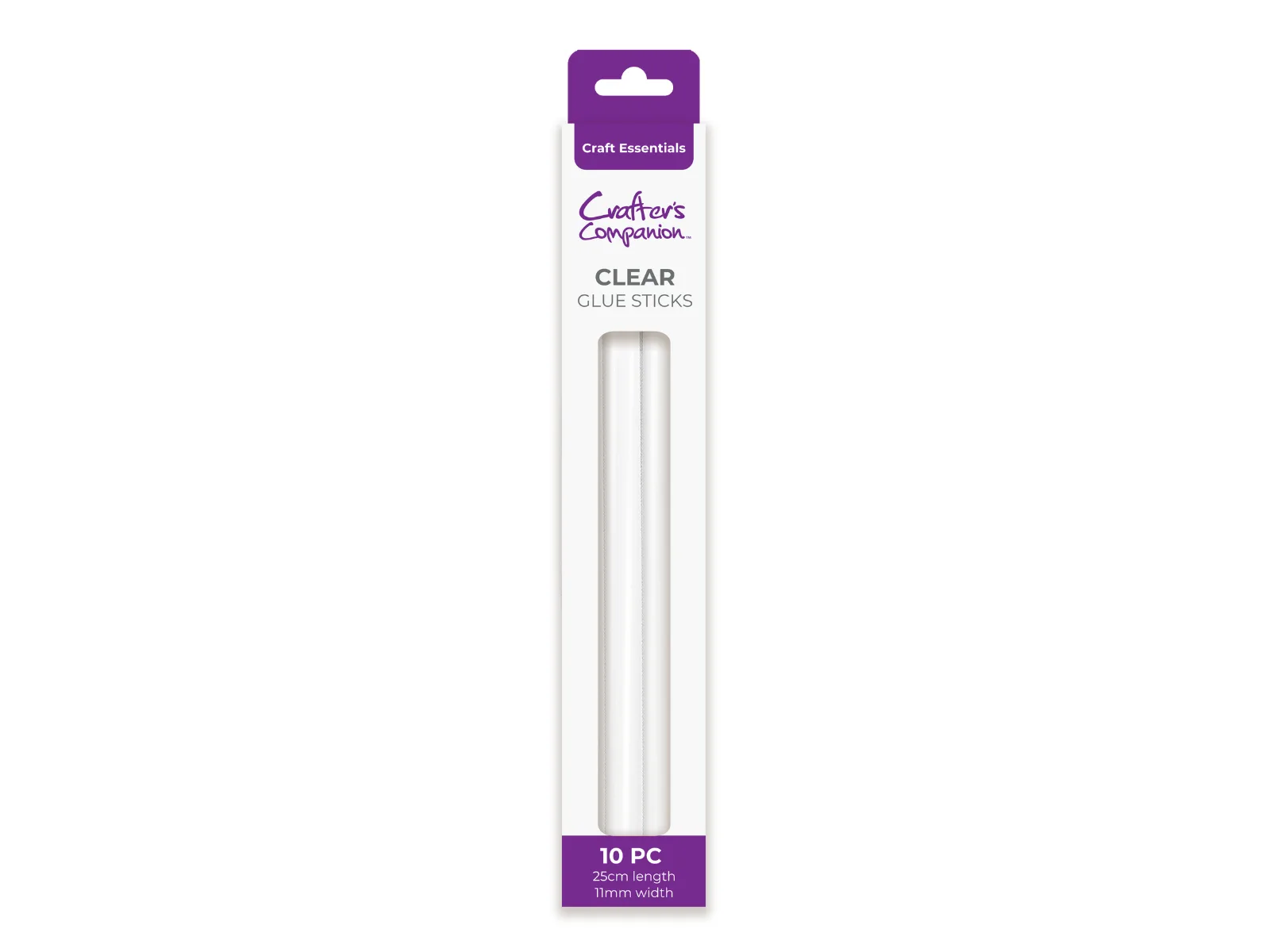
- Crafters Companion Large Glue Sticks - 11mm x 250mm: These are 11mm x 250mm clear hot glue gun sticks supplied in a pack of 10, designed for use with a large hot glue gun and described as drying clear for papercraft, card making, DIY, and home décor. The 11mm diameter and 250mm length tell you these fit a large glue gun, not a mini one, so check your tool before buying. Clear drying matters when the adhesive may show at the edge of a foam or mixed-media join.
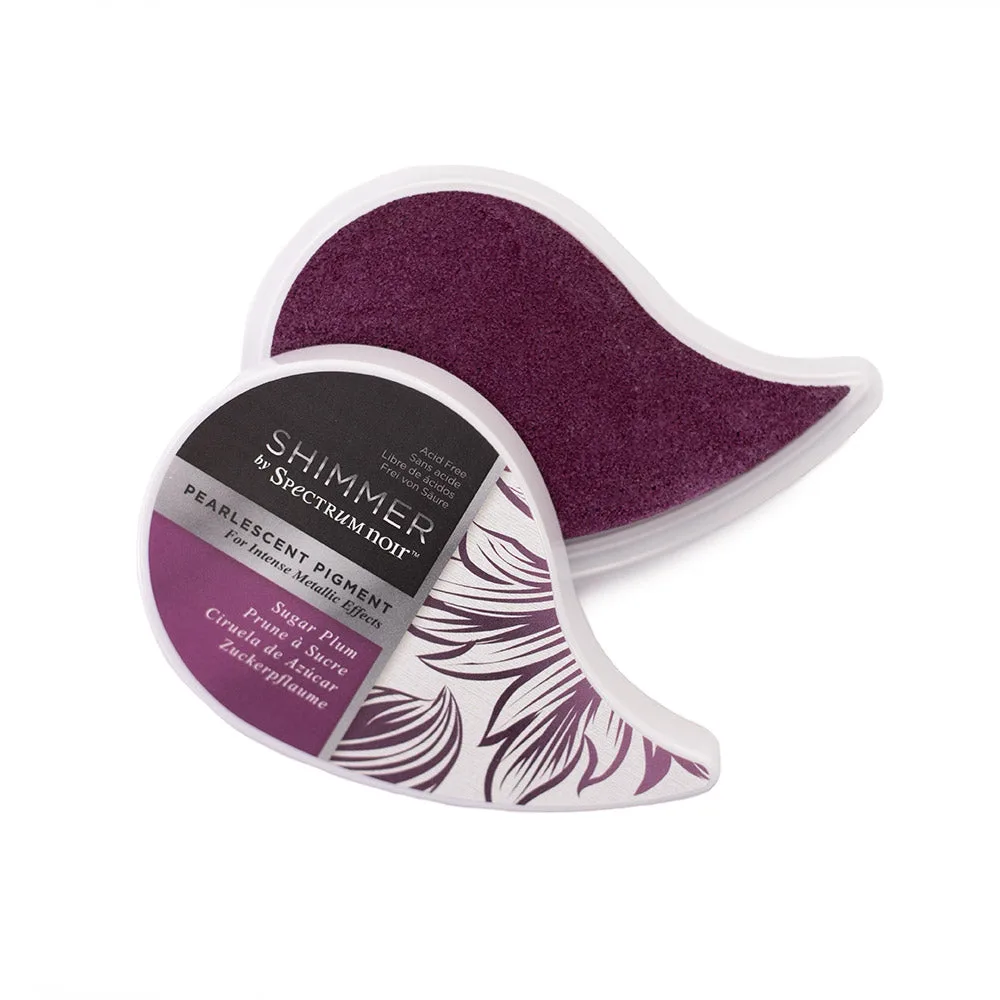
- Spectrum Noir Shimmer - Pearl Inkpad - Sugar Plum: This is a pearlescent pigment inkpad described for stamping, lettering, embossing, layering, and blending, with a metallic shine. Pigment ink stays wet longer than dye ink, so if you are stamping a layer that will be glued down, allow extra drying time before applying adhesive or the bond may smear the image.
Who this buying approach fits
Best for
- Card makers and papercrafters who need flat, clean layers without curling
- Crafters working across paper, fabric, and foam who want one decision framework instead of a drawer of random adhesives
- Beginners who want to buy two or three versatile adhesives instead of a specialist product for every material
Not for
- Crafters who need a single adhesive for every material and are unwilling to test on scraps
- Projects that require archival or conservation-grade adhesives, where you should check the specific product documentation
- High-stress fabric seams that will be washed repeatedly, where sewing is the more reliable choice
Pick adhesive by material behavior and bond type, then test on a scrap before you commit. Keep one permanent and one removable option in your stash, match glue stick size to your gun, and let the full cure time decide whether the bond actually works.