Quick Answer
To choose the right keyboard wrist rest, match its width to your keyboard's size (60%, 65%, TKL, or full-size) and its height to your typing posture. For compact 60% and 65% boards, a short, low-profile rest like the HyperX Wrist Rest keeps your wrists neutral without crowding your desk.
Why Size Matters More Than You Think
A wrist rest that's too wide overhangs your keyboard, creating pressure points on your forearms. One that's too narrow leaves your wrist unsupported, forcing you to hover. The right size keeps your wrist in a neutral, straight line with your forearm—that's the whole point of ergonomic wrist support.
Keyboard size determines the width you need. A 60% board is roughly 11.5 inches wide, a 65% is about 12.5 inches, a tenkeyless (TKL) is around 14 inches, and a full-size is 17–18 inches. Measure your keyboard's width and compare it to the wrist rest's length to avoid guesswork.
Height and Angle: The Overlooked Variable
Wrist rests come in different heights, usually between 0.5 and 1 inch. The right height depends on your keyboard's profile and whether you use its flip-out feet. If your wrists are bent upward while typing, your rest is too low; if they're bent downward, it's too high.
A low-profile rest (around 0.5 inches) suits flat keyboards and compact boards. A taller rest (0.75–1 inch) works better for keyboards with high-profile keycaps or when you raise the keyboard's tilt. The goal is a straight wrist, not a soft pillow.
Material and Stability Trade-offs
Memory foam and gel rests conform to your wrist, but they can feel too soft for some. Harder materials like rubber or plastic offer more stability but less cushioning. The key is finding a balance: enough give for comfort, enough firmness to keep your wrist from sinking.
An anti-slip base is non-negotiable. A rest that slides around while you game or type is worse than none at all. Look for a natural rubber underside that grips the desk, especially if you make fast, sweeping mouse movements.
Decision Rules for Choosing Your Wrist Rest Size
- Measure your keyboard width: Use a ruler or tape measure to get the exact width of your keyboard from left to right. This is your target wrist rest length. Don't guess based on the model name alone—some 65% boards vary slightly.
- Match the rest to your keyboard size: For a 60% or 65% board, choose a compact wrist rest that's roughly the same width (around 11.5–12.5 inches). For TKL, look for a 14-inch rest; for full-size, a 17–18-inch rest. A rest that's slightly shorter is better than one that overhangs. If you have a 60% or 65% keyboard, a compact rest like the HyperX Wrist Rest is a solid fit.
- Check the height against your posture: Sit at your desk and type naturally. If your wrists are bent upward, you need a taller rest; if bent downward, a lower one. Most compact boards pair well with a low-profile rest (around 0.5 inches). Adjust the rest's height until your wrist is in a straight line with your forearm.
- Prioritize an anti-slip base: Look for a rest with a natural rubber or silicone underside that grips the desk. Test it by sliding your mouse quickly—if the rest moves, it's not stable enough. Stability is a must; a sliding rest can cause more strain than no rest at all.
Product Facts
-
HyperX Wrist Rest - Keyboard - Compact 60% 65%: The HyperX Wrist Rest provides comfortable wrist cushioning for use with a mouse or a variety of keyboard sizes, and it has an anti-slip natural rubber underside. Its anti-slip base keeps the rest stable during intense gaming sessions, and the cushioning supports your wrist whether you're on a compact 60% or a full-size board.
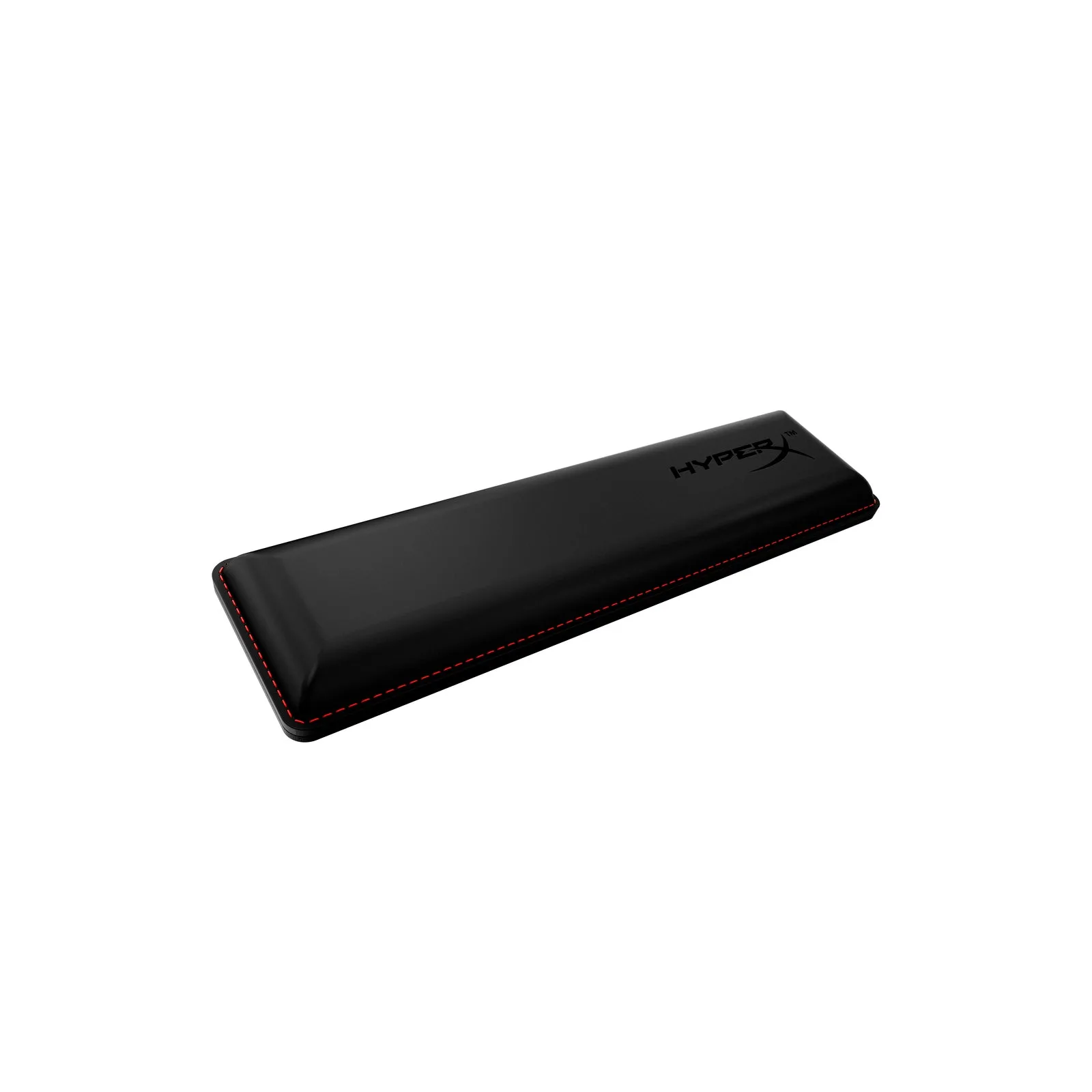
HyperX Wrist Rest - Keyboard - Compact 60% 65%
Who Is This For?
Best For
- Gamers and typists using compact 60% or 65% mechanical keyboards who want a low-profile, stable wrist rest
- Anyone who experiences wrist fatigue during long sessions and needs a simple, budget-friendly ergonomic upgrade
Not For
- Users with full-size or TKL keyboards who need a wider rest to match their board's length
- People who prefer very soft, plush gel rests—the HyperX Wrist Rest offers a firmer, more stable feel