Quick answer
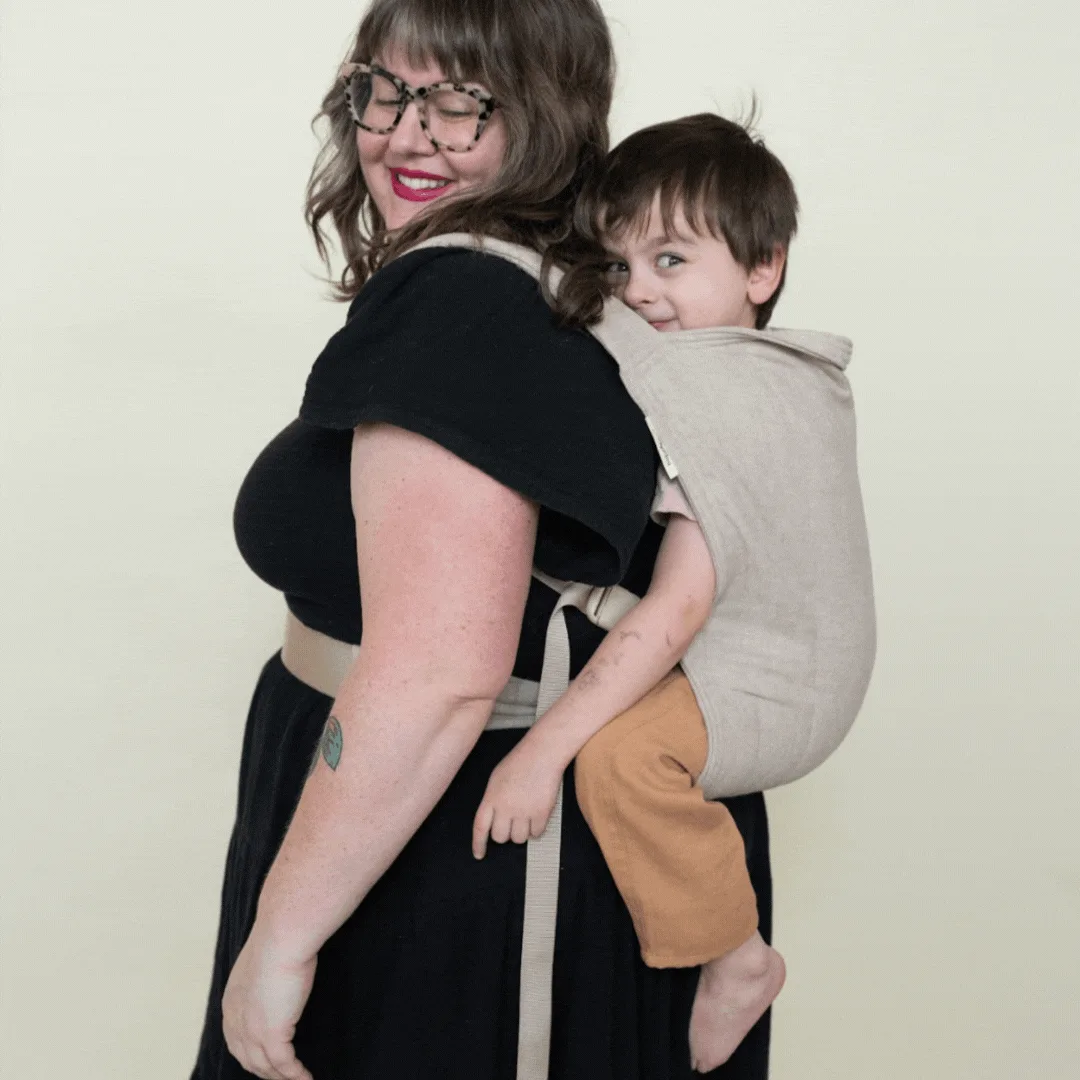
Start with your child's actual weight and torso length, not their clothing size. For kids in 3T and up who weigh 25–65 lbs, a Lark Kid Carrier in the right length gives a snug front or back carry, and the apron-style waistband plus lightly padded straps keep the load comfortable as they grow.
Match the carrier to weight and length, not just age
Toddler sizing gets confusing because clothing size and carry size are different scales. A child can wear 3T and still be at the lighter end of a carrier's range, or wear 4T and sit near the top. Weigh your child and measure their seated torso from the base of the neck to the top of the hips. That measurement tells you more about which length you need than their age or pants size. The Lark Kid Carrier is built for kids in 3T and up, 25–65 lbs, so if your child is under that weight range, a newborn or baby carrier is the safer starting point.
Front carry vs back carry: choose by stamina, not preference
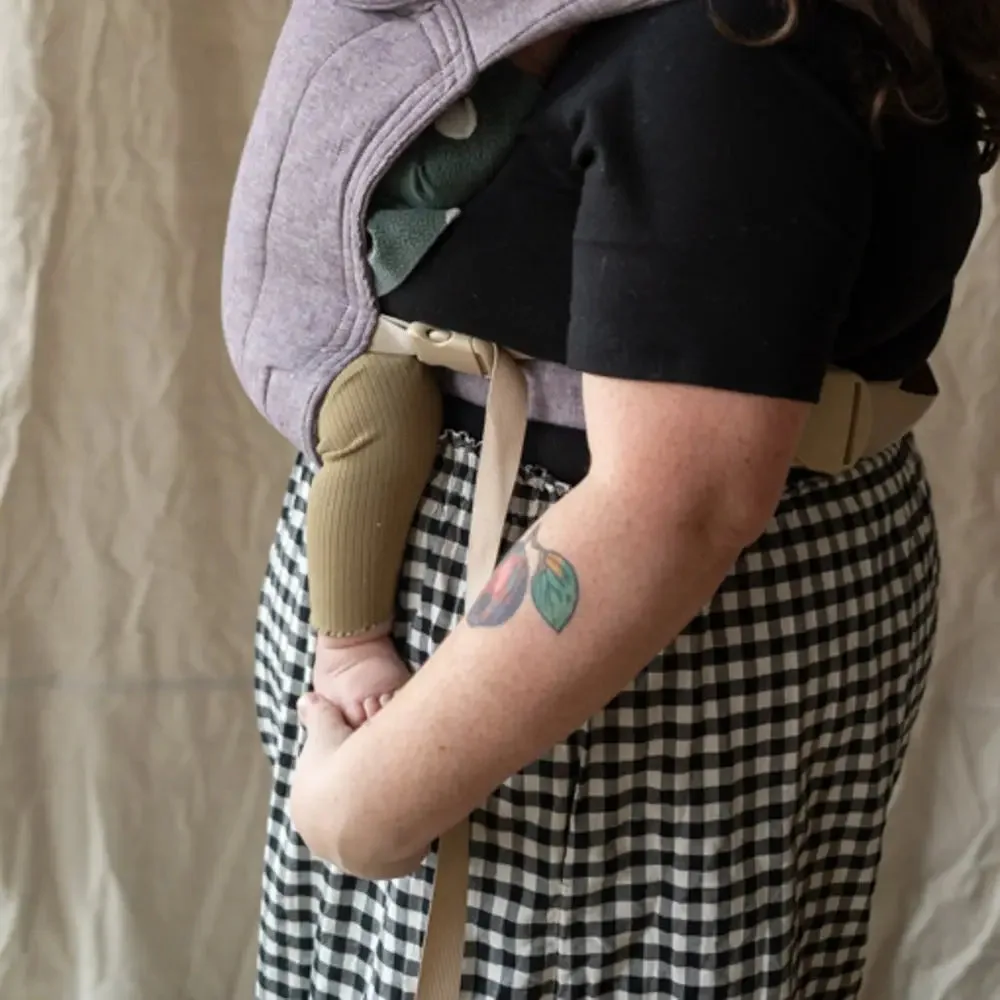
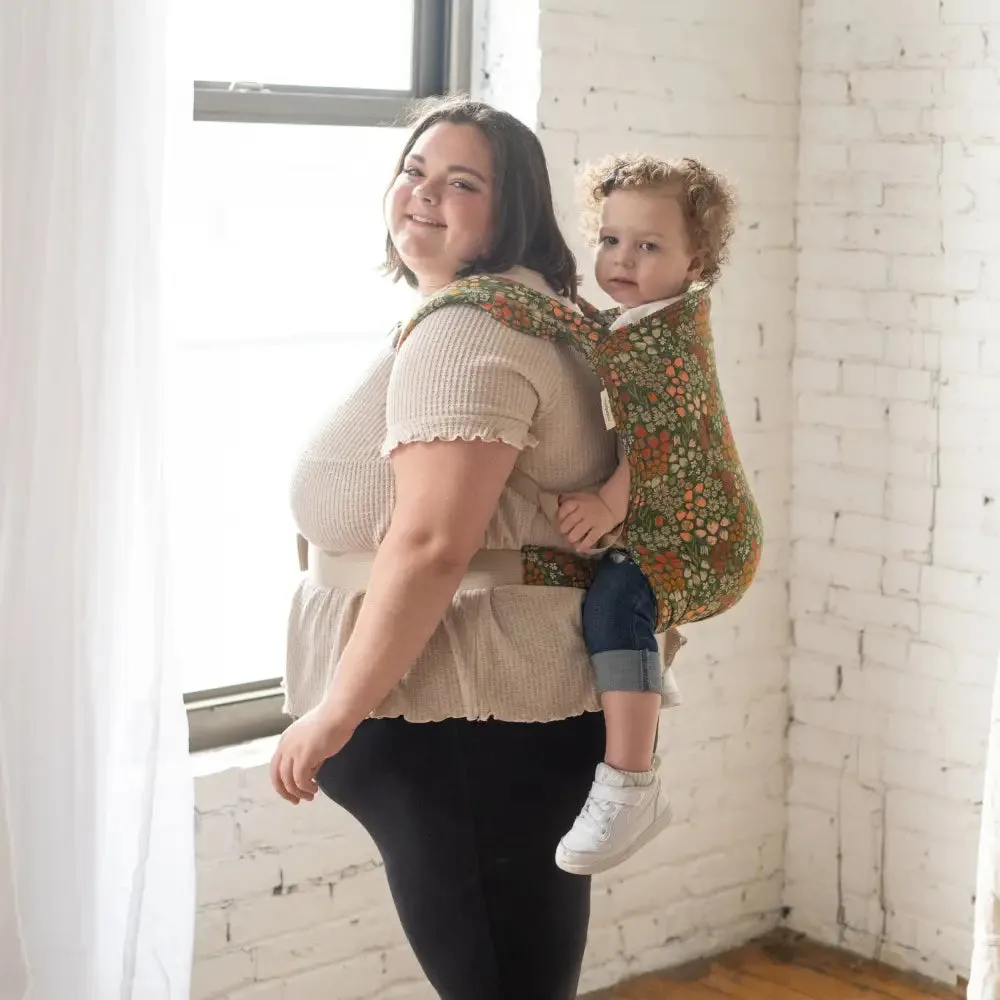
Front carry keeps your child close and lets you monitor their breathing and posture easily, which is helpful on short errands or when they want to nap against you. Back carry distributes weight across your hips and shoulders more efficiently for longer walks, and it frees your arms and view. A carrier that supports both options gives you room to switch as your child gets heavier. If you plan to carry a 40 lb preschooler for more than 20 minutes, back carry is usually the more sustainable choice, and the Lark's apron-style waistband is designed to help transfer that load to your hips.
Check the length options before you buy
Some Lark Kid Carrier styles are sold by length rather than a single universal size. That matters because a carrier that is too short can leave the seat shallow and the panel too low on your child's back, while one that is too long can swallow a smaller toddler. Use the store's size or length chart with your child's actual torso measurement, and if you are between lengths, size down for a snugger seat or size up if your child is already near the top of the weight range. If a specific measurement is not listed, treat that as a decision limitation and ask the store before ordering rather than guessing.
Decision rules for choosing a toddler carrier
- If your child is under 25 lbs: Do not start with a Lark Kid Carrier. Choose a newborn or baby carrier rated for their current weight. Weight rating is the first filter, not the last.
- If your child is 25–65 lbs and in 3T or up: Measure seated torso length and pick the Lark length that matches. Choose a style with two length or size options so you are not stuck between sizes. Length fit decides comfort more than fabric or color.
- If you carry for more than 20 minutes at a time: Prioritize a carrier with an apron-style waistband and lightly padded straps, and plan to use back carry for the heavier stretches. Hip transfer and padding are the long-carry features that matter.
- If you are between two lengths: Size down for a snugger seat if your child is near the lower end of the weight range; size up if they are already near the top. When in doubt, ask the store with your child's measurements in hand.
Product facts to compare
- Frolic Lark Kid Carrier: The Frolic Lark Kid Carrier is available in two sizes and offers both front and back carry options for kids in 3T and up. Two sizes let you match the carrier to your child's torso length, and dual carry positions mean you can switch as your toddler grows heavier.
- Piper Lark Kid Carrier: The Piper Lark Kid Carrier is available in two lengths and supports front and back carry for kids in 3T and up. Length options are the key fit variable for toddlers, so this is the one to check against your child's seated torso measurement before ordering.
- Pepper Lark Kid Carrier: The Pepper Lark Kid Carrier is built for kids in 3T and up (25–65 lbs), with lightly padded straps and an apron-style waistband for front or back carry in two inclusive sizes. The stated weight range and padded straps matter most when you are carrying a heavier preschooler for longer stretches.
Who this carrier is right for
Best for
- Parents of kids in 3T and up who weigh 25–65 lbs and want one carrier for front and back carry
- Caregivers who need length or size options to match a child's torso measurement
- Families planning longer walks where hip and shoulder comfort matters
Not for
- Babies and toddlers under 25 lbs who need a carrier rated for a lower weight range
- Anyone who wants a single universal size without checking a length chart
- Parents looking for a newborn-specific carrier or wrap