Quick answer
For most day hikes, choose a synthetic or blend t-shirt that wicks moisture and dries fast. Save cotton for short, cool walks where sweat isn't a concern.
Why fabric choice matters on the trail
A hiking t-shirt does more than cover your torso. It manages sweat, protects against sun, and helps regulate temperature as you climb and descend. The wrong fabric can leave you wet, chafed, or chilly when you stop for a break.
Synthetic fabrics like polyester and blends with TENCEL™ or spandex move moisture away from your skin and dry quickly. Cotton absorbs sweat and stays wet, which can lead to discomfort and even hypothermia in cool conditions. That doesn't mean cotton is useless — it's fine for a short, warm walk or as a camp shirt.
Fit and features for the trail
A hiking t-shirt should allow a full range of motion without being baggy. Look for a cut that lets you reach overhead or scramble without the hem riding up. Flat seams reduce chafing under a backpack strap.
Some hiking shirts include UPF sun protection, odor control, or a chest pocket. These are nice extras but not essential for a day hike. Focus first on fabric and fit, then consider add-ons if they match your typical conditions.
Step-by-step guide to picking your hiking t-shirt
- 1. Choose your fabric based on the hike: For warm, sweaty hikes or multi-day trips, pick a synthetic or blend shirt (polyester, nylon, or TENCEL™ blend). For short, cool walks where you won't sweat much, cotton is fine. Common mistake: wearing cotton on a long, hot climb — it stays wet and can cause chafing. Checkpoint: If you expect to sweat, skip 100% cotton.
- 2. Check the fit for movement: Try the shirt on and reach overhead, twist side to side, and pretend to grab a handhold. The shirt should move with you without binding or riding up. Common mistake: choosing a shirt that fits well standing still but restricts motion when you reach or bend. Checkpoint: The shirt should feel comfortable in a hiking posture, not just standing upright.
- 3. Look for quick-dry and moisture wicking: Check the care label for polyester, nylon, or TENCEL™ as primary materials. These fabrics pull sweat away from your skin and dry fast when you stop. Common mistake: assuming all 'activewear' shirts wick moisture — some rely on finishes that wash out. Fabric blend matters more than a marketing label. Checkpoint: Turn the shirt inside out and check the fabric composition, not just the hang tag claims.
- 4. Evaluate extras (UPF, pockets, odor control): If you hike above treeline or in strong sun, a shirt with UPF 30+ adds protection. A small chest pocket can hold a lip balm or snack. Odor control helps on multi-day trips. Common mistake: paying extra for features you don't need — a simple, well-fitting shirt beats a loaded one that doesn't breathe. Checkpoint: Prioritize fabric and fit first; treat extras as nice-to-haves.
T-shirts that work on the trail
-
Empaca Crew T-Shirt - Men's: The Empaca Crew T-Shirt uses recycled polyester, TENCEL™, and spandex — one of Cotopaxi's all-time favorite fabric blends. This blend gives you the moisture wicking and quick-dry performance of synthetics with the softness of TENCEL™, plus stretch for easy movement on uneven terrain.
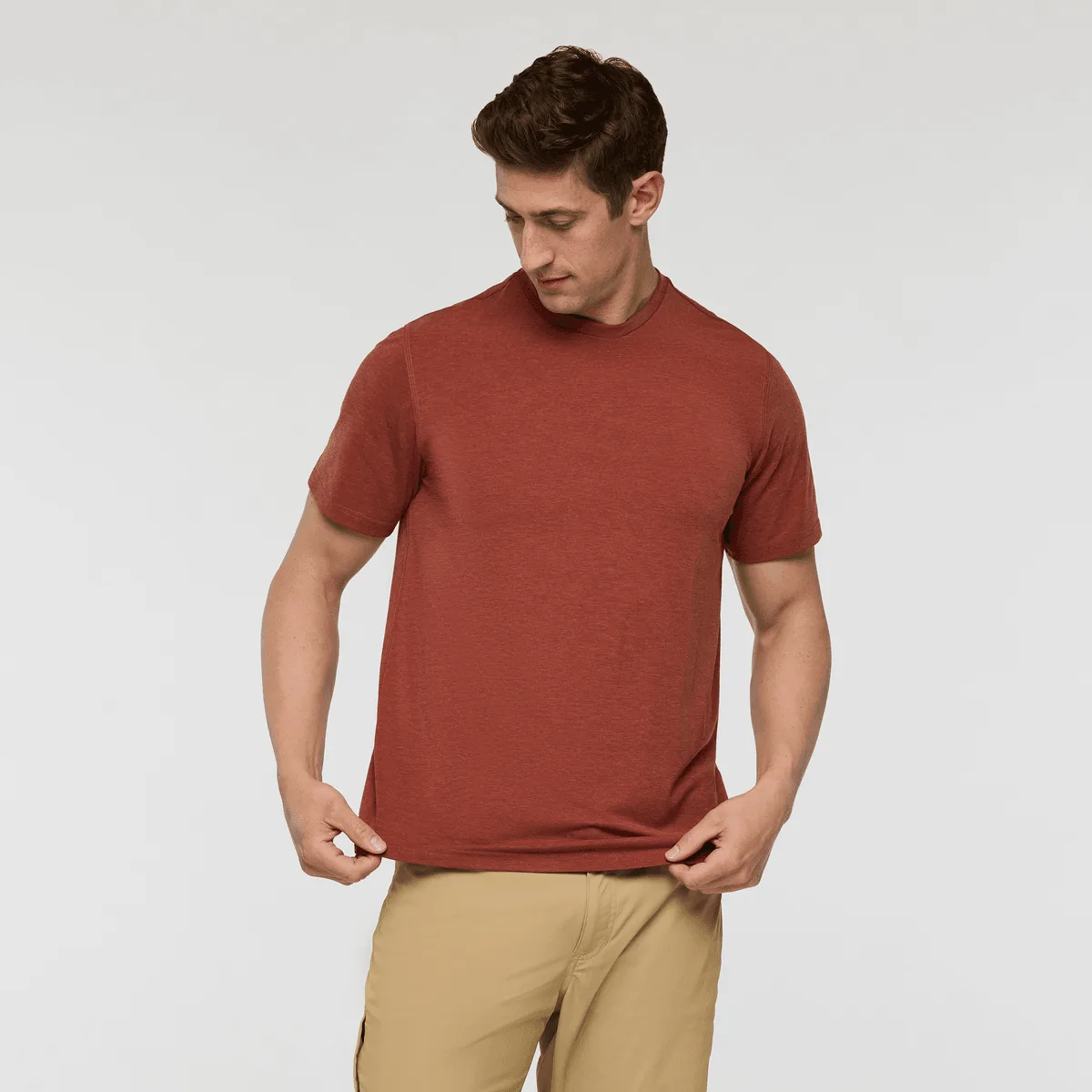
Empaca Crew T-Shirt - Men's
-
Cuatro Bitmap T-Shirt - Men's: The Cuatro Bitmap T-Shirt blends organic cotton with recycled polyester for a feel that is softer on your skin and softer on the planet. If you prefer natural fibers but want some of the durability and quick-drying benefits of synthetics, this blend is a solid middle ground for moderate hikes.
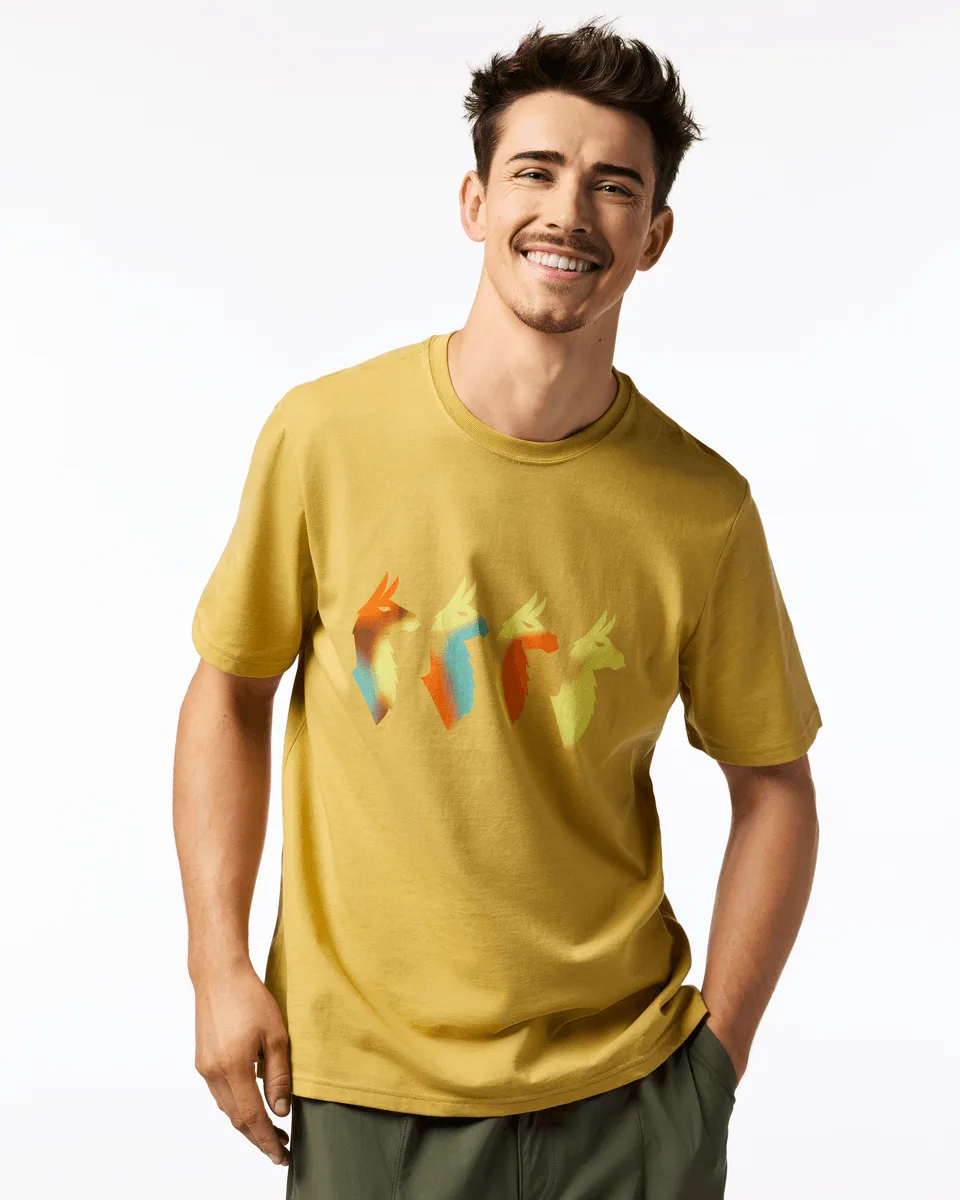
Cuatro Bitmap T-Shirt - Men's