Quick answer
Start with the job, not the harness. A patrol or service dog that carries gear needs a padded frame with MOLLE webbing and metal buckles; a search-and-rescue dog that works cold, steep terrain needs added coverage like a skid plate and cape. Measure girth and chest, then choose the smallest size that still clears the shoulder. If your dog works in winter conditions, plan the harness around the head and ear protection it must fit with.
protection
Match the frame to the job before you compare features
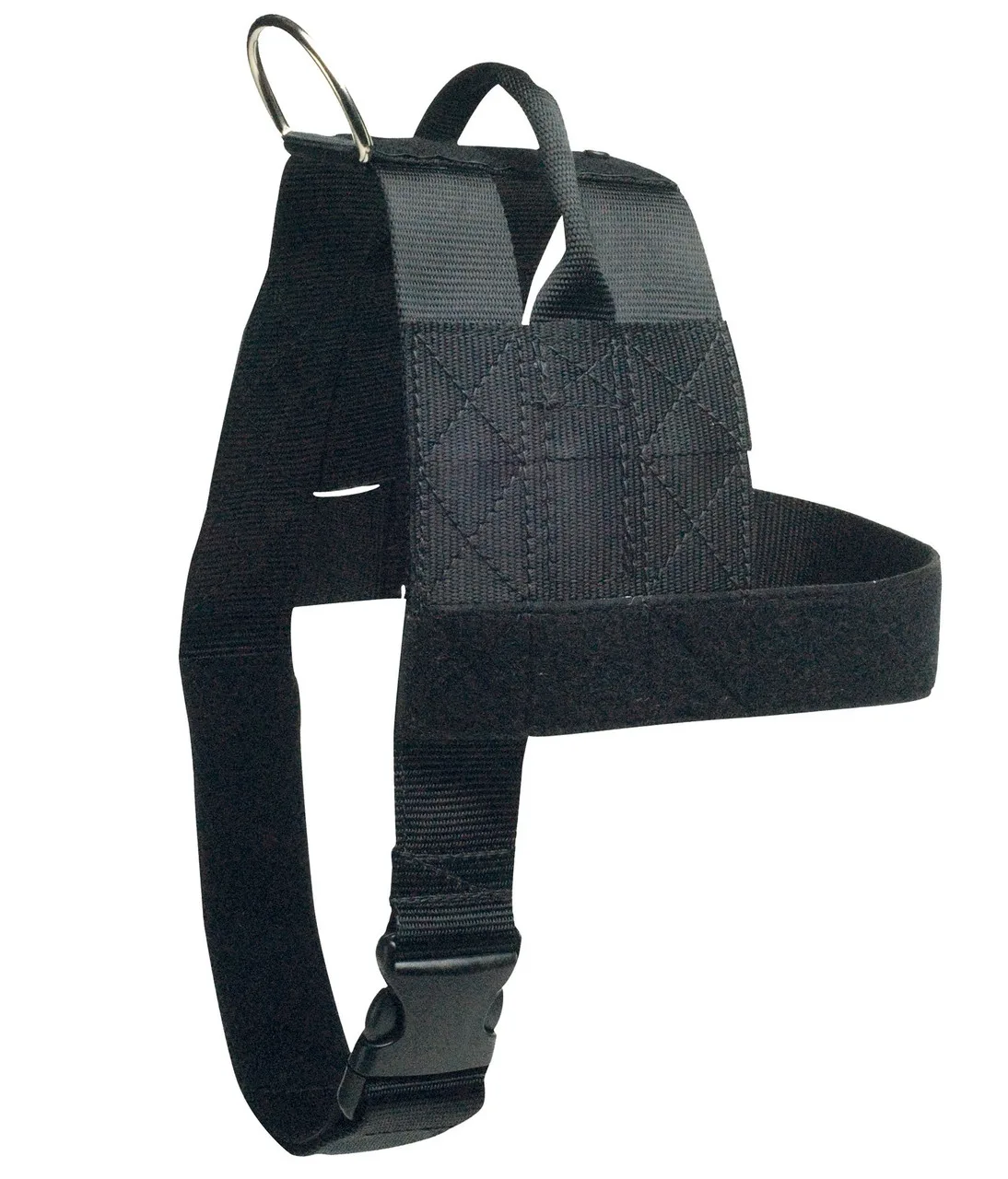
A tactical harness is a load-bearing frame, so the first question is what the dog must carry and where. Patrol and service dogs usually need a low-profile frame that leaves the shoulder free and holds a patch, light, or radio close to the body. Search-and-rescue dogs working snow, rock, or scree need a wider frame with a skid plate and full coverage cape so the belly and sides are protected when the dog drops into crust or brush.
If the dog also wears a goggle-helm or ear covers, the harness must leave the neck and head clear. Buying the harness first and adding head protection later often forces a second purchase because the collar and chest straps crowd the ear covers.
- Patrol or service work: low-profile padded frame, MOLLE webbing, metal buckles.
- Search and rescue in winter terrain: full coverage cape, skid plate, reinforced belly.
- Dual-purpose dogs: choose a harness whose chest strap sits behind the shoulder so head gear still fits.
Measure girth and chest, then size to the smallest that fits
Use a soft tape at the deepest part of the ribcage for girth, and from the front of the chest to the widest point of the ribcage for chest depth. Measure the dog standing, not sitting, and add nothing for growth on an adult working dog. A harness that is too large slides forward on a downhill track or when the dog drops its head to scent; one that is too small restricts the shoulder and shortens the stride.
Check three points after fitting: two fingers should fit under the girth strap, the chest strap should sit behind the shoulder blade, and the rear strap should not ride into the flank when the dog trots. If any strap crosses the shoulder joint, size down or choose a different frame.
- Girth: deepest point of the ribcage, standing.
- Chest: front of chest to widest rib point.
- Fit check: two fingers under girth, chest strap behind shoulder, rear strap clear of flank.
Decide on MOLLE, buckles, and coverage as trade-offs
MOLLE webbing lets you move pouches and patches without sewing, which matters when the dog switches between patrol, tracking, and public-access work. The trade-off is weight and snag risk: more webbing means more places for brush to catch. Metal buckles such as GT Cobra buckles add strength and quick release but cost more and are heavier than polymer. Full coverage capes protect the dog but hold heat, so they suit cold-weather deployment, not summer pavement work.
Pick the minimum coverage the job demands, then add modular pieces only when a specific task requires them. That keeps the harness light enough for daily wear and avoids buying a second frame when the season changes.
- MOLLE: choose when gear changes often; skip when the dog works tight brush.
- Metal buckles: stronger and faster to release; accept the weight and price.
- Coverage: cape and skid plate for cold, abrasive terrain; low-profile frame for heat and speed.
Plan the rest of the kit around the harness
A harness does not work alone. If the dog wears ear covers or a goggle-helm, fit those first and then confirm the harness straps do not interfere. For travel and deployment, a durable bowl that packs flat saves space in the same kit bag. For training sessions where rewards change per dog, a tool belt that holds multiple treat types keeps your hands free while the harness stays on the dog.
Buy the harness that fits the dog you have today and the job it does this season. Add modular pieces as the mission changes rather than buying one frame for every possible task.
Decision rules for buying a tactical harness
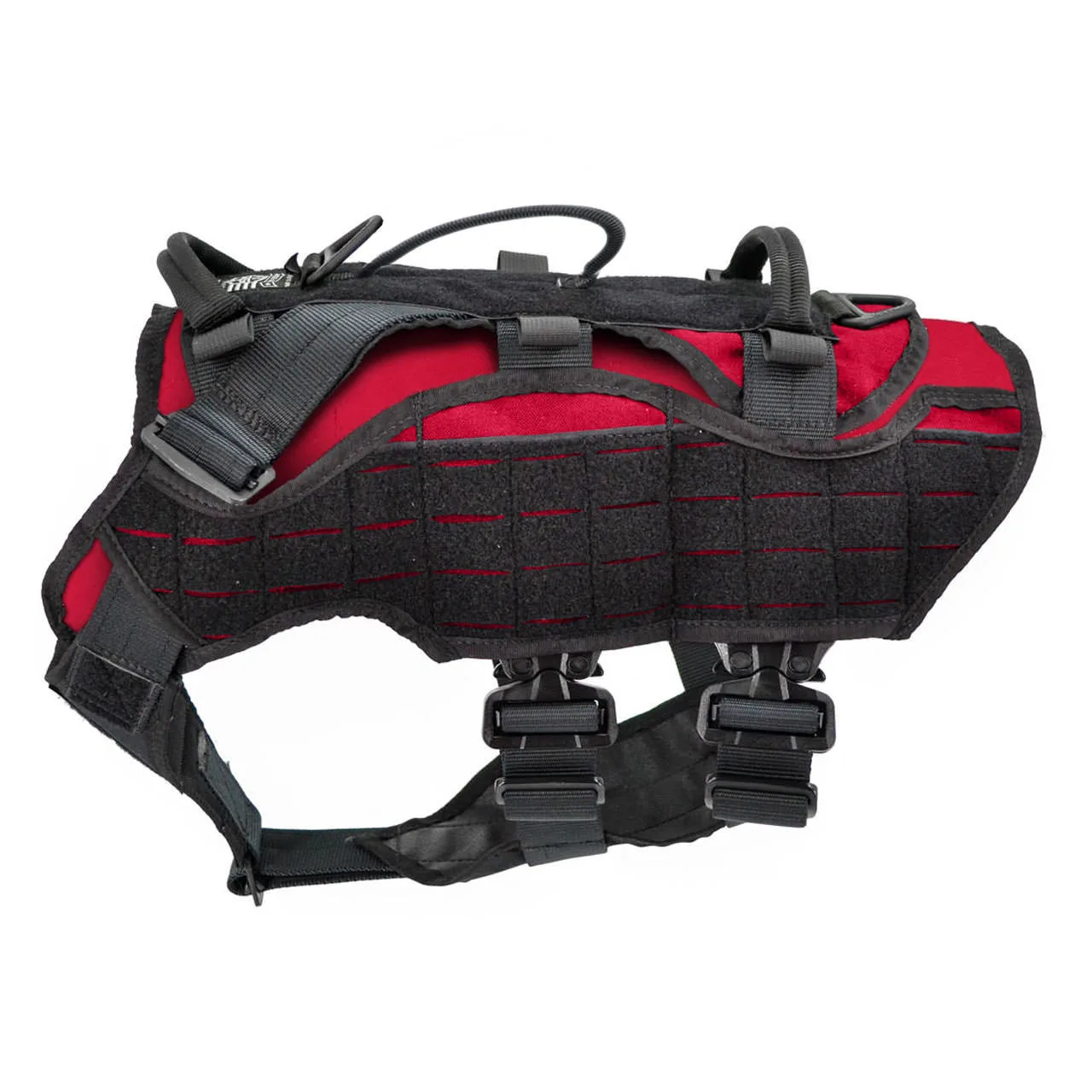
- If the dog works cold, steep terrain: Choose a frame with a full coverage cape and skid plate, such as the Nomad Ski Patrol Harness, and accept the extra weight and heat retention. Coverage first; low profile second.
- If the dog wears a goggle-helm or ear covers: Fit the head gear first, then select a harness whose chest strap sits behind the shoulder and whose neck opening clears the ear covers. Head gear determines harness geometry.
- If gear changes every deployment: Pick a MOLLE dog harness so pouches and patches move without sewing, but check for snag points in brush. Modularity trades weight and snag risk for flexibility.
- If the dog is between sizes: Size down and verify two fingers under the girth, chest strap behind the shoulder, and no flank rub at a trot. A snug frame beats a loose one on downhill work.
Product facts that affect the decision
- Nomad Ski Patrol Harness™: Nomad Ski Patrol Harness combines the Nomad Harness Frame with GT Cobra buckles and modular components including a full coverage cape in ski patrol red and a matching Nomad Skid Plate. This is the choice when the job requires cold-weather coverage and quick-release metal buckles, not a low-profile patrol frame.
- K9 Helm CS1-A2 Ear Covers: K9 Helm CS1-A2 Ear Covers are designed for the CS1-A2 GoggleHelm and are injection-molded from high-impact polycarbonate, over 25 times more impact-resistant than the previous 3D printed versions. If your dog wears this head protection, fit the harness so the chest and neck straps stay clear of the ear covers and goggle-helm.
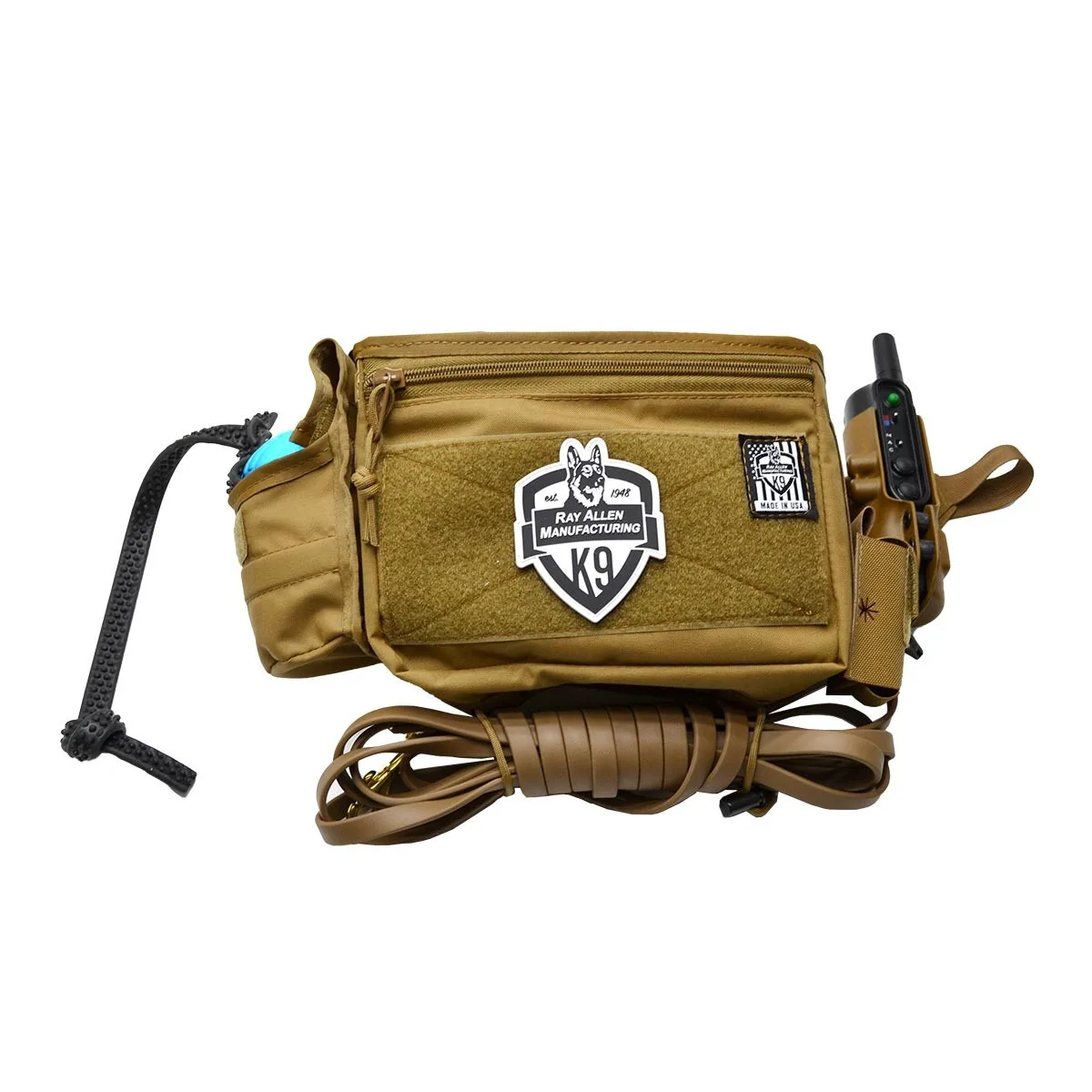
- Dog Trainer Tool Belt: Dog Trainer Tool Belt is MOLLE compatible and built for working multiple dogs with different rewards. Keeps treats and tools on your waist so the harness stays on the dog during multi-dog sessions.
- GUNNER® Dog Bowl: GUNNER Dog Bowl is made from ultra-strong nylon, BPA free, food grade, and will not rust. A packable, rust-free bowl belongs in the same deployment bag as the harness.
Who this harness approach fits
Best for
- Handlers who need one working dog harness that matches a specific job, not a general-purpose pet harness.
- Dogs that carry gear, wear head protection, or work in cold, abrasive terrain.
- Buyers who will measure girth and chest before ordering and adjust straps at the shoulder.
Not for
- Owners who want a casual walking harness with no load-bearing or modular requirements.
- Dogs that overheat easily and cannot tolerate a full coverage cape.
- Buyers who will not measure and expect a one-size-fits-all fit.