Quick answer
Choose pattern by the job the room needs, not by trend. Pick a trellis or geometric rug when you want energy and a clear focal point, a stripe when you want calm and a room that reads longer, and a plaid when you want cozy structure around wood furniture. Then match the pattern's repeat size to your floor area: small repeats on small floors, large repeats on large floors.
Start with the room's job, then pick the pattern family
A rug pattern is a visual rhythm. Trellis and geometric designs repeat a shape across the field, which creates movement and draws the eye down and around the room. Stripes repeat in one direction, so they read as lines and can make a narrow room feel longer when the stripes run along the room's length. Plaids cross horizontal and vertical bands, which creates a grid that visually anchors furniture.
Ask one question before you shop: should this room feel more awake or more settled? Awake rooms (playrooms, home offices, entryways) tolerate busier repeats. Settled rooms (bedrooms, reading corners) usually want a quieter rhythm, a lower-contrast palette, or a pattern that only shows up close.
Trellis vs geometric: what actually differs
Trellis is a specific geometric: an open, interlocking lattice, often with a quatrefoil or diamond structure. Because the lines are thin and the background shows through, trellis reads lighter than a solid geometric print of the same color. That makes it a good compromise when you want pattern without a heavy visual block.
A bold geometric with filled shapes carries more weight. It can hold its own against a large sectional or a dark floor, but it competes with busy art, heavily patterned wallpaper, and multiple accent prints. If your room already has two strong patterns, choose a geometric with a larger scale and fewer colors rather than adding a third busy repeat.
Plaid in the living room: cozy without clutter
A plaid rug living room works best when the plaid is the loudest pattern in the room. Plaids are grids, so they already imply structure; adding a floral sofa, a striped throw, and a geometric pillow at the same scale creates visual noise. Keep the plaid and make everything else solid or textured.
Plaid also hides everyday life well. Crossed bands break up crumbs, pet hair, and foot traffic marks better than a solid light rug. If your living room doubles as a playroom, that practical benefit often outweighs a more delicate pattern.
Striped rug dining room: direction and scale
In a dining room, a striped rug dining room layout should run the stripes parallel to the table's long edge. That direction echoes the table and keeps the lines from fighting the chairs. A stripe that runs across the table's short side can make a long room feel chopped up.
Stripe width matters more than color here. Wide stripes read as bold bands and need a large rug to avoid looking cut off; narrow stripes read as texture and are more forgiving under a table with legs and shadows. If you are unsure, choose the narrower stripe and let the dining set be the focal point.
Patterned rug size guide: scale rules that prevent mistakes
Pattern scale and rug size have to agree. A small repeat on a very large rug can look like static from across the room; a huge repeat on a small rug can look like a fragment of a larger design. As a rule, the larger the rug, the larger the repeat it can carry.
For a living room, the rug should be wide enough that at least the front legs of the main seating sit on it, and long enough to extend past the sofa on both sides. For a dining room, add roughly 24 inches of rug beyond every edge of the table so chairs stay on the rug when pulled out. These are sizing rules, not pattern rules, but they decide whether a pattern looks intentional or cramped.
Decision rules for choosing a rug pattern
- If the room already has two strong patterns: Choose an open trellis or a low-contrast organic stripe instead of a filled geometric or plaid. Thin lines and muted contrast add texture without becoming a third competing repeat. Count your patterns before you buy: rug, wallpaper, upholstery, art, and curtains all count.
- If the room is long and narrow: Choose a stripe and run it along the room's length. Avoid a large-scale plaid, which can make a narrow floor feel boxed in. Direction is a design decision, not a default; rotate the rug before you commit.
- If the room is large and open: Choose a larger repeat, such as a bold plaid or a wide stripe, so the pattern still reads from across the room. Small repeats can disappear at distance. Stand at the doorway and look at the rug from there, not from directly above it.
- If the room is small or multi-use: Choose a smaller repeat and a lower-contrast palette, and prioritize a washable construction if the space sees food, pets, or crafts. Scale down the pattern as the floor area scales down.
- If you are matching a rug to a dining table: Choose a stripe parallel to the table's long edge or a plaid with a repeat smaller than the tabletop. Keep roughly 24 inches of rug beyond each table edge so chairs stay on the rug. Measure the table plus 48 inches in both directions before choosing a size.
Patterns that show these rules in practice
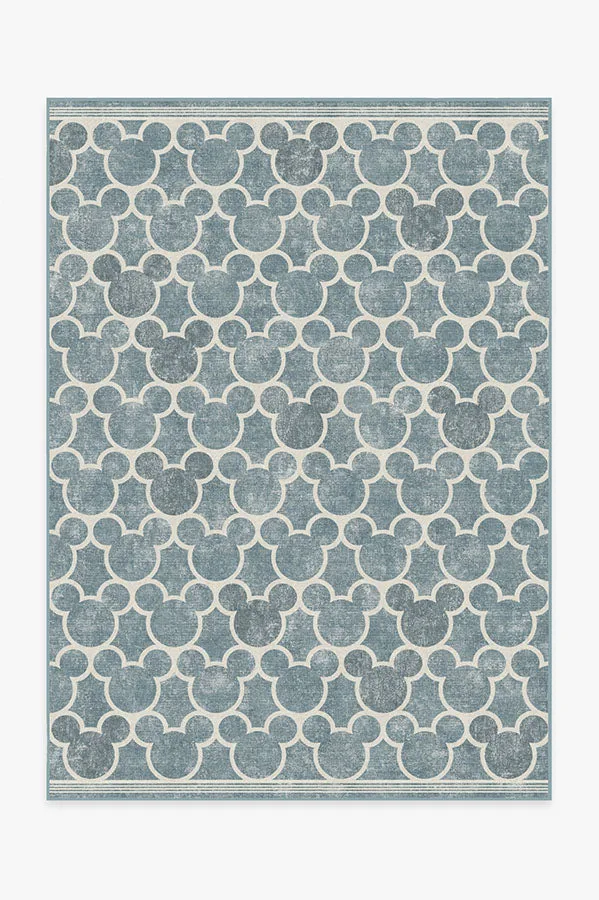
- Mickey Trellis Slate Rug: The Mickey Trellis Slate Rug uses the classic trellis motif with graphic outlines of Mickey Mouse's head, tinted in pearl against a lightly distressed slate blue and grey green backdrop. A light-on-dark trellis keeps the pattern readable but not heavy, so it suits rooms that need a focal point without a solid color block. The Disney motif is subtle enough for a main living space if the rest of the room stays simple.
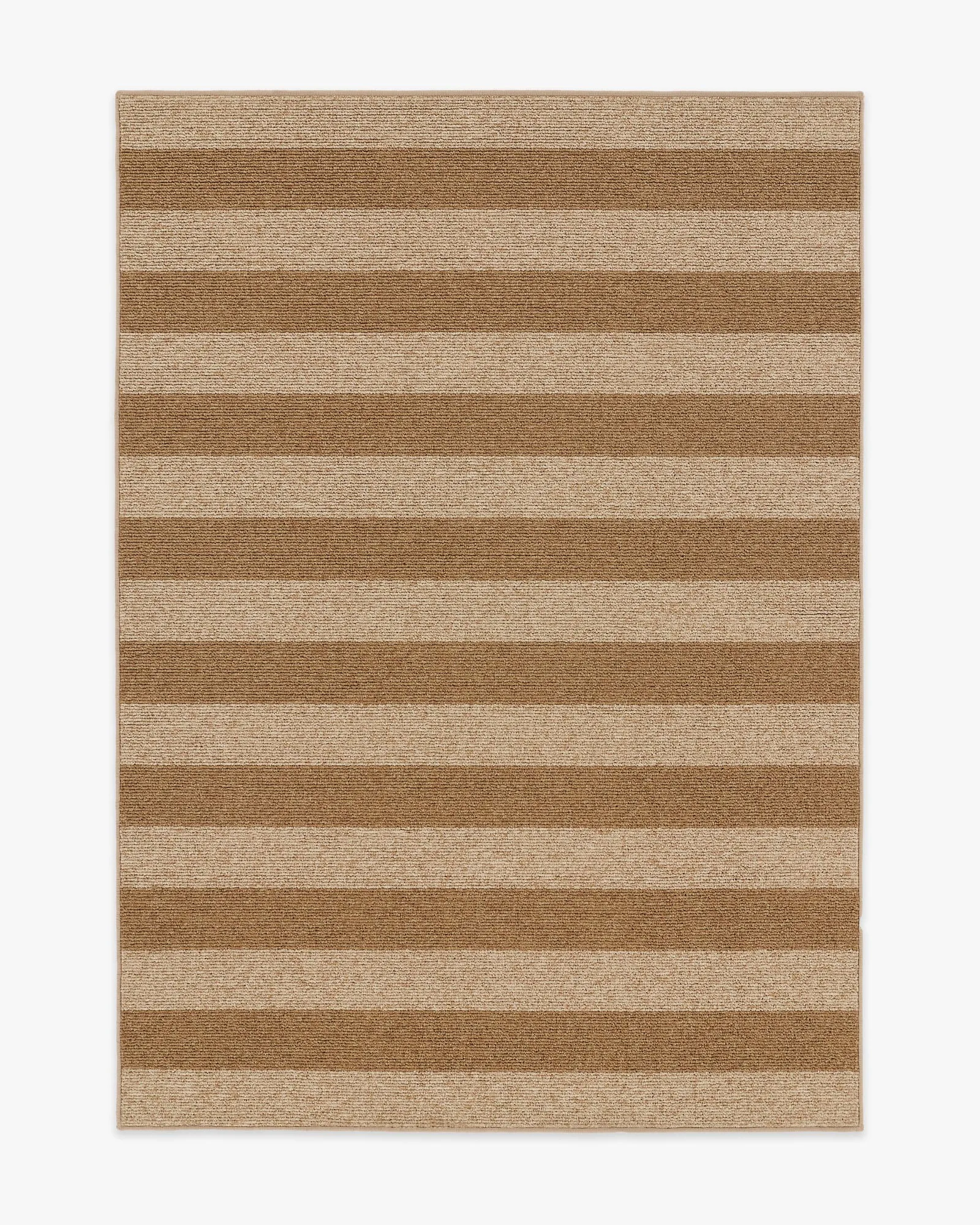
- Nolan Bold Stripe Natural & Dark Natural Performance Weave Rug: The Nolan Bold Stripe Natural & Dark Natural Performance Weave Rug sets rich dark caramel stripes against a soft natural ground, with a tufted high-low texture and a sun-faded take on classic coastal sailor stripes. Wide, high-contrast stripes are a strong directional choice, so run them along the room's length or parallel to a dining table. The high-low texture adds dimension that a flat stripe lacks, which helps in rooms with limited pattern elsewhere.
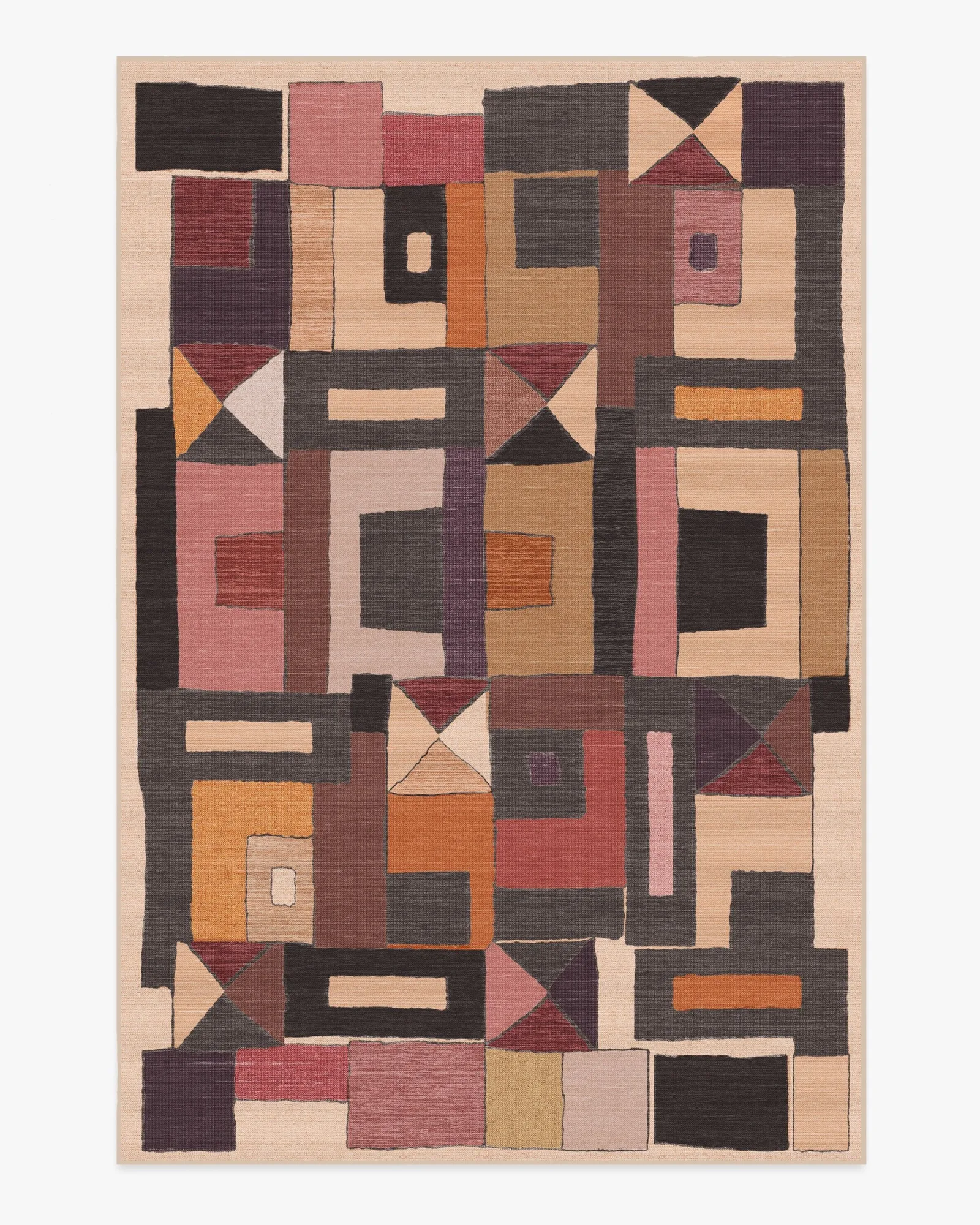
- Modra Warm Brown Rug by Jungalow: The Modra Warm Brown Rug by Jungalow is a repeating pattern of nested block shapes with a hand-drawn quality, translated from Justina Blakeney's original freehand artwork, using warm neutrals from cream and taupe through burgundy, rust red, and dark chocolate brown. This is a filled geometric rather than an open trellis, so it carries more visual weight and works best as the dominant pattern in a room. The warm neutral range makes it easier to pair with wood tones than a high-contrast black-and-white geometric.
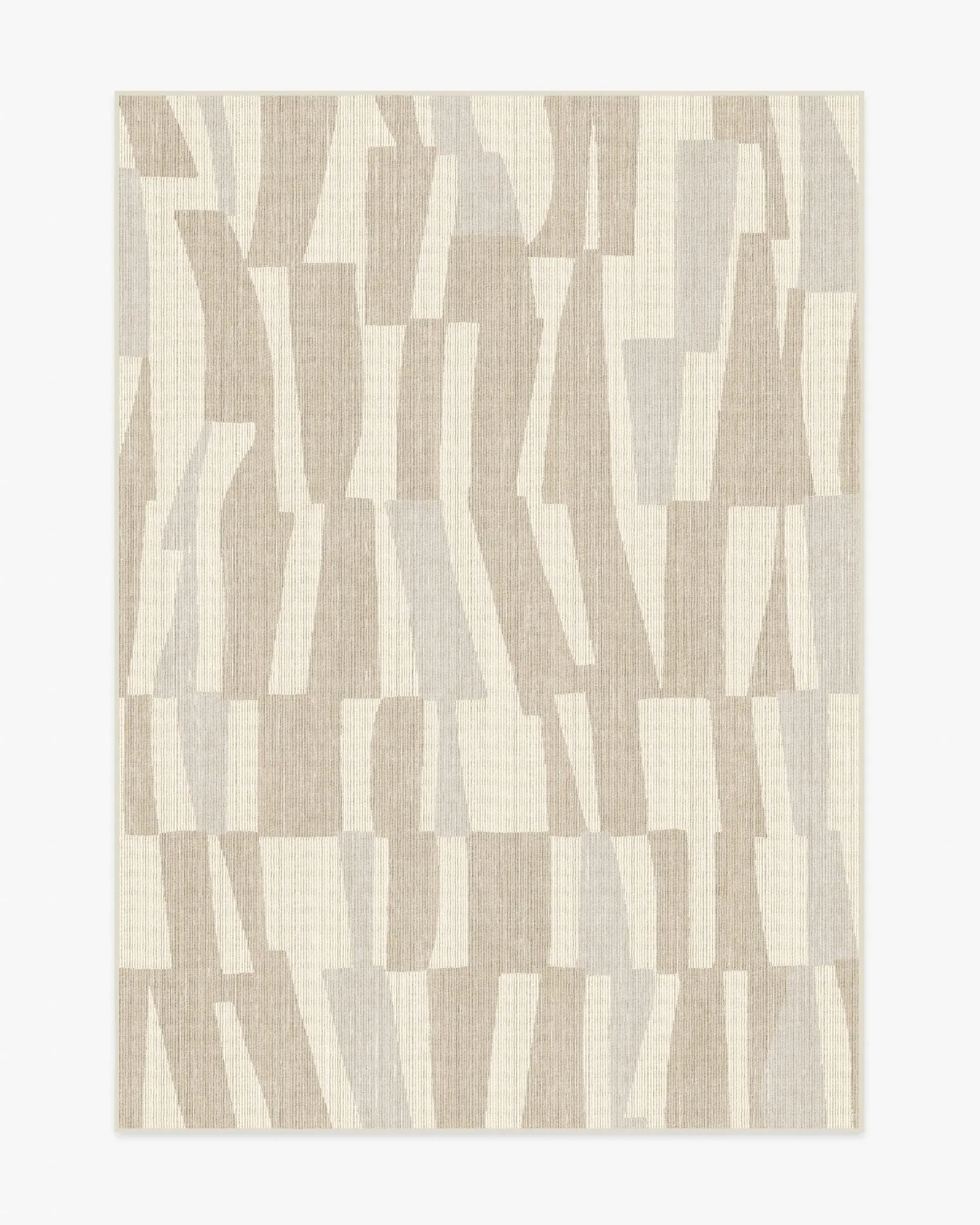
- Enzo Beige & Ivory Rug: The Enzo Beige & Ivory Rug uses a subtle organic stripe across a warm beige and ivory palette, and it is water-resistant, stain-resistant, and fully machine-washable. A low-contrast organic stripe is the safe choice when you want texture rather than a statement pattern, and the washable construction suits dining rooms and high-traffic areas where a bolder plaid or geometric would be harder to maintain.
Is a patterned rug right for your room?
Best for
- Rooms with solid or textured furniture that need a focal point
- Living rooms and dining rooms where you want to define a seating or dining zone
- High-traffic family spaces that benefit from a pattern hiding everyday marks
- Anyone willing to measure the room and match pattern scale to floor area
Not for
- Rooms with heavily patterned wallpaper, art, or upholstery where a third pattern would compete
- Very small floors where a large repeat would be cut off by the room's edges
- Anyone who wants the rug to disappear completely; choose a solid or tonal texture instead