Quick answer
Choose play food made from solid, untreated or non-toxic painted wood with no small detachable parts. Look for rounded edges and pieces large enough to prevent choking hazards.
Why material matters most
Toddlers explore by putting things in their mouths, so the material of play food is your first safety checkpoint. Solid wood is naturally durable and splinter-resistant when sanded smooth, but not all wood toys are equal. Avoid sets with glossy finishes that may contain lead or phthalates; instead, look for water-based paints and clear coatings labeled non-toxic. The Le Toy Van wooden sets, for example, use responsibly sourced rubberwood and child-safe paints, making them a reliable choice for little ones.
Size and shape: what to watch for
Choking risks come from pieces that fit entirely inside a toddler's mouth. A good rule is to avoid any item smaller than 1.25 inches in diameter. Play food sets often include small toppings or accessories — check that these are either attached or large enough to be safe. The Le Toy Van Pizza set includes removable toppings, but each piece is chunky and easy to grip, reducing risk during supervised play. Also, look for rounded edges and smooth surfaces to prevent scratches during enthusiastic play.
Durability and long-term use
Toddlers are tough on toys. A set that chips, cracks, or loses paint quickly becomes a safety hazard. Wooden play food is generally more durable than plastic alternatives, but construction quality varies. Check that pieces are solidly built and that any attached parts (like pretend icing or crusts) are securely fixed. The Le Toy Van Bakery Wooden Market Crate features five sturdy wooden treats with no loose components, so it holds up to daily play without breaking apart.
4 decision rules for safe play food
- Check for non-toxic certification: Look for labels like ASTM F963 (US) or EN71 (EU) that confirm the paint and wood are free from harmful chemicals. If the set doesn't list certifications, choose brands that explicitly state 'non-toxic' and 'child-safe'.
- Measure piece size: Use a toilet paper roll as a quick gauge: if a piece fits entirely inside the tube, it's a choking hazard for children under 3. Avoid sets with pieces smaller than that. For toddlers, bigger is safer — skip sets with tiny pretend ingredients.
- Inspect for loose parts: Shake the set gently and check for any rattling or easily detachable pieces. Removable toppings are fine for supervised play, but avoid sets with beads, buttons, or magnets that could come off.
- Feel for sharp edges: Run your finger along all edges and corners. Any rough spots or splinters mean the toy isn't finished properly. High-quality wooden play food should feel smooth and slightly rounded.
Play food picks that meet safety standards
-
Le Toy Van | Bakery Wooden Market Crate: Fresh from the oven! This sweet baker's crate brings British bakery charm to market play. Five delicious wooden treats spark endless pretend adventures. Each piece is solid wood with no small detachable parts, making it a low-risk option for toddlers who still mouth toys.
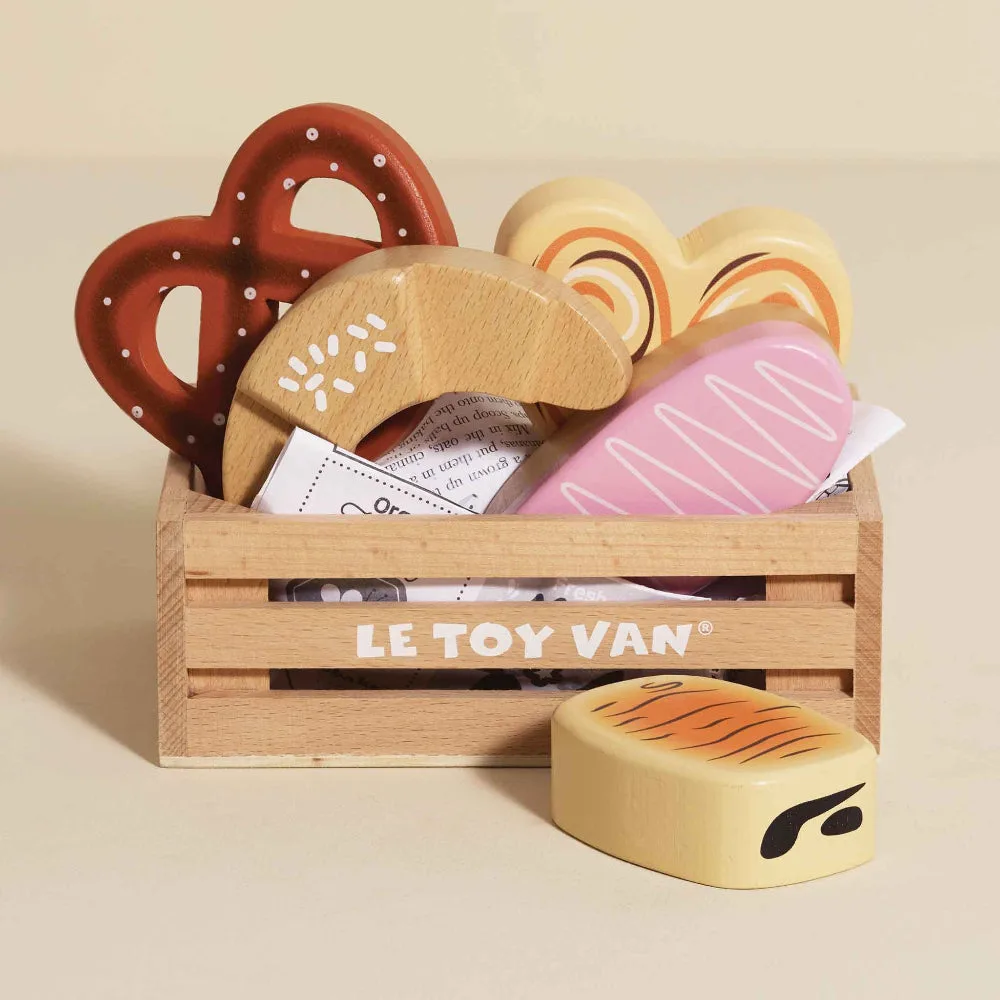
Le Toy Van | Bakery Wooden Market Crate
-
Le Toy Van | Pizza w/ Toppings: Little chefs create pizza perfection with this interactive wooden set. British-designed with removable toppings and a real pizza cutter for authentic kitchen play. The removable toppings are chunky and large enough to handle safely, though adult supervision is recommended during first use to ensure no pieces are mouthed.
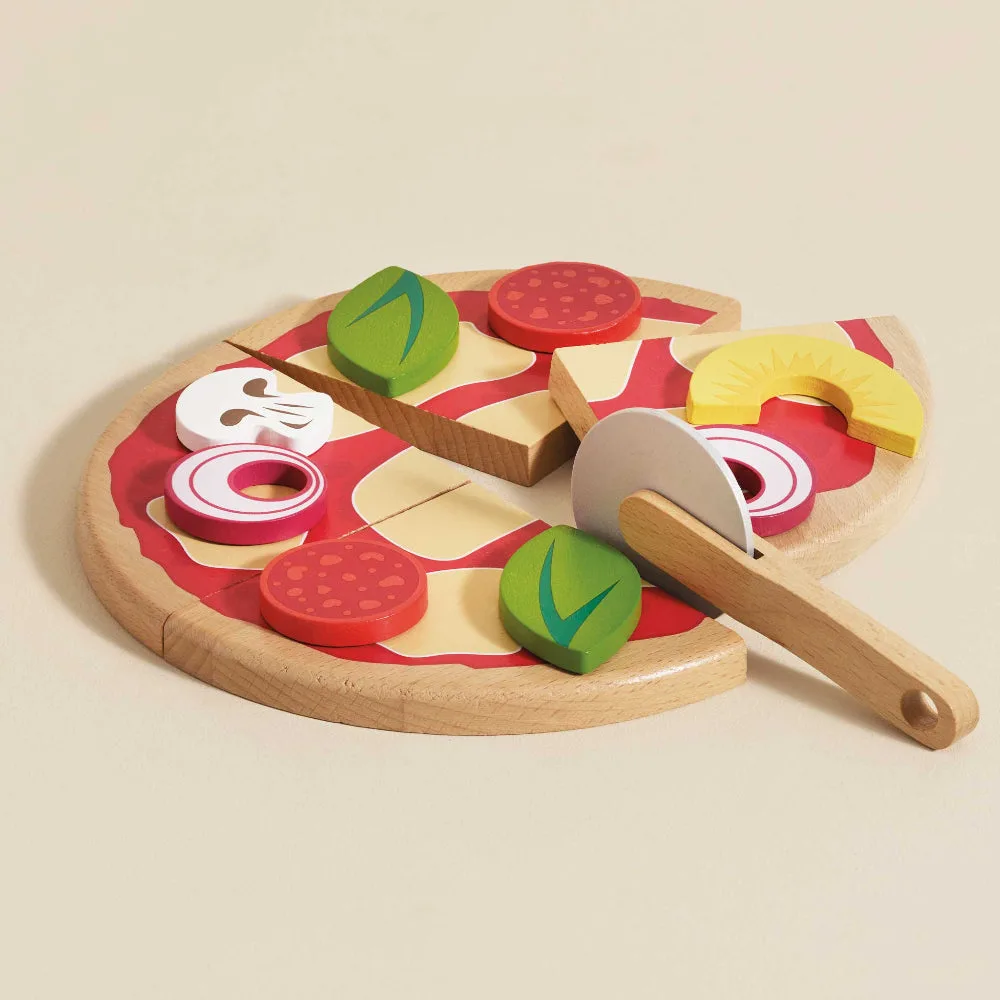
Le Toy Van | Pizza w/ Toppings
Which play food set fits your toddler?
Best for
- Toddlers who still explore with their mouths and need solid, one-piece wooden food
- Families wanting a long-lasting, open-ended play food collection that grows with the child
Not ideal for
- Children under 12 months who put everything in their mouths — wait until they can follow simple safety cues
- Parents who prefer realistic, detailed play food with many small accessories