Quick Answer
Choose treats that match your pet's species, are low in sugar, and free from unsafe ingredients like dairy or nuts. Look for simple, hay-based or vegetable-based options and offer them in small amounts.
Why Treats Differ by Species
Guinea pigs need vitamin C, so treats with bell peppers or parsley are helpful. Hamsters are omnivores and can have small amounts of protein like mealworms, but avoid citrus. Rabbits thrive on high-fiber treats like hay cubes or dried herbs.
A treat that is safe for one species may be harmful to another. For example, yogurt drops are popular but contain dairy, which is not ideal for rabbits or guinea pigs.
Sugar and Additives: The Hidden Risks
Many commercial treats are high in sugar, which can lead to obesity and dental issues. Honey, molasses, and fruit should be limited. Check the ingredient list for artificial colors or preservatives, which offer no nutritional value.
Treats should be a small part of the diet—no more than 5% of daily intake. Always introduce new treats gradually to avoid digestive upset.
When to Avoid Certain Ingredients
Avoid treats containing nuts, seeds, or chocolate, as these can be choking hazards or toxic. Also avoid treats with added salt or sugar. For rabbits and guinea pigs, avoid any treat with dairy.
If a treat is high in starch or fat, it may cause weight gain. Read the label and choose treats that list a forage or vegetable as the first ingredient.
Decision Rules for Choosing Safe Treats
- Check the ingredient list: Look for a single main ingredient like hay, vegetables, or a specific protein. Avoid artificial colors, preservatives, and added sugar. If you can't pronounce an ingredient, it's probably not necessary.
- Match the treat to the species: For guinea pigs, choose vitamin C-rich treats. For hamsters, opt for protein-based treats. For rabbits, stick to hay or herb-based treats. When in doubt, ask your vet.
- Control portion size: Offer treats in small amounts, no more than a teaspoon for most small pets. Adjust based on your pet's size and activity level. Treats should never replace a balanced diet.
A Simple Treat Option
-
Critter's Choice Small Animal Treats Honey Buttons 40g: Critter's Choice Small Animal Treats Honey Buttons are small, colorful treats designed for daily rewards as part of a balanced diet. They are portion-controlled and can be offered daily, making it easy to reward your pet without overfeeding.
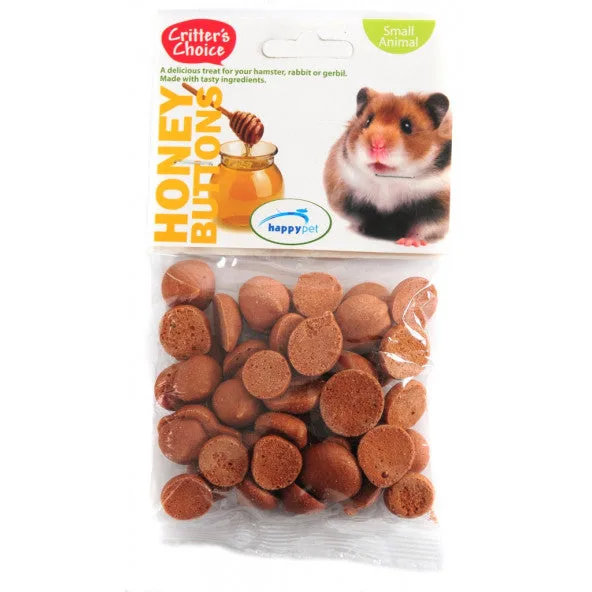
Critter's Choice Small Animal Treats Honey Buttons 40g
Who Should Use These Rules
Best for
- New small pet owners who want to avoid common mistakes
- Owners looking for daily, low-sugar treat options
Not for
- Pets with specific health conditions requiring prescription diets