Quick Answer
Choose wooden toys for toddlers by checking three things in order: age suitability and small parts, the wood and finish, and whether the toy has open-ended play value. If a toy has loose pieces smaller than a choke-test cylinder, skip it for under-threes no matter how good the wood is. Buy fewer, sturdier pieces that grow with your child.
Most parents start shopping for wooden toys because they want something durable, quiet, and less plastic. The harder question is how to tell which wooden toys are genuinely safe for a toddler, not just marketed that way. The answer is usually in the details: age grading, part size, materials, and how the toy is meant to be used.
This guide walks through the decision rules I use when evaluating toddler toys, plus honest trade-offs. You will see how real products from the Tender Leaf range stack up against those rules, so you can apply the same checklist to anything you buy.
Start with age grading and small parts
Age grading is the first filter, not the last. A toy labeled 18 months+ has been designed around the mouthing and grabbing habits of that stage. If a product listing does not state an age range, treat that as a missing specification and contact the seller before buying for a child under three.
Small parts are the biggest choking risk with wooden toys. Loose blocks, tiny animals, and removable wheels all need to be judged against your child's stage. A good rule: if a piece fits inside a toilet paper tube, it is too small for a child who still puts everything in their mouth.
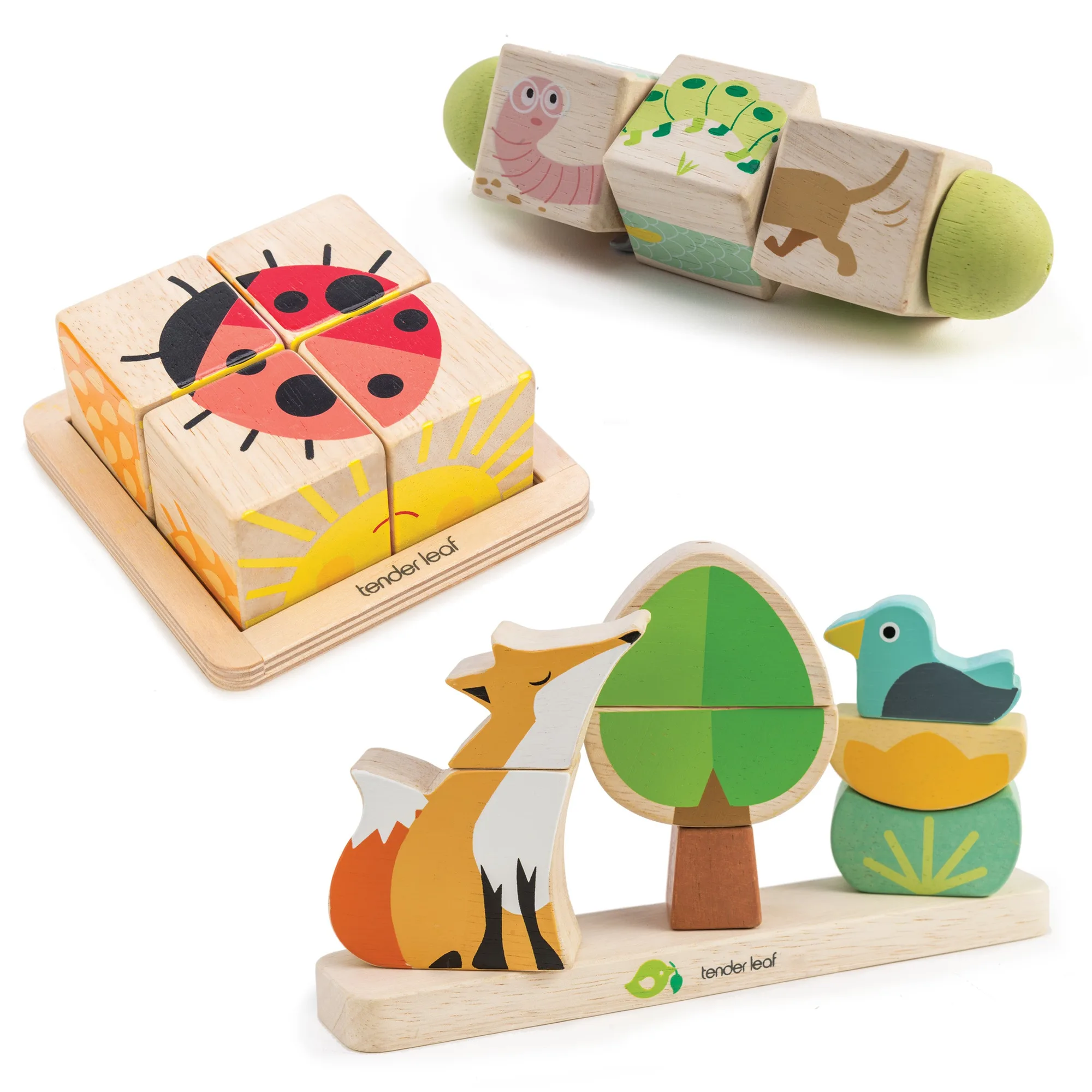
The Infant Blocks Collection is a useful example because the catalog lists an age range of 18 months+ and describes twisting cubes that build manual dexterity and matching skills. That is a toy designed for a toddler who is past the heaviest mouthing phase but still needs chunky, connected parts.
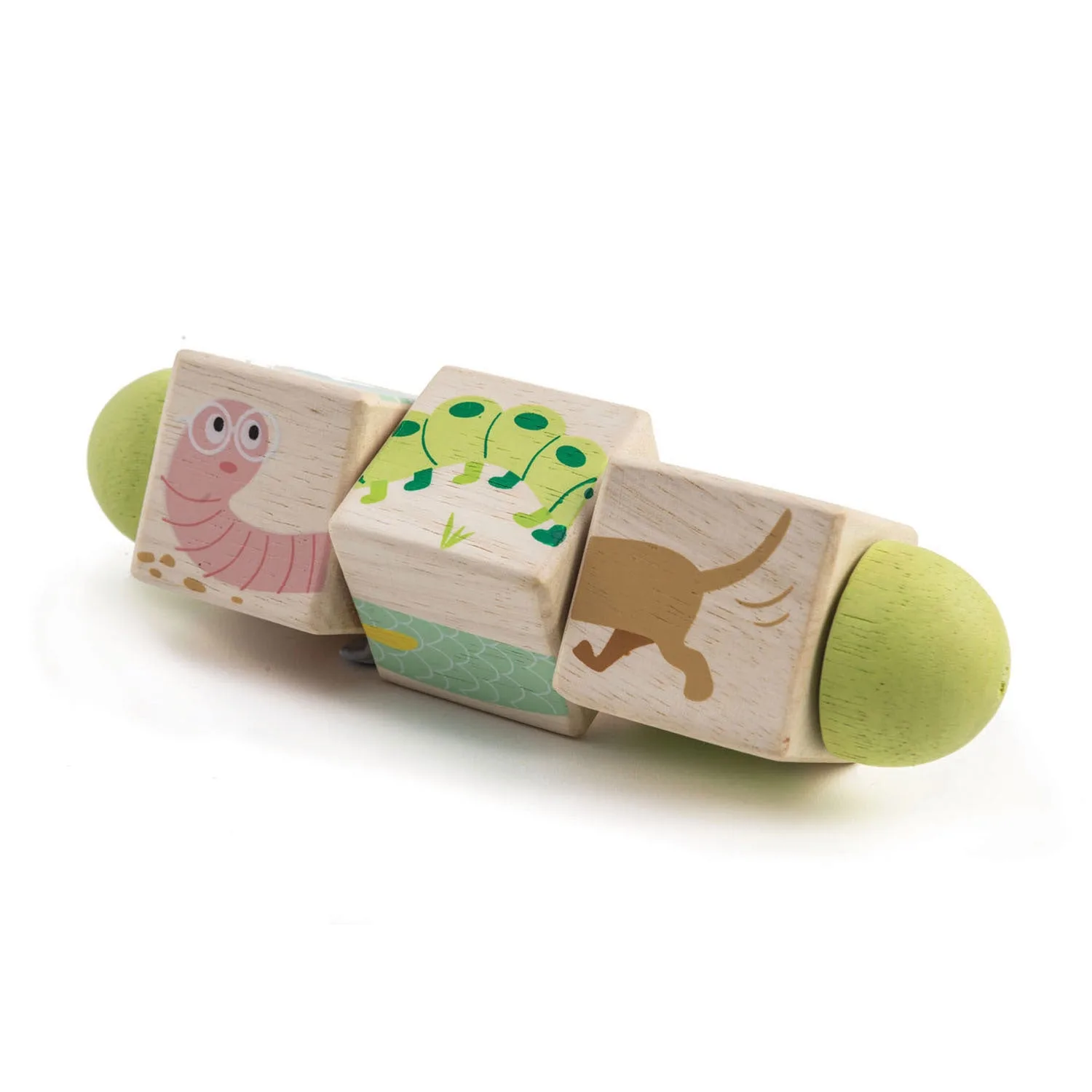
twisting cubes
- Check the stated age range on the listing before anything else.
- Use the toilet paper tube test for any loose part.
- Prefer connected or chunky pieces for under-twos.
Judge the wood and the finish
Wood type matters less than how it is finished and how it is assembled. Sustainably sourced rubberwood and quality plywood are common in well-made toddler toys because they hold up to drops and repeated handling. What you want to avoid is a toy with rough edges, splinters, or a finish that smells strongly of solvent when you open the box.
For parents searching for non toxic wooden toys, the practical move is to look for water-based paints and clear material descriptions rather than vague claims. If a listing does not name the wood or the finish, that is a decision limitation, not proof of a problem. Ask the seller, or choose a product that does disclose it.
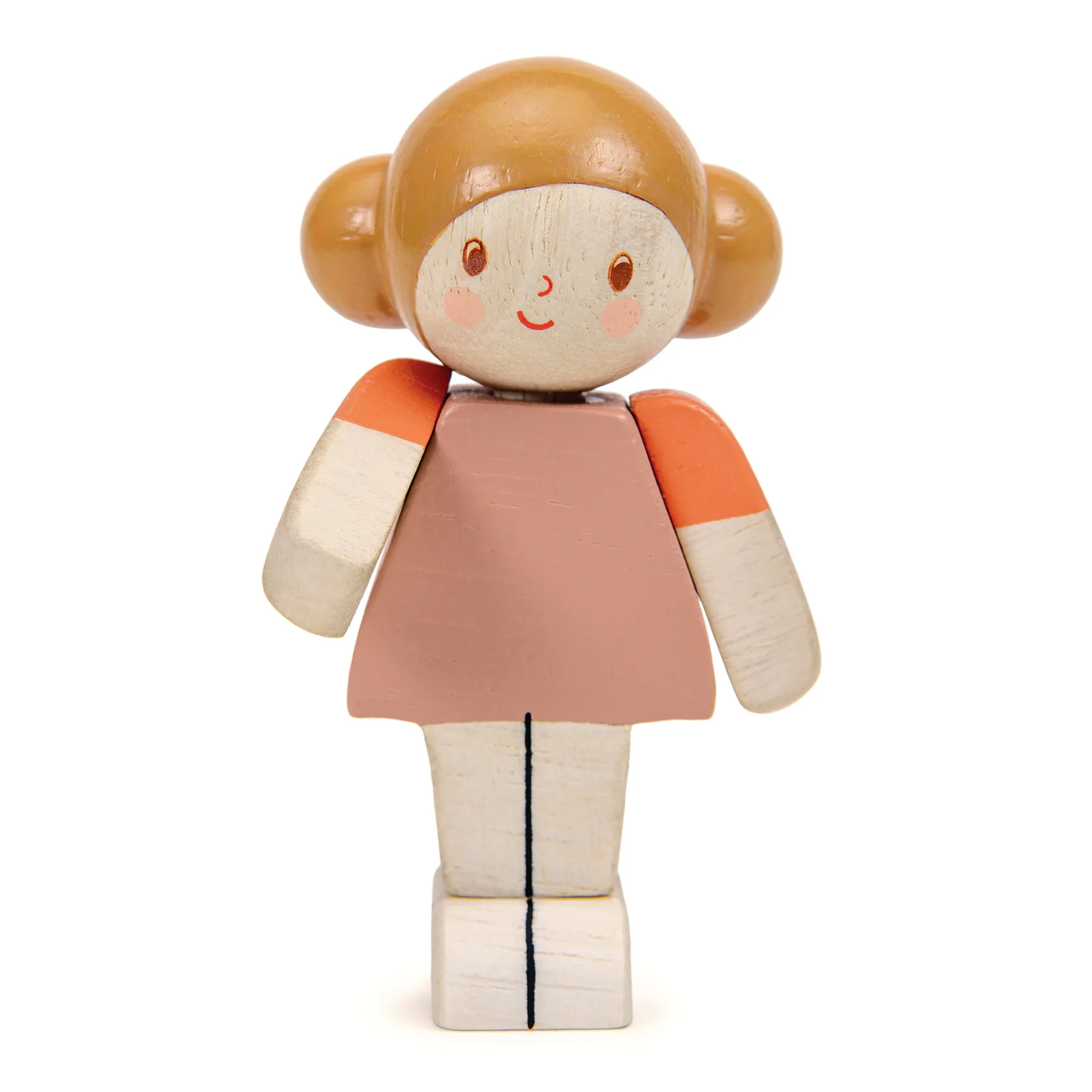
The Ivory Girl doll is made from sustainably sourced rubberwood with articulated arms and a painted face, which tells you the material and the finish approach up front. That level of disclosure is what you want to see across any wooden toy you consider.
- Look for named wood types such as rubberwood or quality plywood.
- Prefer water-based paints and clear material descriptions.
- Run your finger along edges and joints before handing a toy over.
Weigh play value against complexity
A safe toy that a toddler ignores is still a poor purchase. Open-ended toys, ones that can be sorted, stacked, matched, or pushed, tend to hold attention longer than single-purpose novelties. They also tend to be the toys you keep for a second child.
Complexity is a trade-off. A large set with many small pieces offers more play but more to store, more to lose, and more to supervise. A single sturdy vehicle or animal offers less variety but is easier to manage and often gets played with more consistently.
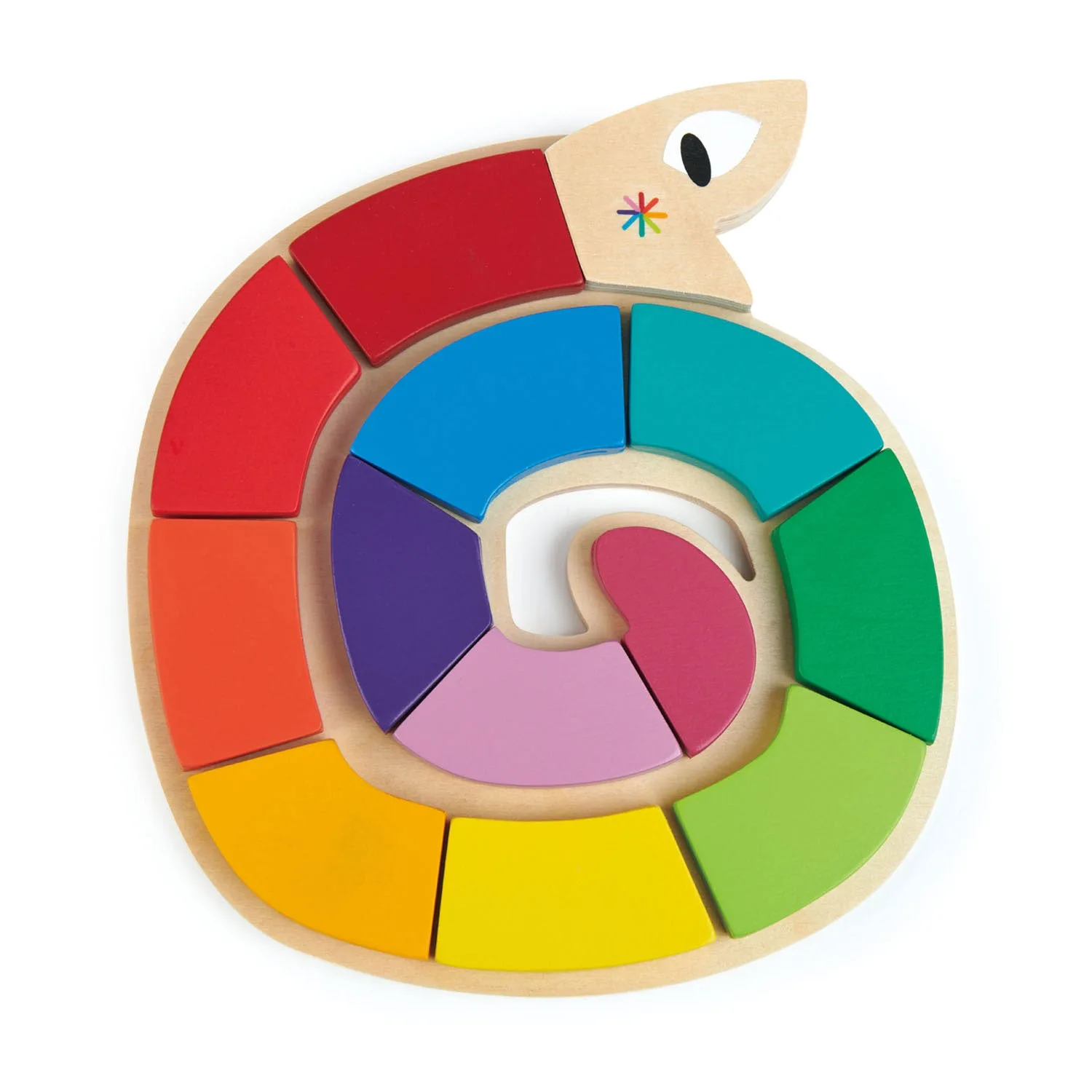
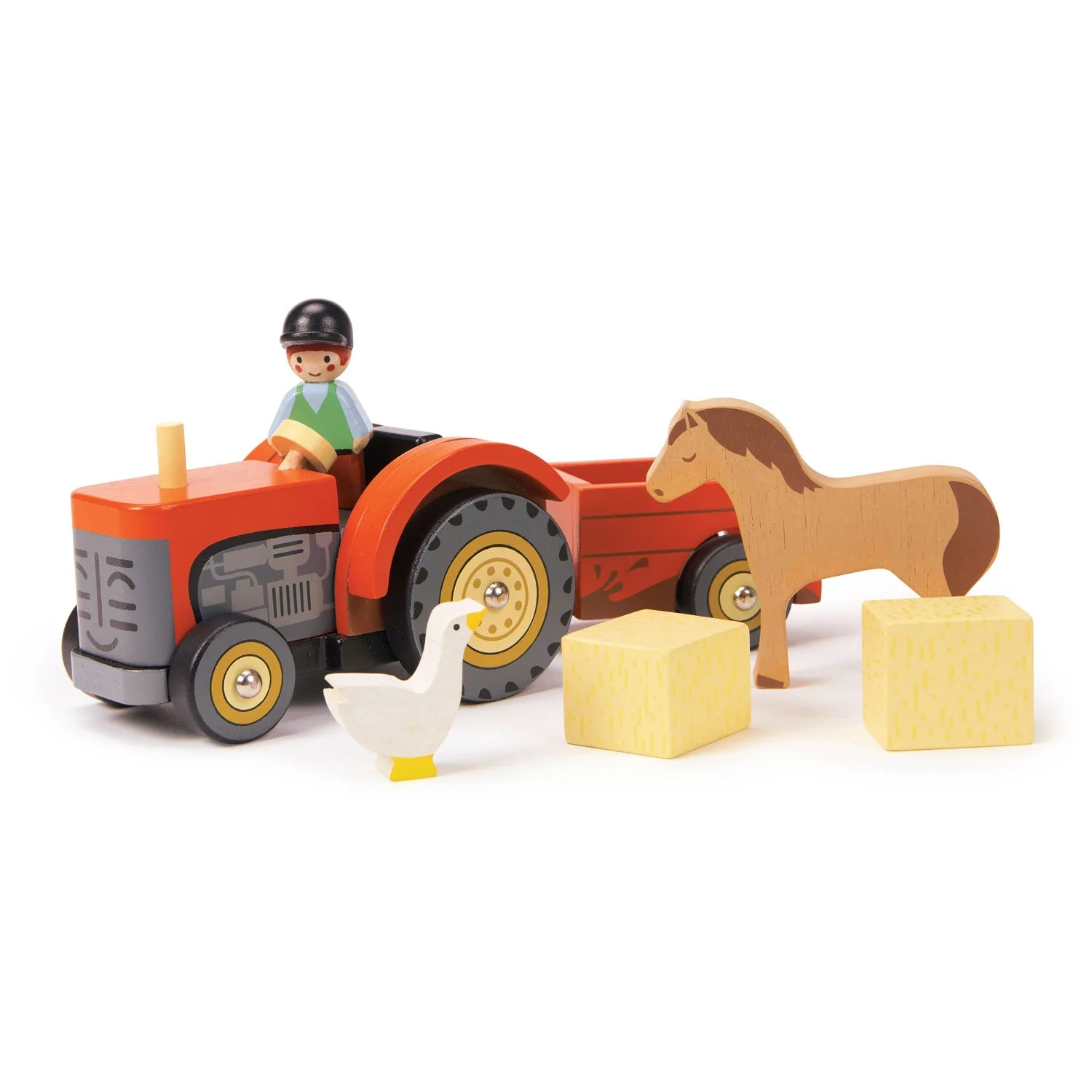
Color Me Happy is a good middle ground: a brightly colored snake with 12 pieces that match up to a three-dimensional shape underneath, so it combines color matching and shape matching in one toy. The Farmyard Tractor takes the opposite approach, with a removable trailer, driver, hay bales, a horse, and a goose, which is more pieces but a clear, familiar play pattern.
- Choose toys with more than one way to play.
- Count the pieces and decide honestly whether you will store and supervise them.
- A familiar theme like a farm or vehicle often gets more repeat play.
Match the toy to your space and routine
Where the toy will live matters as much as what it is. A large farm set with fences, stables, and a pulley system needs floor space and a place to stay set up. A small doll or animal can live in a bag and come out at a restaurant or on a trip.
Think about your actual routine before you buy. If your toddler plays in a small apartment or a shared living room, a compact set that packs away will get used more than a sprawling one that has to be cleared every evening.
Tender Leaf Farm is a good example of a larger commitment: it is made from top quality plywood and includes a barn with doors, two stables, a ladder, a pulley system with a magnetic end, and multiple animals. That is a toy you set up and leave out, not one you tuck into a diaper bag.
- Measure the space where the toy will actually live.
- Choose compact toys for travel and waiting rooms.
- Reserve large sets for a dedicated play area.
Decision Rules for Buying Wooden Toys for Toddlers
- If your child is under 18 months: Stick to toys with no loose parts smaller than a choke-test cylinder and prefer connected or chunky pieces. Skip anything with a removable wheel, small animal, or tiny accessory, even if the wood and finish are excellent. Age and part size outrank every other feature at this stage.
- If the listing does not name the wood or finish: Treat that as a missing specification. Ask the seller directly, or choose a product that discloses its material, such as the rubberwood used in the Ivory Girl doll. Disclosure is a reasonable proxy for a manufacturer that expects questions.
- If you are choosing between one big set and several small toys: Pick the big set only if you have a dedicated spot to leave it assembled. Otherwise, two or three compact toys such as Color Me Happy and a small doll will get more use and create less clutter. Match the toy to your storage reality, not to the product photo.
- If you want the toy to last for a second child: Prioritize solid construction, named materials, and open-ended play over novelty features. Toys with a single gimmick tend to be outgrown faster than toys that can be sorted, matched, or pushed. Durability and replay value are the two best predictors of long-term value.
How These Tender Leaf Toys Fit the Checklist
- Infant Blocks Collection: The catalog lists an age range of 18 months+ and describes twisting cubes that match animal bodies and build manual dexterity and matching skills. The stated age range and connected, chunky design make it a reasonable fit for a toddler past the heaviest mouthing stage who still needs parts that will not scatter.
- Color Me Happy: A brightly colored snake with 12 pieces that match up to a three-dimensional shape underneath, combining color and shape matching. It offers two play goals in one toy, which is useful when you want play value without adding a large set to your floor.
- Ivory Girl: Made from sustainably sourced rubberwood with articulated arms and a pretty painted face, available in several skin tones and outfits. The material is disclosed and the doll is small and portable, so it works well for travel and for families who want toys that reflect their own family.
- Farmyard Tractor: A wooden tractor with a removable trailer, driver, two hay bales, a horse, and a goose, painted bright red with illustrated details. The removable trailer and loose animals mean more pieces to track, so it suits a toddler who no longer mouths small parts and a household that can store them.
Who This Approach Suits
Best for
- Parents buying a first wooden toy for a toddler aged 18 months to three years
- Families who want toys that can be passed down to a younger sibling
- Shoppers who prefer disclosed materials and simple, open-ended play over electronic features
Not for
- Buyers who need a toy for a child under 12 months, where mouthing and small parts require a different category entirely
- Shoppers looking for battery-powered or app-connected toys
- Anyone who needs a fully assembled large set with no storage space to keep it out
Safe wooden toys for toddlers come down to three checks: the age range and part size, the disclosed wood and finish, and whether the toy will actually get played with in your home. Apply those rules to any listing, including the Tender Leaf pieces above, and you will make a calmer, more useful purchase.