Quick answer
Choose a sandbox that leaves at least 2 feet of clear space on every side for digging and walking, and prioritize a model with molded-in seats and a lid if your yard is tight. For most small backyards, a compact four-seat sandbox like the Bluey Beach Day Sandbox is the practical pick because it seats multiple kids without needing extra furniture. Skip oversized wooden kits and open trays that collect leaves and rain.
Measure the footprint before you shop
Start by pacing out the actual play zone, not the whole yard. A sandbox needs room for kids to kneel or sit on the edges and for a parent to reach in without stepping on the sand. Leave at least 2 feet of clearance on all sides, and avoid placing it under a roof drip line or where water pools after rain.
If your space is a patio corner or a narrow strip beside a fence, measure the longest straight edge you can dedicate and choose a sandbox that fits inside it with room to spare. A sandbox that barely fits will feel cramped once two children climb in.
Match seating to how many kids will play
Seating is the most overlooked part of the sandbox size guide. Molded-in seats let children sit at the rim instead of kneeling in the sand, which keeps sand where it belongs and makes longer play sessions more comfortable. If siblings or neighborhood friends will share the box, count seats, not just square footage.
A sandbox with four molded-in seats, such as the Bluey Beach Day Sandbox, supports multiple kids at once without adding separate chairs or stools to your small yard.
Decide how you will handle rain, leaves, and animals
A sandbox with a lid is not a luxury in a small yard; it is what keeps the sand usable between play sessions. Look for a lid that covers the entire sand area and is light enough for one adult to lift. If the lid doubles as a play surface or stores flat, that is a bonus in tight spaces.
Check whether the lid is included or sold separately before you compare prices. A cheap open tray often costs more over time because you end up buying a cover or replacing contaminated sand.
Weigh themed accessories against open-ended play
Themed accessories can spark imaginative play, but they also add small pieces to store. If your child is deeply into a character, a themed set like the Bluey Beach Day Sandbox gives them a ready-made story to act out. If you prefer open-ended play, choose a simpler box and add your own buckets and scoops.
Either way, confirm that the accessories are sized for toddlers and that they fit inside the sandbox footprint when not in use.
Plan the sand and the surrounding play zone
Play sand is not included with most sandboxes, so budget for it and check the fill depth recommended for the model you choose. A shallow box needs less sand, which matters if you are carrying bags through a house or up stairs. Keep a small broom and a lidded bin nearby to catch stray sand before it reaches a patio or door.
If your yard is mostly hardscape, place a mat under the sandbox to make cleanup easier and to protect the surface beneath.
Decision rules for a small-backyard sandbox
- Clearance rule: Leave at least 2 feet of clear space on every side of the sandbox for kneeling, digging, and walking. If you cannot meet this, size down or move the sandbox to a patio edge.
- Seat-count rule: Count the children who will play at the same time. Choose a sandbox with at least that many molded-in seats. Four seats covers most sibling and playdate scenarios without adding chairs.
- Lid rule: Buy a sandbox with a full-coverage lid included, or confirm the lid price before comparing totals. An open tray without a lid is a false economy in a small yard.
- Accessory rule: Themed accessories are worth it only if your child already loves the character and you have a place to store the pieces. Otherwise choose a simpler box and add open-ended toys.
Product facts for small-yard sand play
- Bluey Beach Day Sandbox™: Spacious layout with four molded-in seats and Bluey-themed accessories for imaginative play. Seats four kids without extra furniture, and the theme gives toddlers a ready-made play scenario in a compact footprint.
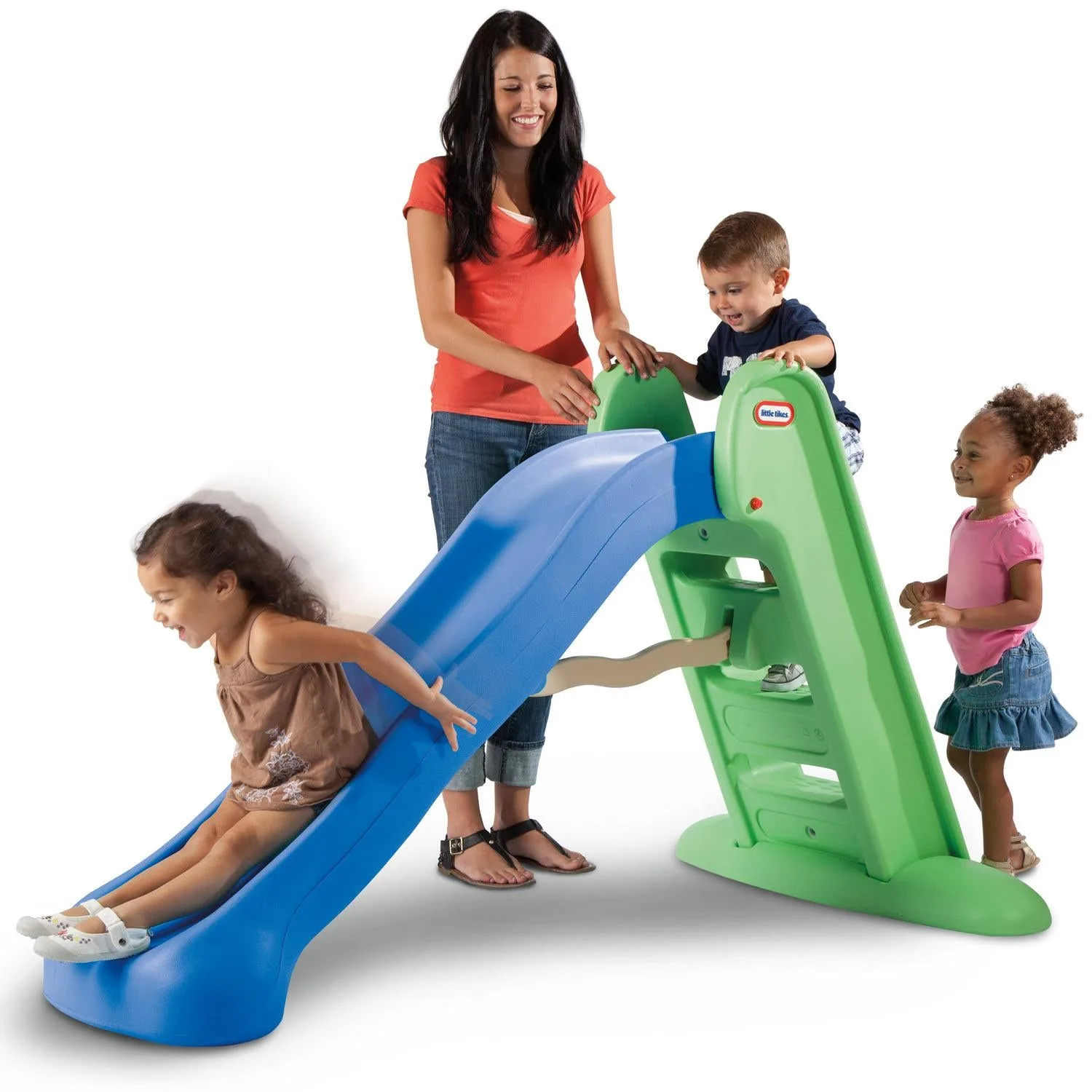
- First Slide™ - Blue/Green: No-tool assembly and indoor/outdoor versatility. You can set it up in minutes and move it between a small yard and a playroom when space is tight.
- Backyard Barbecue Grillin' Goodies: Colorful, kid-friendly barbecue play food set for pretend cooking and serving. Adds a compact pretend-play option that pairs with sandbox play or works indoors on rainy days.
Who this sandbox approach fits
Best for
- Families with a compact yard, patio, or deck corner who want seating for multiple toddlers
- Parents who want a lid to keep sand clean between sessions
- Shoppers looking for a toddler-friendly sandbox with a familiar character theme
Not for
- Large yards where a full-size wooden sandbox with built-in benches is a better fit
- Families who prefer no character licensing and purely open-ended play
- Shoppers who need a sandbox that includes sand in the purchase