Quick answer
For most side sleepers, the best setup is a quilt paired with a sheet that holds it in place, not a narrow mummy bag. A quilt-and-sheet system lets you bend your knees, roll from side to side, and keep the insulation sealed without straps fighting your shoulders. If you sleep on your side and stomach, prioritize shoulder and hip room above almost everything else.
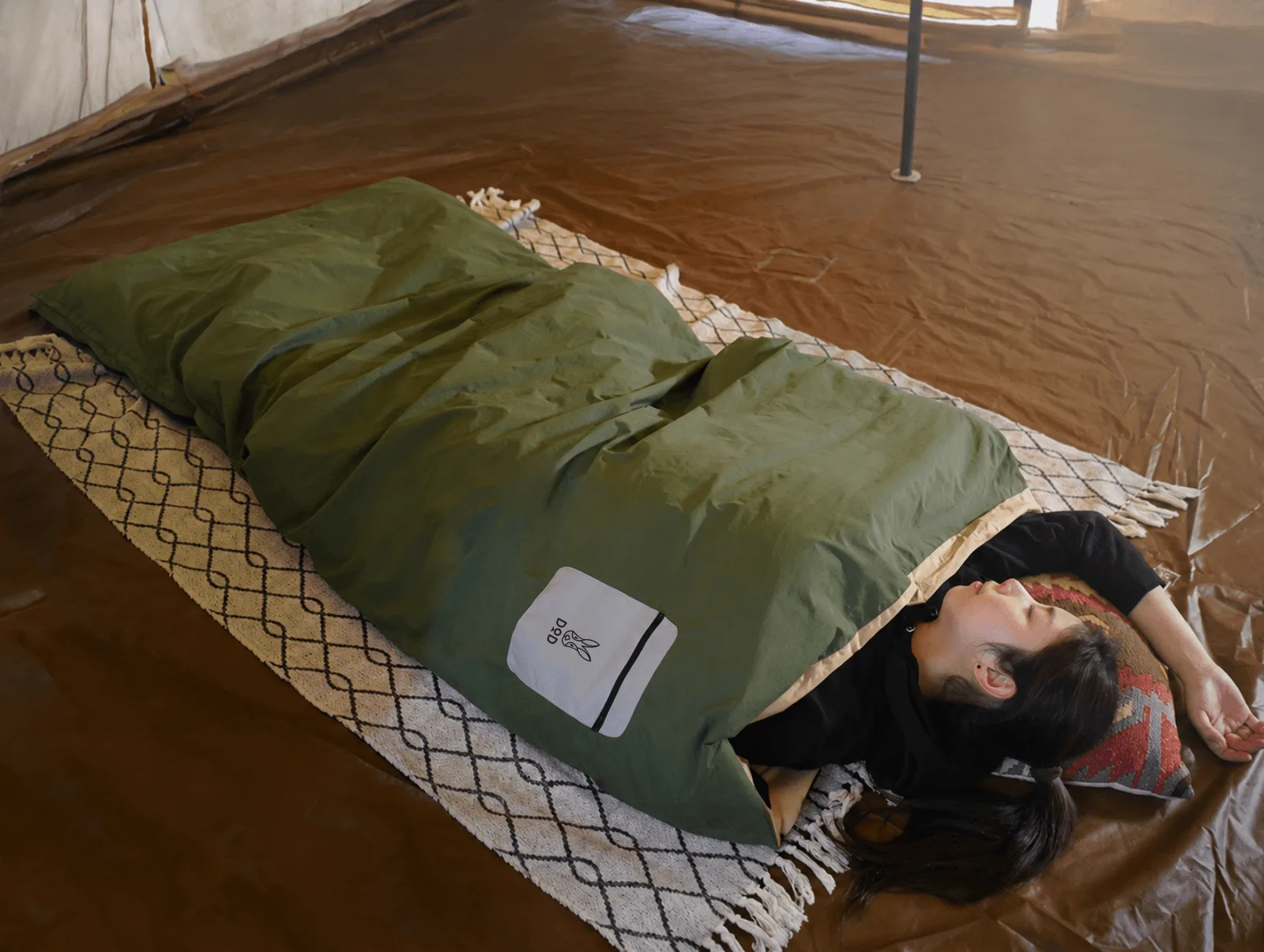
If you wake up with a numb arm or a cold draft every time you roll onto your side, the problem is usually the bag, not you. Traditional mummy bags are shaped for back sleepers, so side sleeping twists the shell, opens gaps at the shoulder, and pulls insulation away from your back.
This guide explains how to choose a sleeping bag for side sleepers using fit, shape, and quilt-and-sheet systems. It covers side sleeper sleeping bag options, a simple sleeping bag shape guide, and the trade-offs that matter for side sleeper camping. You will also see how specific products fit into those decisions.
Why standard mummy bags fight side sleepers
A mummy bag tapers at the shoulders and hips to save weight, which works well when you lie still on your back. Side sleepers bend at the knees and hips, and that bend pulls the bag tight across the back and shoulders. The result is a cold spot where the insulation lifts away, plus restricted movement that wakes you up.
You can size up, but extra length does not fix a narrow shoulder cut. The better fix is a sleep system that separates the insulation from the attachment. Quilts attach to a sheet or pad, so the top layer can move with you while the bottom stays sealed.
- Check shoulder circumference first, not just length; a bag that fits your height can still be too tight across the shoulders.
- If you roll often, a wider cut or quilt system reduces the chance of waking with a draft.
Quilt-and-sheet systems explained for side sleepers
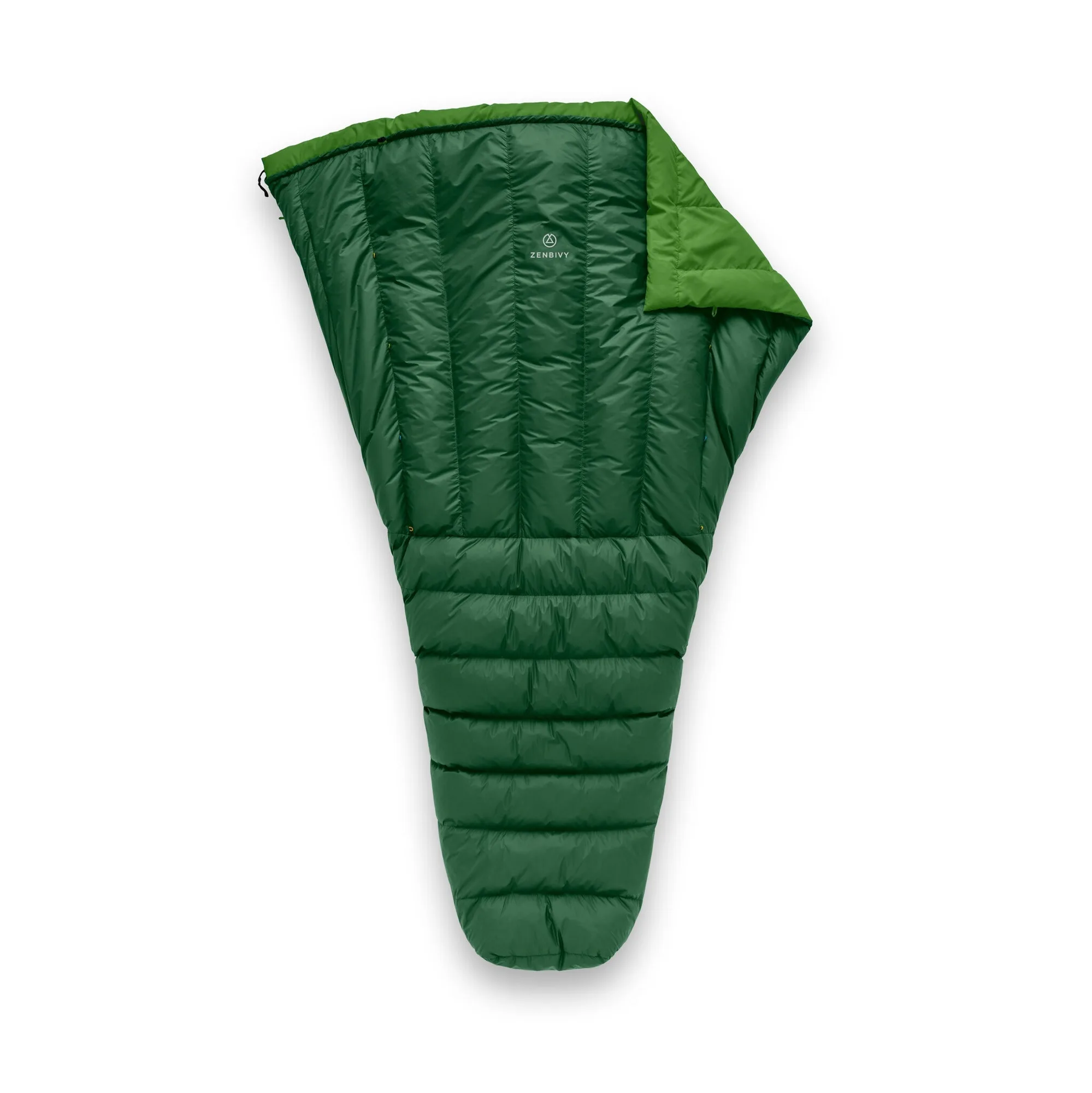
A quilt is an open blanket with no hood or back panel, so it drapes over you instead of wrapping you. On its own, a quilt can shift when you roll. A sheet solves that by creating a stable base that holds the quilt edges, blocks drafts, and manages your pillow.
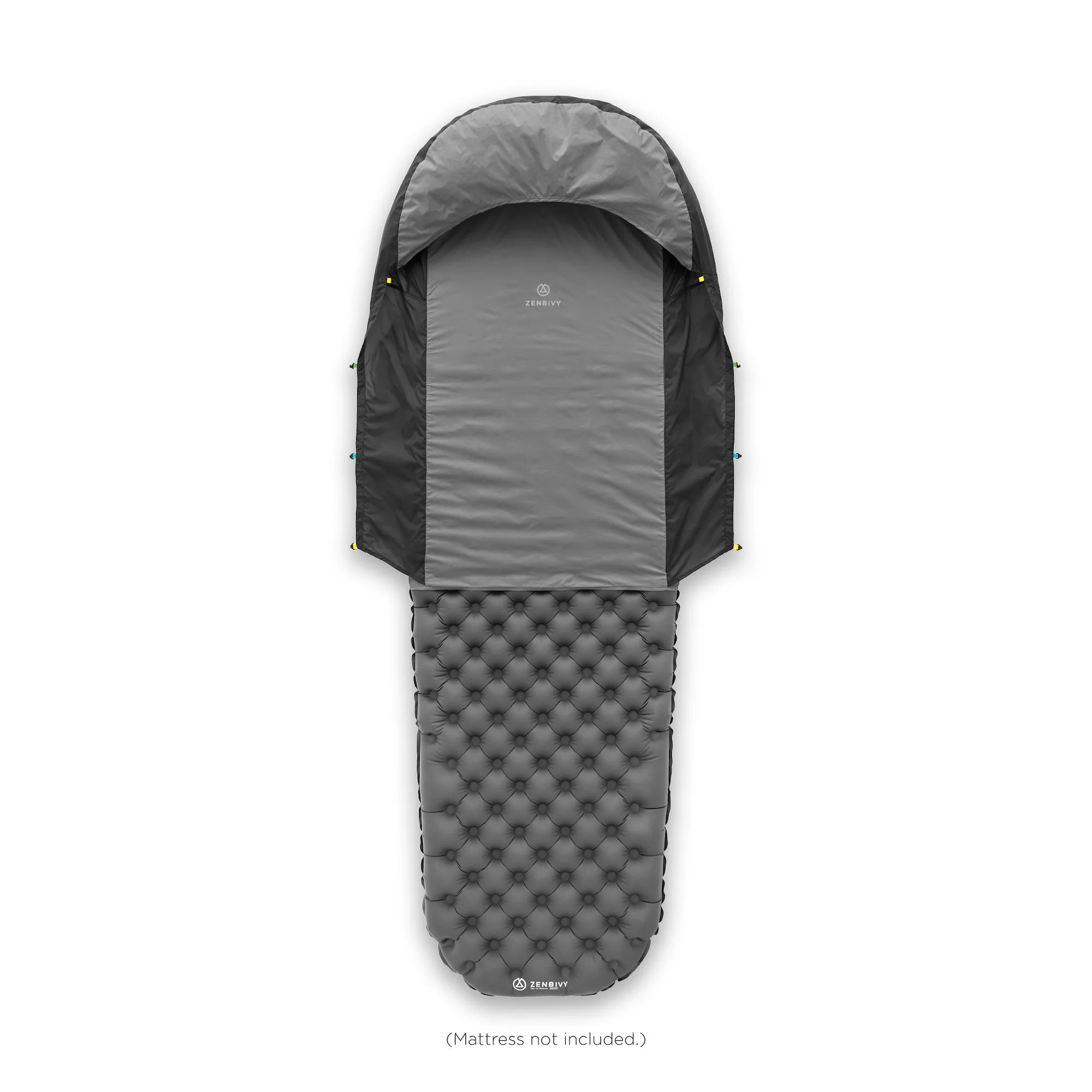
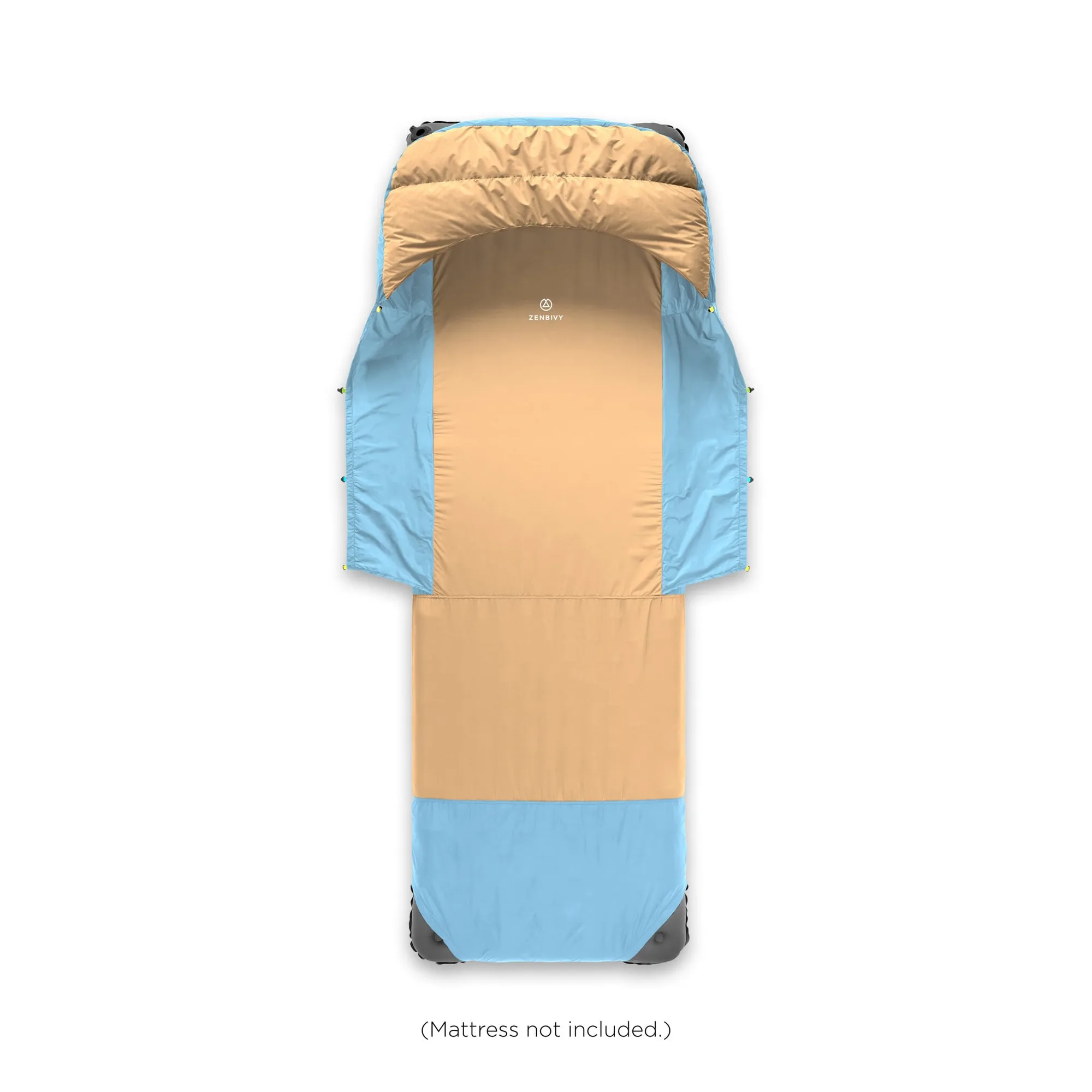
The Zenbivy Ultralight Sheet is the lightest way to block all drafts, eliminate all constriction, insulate your head, and manage your pillow, according to the catalog. It is compatible with any Zenbivy clip quilt, or you can convert a backpacking quilt you already own. That compatibility matters if you already own a quilt and only need the sheet half of the system.
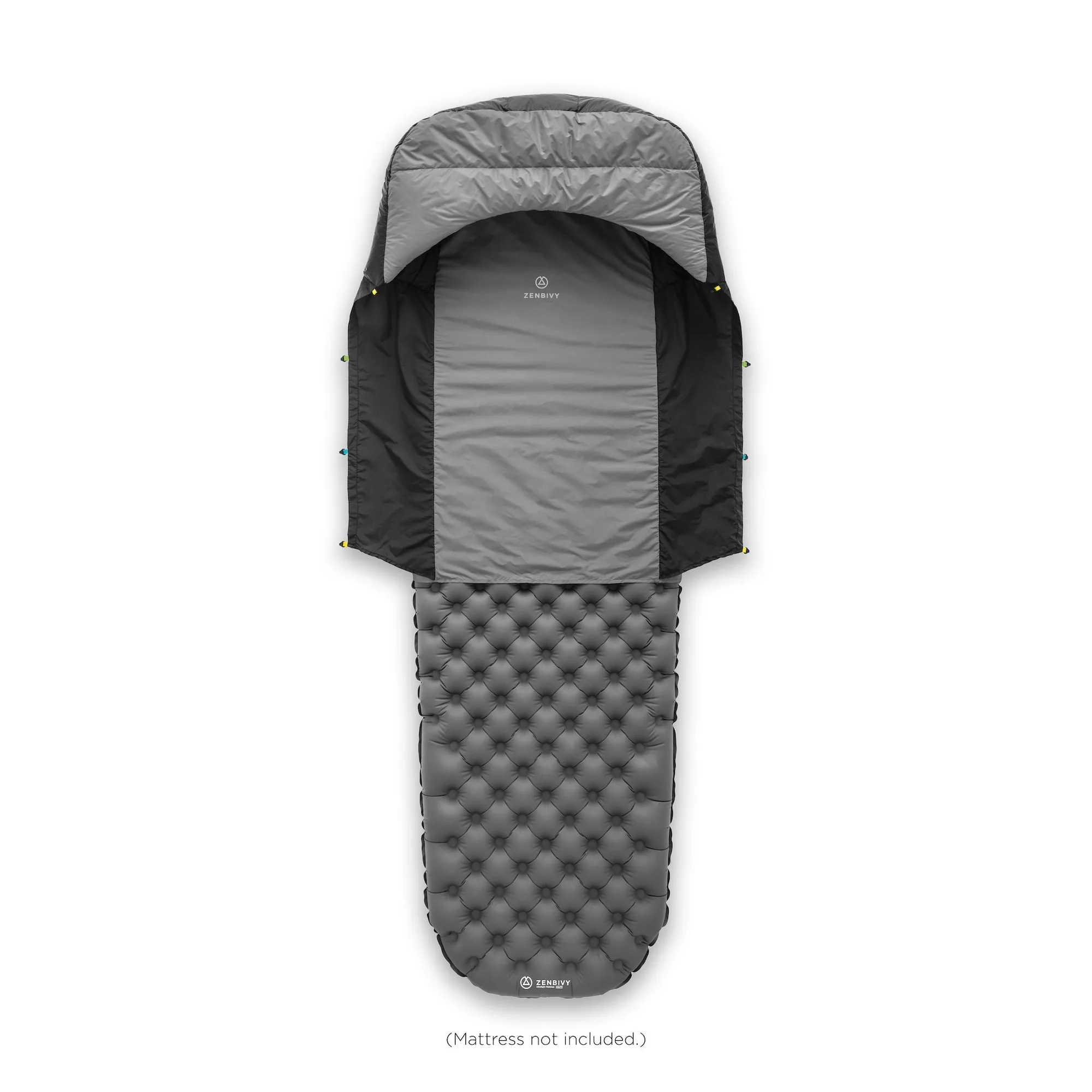
Ultralight Sheet
- Pair a sheet with a quilt for the most freedom of movement; the sheet stays put while the quilt moves with you.
- If you already own a clip-compatible quilt, you may only need the sheet to fix draft and constriction problems.
Shape guide: match the cut to your sleep position
Sleeping bag shapes fall into three broad groups: mummy, semi-rectangular, and rectangular or quilt. Mummy bags save weight but restrict side sleepers. Semi-rectangular bags add shoulder and hip room at a modest weight cost. Rectangular bags and quilts give the most room but are heavier and bulkier for the same warmth.
For side sleepers, a quilt or semi-rectangular cut is usually the best compromise. If you also sleep on your stomach, treat shoulder width as the deciding measurement. A sleeping bag for stomach sleepers needs even more shoulder room because the arms often end up under the head or chest.
- Lie in the bag or quilt on your side before buying; if your knees cannot bend freely, size up or switch shape.
- Stomach and side sleepers should prioritize shoulder girth over temperature rating when two options are close.
Fit guidance: measurements that actually matter
Ignore the temperature rating for a moment and measure three things: shoulder circumference, hip circumference, and the distance from shoulder to knee when your legs are bent. A bag that fits your height but pinches your shoulders will still wake you up. Add roughly two to three inches of room beyond your body measurements for clothing and movement.
For quilts, fit works differently. The quilt needs to be wide enough to tuck under your sides when you roll, and the sheet or pad attachment needs to hold it there. If the quilt is too narrow, you will feel a draft along your back no matter how warm the fill is.
- Measure your shoulder and hip circumference with a soft tape, then compare to the bag's internal dimensions, not the external ones.
- For quilts, check the width at the shoulder and hip, and confirm the sheet or pad attachment method before buying.
Temperature, fill, and the trade-off with room
More room usually means more weight and bulk for the same warmth, because a wider bag has more surface area to insulate. That is the honest trade-off: side sleepers often accept a slightly heavier or bulkier system in exchange for sleeping through the night. If you backpack long distances, a quilt-and-sheet system can offset some of that weight by removing the hood and back panel you do not use.
Fill type matters too. Down packs smaller and lasts longer but costs more and needs to stay dry. Synthetic handles damp conditions better and costs less, but it is bulkier. Choose based on your climate and how you sleep, not on a single temperature number.
- If you sleep cold and on your side, a wider quilt with a draft-blocking sheet is often warmer in practice than a tight mummy bag.
- If you sleep warm, a lighter quilt with a thin sheet may be enough and saves weight.
Decision rules for side sleepers
- If you roll from side to back all night: Choose a quilt-and-sheet system rather than a mummy bag. The sheet holds the edges and blocks drafts while the quilt moves with you. Start with a sheet plus a quilt in your temperature range.
- If you also sleep on your stomach: Treat shoulder width as the deciding measurement. A sleeping bag for stomach sleepers needs more shoulder girth than a side-only sleeper, because arms often end up under the chest. Size up in shoulder girth before you size up in length.
- If you already own a clip-compatible quilt: You may only need a sheet to fix draft and constriction problems. Check compatibility before buying a whole new system. Buy the sheet first and test it with your existing quilt.
- If you sleep cold and move a lot: A wider quilt with a draft-blocking sheet is often warmer in practice than a tight mummy bag, even if the temperature ratings look similar. Prioritize draft control over a lower temperature number.
- If you backpack long distances: Compare total system weight, not just the bag. A quilt-and-sheet setup can remove the hood and back panel you do not use, offsetting the weight of extra room. Weigh the sheet and quilt together against the bag you are replacing.
Products that fit side-sleeper systems
- Ultralight Sheet: The Ultralight Sheet is the lightest way to block all drafts, eliminate all constriction, insulate your head, and manage your pillow, and it is compatible with any Zenbivy clip quilt. It solves the two biggest side-sleeper complaints: drafts when you roll and shoulder constriction from straps.
- Core Quilt: The Zenbivy Core Quilt is the simplest, softest, and most affordable backpacking quilt, featuring a soft 50D Pongee lining for premium comfort. It is a lower-cost entry into a quilt-and-sheet system, so you can test whether quilt sleeping works for you before spending more.
- Light Quilt: The Zenbivy Light Quilt features an ultra-soft, lightweight 25D Pongee lining and a quick Fast Footbox for easy, adjustable warmth, and pairs with a Light Sheet to create a backpacking sleep system. The adjustable footbox helps side sleepers who want a warmer foot area without a tight, restrictive cut.
- Fast Sheet: The Fast Sheet is built for minimalist, ultralight backpackers, blocks drafts while allowing total freedom of movement, pairs with any Zenbivy quilt, and starts at just 3 ounces. It is the lightest option for side sleepers who move a lot and want almost no weight penalty.
Is a quilt-and-sheet system right for you?
Best for
- Side sleepers who roll frequently and wake up with drafts or numb arms
- Backpackers who want to bend their knees and turn without straps restricting them
- Campers who already own a clip-compatible quilt and only need a sheet
Not for
- Back sleepers who never move and want the lightest possible mummy bag
- Campers who prefer a hooded bag and do not want to manage a separate sheet
- Buyers who want one-piece simplicity and will not adjust attachments
Choose a sleeping bag for side sleepers by fit and freedom of movement first, then match the temperature rating to your conditions. A quilt-and-sheet system solves the draft and constriction problems that make side sleeping uncomfortable, and it lets you keep using a quilt you already own. Measure your shoulders and hips, decide how much room you need, and pick the system that lets you roll without waking up.