Quick Answer
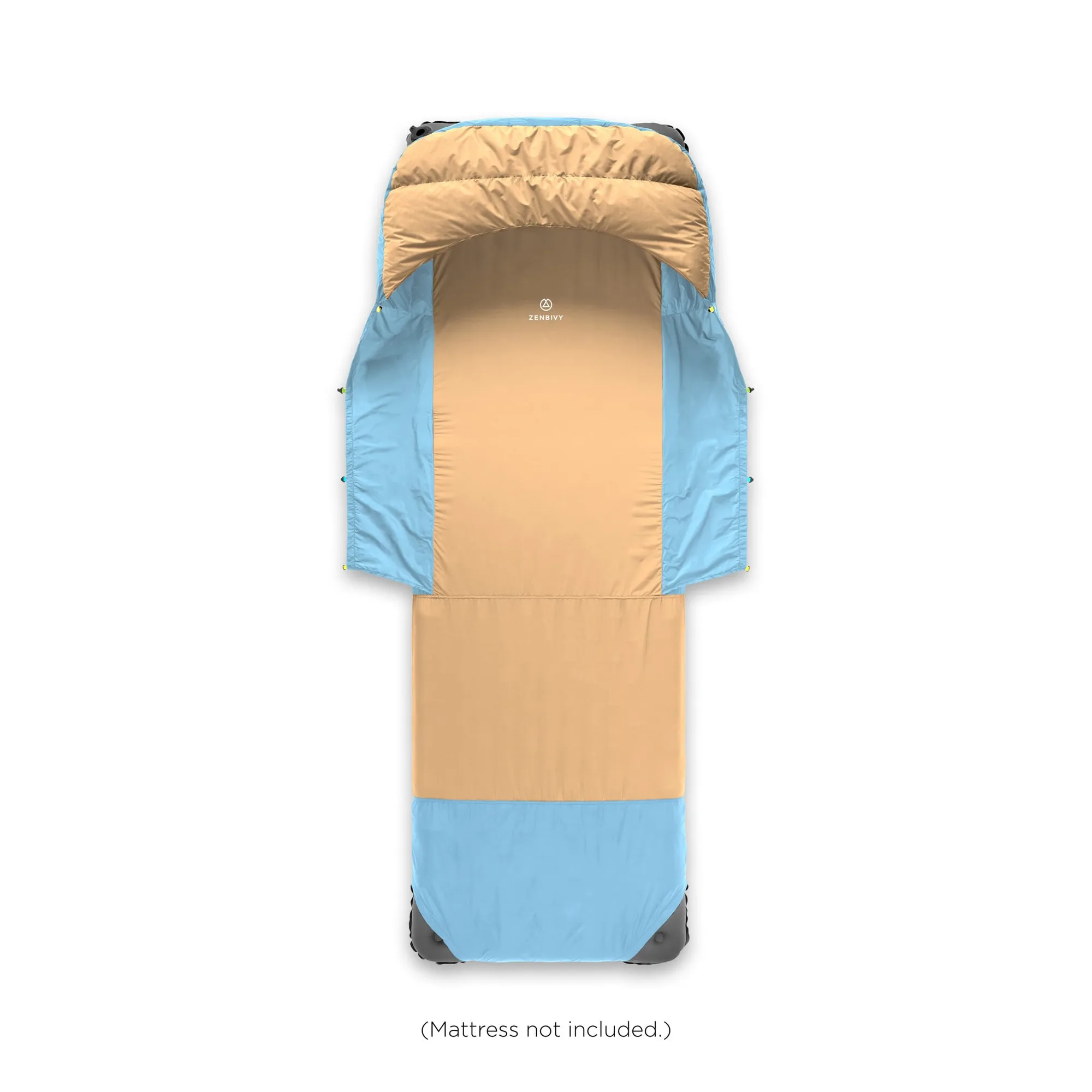
In warm weather, treat your quilt as a blanket over a pad-and-sheet base rather than a bag you climb into. Lay the quilt on top, close the footbox only when your feet feel cool, and tuck the edges under you instead of strapping the quilt tight. If you want a draft-free setup without straps, pair a quilt with a sheet such as the Ultralight Sheet.
Ultralight Sheet
A quilt is not a broken sleeping bag. On warm nights it is often the better tool: you can push it off when you overheat, then pull it back over your shoulders at 3 a.m. without wrestling a zipper in the dark.
The catch is that a quilt only works if the layers under and around you are set up in the right order. This guide walks through the steps for a summer-ready quilt sleep system, including the mistakes that make people give up on quilts after one cold, drafty night.
Why a Quilt Works Better Than a Bag in Warm Weather
A sleeping bag wraps insulation around your whole body, including the back that is already compressed against your pad. In warm weather that extra layer is dead weight and trapped heat. A quilt removes the insulated back panel and relies on your pad for the bottom half of the system, so you carry less and vent faster.
The tradeoff is that a quilt has no hood and no full-length zipper, so it depends on your sheet, pad, and technique to keep drafts off your neck and sides. That is a fair trade in summer, when overheating is a bigger risk than a small draft.
- Quilts vent faster than bags because you can peel back one edge instead of opening a zipper.
- Your sleeping pad does the insulating work underneath you; the quilt handles the top and sides.
Set Up the Base Layers First
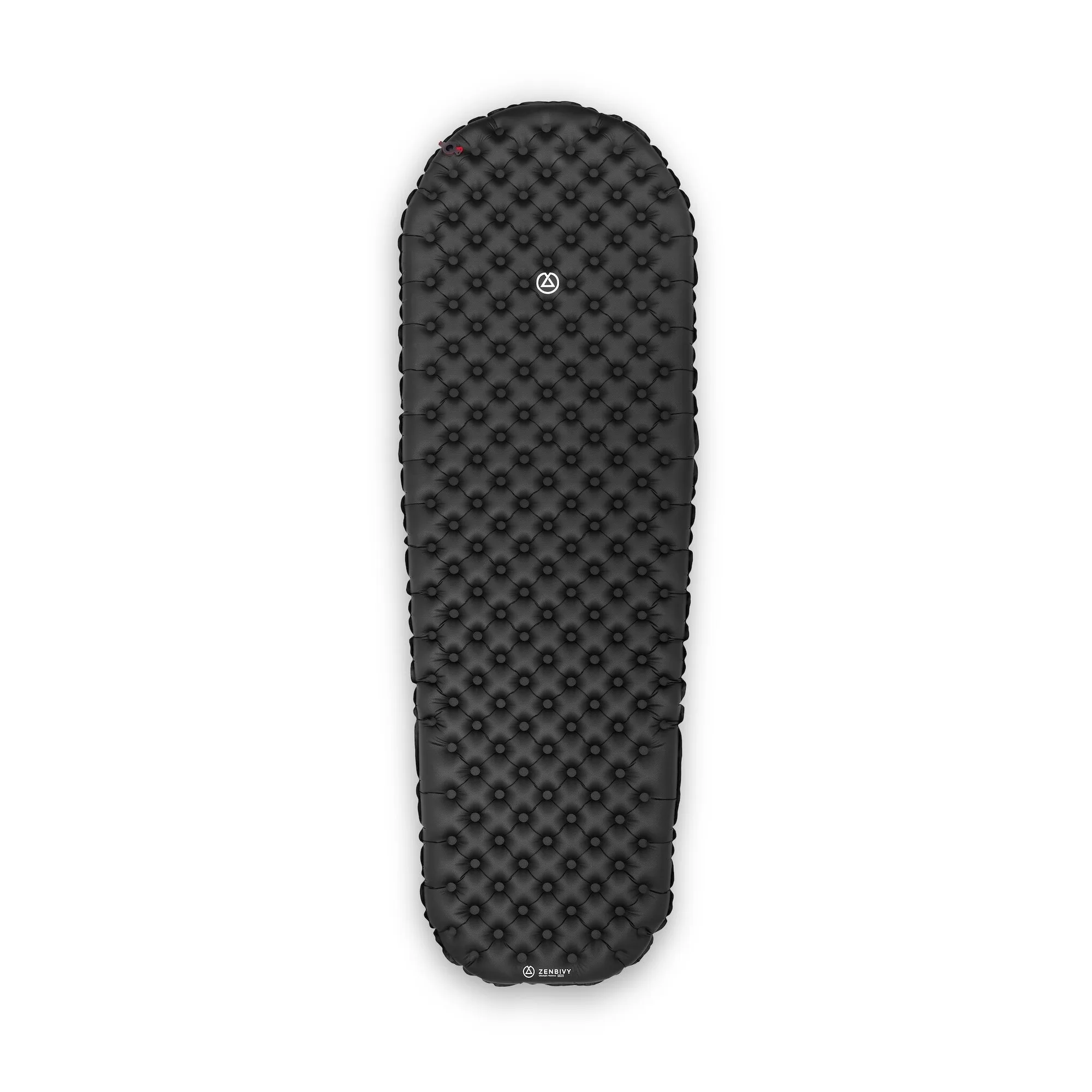
Start with your pad. Inflate it fully and check that it stays firm through the night; a soft pad lets your hips sink and creates a gap along your sides where cold air pools. If your pad has a pump sack, use it so you are not adding humid breath to the inside of the pad.
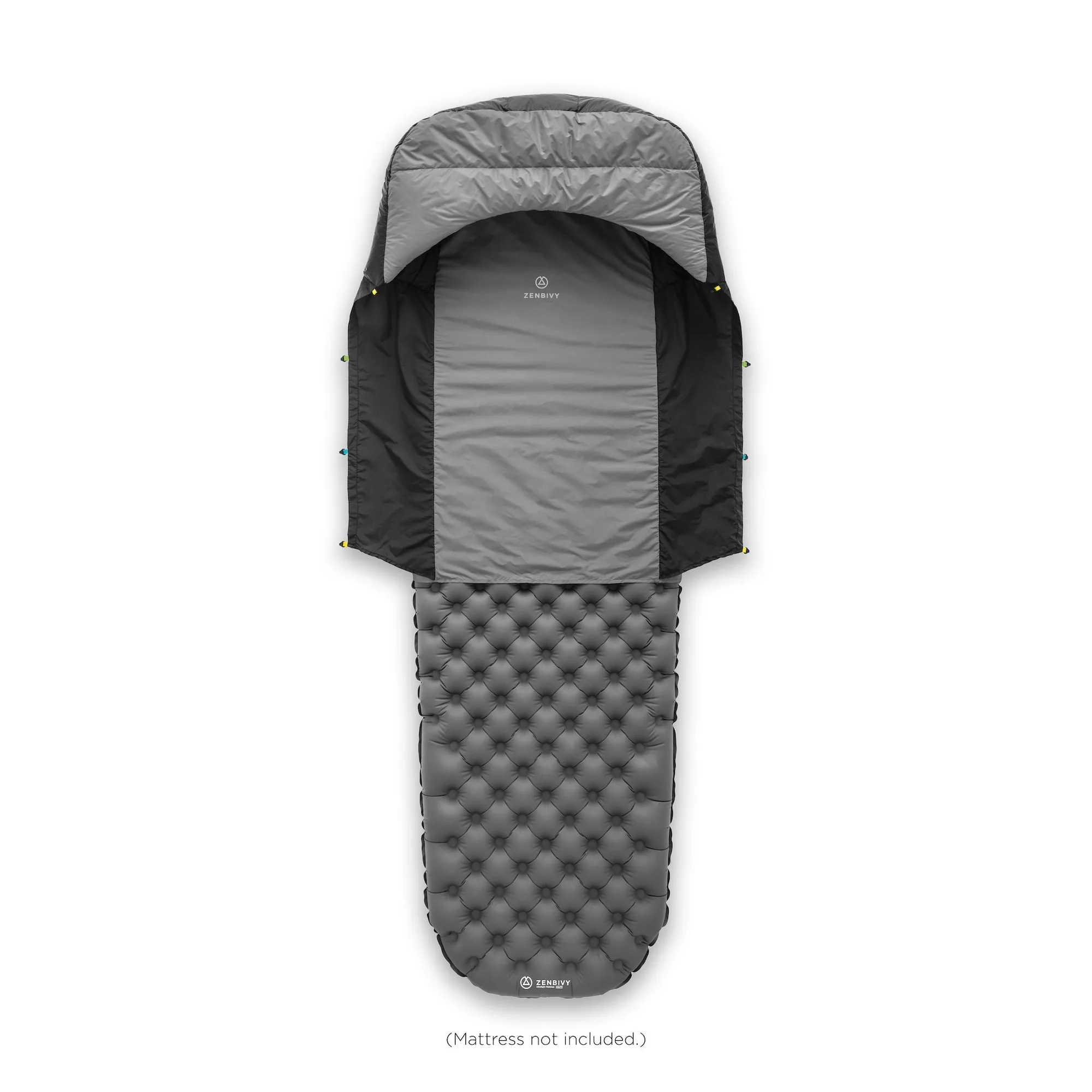
Next, add your sheet. A sheet gives the quilt something to clip or tuck into and keeps your skin off the pad. The Ultralight Sheet is designed to block drafts, insulate your head, and manage your pillow, which matters more with a quilt than with a bag because there is no hood to seal the top.
- Lay the sheet flat and smooth before you get in; wrinkles become cold spots.
- Keep your pillow inside the sheet's pillow pocket if it has one, so it does not slide off the pad.
Choose and Attach the Right Quilt
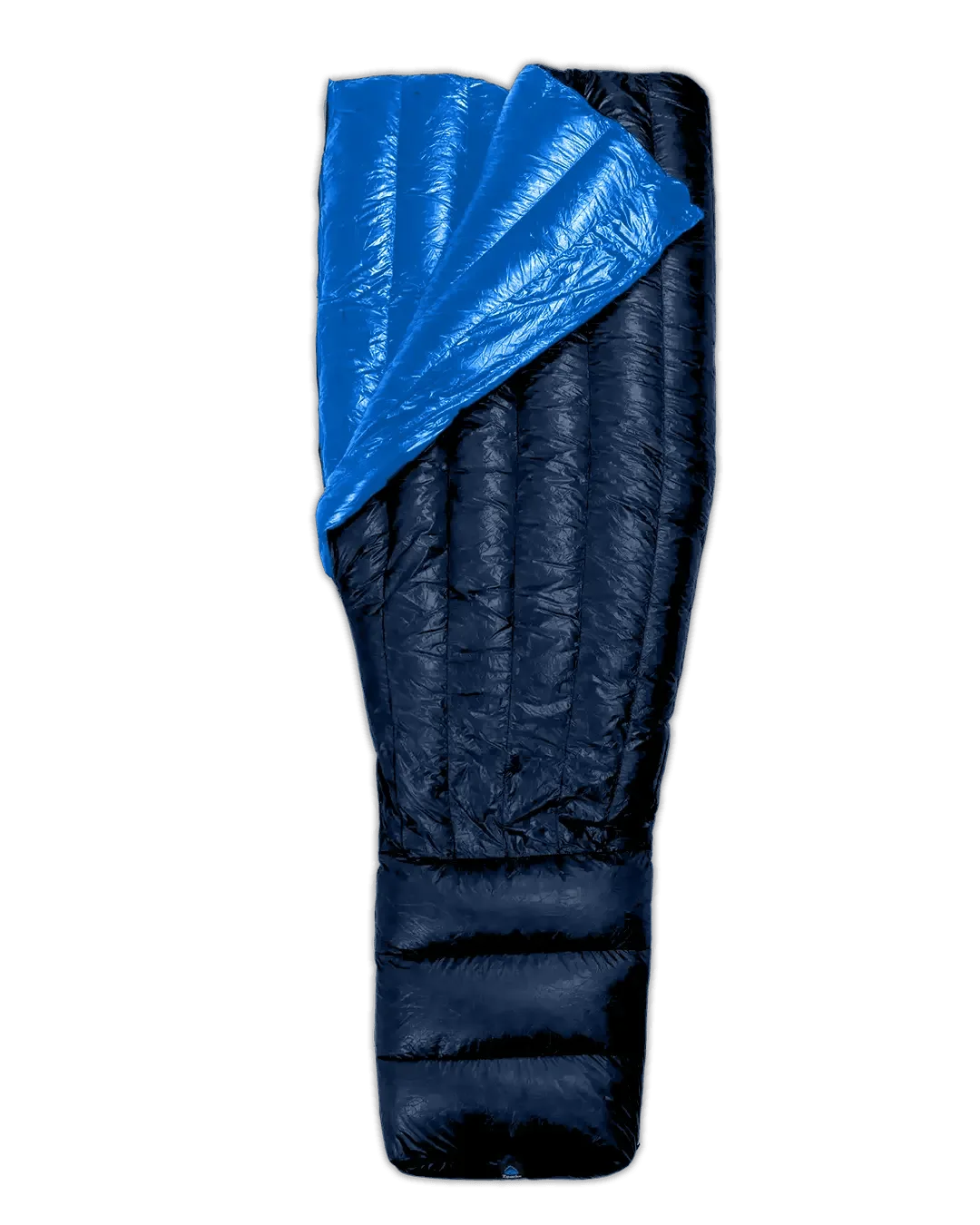
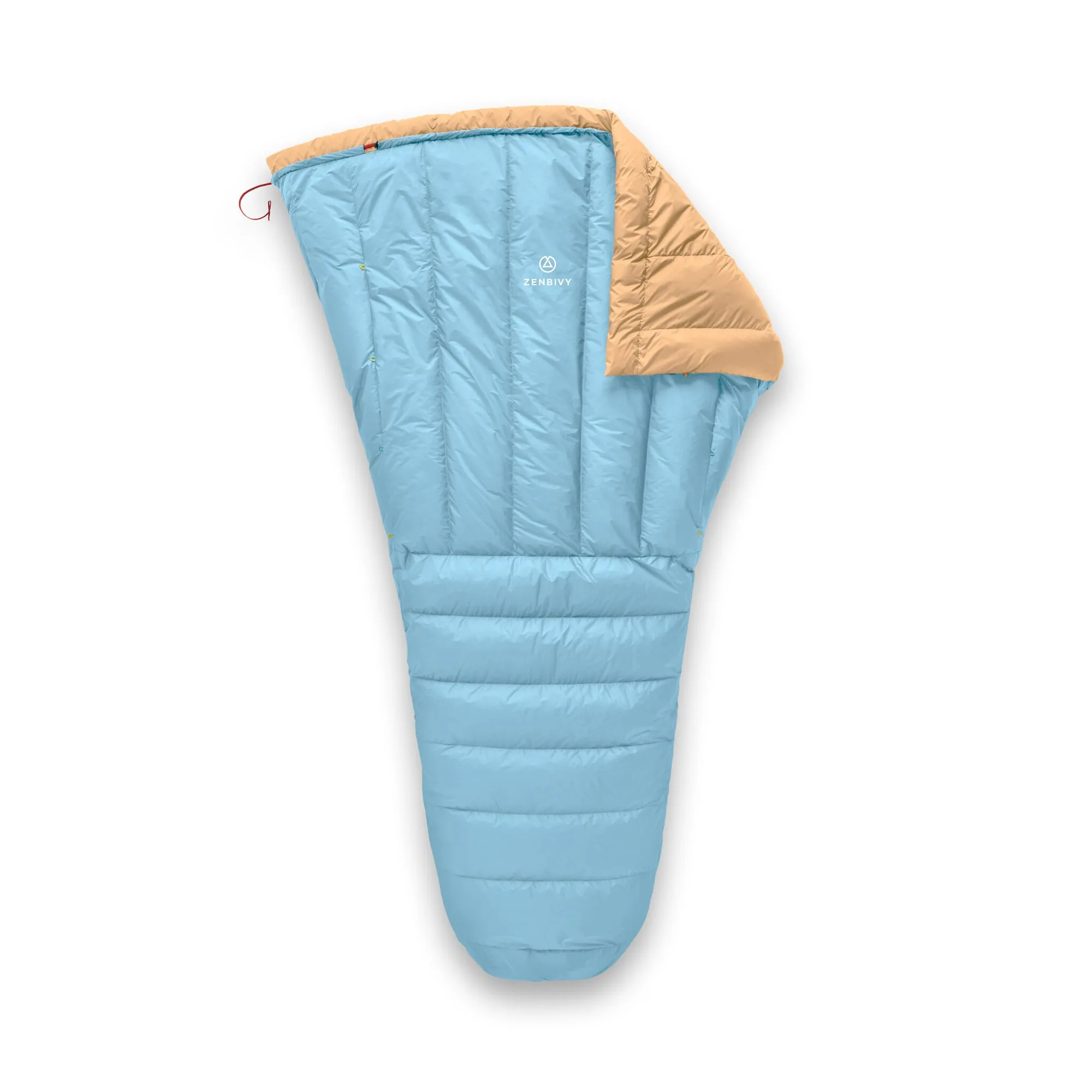
For warm-weather backpacking, a lighter quilt with a fast-adjusting footbox is easier to live with than a heavily insulated one. The Light Quilt uses a 25D Pongee lining and a quick Fast Footbox, so you can open it wide when you are warm and close it down when your feet get cold.
Light Quilt
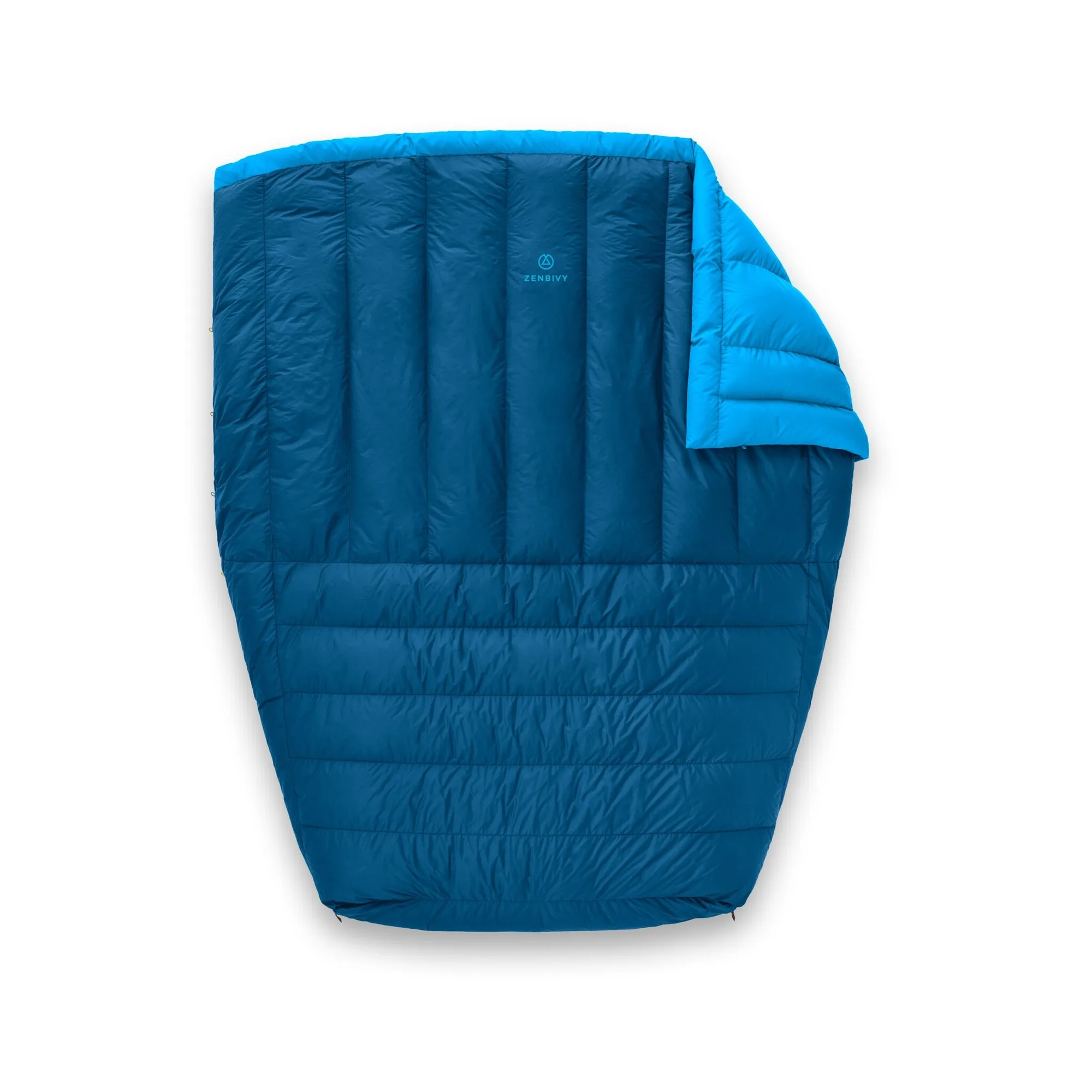
If you are camping with a partner or want more room to move, a double quilt changes the setup. The Core Double Quilt has a soft 50D Pongee lining and pairs with a Zenbivy Double Sheet to make a two-person sleep system, which is useful when one person sleeps warm and the other sleeps cold.
- Match the quilt's temperature and fill option to the low end of your trip forecast, not the daytime high.
- Clip or tuck the quilt to the sheet before you get in, not after you are already lying down.
Adjust the Footbox and Edges as the Night Cools
Start the night with the footbox open and the quilt draped loosely over you. As the temperature drops, close the footbox first, then tuck the side edges under your shoulders and hips. This order keeps your feet warm without sealing in heat you do not need yet.
If you wake up cold, check for gaps before you add layers. Most quilt drafts come from an untucked edge or a pad that has lost firmness, not from the quilt being too thin. Fix the gap first, then decide whether you need more insulation.
- Tuck the quilt edges under you rather than pulling it tight across your chest.
- If your feet are cold but your body is warm, close the footbox before adding a layer.
Manage Moisture and Ventilation
Warm-weather camping often means humid air and a body that sweats. A quilt lets you vent more precisely than a bag: open one side, leave the footbox cracked, or push the quilt down to your waist. That airflow helps keep the inside of your sleep system drier.
If condensation forms on the inside of your shelter, keep the quilt edges from touching the wet walls. A damp quilt loses loft and warmth fast, and it will not recover until it dries.
- Air out your quilt in the morning before you pack it if it feels clammy.
- Keep the quilt off tent walls, especially on still, humid nights.
Car Camping and Basecamp Variations
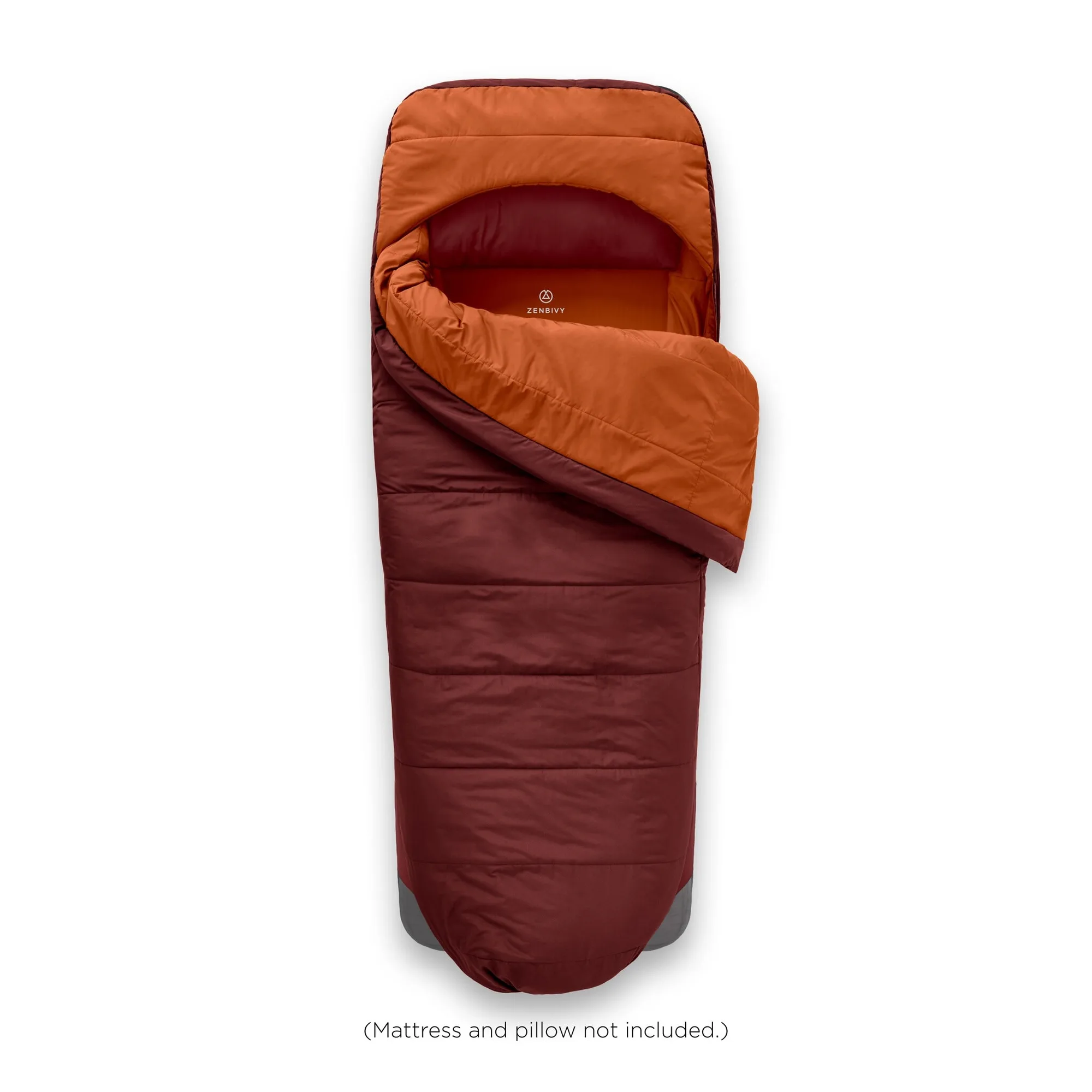
The same principles apply when you are not carrying your gear. A convertible quilt such as the Overland ZipBed is built for car camping, with wide, fully rectangular coverage and a universal-fit sheet that adapts to most car camping mattresses. It uses 650FP down and DWR-free fabrics, so it favors softness and room to move over packability.
If you are building a full bed for a vehicle or basecamp, a bundle can simplify the decision. The Build a Zip Bed Bundle is one option, though the catalog does not list its individual components, so check what is included before you buy.
- Car camping quilts can be heavier and roomier because you are not carrying them.
- Confirm what a bundle includes rather than assuming it matches a quilt you already own.
Warm-Weather Quilt Setup: Step by Step
- 1. Inflate and test your pad: Inflate the pad fully, then press a knee into it to check firmness. A soft pad lets your hips sink and opens side gaps that a quilt cannot seal. Checkpoint: if the pad feels spongy, add air before you lay anything else down.
- 2. Lay the sheet and smooth it out: Put your sheet on the pad and flatten every wrinkle. If it has a pillow pocket, put your pillow in it now so it does not slide off in the night. Common mistake: skipping the sheet and relying on quilt straps, which constricts and still leaves drafts.
- 3. Attach the quilt to the sheet: Clip or tuck the quilt to the sheet before you get in. Start with the footbox open and the quilt draped loosely over the pad. Checkpoint: the quilt should lie flat with no twisted edges before you climb in.
- 4. Start warm, then adjust down: Begin with less coverage than you think you need. As you cool off, close the footbox first, then tuck the side edges under your shoulders and hips. Common mistake: sealing the quilt tight at bedtime and waking up sweaty an hour later.
- 5. Fix gaps before adding layers: If you wake up cold, feel along your sides and neck for drafts. Re-tuck the quilt edges and check pad firmness before you reach for another layer. Most warm-weather quilt chills come from a gap, not from too little insulation.
- 6. Vent and dry in the morning: Shake out the quilt and let it air before packing. If the inside of your shelter was damp, keep the quilt away from the walls overnight. Checkpoint: a dry quilt lofts better the next night.
Products That Make a Quilt Setup Work
- Ultralight Sheet: The Ultralight Sheet is the lightest way to block all drafts, eliminate all constriction, insulate your head, and manage your pillow, and it is compatible with any Zenbivy clip quilt. A sheet is the piece that turns a loose quilt into a draft-free system, especially around your head and shoulders where a quilt has no hood.
- Light Quilt: The Zenbivy Light Quilt features an ultra-soft, lightweight 25D Pongee lining and a quick Fast Footbox for easy, adjustable warmth, and pairs with a Light Sheet. The Fast Footbox lets you open or close warmth at your feet without getting out of bed, which is exactly what warm-weather nights demand.
- Core Double Quilt: The Zenbivy Core Double Quilt features a soft 50D Pongee lining and a spacious design, and pairs with any Zenbivy Double Sheet for a camp sleep system for two. A double quilt is a practical choice when two sleepers want different warmth levels, since each person can vent or tuck their side independently.
- Overland ZipBed: The Zenbivy Overland ZipBed is optimized for car camping with soft 50D Pongee fabrics, a wide, fully rectangular zippered convertible quilt, a universal-fit sheet, and 650FP down with DWR-free fabrics. If you are not carrying your sleep system, the extra room and softness matter more than pack size, and the universal-fit sheet simplifies matching it to a car camping mattress.
A quilt is not a compromise in warm weather; it is the more flexible tool once your pad and sheet are set up correctly. Start with the footbox open, tuck edges as the night cools, and fix gaps before you add insulation. If you want a draft-free system without straps, pair a quilt with a sheet such as the Ultralight Sheet and adjust from there.