Quick Answer
For most three-season backpackers who sleep on their back or stomach and want to cut pack weight, a quilt is the better choice. Choose a sleeping bag instead if you sleep on your side, move a lot, or camp in wet, drafty conditions where a full enclosure matters more than grams. Couples who backpack together should look at a double quilt system to share warmth without buying two separate bags.
The sleeping bag vs quilt debate usually starts with weight, but that is only half the story. A quilt removes the material and insulation underneath you because your sleeping pad already handles that job. That saves bulk and lets you move more freely. The trade-off is that quilts depend on a good pad and careful strap setup to avoid drafts.
This comparison sticks to the facts we can verify from our own catalog. We will look at how a quilt vs sleeping bag backpacking setup actually differs in warmth, weight, and coverage, then match two real quilts and a mattress sheet to the trips they suit. By the end you should know whether a quilt or a bag belongs in your pack.
How a Quilt and a Bag Handle Warmth Differently
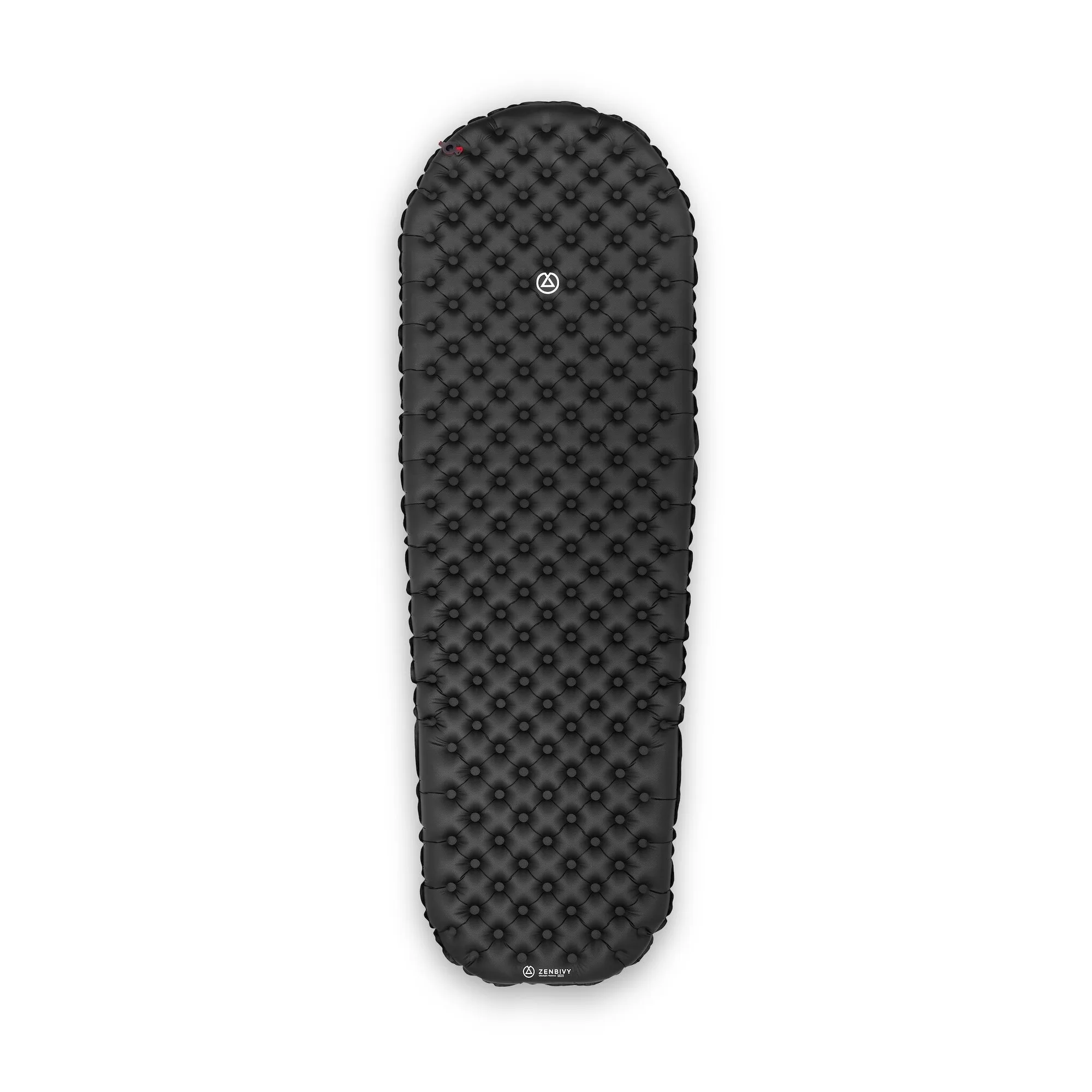
A sleeping bag wraps insulation around your entire body, including the bottom that gets compressed under your weight. A quilt skips that compressed bottom layer and relies on your pad for insulation from below. That is why quilt vs bag weight comparisons often favor quilts: you are not carrying insulation that does nothing. The catch is that a quilt has open edges, so drafts can sneak in if you roll around or if the quilt is not attached to your pad.
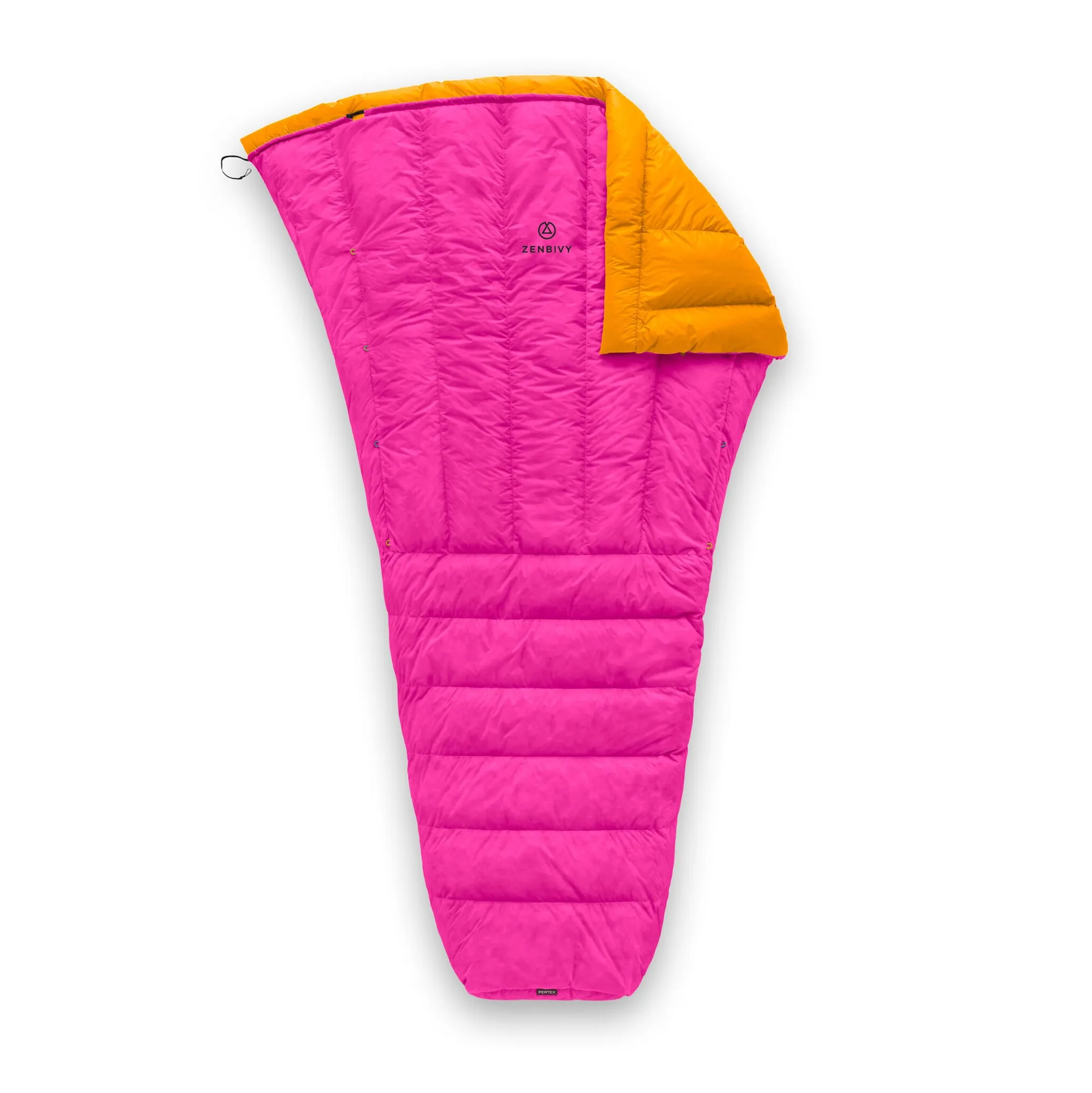
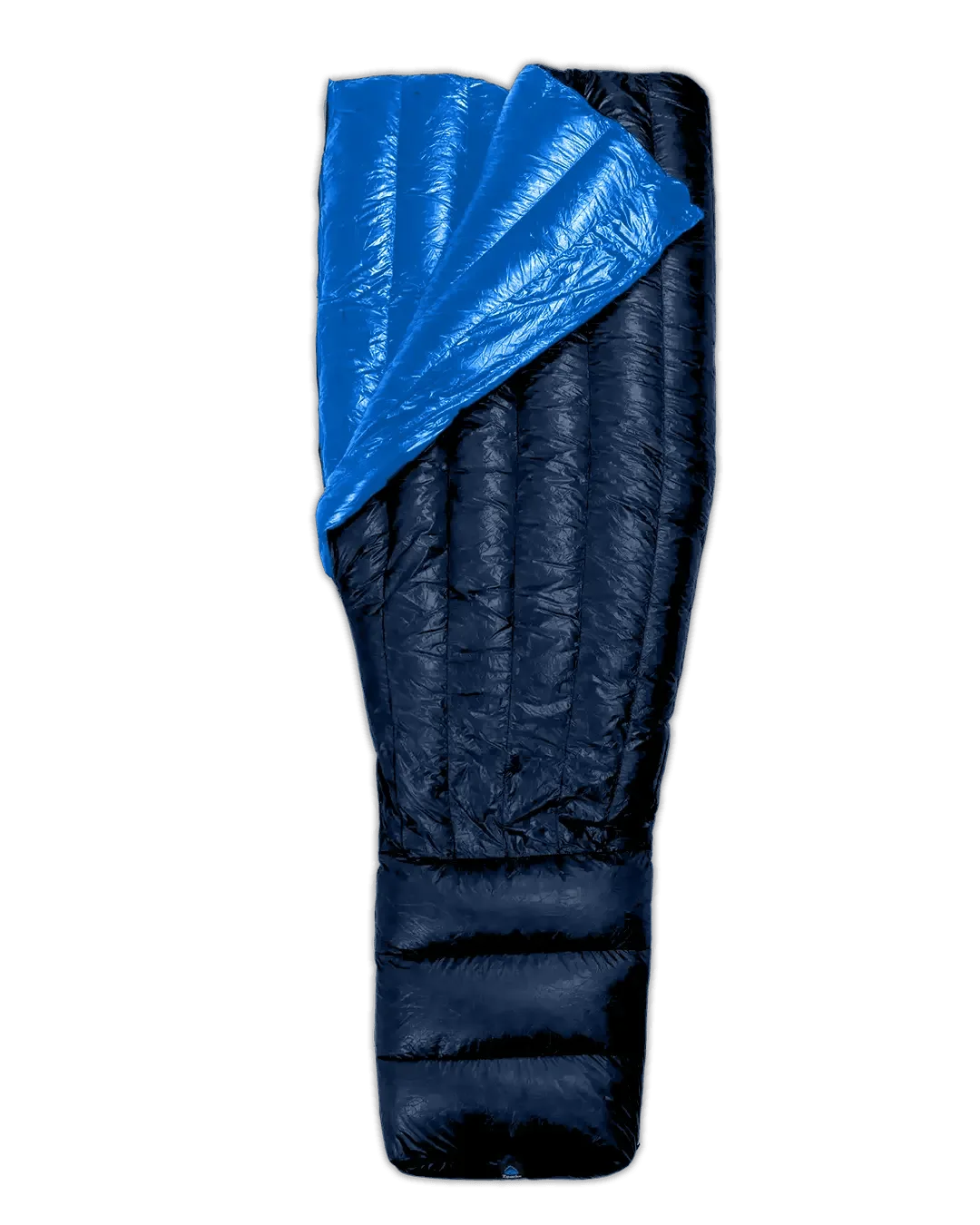
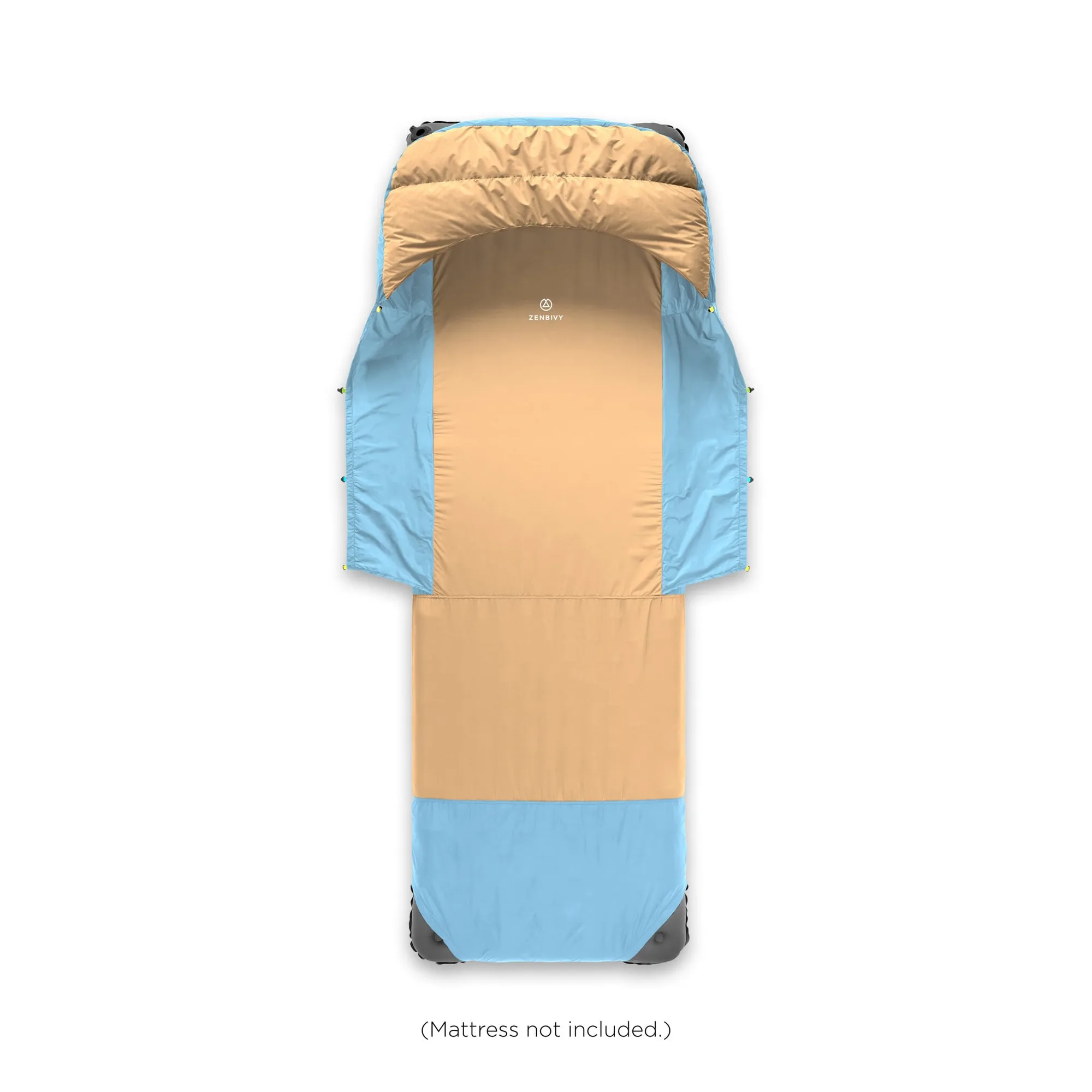
The Ultralight Quilt is built for ultralight backpackers and is our lightest and most packable option while keeping the key comfort features and patented tech. It comes in multiple rating and fill options, so you can match warmth to your season. If you want full mattress coverage and draft protection, the Light Sheet pairs with any Zenbivy clip quilt and adds an insulated hood for cold nights.
Light Sheet
- Match your quilt rating to the lowest temperature you expect, not the average.
- Use a pad with an adequate R-value; a quilt cannot compensate for a cold pad.
Weight and Packability: Where Quilts Pull Ahead
Quilts generally win on packed size because they leave out the bottom insulation and often use lighter fabrics. The Ultralight Quilt is described as our lightest and most packable, which makes it a strong pick for long-distance hikers counting every ounce. A traditional bag with a full zipper and hood will usually weigh more for the same temperature rating, though it offers more built-in coverage.
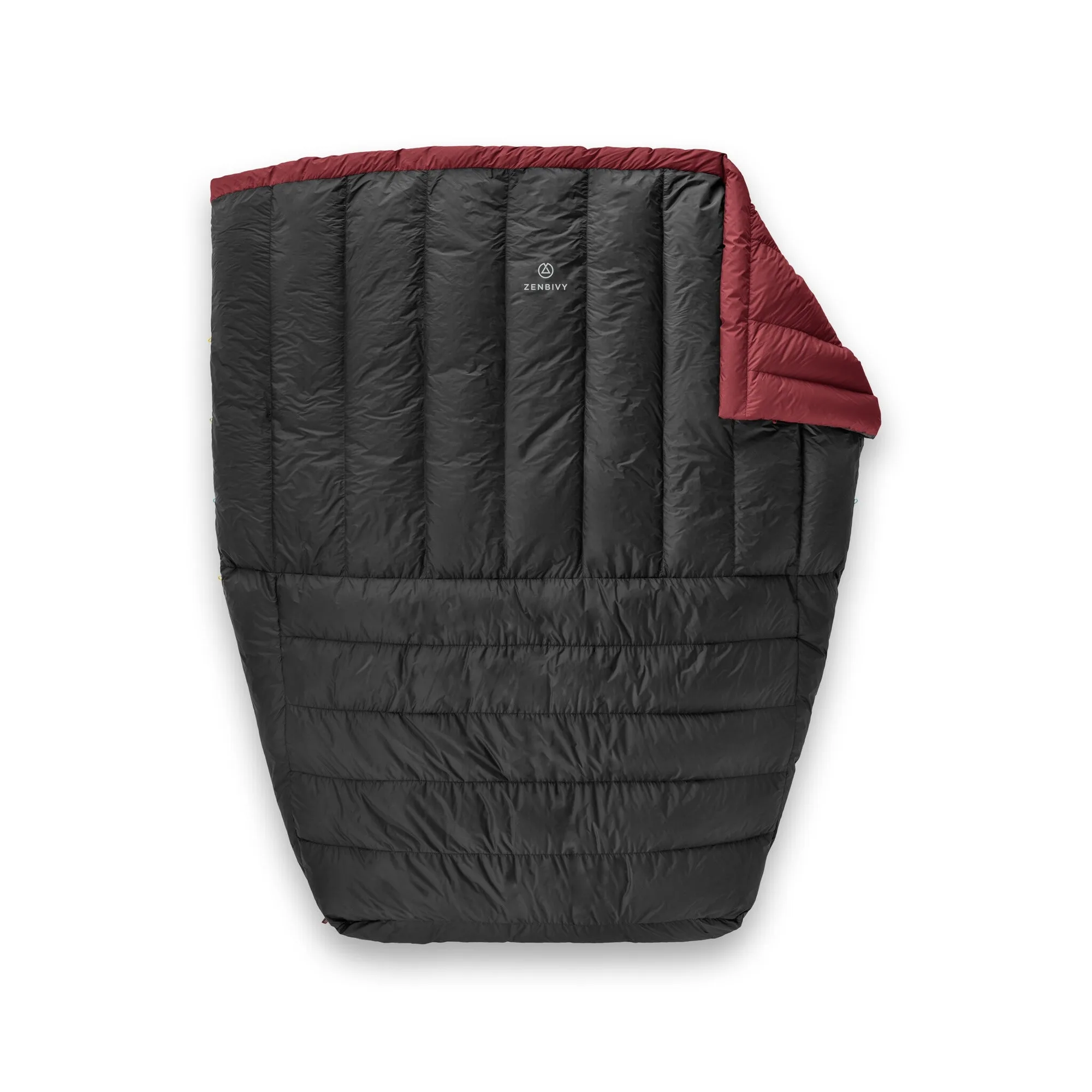
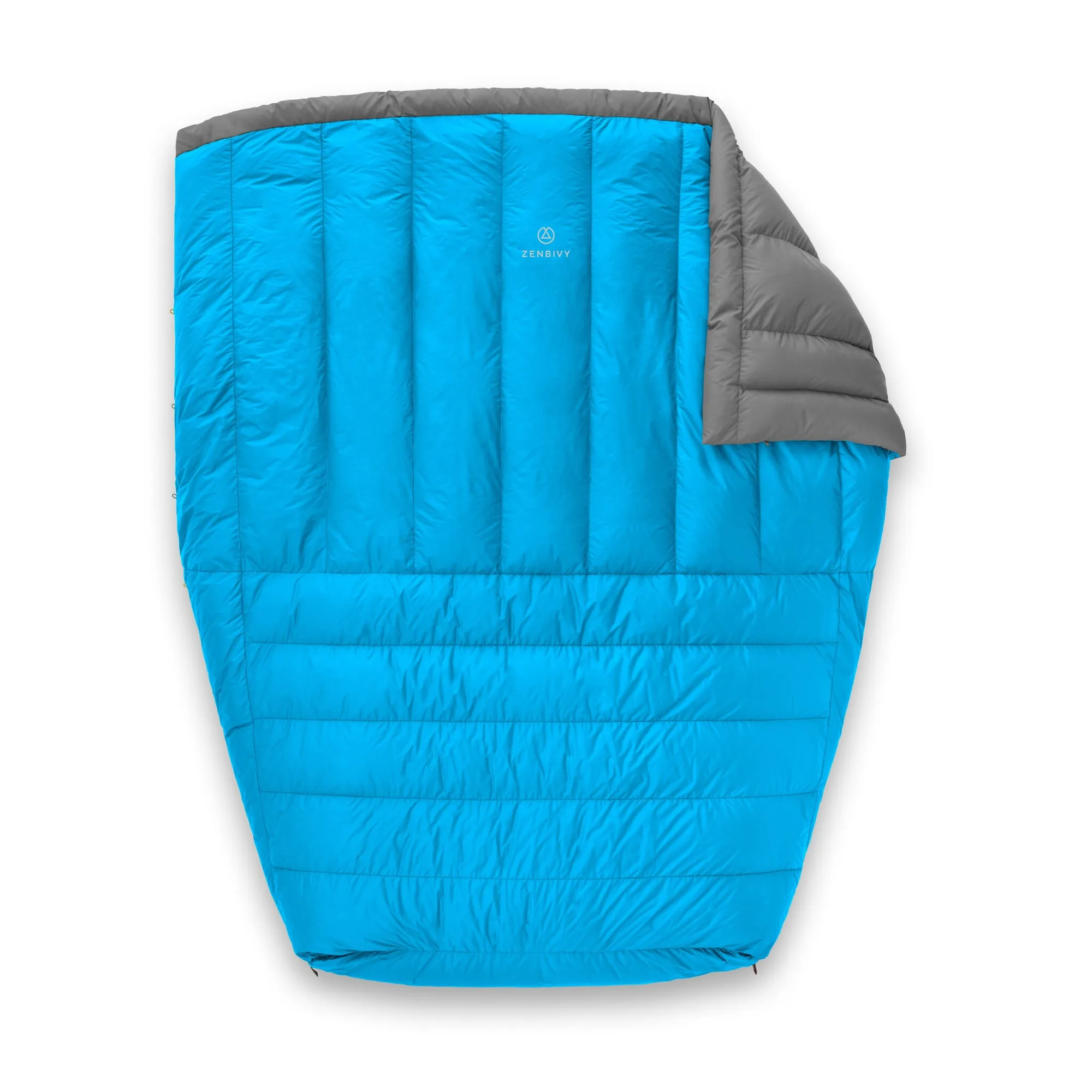
If you backpack as a couple, the math changes. Two separate bags mean two shells, two stuff sacks, and two sets of straps. The Overland Double Quilt is an oversized double quilt designed to let couples sleep together as comfortably as at home, with room to move without cold spots. For backpacking couples who want a complete system, the Light Double Bed Bundle includes a Light Double Quilt, a Light Double Sheet, two Flex Air Mattresses with inflation sacks, and two modular pillows.
- Weigh your pad, quilt, and straps together before comparing to a bag.
- Couples can often save total weight with one double quilt instead of two bags.
Drafts, Movement, and Sleep Position
The biggest practical difference is how each system handles movement. A bag keeps you enclosed no matter how you turn, which suits side sleepers and restless sleepers. A quilt rewards back and stomach sleepers who stay put, but it can gap at the edges if you toss and turn. The Light Sheet helps here by providing full mattress coverage, blocking drafts, eliminating constriction, and keeping your pillow in place.
Setup matters as much as the quilt itself. Clip systems and straps keep the quilt attached to your pad so it moves with you rather than sliding off. The Ultralight Quilt keeps the key comfort features and patented tech, which is why it works well for ultralight hikers who still want a secure fit. If you regularly camp in exposed, windy spots, plan to dial in your strap tension before you rely on a quilt.
- Side sleepers should test a quilt with a sheet before committing.
- Always clip or strap your quilt to the pad to reduce draft gaps.
Trade-Offs: Quilt vs Bag at a Glance
- Weight and pack size: A quilt usually weighs less and packs smaller because it omits bottom insulation. The Ultralight Quilt is our lightest and most packable option. A comparable bag adds a full shell, zipper, and hood. Choose a quilt if grams and liters drive your decisions.
- Draft protection and coverage: A bag encloses you completely, which helps in wind and cold. A quilt can gap at the edges unless you clip it to your pad. Adding the Light Sheet provides full mattress coverage and blocks drafts. Choose a bag for exposed, drafty campsites; choose a quilt plus sheet for most three-season trips.
- Sleep position and movement: Side sleepers and restless sleepers often prefer a bag because it stays wrapped around them. Back and stomach sleepers who stay put get the most from a quilt's freedom of movement. Match the system to how you actually sleep, not to the spec sheet.
- Couples and shared sleep: Two bags mean two of everything. The Overland Double Quilt is an oversized double quilt that lets both sleepers move without cold spots, and the Light Double Bed Bundle packages a double quilt, sheet, two mattresses, and two pillows together. Couples can simplify and often save weight with one double quilt system.
Catalog Facts That Matter
- Ultralight Quilt: Built for ultralight backpackers, the premium Ultralight Quilt is our lightest and most packable while keeping all the key Zenbivy comfort features and patented tech. Best for long-distance hikers who prioritize low pack weight and still want a secure, comfortable quilt.
- Overland Double Quilt: The Zenbivy Overland Double Quilt is the most comfortable double quilt we've ever built, designed to let couples sleep together outdoors just as comfortably as they do at home. Its oversized shape functions like a real comforter, giving both sleepers room to move without cold spots. Built entirely with our legendary soft 50D Pongee fabrics, it's luxuriously comfortable and ideal for car camping, vanlife. Best for couples and car campers who want shared warmth and room to move, not two separate bags.
- Light Sheet: The Zenbivy Light Sheet features an ultra-soft 25D Pongee lining and provides full mattress coverage for maximum comfort. It blocks drafts, eliminates constriction, and keeps your pillow securely in place throughout the night. On cold nights, keep your head warm under the sheet's insulated hood. Available in down and synthetic. Compatible with any Zenbivy clip quilt. Turns a quilt into a draft-resistant system and adds an insulated hood for cold nights.
- Light Double Bed Bundle: A complete double sleep system for backpacking couples who want to sleep just as comfortably together in the backcountry as they do in their bed at home. This all-in-one complete bed bundle includes a Light Double Quilt, a Light Double Sheet, (2) Flex Air Mattresses with included inflation storage sacks, (2) 3-piece modular SoftTop Pillows for maximum comfort, and a Dry Sack with Compression Caps to keep everything. A single purchase that covers the whole couple's sleep system, so you are not piecing together quilts, pads, and pillows separately.
Which Should You Choose?
Best for a quilt if you:
- Backpack long distances and want the lightest, most packable option, like the Ultralight Quilt.
- Sleep on your back or stomach and do not thrash around at night.
- Camp as a couple and want shared warmth from a double quilt such as the Overland Double Quilt or the Light Double Bed Bundle.
- Want to add draft protection and an insulated hood with the Light Sheet.
Choose a sleeping bag instead if you:
- Sleep on your side or move constantly and need full enclosure.
- Camp in very windy, exposed, or wet conditions where drafts are hard to manage.
- Prefer a hooded, zippered system you can cinch tight without extra pieces.
- Do not want to manage straps, clips, or a separate sheet.
There is no universal winner in the sleeping bag vs quilt question, only a better match for your body and your trips. If you want to cut weight and sleep freely, start with the Ultralight Quilt and add the Light Sheet for draft protection. If you backpack as a couple, the Overland Double Quilt or the Light Double Bed Bundle removes the two-bag hassle. Pick the system that fits how you actually sleep, and you will sleep better for it.