Quick answer
Match your socks to your trousers first, then to your shoes, and treat pattern as a small accent rather than the main event. For most outfits, pick a sock tone one shade darker than your trousers, keep the visible sock line short with cropped or slim cuts, and save bold patterns for occasions where the sock is meant to be noticed.
Socks are the smallest visible part of an outfit and one of the easiest to get wrong. A bright sock under a dark trouser hem, or a thick sock bunching above a low shoe, can pull attention away from everything else you styled on purpose.
The good news is that sock coordination follows a short set of rules. Once you know what to look at first, matching socks to an outfit takes seconds, whether you are dressing for the office, a weekend in trainers or a cold evening indoors.
Start with the trouser, not the shoe
Trousers decide the sock colour because they sit closest to the sock and create the longest visual line. If your trousers are navy, charcoal, beige or black, a sock in a similar or slightly darker tone keeps the leg looking continuous. A sock that contrasts sharply with the trouser breaks that line and becomes the focal point.
This is why a sock colour guide usually starts with neutrals. Black, grey, navy, brown and skin-tone socks cover almost every trouser colour you own. Once you have those basics, adding one or two accent colours is a choice rather than a necessity.
- Checkpoint: hold the sock against the trouser hem in daylight before you commit to the outfit.
- If your trousers are patterned, pick the quietest colour in the pattern for the sock.
Then match the shoe and the amount of sock that shows
Shoes matter most when the sock is visible. With low-cut shoes, trainers or loafers, a short sock or socquette keeps the ankle clean and avoids a bulky line. With boots or covered shoes, the sock is mostly hidden, so warmth and comfort can take priority over colour matching.
The cut of the sock also changes how the outfit reads. A sock that stops below the shoe edge looks deliberate and modern, while a sock that rises above the shoe creates a more classic, covered look. Decide which effect you want before choosing the colour.
- For visible ankles, choose a sock that stays hidden inside the shoe.
- For cold weather, a mi-high sock that covers the ankle slightly adds warmth without bulk.
Use patterned socks as an accent, not a second outfit
Patterned socks styling works best when the pattern echoes something already in the outfit. A stripe that repeats a colour from your shirt, or a small motif that matches your bag or scarf, looks intentional. A pattern that introduces a brand-new colour palette usually looks accidental.
Keep the rest of the outfit calm when the sock is busy. If your trousers, shirt and shoes are all plain, a patterned sock adds personality without competing. If the outfit already has strong prints, choose a plain sock in a matching tone and let the clothing do the talking.
- Rule of one: only one patterned element below the knee at a time.
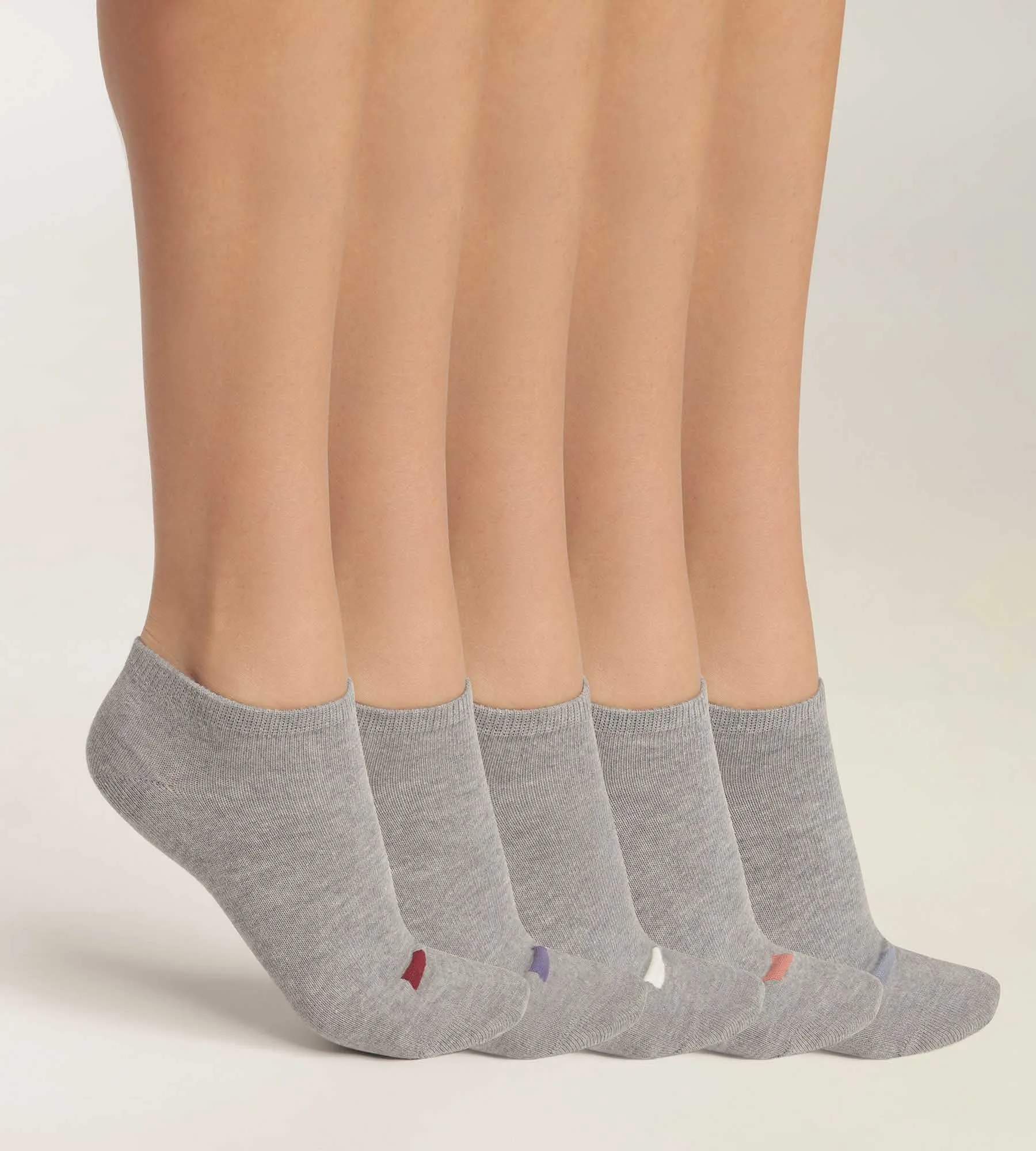
- Colourful markings on the sock can also make pairing and sorting easier at home.
Match the sock to the season and the occasion
Season changes the material and the weight more than the colour. In summer, fine cotton and light tones feel right with lighter trousers and bare ankles. In winter, a warmer sock with a brushed interior keeps feet comfortable, and darker tones hide marks from wet pavements and boots.
Occasion sets the formality. For work or formal settings, plain socks in a trouser-matching tone are the safest choice. For weekends, sport and casual wear, colour and pattern can be more relaxed because the outfit itself is more relaxed.
- Formal: plain, trouser-matched, no visible logo.
- Casual: pattern and colour are welcome as long as one element repeats.
Your five-step sock matching routine
- 1. Identify the trouser tone: Look at the trousers you are wearing and note whether they are dark, light or mid-tone. This is the anchor colour for the sock. Checkpoint: if you cannot name the trouser tone in one word, simplify the outfit before choosing socks.
- 2. Choose a sock one shade darker or the same tone: Pick a sock in the same colour family as the trouser, or one shade darker. This keeps the leg line continuous and avoids a distracting break at the ankle. Common mistake: choosing a sock that is much lighter than the trouser, which draws the eye downward.
- 3. Match the sock cut to the shoe: Use a short or invisible sock with low shoes and trainers. Use a mi-high sock with boots or in cold weather when you want ankle coverage. Checkpoint: look in a mirror from two metres away. If the sock line is the first thing you notice, change the cut.
- 4. Add pattern only if it repeats a colour: If you want a patterned sock, make sure at least one colour in the pattern already appears in your shirt, knitwear or accessories. Common mistake: wearing a patterned sock with a patterned trouser or shoe, which creates visual noise.
- 5. Adjust for season and occasion: Switch to lighter cotton and shorter cuts in warm weather, and to warmer socks with ankle coverage in winter. Keep formal outfits plain and casual outfits freer. Final check: your socks should support the outfit, not compete with it.
DIM socks that make matching easier
- Lot de 5 paires de socquettes femme en coton Gris Clair EcoDim: Short, invisible-cut cotton-blend socquettes in Gris Clair Chiné with reinforced heels and toes and coloured tags for easy sorting. The neutral grey works with most trousers and trainers, the low cut keeps the ankle clean, and the coloured tags solve the matching-and-sorting problem that builds up with plain socks.
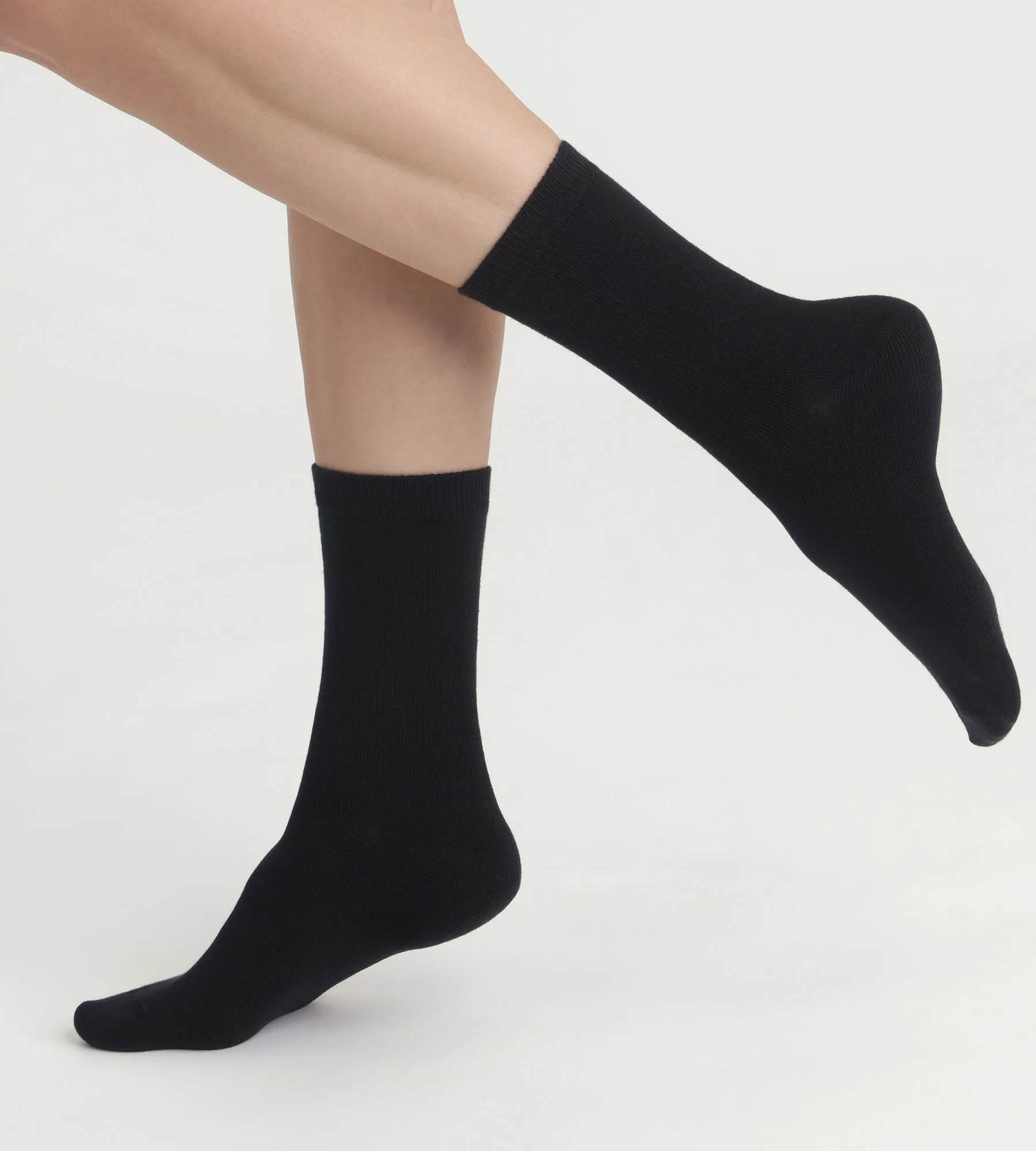
- Lot de 2 paires de chaussettes femme Noir Thermo Polaire: Mi-high cotton socks in black with a fleece interior, flat seams and a shape that covers the ankle slightly. Black is the easiest colour to pair with dark trousers and boots, and the brushed interior adds warmth for cold-weather outfits without changing the visible line.
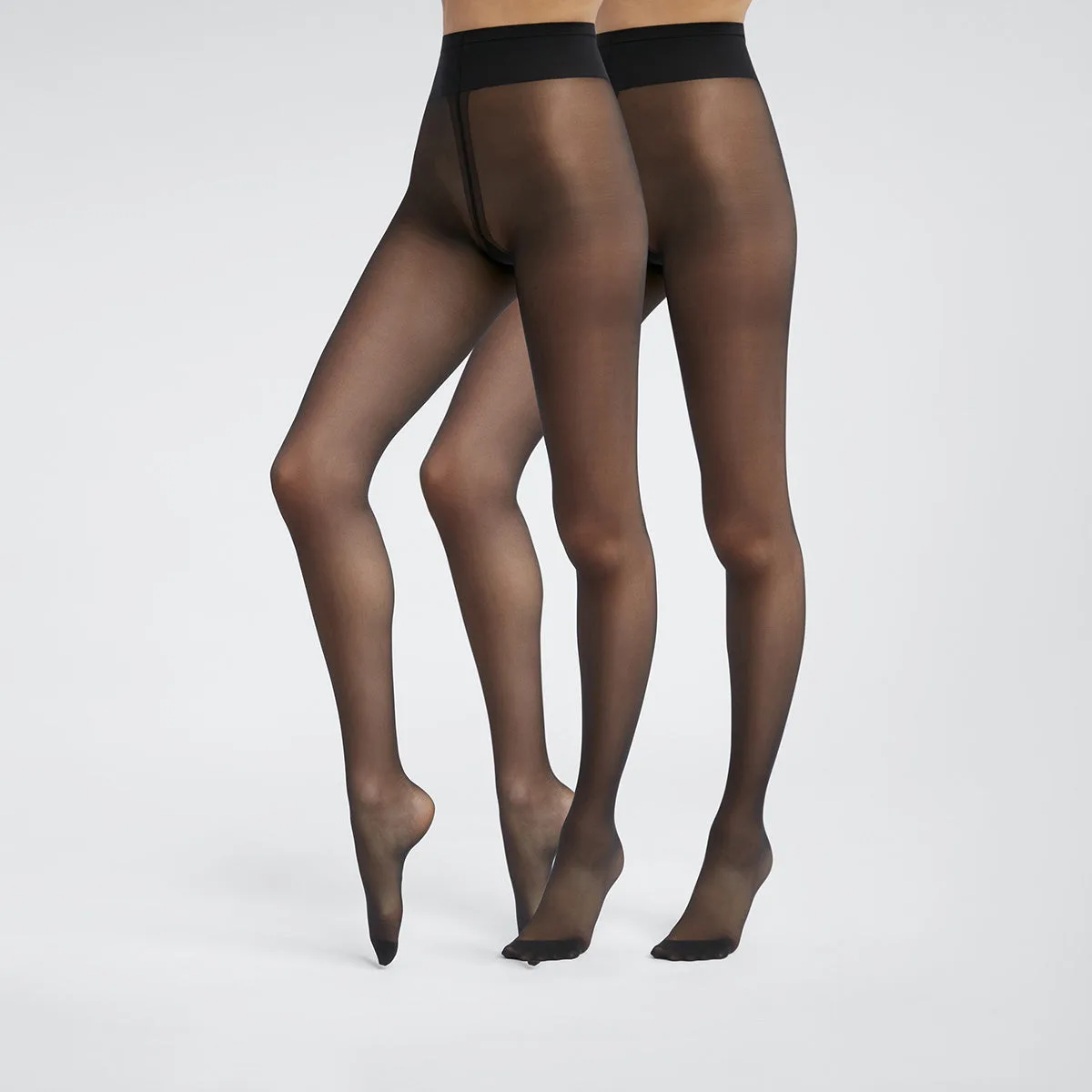
- Lot de 2 collants semi-opaques en Lycra Noir Diam’s Jambes Fuselées: Semi-opaque 25D Lycra tights in black with an invisible elastic waistband and reinforced toes. When the weather calls for tights instead of socks, a semi-opaque black pair follows the same trouser-matching logic and keeps the leg line smooth under skirts and dresses.
Matching socks to an outfit comes down to one habit: start with the trouser, then the shoe, then decide whether pattern is welcome. Keep a small set of neutral socks for everyday wear and one or two patterned pairs for when you want the detail to show. That is enough to make the smallest part of your outfit look intentional.