Quick answer
Focus on the kit's suggested age range, project complexity, and your child's current interests to find a STEAM kit that challenges without frustrating.
Why age labels matter but aren't the whole story
Manufacturer age recommendations give a starting point, but every child develops at a different pace. A kit marked for ages 8+ might be perfect for a curious 7-year-old or too simple for a 9-year-old who loves building. The key is to look at the type of activities: kits with open-ended projects suit creative thinkers, while step-by-step kits work better for kids who prefer clear instructions.
The trade-off between complexity and independence
More complex kits often require adult help, which can be a bonding opportunity or a frustration point depending on your schedule. Simpler kits let kids work alone but may not hold their attention as long. Think about how much time you can spend guiding the activity before you buy.
Decision rules for choosing a STEAM kit by age
- Ages 3-5: Focus on sensory play and basic cause-effect: Look for kits with large pieces, simple color mixing, or magnetism. Avoid small parts and multi-step instructions. Parental guidance is expected.
- Ages 6-8: Introduce guided projects with a clear outcome: Kits that build a specific model or perform a single experiment work well. Kids this age can follow picture-based instructions but may need reading help. Check if the kit requires reading; if so, plan to sit with them.
- Ages 9-12: Choose kits that allow customization and deeper exploration: Look for kits with multiple experiments, open-ended challenges, or real-world applications. Kids can often work independently but may still need occasional adult support for tricky steps. The Brown Toy Box Dadisi Academy Dre/Astronomy STEAM Kit fits this stage with its mix of projects and book-based learning.
- Ages 13+: Prioritize advanced concepts and real tools: Teens benefit from kits that use actual scientific instruments, coding platforms, or engineering components. They can handle longer instruction sets and more abstract ideas. If the kit includes a book or reference material, it can double as a supplement to school subjects.
Product spotlight
-
Brown Toy Box Dadisi Academy Dre/Astronomy STEAM Kit: This Astronomy STEAM Kit includes interactive projects and activities to keep hands busy and minds engaged, plus a book for an academic edge. It balances structured learning with open-ended discovery, making it a good fit for kids who enjoy both reading and hands-on tinkering.
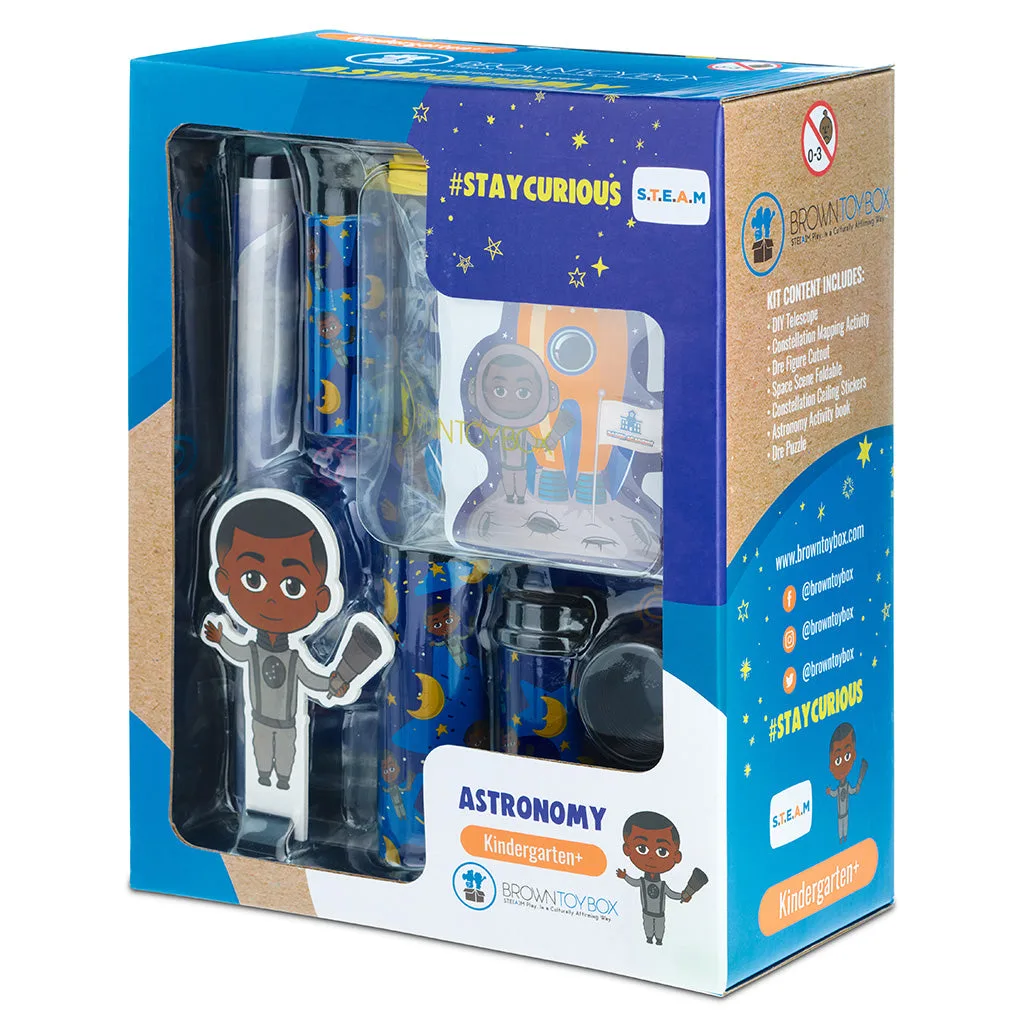
Brown Toy Box Dadisi Academy Dre/Astronomy STEAM Kit
Who this approach works best for
Best for
- Parents who want a structured way to match a kit to their child's developmental stage
- Gift-givers who don't know the child's exact skill level but want a safe bet
Not for
- Families who prefer completely open-ended, child-led exploration without any age-based guidelines
- Kids who already have a strong preference for a specific science topic and would rather choose by subject than by age