Quick answer
Choose a strapless bra by band fit first, not cup size. A snug, level band does most of the holding; cups only shape. If your band rides up when you lift your arms, size down in the band or pick a style with a wider underband. A wire-free triangle bra works well for small to medium busts and short wear; a minimizer with side support suits fuller busts or longer events.
Why strapless bras slip (and what to check first)
A strapless bra stays up through band tension and skin friction, not straps. If the band is too loose, the bra slides down when you move. If the band is tight but the cups are too shallow, the bra pushes away from your ribs and gaps. Start by fastening the band on the loosest hook and checking that it sits level all the way around, not angled up at the back. You should be able to slide two fingers under the band, no more. Then bend forward and scoop your breast tissue into the cups; if any tissue spills over the top or under the arm, the cup is too small. For a full fit walkthrough, see our DIM bra size guide.
Wire-free vs underwire strapless: which holds better
Wire-free strapless bras rely on a wide underband and firm fabric to stay put. They feel lighter and suit smaller busts or shorter wear, but they offer less separation and can shift if the band stretches out. Underwire strapless bras add structure and side support, which helps fuller busts stay lifted, but the wires must sit flat against your ribcage without digging. Neither is universally better: if you hate the feel of wires, a well-fitted wire-free style can work for a few hours; if you need all-day hold, an underwire with side panels is usually more reliable.
Fabric, padding, and grip: what actually helps
Smooth, lightweight fabrics slide against skin more easily than textured or cotton-blend fabrics. If you have slippery skin or a silky dress, look for a bra with a silicone strip along the inside of the band, or choose a style with a slightly firmer underband. Molded cups keep their shape but can gap if they do not match your breast shape; unlined cups adapt better but show nipple outline. Padding adds volume but also weight, which can pull a loose band down. There is no universal grip guarantee: fit matters more than any single feature.
How to test a strapless bra before you commit
Wear the bra for 10 minutes at home with the tags on. Raise your arms overhead, bend forward, and twist your torso. If the band stays level and the cups stay in contact with your chest, it is likely to stay put. If the band rolls or the center panel lifts away, try a smaller band size or a different style. Also check the closure: a back clasp lets you adjust tension, while a pull-on bandeau has no adjustment and must fit correctly from the start.
Decision rules for a strapless bra that stays put
- Band first, cup second: Fasten on the loosest hook. The band must sit level and snug; if it rides up when you raise your arms, size down in the band before changing cup size. A loose band is the most common reason a strapless bra slips.
- Match support to bust size and wear time: Small to medium busts and events under 4 hours: a wire-free triangle or bandeau can work. Fuller busts or all-day wear: choose underwire with side panels for lift and separation. If you need hold for more than a few hours, prioritize structure over lightness.
- Check the underband width and grip: A wider underband distributes pressure and grips better. If your dress fabric is silky, look for a silicone strip or a firmer band; cotton-modal blends are soft but can slide more. Fabric and band width change how often you need to tug the bra back up.
- Test before removing tags: Wear the bra for 10 minutes. Raise arms, bend forward, twist. If the band rolls or the center lifts, return it and try a different size or style. A bra that passes this test at home is far more likely to stay put at your event.
DIM options that match these rules
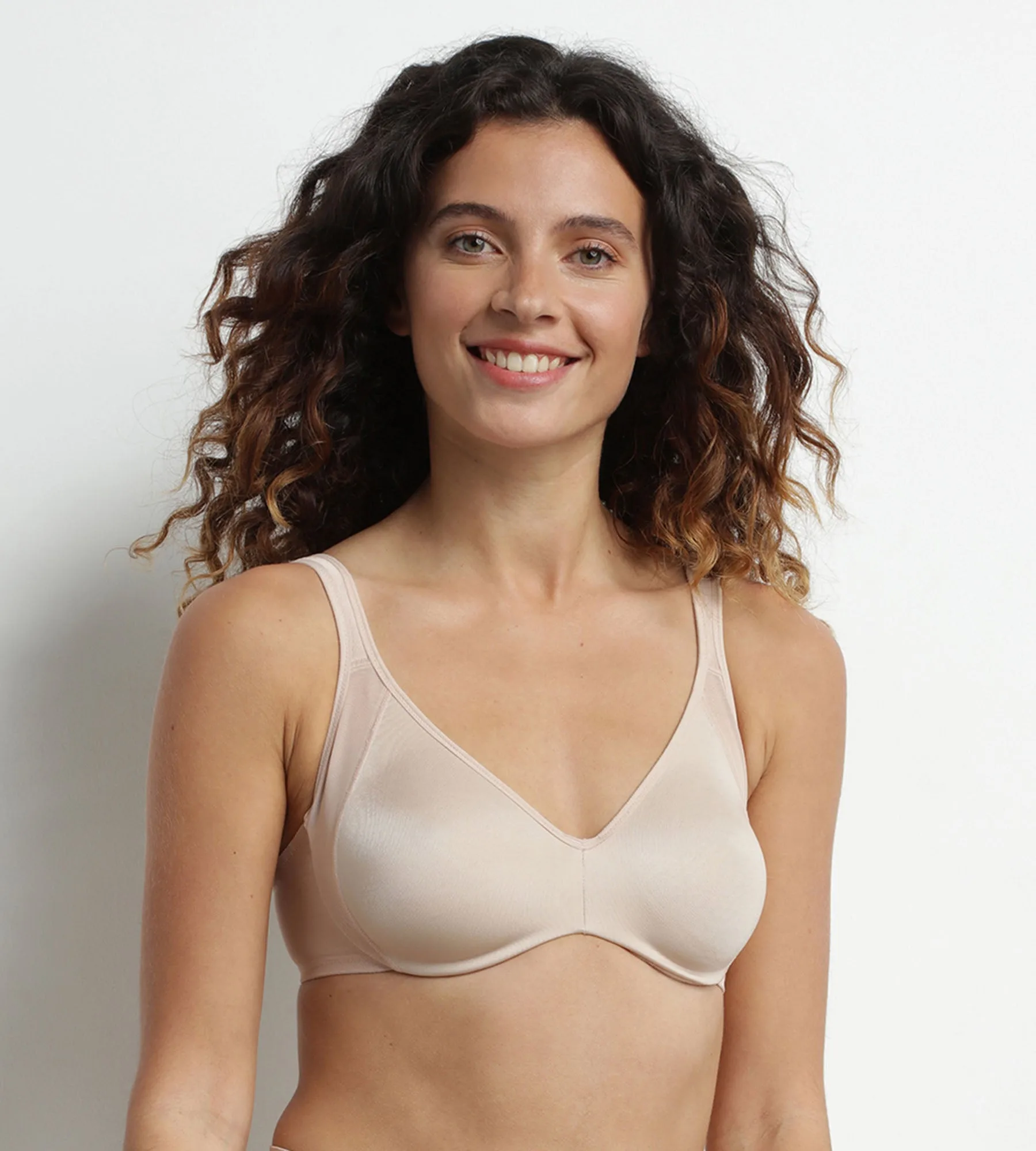
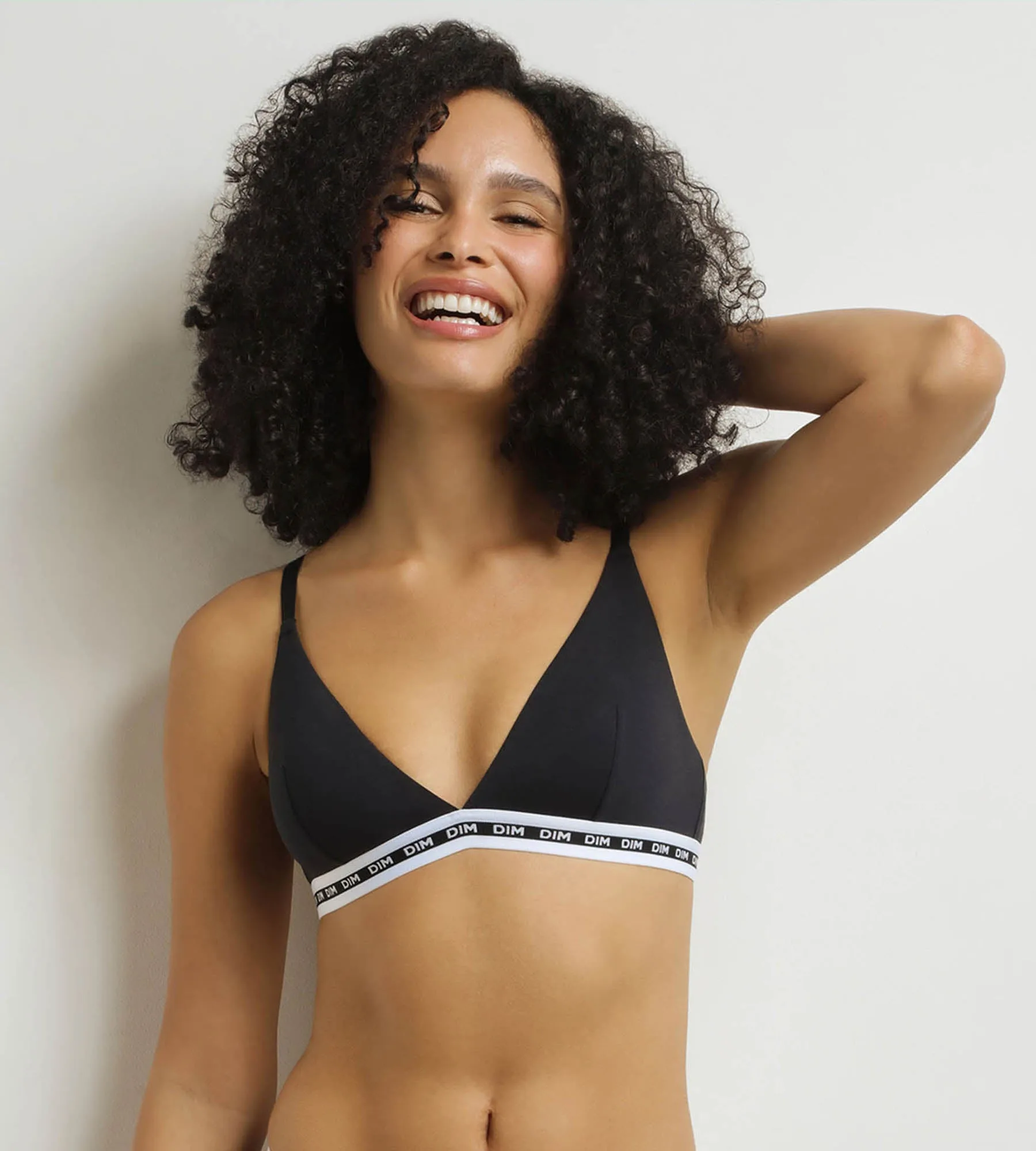
- Soutien-gorge triangle femme sans armature Noir Dim Icons: Wire-free triangle bra in cotton modal with a Dim-elastic underband. The soft, breathable fabric and wire-free cut suit small to medium busts and short wear, but the triangle shape offers less side support than a structured bra.
- Soutien-gorge minimiseur new skin Femme Generous Minimizer: Underwired, non-padded minimizer with side panels that redistribute volume. The side support and covering shape help fuller busts stay lifted and reduce projection, making it a stronger choice for all-day strapless wear.
- Soutien-gorge de sport en microfibre sculptante Écru Dim Move: Wire-free sports bra in quick-dry microfiber with molded cups and adjustable straps. This is not a strapless bra, but its snug band and flat edges show how a wide, smooth underband can hold without wires; use it for active days when you can wear straps.
Who should choose which strapless style
Best for
- Small to medium busts wanting a light, wire-free option for short wear
- Fuller busts or long events needing underwire and side support
- Anyone whose band currently rides up and needs a smaller band size
Not for
- Fuller busts wanting all-day hold from a wire-free triangle bra
- People who cannot wear a snug band for comfort reasons
- Those who need a strapless bra for high-impact activity