Quick answer
Measure your erect girth with a flexible tape, then match that number to a condom's nominal width, not its marketing label. If you measure 4.7 to 5.1 inches around, start with a standard condom; under 4.7 inches, try a snugger fit; over 5.1 inches, move to a large condom such as Trojan Magnum Bareskin or Trustex Extra Large. Length matters less than width because a condom that is too tight breaks and one that is too loose slips off.
Measure width, not length
Condom sizing is driven by girth, not length. Wrap a flexible measuring tape around the thickest part of your erect penis, usually the mid-shaft or base, and write down the circumference in inches. If you do not have a tape, use a strip of paper, mark where it overlaps, and measure that against a ruler. Do this twice on different days so you are not sizing off one outlier measurement.
Once you have your circumference, convert it to the nominal width printed on condom boxes. Nominal width is roughly half the stretched circumference, so a 4.7-inch girth points to about a 53 mm nominal width, while a 5.5-inch girth points closer to a 60 mm or wider. This is the single number that tells you whether a condom will actually fit, regardless of whether the box says regular, large, or magnum.
- Measure erect, not flaccid, because girth changes significantly.
- Use a flexible tape or paper strip, not a rigid ruler, for circumference.
- Write down both your circumference and the matching nominal width before shopping.
Read a condom fit chart like a filter, not a verdict
A condom fit chart narrows the field; it does not pick the winner for you. Start with the nominal width range that matches your measurement, then filter by shape, material, and lubricant. A straight-walled condom feels different from a contoured one, and a tapered base changes how secure the fit feels during use. If your measurement falls on the border between two ranges, try one condom from each range rather than buying a full box of either.
Pay attention to how the condom behaves rather than how it looks on the packaging. If it leaves a deep red ring at the base, bunches excessively, or feels tight enough to dull sensation, go up a size. If it wrinkles along the shaft, slides, or feels loose at the base, go down a size. Fit is a two-variable problem: width and base taper.
- Use nominal width as the first filter, then shape and material as the second.
- Borderline measurements deserve a single-condom test of each adjacent size.
- Red rings, bunching, or dulled sensation mean size up; wrinkles or slipping mean size down.
Small condoms vs large condoms: what actually changes
Snugger fit condoms are not just shorter versions of standard condoms. They are narrower, which reduces slippage for people who measure under roughly 4.7 inches in circumference. Large condoms are wider and often longer, which reduces the tightness and breakage risk for people above roughly 5.1 inches. The trade-off is real: a snugger fit improves security but can feel restrictive, while a large condom improves comfort but can slip if you are not actually in that range.
Do not assume large means better. A large condom on a smaller penis is more likely to slip off, and a snug condom on a larger penis is more likely to tear. The right size is the one that stays put without pinching, and that usually means staying within about 10 percent of your measured nominal width.
- Snugger fit condoms reduce slippage for smaller girths.
- Large condoms reduce tightness and breakage for larger girths.
- Staying within roughly 10 percent of your measured nominal width is the practical target.
When to test before committing to a box
If you are switching sizes or brands for the first time, buy a small quantity before committing to a bulk pack. Condom feel varies by brand even at the same nominal width because of latex formulation, lubricant type, and reservoir design. A condom that measures correctly can still feel wrong if the lubricant is too thick or the base taper is too aggressive for your anatomy.
Keep a simple log for the first few tries: size, brand, how it felt during use, and whether it stayed in place. Two or three data points are usually enough to lock in a size. After that, you can buy with confidence and stop treating every purchase as an experiment.
- Buy a small pack first when changing size or brand.
- Log size, brand, feel, and security for the first few uses.
- Two or three consistent results are enough to confirm your size.
Decision rules for picking your size
- Under 4.7 inches girth: Choose a snugger fit condom rather than a standard one. Standard condoms will wrinkle and may slip. Recheck after two uses; if it still slips, confirm your measurement.
- 4.7 to 5.1 inches girth: Start with a standard condom. Only move to large if you get a red ring or persistent tightness at the base. Standard is the default for this range, not a compromise.
- Over 5.1 inches girth: Choose a large condom. If large still feels tight, look for a wider nominal width or a longer large option. Do not force a standard condom; breakage risk rises quickly when width is too small.
- Borderline measurement: Buy one condom from each adjacent size and test both before committing to a box. One test condom is cheaper than a box you cannot use.
Products that match common size decisions
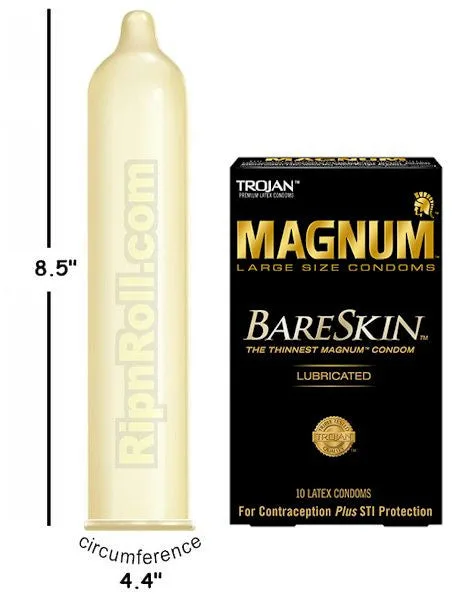
- Trojan Magnum Bareskin Condoms: Trojan Magnum Bareskin is the thinnest Magnum condom, with a wider contoured shape and a tapered base for a secure fit. If you measure above roughly 5.1 inches and want a large condom that does not feel thick or baggy, this is a practical starting point because the taper helps keep the base secure while the thinner latex preserves sensation.
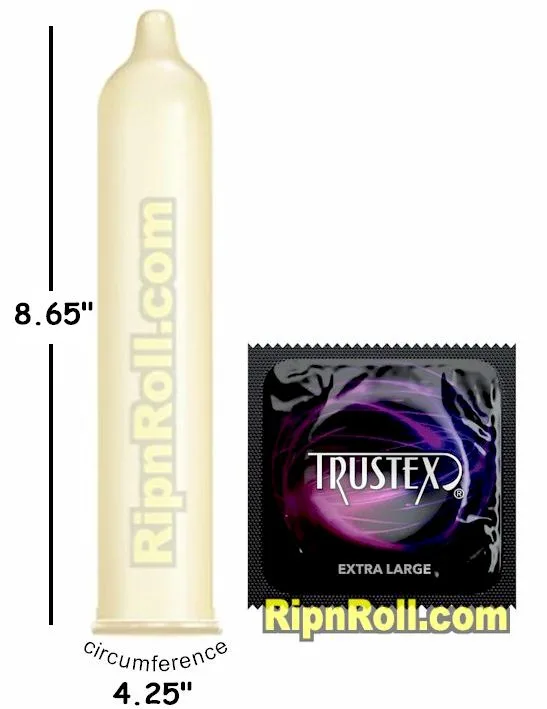
- TRUSTEX EXTRA LARGE CONDOMS: Trustex Extra Large condoms are among the longest condoms carried and are a bit wider than most other larger condoms. If standard large condoms still feel tight or short, this is the next step up in both length and width, which matters for people whose girth and length both exceed standard large sizing.
Who should choose which fit
Best for
- People who measure 4.7 to 5.1 inches in girth and want a standard condom that stays put
- People above 5.1 inches who need a large condom with a tapered base for security
- Anyone switching brands who wants to test one size before buying a full box
Not for
- People under 4.7 inches who should choose a snugger fit condom instead of a standard or large one
- People who have not measured and are guessing based on the word magnum on the box
- Anyone looking for a novelty or flavored condom rather than a fit-focused purchase