Quick answer
Choose a corset by matching the silhouette to your natural proportions rather than chasing a trend. If your waist and hips are close in measurement, a longline or high-apex style with vertical seams flatters most. If you have a defined waist-to-hip ratio, a shorter corset or waist cincher emphasises the curve without fighting it. Always size to your largest measurement and use adjustable lacing or straps to fine-tune the fit.
Start with your waist-to-hip ratio, not your dress size
Corsets are structured garments, so they follow your skeleton and soft tissue rather than a standard clothing size. Measure your natural waist at its narrowest point, then your hips at their fullest. If the difference is under about 20 cm (8 in), you have a straighter silhouette and will get the most flattering line from a longline corset or a high-apex bra-style piece that creates a longer vertical line. If the difference is larger, a shorter corset or a waist cincher can highlight the curve without adding bulk. Never buy a corset based on your usual top size alone.
Match the corset length to your torso
Torso length decides whether a corset sits comfortably or digs in. A longline corset covers from underbust to hip and suits longer torsos, but on a short torso it can pinch when you sit. A standard or underbust corset ends above the hip and is easier to wear for hours. If you are between lengths, choose the shorter option and add a high-waisted brief or suspender for coverage. Check the back length too: a corset that is too long at the back will ride up when you sit down.
Waist cincher vs corset: pick by occasion
A waist cincher is a wide, stretchy band that smooths the midsection and is comfortable for all-day wear, but it does not create dramatic waist reduction. A traditional corset uses rigid boning and lacing to shape the torso and is best for evening or photoshoot wear where you want a strong silhouette. If you want the look of a corset without full rigidity, a structured bodysuit with shaping panels can be a middle ground. Decide how long you need to wear it before you choose the level of structure.
Fabric, boning and closure decide comfort
Look for spiral steel or flexible synthetic boning if you want support with movement; rigid straight boning gives more hold but less give. Mesh and satin panels breathe better than solid latex or PVC, which can feel warm and restrictive. Front busk closures are easier to put on alone, while back lacing gives more adjustability. If you are new to corsets, choose a style with a front closure and adjustable lacing so you can loosen it as the evening goes on.
How to check fit before you commit
Put the corset on over a thin liner and sit, bend and reach overhead. The top edge should not press into your underbust or armpit, and the bottom edge should not dig into your hip bone when seated. You should be able to slide a finger under the top and bottom edges. If the corset gapes at the back or the lacing is fully closed, size down; if the edges dig in or you cannot breathe deeply, size up. A corset that fits well feels snug, not painful.
Decision rules for choosing your corset
- If your waist-to-hip difference is under 20 cm: Choose a longline corset or high-apex bra-style piece with vertical seams to create a longer, leaner line. Avoid short, boxy corsets that cut the torso in half.
- If you have a short torso: Choose an underbust or standard-length corset that ends above the hip, and check the back length when seated. A longline corset will likely dig in when you sit.
- If you want all-day wear: Choose a waist cincher or a lightly boned corset with a front closure and breathable mesh panels. Rigid steel-boned corsets are for short evening wear, not full days.
- If you want dramatic shaping for an event: Choose a rigid corset with spiral steel boning and back lacing, and size to your largest measurement. Have someone help you lace it for the best fit.
Product facts to guide your choice
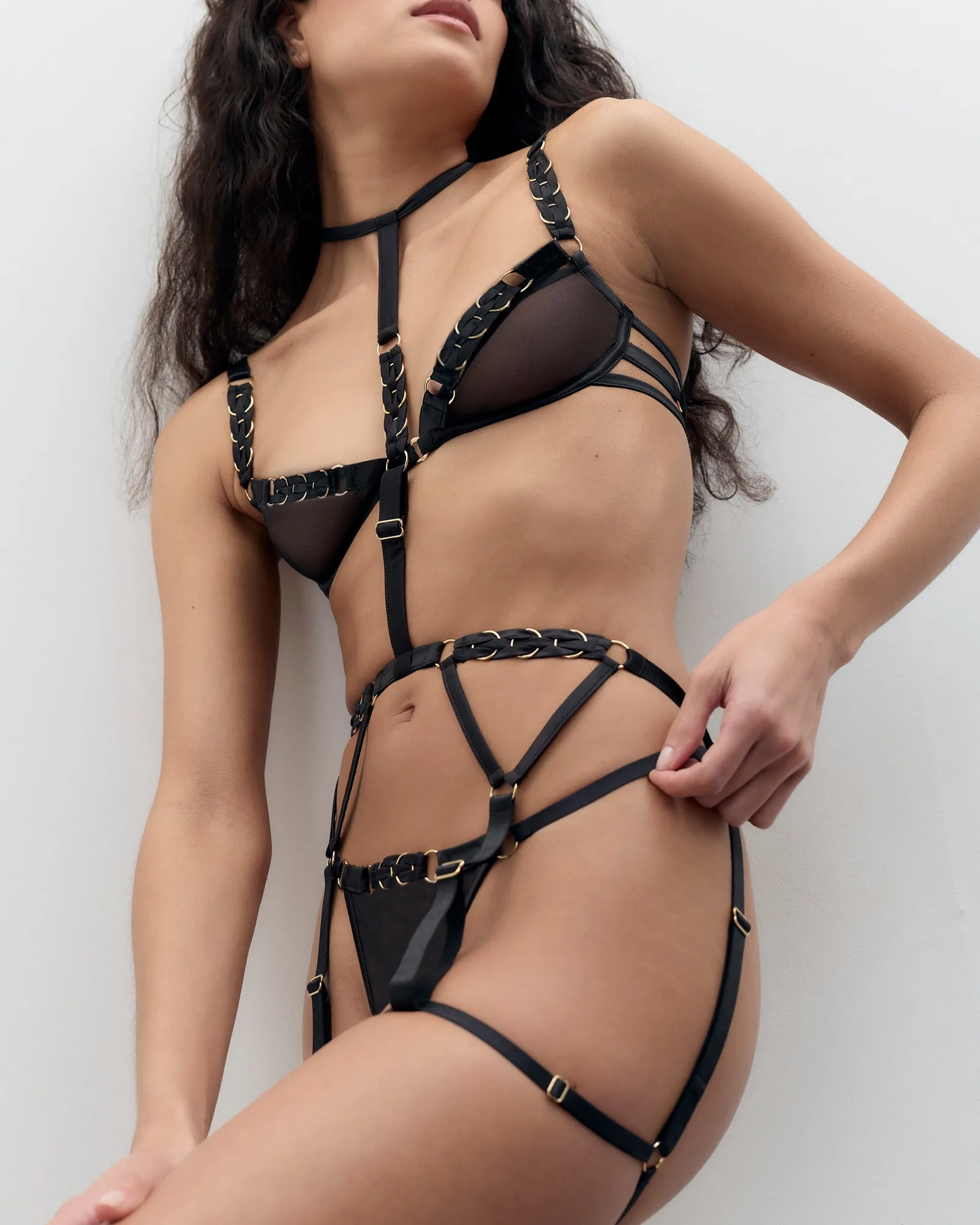
- Suri Thigh Harness with Collar Black: The Suri Thigh Harness with Collar in black combines neck, chest and thigh straps with satin bands interwoven through gold hoops, adjustable thigh straps and a swan hook with sliding elastic. If you want corset-style structure without a boned torso, this harness adds a sculptural, adjustable statement across the body and can be layered over a bodysuit or bra.
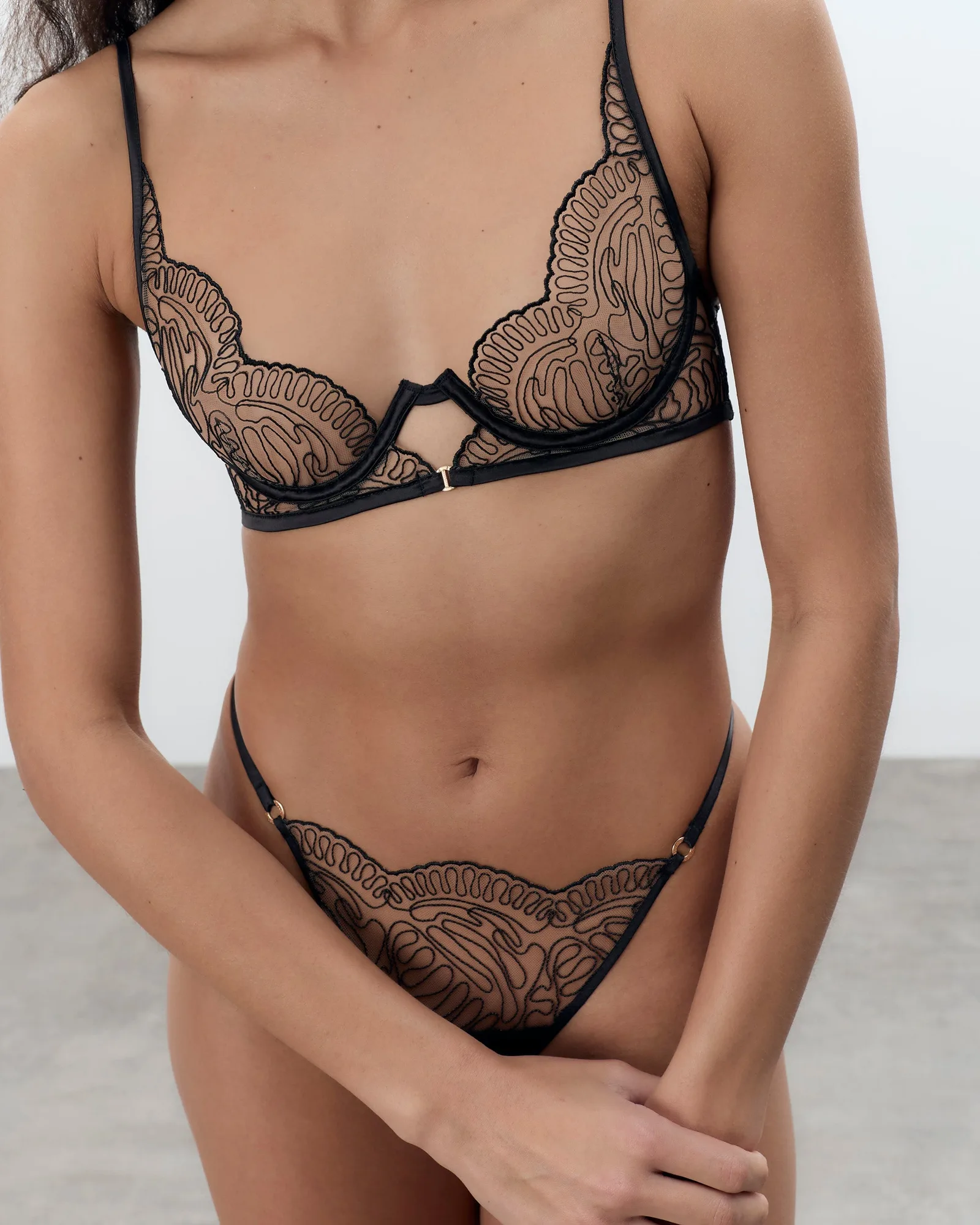
- Leliana High Apex Longline Bra Black: The Leliana High Apex Longline Bra in black uses sheer mesh with directional embroidery, high-rise cups, a raised centre gore with keyhole detail, satin trim and adjustable shoulder straps. A longline bra gives a corset-like elongated line across the chest and works well for straighter body types or anyone who wants shaping without a full corset.
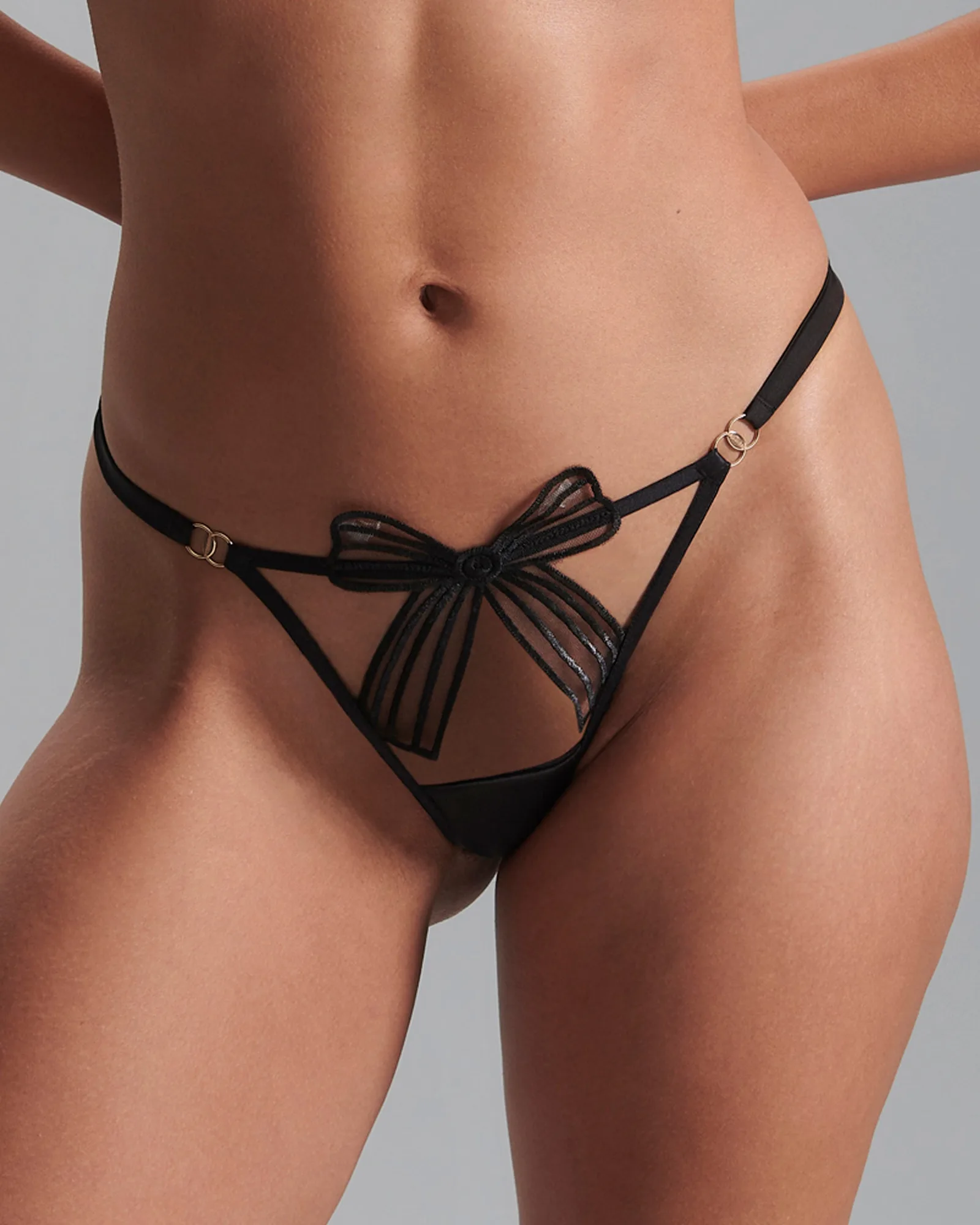
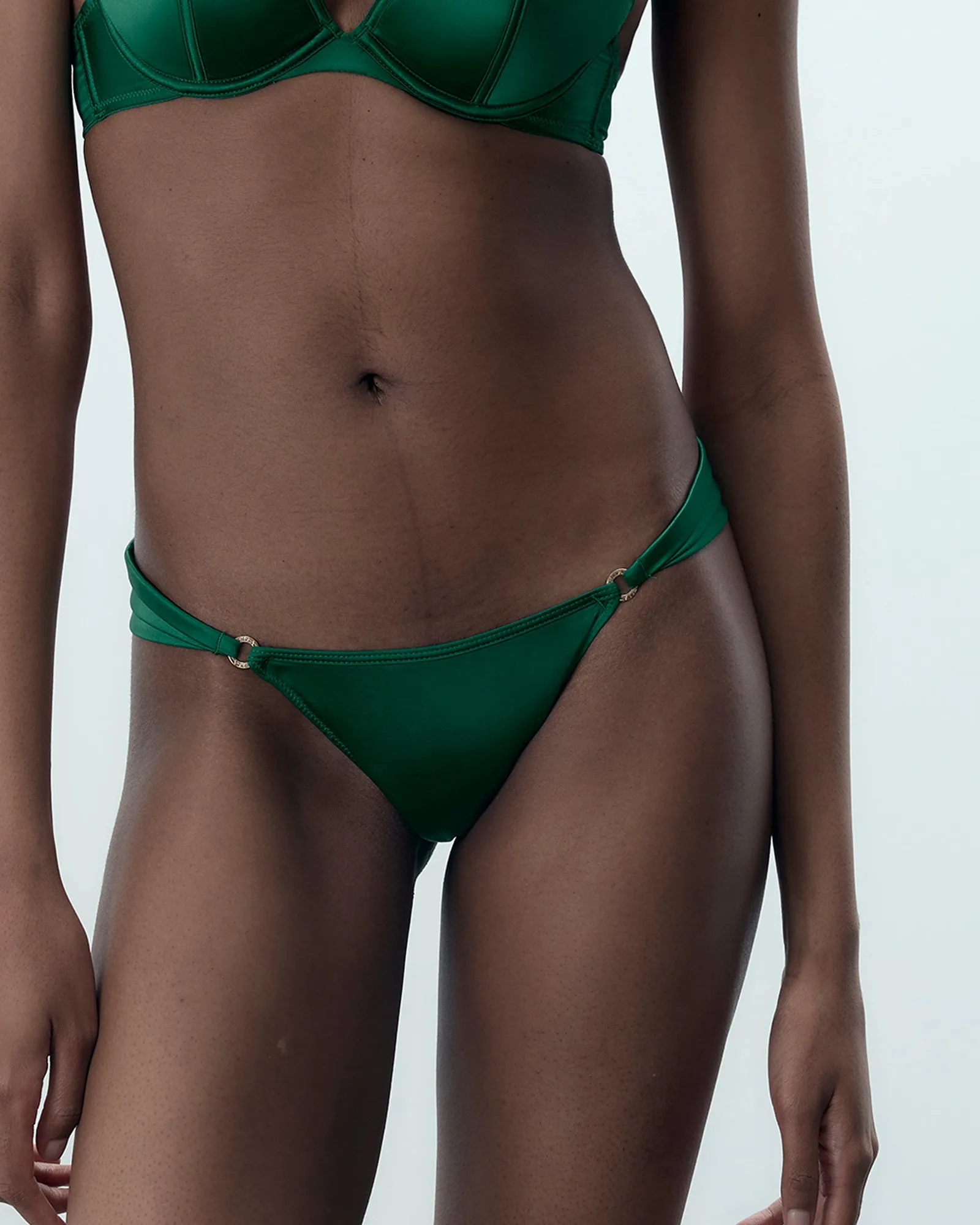
- Annabel Open Bow Panty: The Annabel Open Bow Panty features an open-back construction with satin strapping, sheer embroidered bows and a bamboo gusset. Pairing a corset or longline bra with open-back briefs keeps the lower half streamlined and avoids visible lines under fitted corset silhouettes.
Who this advice is for
Best for
- Anyone buying their first structured corset or basque and unsure which silhouette suits their proportions
- Shoppers who want a corset-style look for an evening event without committing to rigid steel boning
- People who have struggled with corsets digging in at the hip or underbust and want a better fit
Not for
- Shoppers looking for medical-grade compression or post-surgical support
- Anyone wanting a corset for daily waist training, which requires specialist fitting and medical guidance
- People who prefer completely unstructured, stretch-only lingerie with no boning at all