Quick answer
Choose a harness that clips at the chest (front-clip) to discourage pulling, or a hands-free leash for training and working dogs. Focus on fit, material durability, and attachment point location. Avoid harnesses that restrict shoulder movement.
Front-Clip vs. Back-Clip vs. Hands-Free
Front-clip harnesses attach the leash at the dog's chest. When your dog pulls, the harness gently turns them sideways, making pulling less effective. This design is ideal for training and daily walks. Back-clip harnesses attach behind the shoulders; they are comfortable for dogs that don't pull but can encourage pulling in strong dogs. Hands-free leashes, like the Spacer Mesh Service Dog Hands Free Leash (product ID 596627), wrap around your waist, leaving your hands free for running, hiking, or working. They work best for dogs already trained not to pull.
Fit and Comfort for Pulling Dogs
A well-fitted harness should not chafe or restrict movement. Measure your dog's chest girth and neck circumference. The harness should be snug but allow two fingers to slide under the straps. Look for padded materials, such as spacer mesh, which adds comfort during long walks. Avoid harnesses that sit too close to the armpits, as they can cause irritation.
Durability and Hardware
For dogs that pull hard, choose a harness with sturdy metal D-rings and reinforced stitching. Nylon webbing is a reliable choice for strength and weather resistance. Check that buckles and clips are made of metal or heavy-duty plastic. A harness that breaks during a walk can be dangerous.
Decision Rules for Choosing a No Pull Harness
- Attachment point: Front-clip for training, back-clip for non-pullers, hands-free for active owners. Choose front-clip if your dog pulls on walks.
- Material and padding: Look for breathable, padded materials like spacer mesh for comfort. Avoid rough edges. Padded materials prevent chafing on long walks.
- Hardware quality: Metal D-rings and buckles last longer than plastic. Check for reinforced stitching. Metal hardware is safer for strong pullers.
- Fit check: Measure chest and neck. Ensure harness does not restrict shoulder movement. A proper fit prevents escape and injury.
Products That Help with Pulling
- Spacer Mesh Service Dog Hands Free Leash: This Spacer Mesh Hands Free Leash is made of ¾” wide nylon, backed with cushion comfort spacer mesh material for additional padding and comfort. It has a built-in molded handle that can be folded down when not needed. The padded spacer mesh reduces chafing during long walks, and the hands-free design lets you keep both hands free while training a dog that pulls.
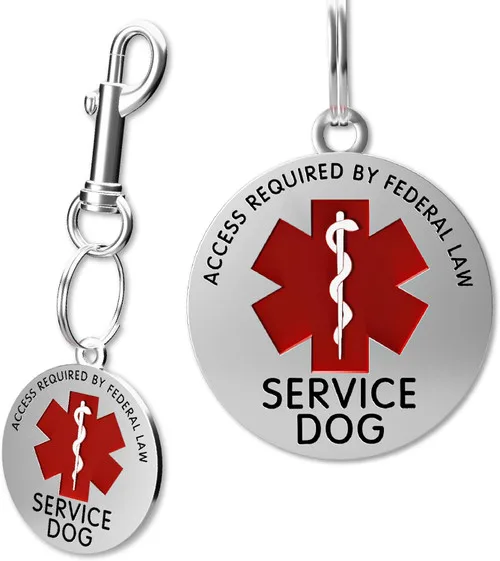
- Hands Free 7' Leash W/ Chrome Service Dog ID Tag: This Hands Free 7' Leash has a high quality engraved Chrome identification tag and is made of ¾” wide nylon with sturdy all metal hardware. The 7-foot length gives your dog more freedom while you maintain control, and the all-metal hardware can withstand repeated pulling without failing.
Who Should Use a No Pull Harness?
Best for
- Dogs that pull on leash during walks
- Owners who want to train loose-leash walking without choking
Not for
- Dogs that already walk calmly on a flat collar
- Very small dogs that may be overwhelmed by a front-clip design