Quick answer
Measure your dog standing, from the floor to the top of the head, and from chest to rump. Choose a house whose interior height is about 2 to 4 inches taller than your dog and whose interior length lets your dog lie down with room to spare. If your dog is between sizes, size up for a large dog and size down for a small one, since a house that's too big is hard to keep warm.
Take three measurements before you shop
You need three numbers: standing height at the top of the head, body length from the point of the chest to the base of the tail, and shoulder width. Measure with your dog standing on a hard floor, not sitting or curled up, because a curled dog measures shorter than it actually is. Write the numbers down and take them with you when you compare houses.
- Height: floor to top of head, standing
- Length: chest to base of tail
- Width: widest point across the shoulders
Turn measurements into a size decision
Interior height should clear your dog's head by roughly 2 to 4 inches. Less than that and your dog can't stand or turn comfortably; much more and the house becomes a large, cold space to heat with body warmth. For length, your dog should be able to lie fully stretched out, so look for an interior length at least equal to body length plus a few inches of margin. Width matters most for dogs that like to sprawl or turn around before settling.
Why a house that's too big is a real problem
A dog's body heat is what warms a house, so extra air volume works against your dog in cold weather. That's why sizing down, not up, is usually the safer call for a small or medium dog. If your dog is still growing, measure again in a few months rather than buying for adult size now, unless the house is adjustable or you plan to add bedding that fills the extra space.
Match the house to your climate and yard
Sizing is only half the decision. In cold or wet climates, look for an elevated floor, rear ventilation, and construction that keeps moisture out, because a damp house is a cold house no matter how well it fits. In hot climates, shade and airflow matter more than insulation. Also check the door opening: an offset door gives your dog a windbreak, but a dog with a very wide chest may need a wider opening to enter comfortably.
Decision rules for picking a size
- If your dog's head clears the interior by 2-4 inches: That's the right height. Anything tighter restricts standing and turning; anything taller wastes body heat. Height is the first filter, not length.
- If your dog is between two sizes: Size up for a large or giant breed that needs room to stretch out, and size down for a small or medium breed that needs to stay warm. The right answer depends on body size, not just preference.
- If your dog is still growing: Re-measure every few months, or choose a house with enough adult clearance and add bedding to reduce the empty space in the meantime. Don't buy for today's puppy size.
- If you live in a cold or wet climate: Prioritize an elevated floor, rear ventilation, and moisture-resistant construction over extra interior room. Dry and snug beats big and drafty.
Products that match these sizing rules
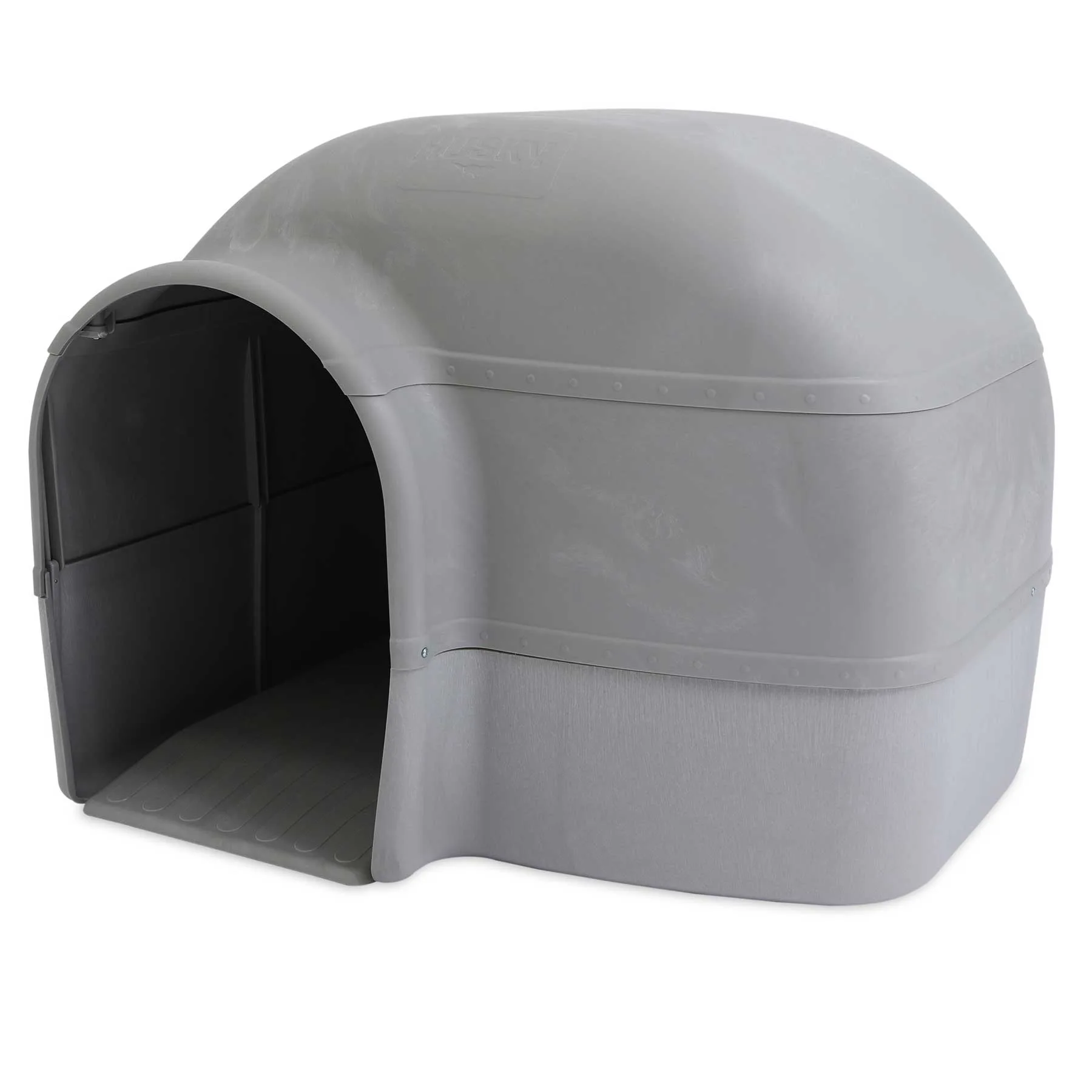
- Petmate Husky Dog House: The Husky Dog House is a heavy-duty structural foam outdoor shelter with an elevated floor, rear ventilation, and a leak-proof design; it comes in multiple sizes and colors. The elevated floor and rear ventilation address the moisture and airflow problems that make an oversized or poorly built house cold, and the size options let you match interior space to your dog's measurements.
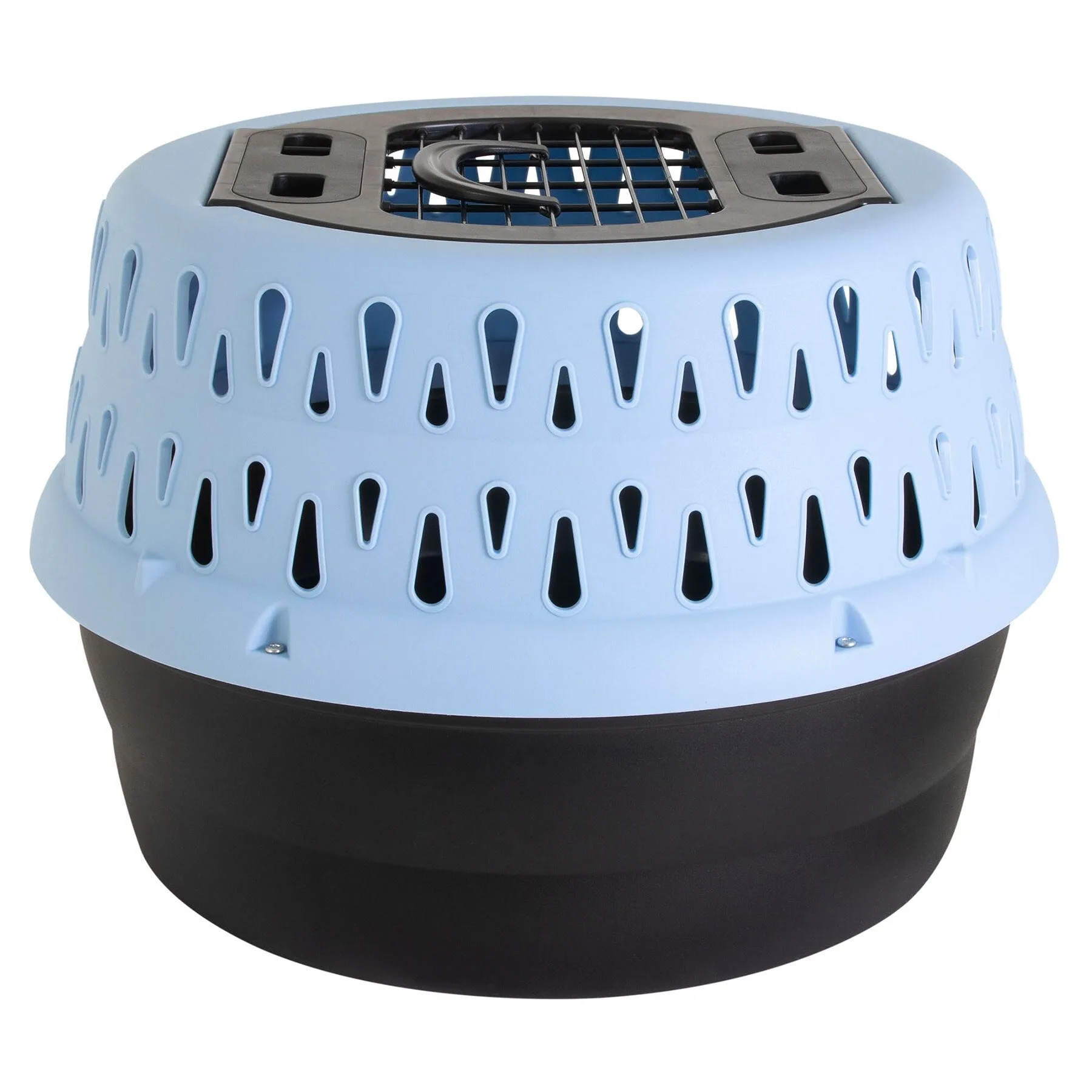
- Get-A-Round E-Z Load Kennel For Cats: The Get-A-Round E-Z Load Kennel For Cats is a round plastic kennel with an extra-large opening, designed around cats' denning instincts. It shows the same principle applied to a smaller animal: a snug, protected space with easy entry works better than a roomy one, which is the trade-off you're weighing when sizing a dog house.
Who this sizing approach fits
Best for
- Owners of medium and large dogs who need a house the dog can stand and stretch in
- Households in cold or wet climates where body heat needs to stay in the house
- Buyers who want to measure once and avoid a return
Not for
- Owners of dogs that will only use the house in hot, dry weather, where shade and airflow matter more than snug sizing
- Multi-dog households expecting one house to fit several dogs of very different sizes